

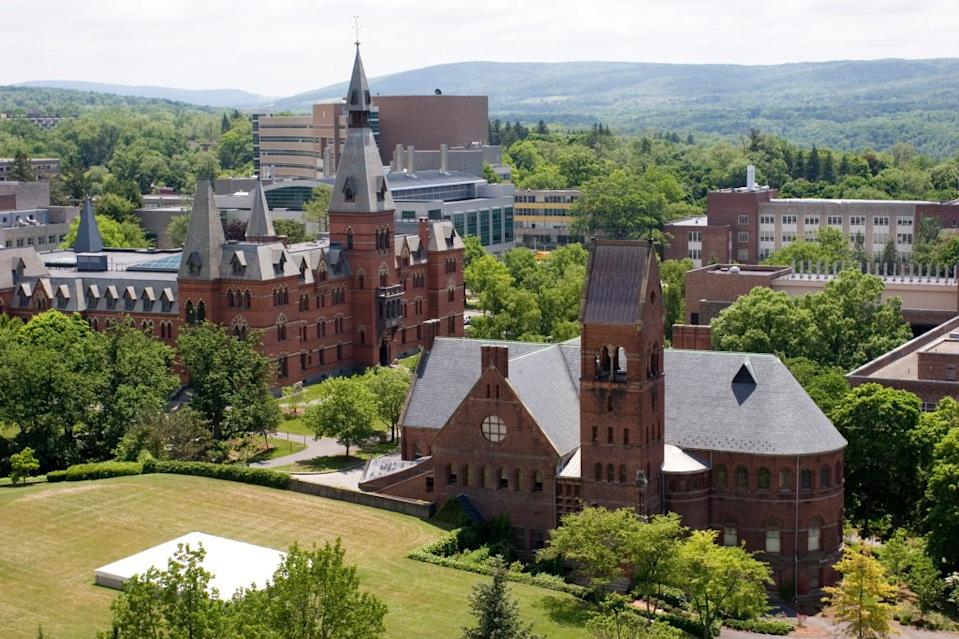
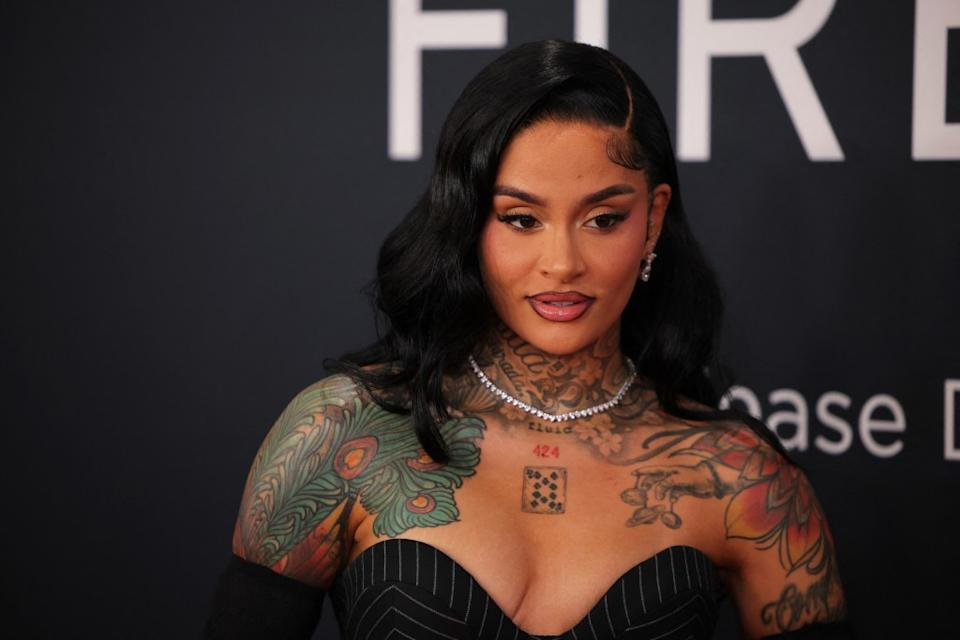
Cornell University is facing a firestorm of controversy after inviting the Grammy-nominated R&B artist Kehlani to perform on May 7 at its annual “Slope Day” celebration.
The backlash centers on Kehlani’s alleged history of antisemitic rhetoric and actions, which many Jewish students and advocacy organizations argue makes her an inappropriate and offensive choice for a high-profile campus event.
The university’s defense—that the invitation was extended by a student-run committee based on popularity—has done little to quell the criticism, with many accusing Cornell of sidelining the concerns of its Jewish community.
According to reports, Kehlani has publicly expressed sentiments that have been interpreted as glorifying violence against Jews and supporting terrorist groups. One of her music videos, “Next 2 U,” begins with the phrase “Long live the Intifada” and features visuals widely associated with pro-Palestinian militancy, including dancers in keffiyehs and Palestinian flags.
Additionally, she has been accused of sharing a map that erases the state of Israel entirely and making inflammatory statements about Zionists, including labeling them “scum of the earth” and wishing them to “go to hell.”
Cornell’s decision comes amid an ongoing civil rights investigation to determine whether the university has failed to protect Jewish students from discrimination and harassment.
Read : Cornell PhD Student Momodou Taal Threatened With an Immigration Arrest Flees US Before Deportation
The situation is exacerbated by last year’s incident in which a student, Patrick Da, pleaded guilty to posting threats to kill Jews on the university’s website. Critics argue that in this sensitive climate, inviting a performer with a controversial stance on Israel and Judaism sends a deeply troubling message.
Kehlani’s Past Statements Ignite a Firestorm
Kehlani’s public statements and artistic expressions have long drawn criticism from pro-Israel organizations and Jewish advocacy groups. The watchdog group StopAntisemitism has been vocal in condemning her, stating that she has used her platform—boasting over 20 million followers—to spread hate and misinformation.
The group alleges that Kehlani has “staunchly supported the terrorist regime Hamas” under the guise of resistance and has curated content that admires the violence of the October 7, 2023, Hamas attack on Israel.
Read : Academic Excellence: India’s Top 10 Universities for Higher Education
The group also pointed out specific posts and remarks from Kehlani’s social media, accusing her of promoting dangerous conspiracy theories and falsehoods.

These include claims that Israeli forces beheaded Palestinian babies and burned civilians alive—allegations that have been widely debunked and seen as an inversion of the atrocities committed against Israelis during the Hamas-led massacre.
Kehlani has also been criticized for sharing and supporting narratives that frame Zionists as universally evil, a stance which many Jewish individuals find indistinguishable from broader antisemitism, considering that a significant majority of Jews worldwide identify with Zionism to some extent.
Her refusal to condemn the October 7 attacks, in which over 1,200 Israelis were killed and many others taken hostage, has further cemented her reputation among critics as someone who promotes or tolerates antisemitic violence.
The backlash at Cornell was swift and vocal. Amanda Silberstein, a junior and president of the Chabad Center at the school, voiced her deep concern, stating, “Kehlani isn’t just an artist with controversial views — she is someone who has publicly glorified violence against Jews and consistently promoted dangerous, antisemitic rhetoric that directly threatens our community.”
She added that inviting Kehlani was “profoundly alienating” and demonstrated that Jewish safety and wellbeing were seen as “negotiable” by university administrators.
Cornell’s Response and the Debate on Free Expression
In response to the criticism, Cornell University issued a statement clarifying that Kehlani was invited by the student-run Slope Day Planning Board, which selected her based on student polls and her popularity in the music genre.
The university emphasized that Kehlani’s personal views do not reflect the institution’s stance and stated that any political expression during her performance would be a violation of her contract.
“The headliner is selected by the student-run Slope Day Planning Board following a poll of students,” a university representative explained. “Kehlani was chosen based on her popularity and the genre of her music. She recently performed at Northeastern University without political expression or incident.”
The university also added that it has clear anti-discrimination policies that prohibit political expression during the concert and warned that failure to comply would result in the loss of payment.
Despite this reassurance, many Jewish students remain unconvinced. They argue that inviting someone with such a polarizing history—even if under student direction—ultimately reflects poorly on the administration and its commitment to inclusivity.
Liora Rez, founder of StopAntisemitism, echoed these sentiments, stating, “Now, Cornell is doubling down by featuring vile Jew-hater Kehlani as a headliner for their end-of-year celebration. Kehlani uses her platform of 20 million followers, more than the number of Jews on the planet, to incite hate against the world’s only Jewish state.”
Rez went on to compare the situation to hypothetical scenarios involving other marginalized communities: “Black students wouldn’t be expected to welcome a KKK rock band on campus. Asian students weren’t told, ‘Asian hate … Get over it.’ So why are Jewish students treated as the exception?”
This comparison resonated with many who feel that antisemitism is often downplayed or treated differently from other forms of hate. The issue, they argue, is not just about Kehlani’s presence but about a broader campus culture that tolerates or fails to adequately address Jewish students’ concerns.
The Broader Implications for Campus Culture
The controversy surrounding Kehlani’s invitation to perform at Cornell underscores a growing national debate over free expression, student safety, and university accountability.
In recent years, many universities have been caught in the crossfire between student demands for open dialogue and expression, and the need to maintain an inclusive and safe environment for all students.
The tension is particularly acute when it comes to the Israeli-Palestinian conflict, a deeply polarizing issue that often manifests in intense campus activism. Pro-Palestinian and pro-Israel groups frequently clash, and the line between legitimate criticism of Israeli policies and outright antisemitism is often blurred.
Cornell’s situation is further complicated by an ongoing civil rights investigation and recent history of antisemitic incidents on campus. The university is under scrutiny for how it handles complaints of antisemitic harassment and discrimination, making the invitation to Kehlani appear especially tone-deaf to some observers.
Many Jewish students feel that their concerns are being marginalized in the name of artistic freedom or student autonomy. They argue that universities must take greater responsibility in ensuring that invited guests do not contribute to a hostile or threatening environment. Others believe that such decisions should be more rigorously vetted, especially in light of past controversies and ongoing investigations.
Still, defenders of the university’s decision argue that Kehlani’s political views—however controversial—do not necessarily disqualify her from performing. They suggest that suppressing such invitations could set a dangerous precedent for censorship and infringe upon the artistic and political freedoms that universities are meant to uphold.
However, critics argue that this is not a matter of free speech but of responsible platforming. They stress that a high-profile event sponsored by the university carries an implicit endorsement and that Cornell cannot simultaneously claim neutrality while giving a stage to someone accused of promoting hatred and misinformation.
Ultimately, the debate over Kehlani’s appearance at Cornell touches on deeper questions about identity, safety, and values in higher education. As the event approaches, it remains to be seen how the university will balance these competing pressures and what impact the controversy will have on its community moving forward.