
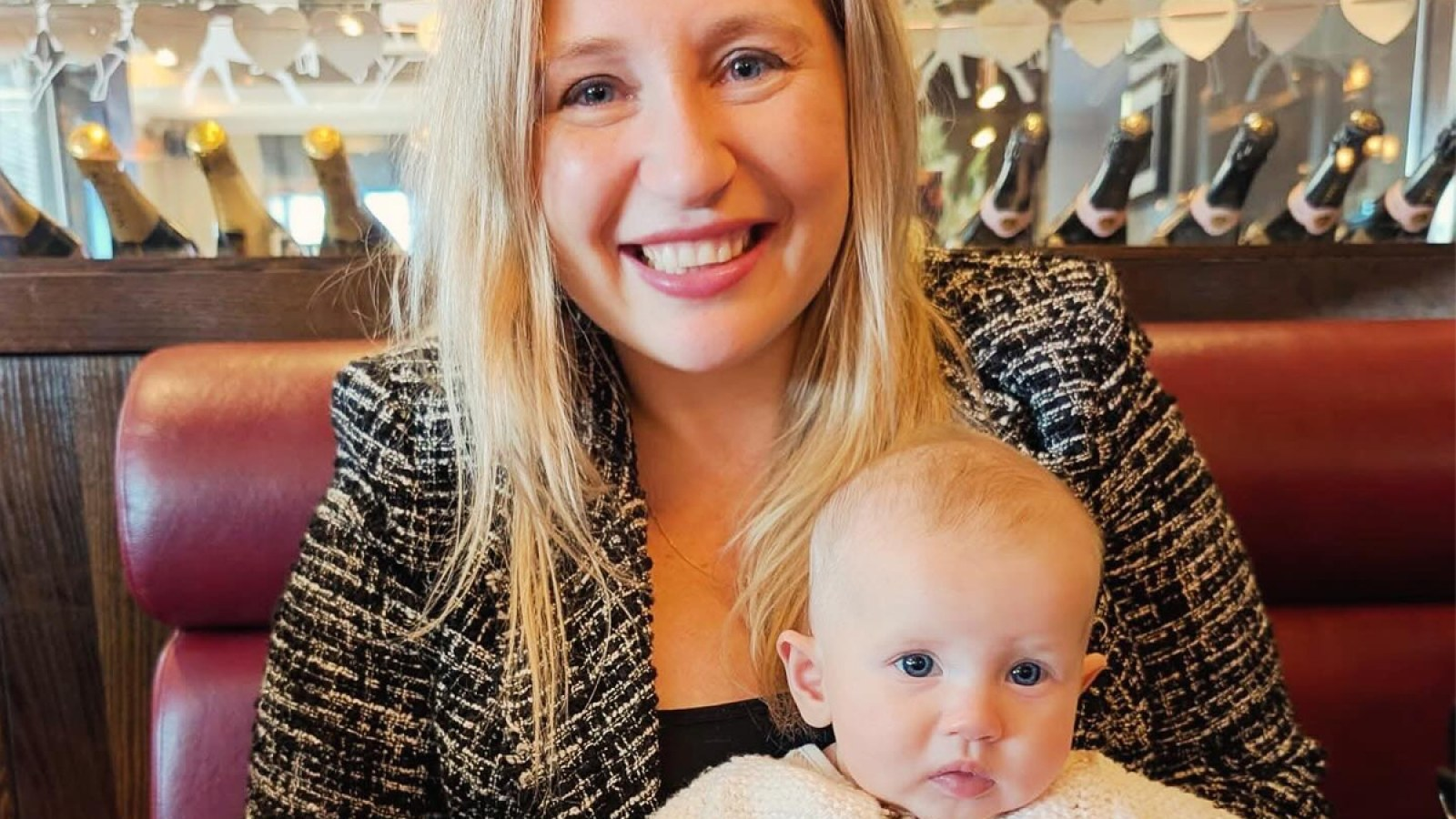
When Davina Schonle, a pioneering AI entrepreneur and founder of Humanvantage AI, set out for London Tech Week, she wasn’t expecting to be at the center of a conversation about motherhood, gender inclusivity, and systemic oversight in the tech industry.
Her trip, which included a three-hour journey with her 18-month-old daughter Isabella, was meant to foster innovation, network with potential suppliers, and represent her startup. Instead, she was turned away at the gates—because she brought her baby with her.
Schonle’s experience, shared publicly via LinkedIn, has since ignited a wave of criticism and introspection across the tech world. Her story has struck a nerve not just with fellow mothers and caregivers, but with professionals across all sectors who have long pushed for more inclusive and family-friendly professional environments.
While the tech industry frequently touts its commitment to modernity and inclusion, Schonle’s experience reveals the disconnect between such values and the infrastructure supporting them.
The Personal Cost of Exclusion
Davina Schonle’s reaction to the incident was deeply emotional, highlighting the exhaustion, frustration, and sadness of being excluded for something as natural and vital as parenthood. “I was refused entry at London Tech Week… because I had my baby with me,” she wrote in her post. “It’s a 3-hour drive one way for me to come to London. At this stage I limit how many hours I am away from my baby girl. This is about new environments for her as much as it is about me.”
Her statement underlines a key issue: the expectation that professional women must compartmentalize their identities. For many parents—especially mothers—entrepreneurship and caregiving go hand in hand. There is no off switch. Many build businesses while breastfeeding, strategize while cooking dinner, and take investor calls while walking strollers through parks. The assumption that a woman with a baby cannot contribute to a professional environment is not only outdated—it’s damaging.
Moreover, Davina Schonle wasn’t asking for special treatment. She wasn’t seeking daycare services or asking to bend rules for a large group of children. She simply brought her daughter with her in a pram, and hoped to attend a business-focused event. Instead of accommodation or understanding, she met a closed door.
What the Tech Industry Must Confront
Davina Schonle’s story has sparked questions about who really “belongs” in tech spaces. For all the industry’s talk about diversity, inclusion, and support for women founders, the reality on the ground often tells a different story. Events like London Tech Week are central to networking, innovation, and business growth—especially for startups and early-stage ventures. Denying entry to a founder because she brought her child not only cuts off a business opportunity but reinforces systemic barriers that keep parents, especially mothers, on the margins.
Read : Insulin, Cancer, and Epilepsy Drugs Denied to People in Custody as Form of Punishment, Report Claims
Her question—“In today’s age shouldn’t we be more inclusive?”—challenges the tech community to examine its assumptions and systems. Why are these events not better equipped for the realities of modern working life? Why do family responsibilities automatically disqualify someone from participation?
Read : Houthi Rebels Hit Back After US Military Destroys 3 Vessels in Red Sea
Schonle raises another important point: “Parents are part of this ecosystem. Caregivers are innovators, founders, investors, and leaders. If major events like London Tech Week can’t make space for them, what message does that send about who belongs in tech?” Indeed, the exclusion of caregivers from such spaces sends an unmistakable message: the tech world is still designed for a narrow, outdated profile of the entrepreneur—unencumbered, hyper-mobile, male.
The fallout from this incident isn’t just a PR issue for London Tech Week. It’s a mirror reflecting a broader cultural failure to truly include caregivers and challenge deeply embedded assumptions about professionalism. Events that fail to provide even basic accommodations for parents—let alone anticipate and welcome them—are not aligned with the values they so often claim to represent.
A Call for Real Inclusion and Structural Change
Schonle’s experience might feel personal, but it represents a broader, structural problem. In tech, women continue to face disproportionate hurdles when it comes to balancing personal and professional lives. For mothers, especially, the industry’s “move fast and break things” ethos can feel both exhilarating and exclusionary. The culture of relentless hustle rarely pauses to accommodate pregnancy, parental leave, or the logistical challenges of early childcare.
Yet, these very qualities—resilience, multitasking, emotional intelligence—are often found in abundance among caregivers. They bring fresh perspectives to problem-solving, innovation, and leadership. Ignoring or excluding them doesn’t just harm individuals—it impoverishes the entire sector.
What’s needed is not just reactive outrage but a proactive reimagining of professional norms. Conferences and tech events must evolve. That includes offering basic accommodations like parent-and-child zones, clearer policies on admittance with children, and even reconsidering whether age-old restrictions on entry still serve a meaningful purpose.
Schonle herself posed a provocative question in her post: “Doesn’t our future belong to the kids?” If so, why is it so hard to make space for them in professional spaces where that future is being built?
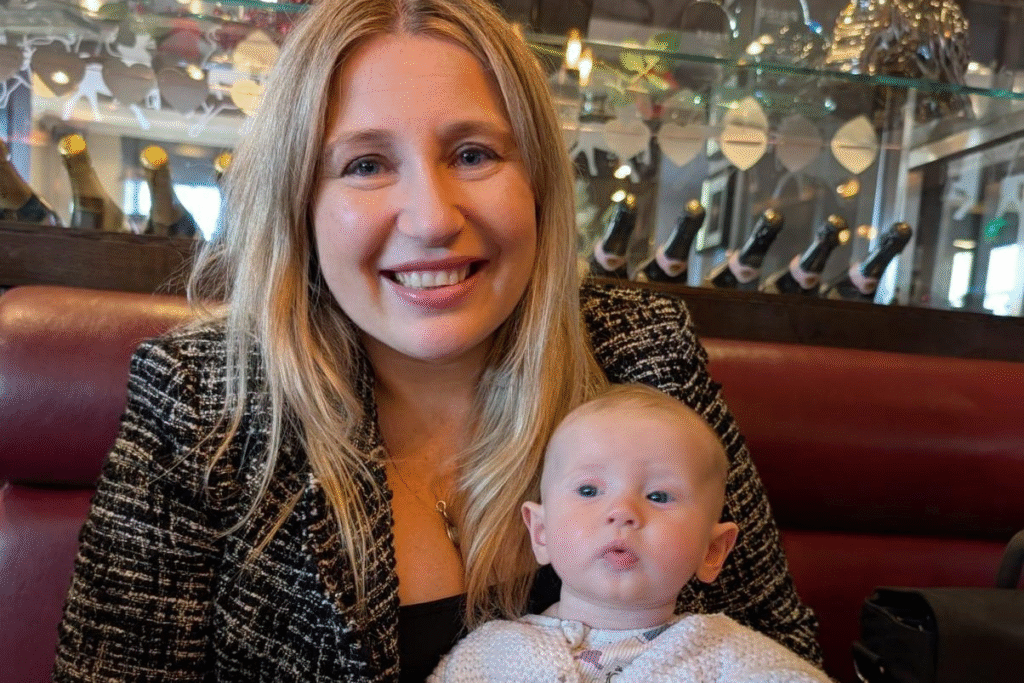
Her words go beyond personal disappointment—they serve as a challenge to the tech industry to live up to its ideals. If the sector truly believes in inclusion, if it truly values innovation and diversity, then it must begin to include the full reality of people’s lives—including the fact that founders and leaders are often also mothers and caregivers.
Real inclusivity is not just about diversity statistics or branding. It’s about structural support and cultural respect. It means creating environments where people like Davina Schonle don’t have to choose between parenthood and participation. Where a baby in a pram isn’t a disruption but a reminder of what the future looks like.
London Tech Week may not have anticipated this controversy, but now that it’s in the spotlight, it has an opportunity. The organizers—and others who run major industry events—can and should take meaningful steps to make their spaces more inclusive, accessible, and family-friendly. This includes publicly addressing such incidents, implementing clearer, more inclusive policies, and consulting with diverse stakeholders, including caregivers, on how to make events welcoming for all.
Until then, stories like Schonle’s will continue to resonate—not just because of the injustice, but because so many have been there before. For every founder turned away at the door, there are countless more who never even try to attend, knowing the environment is not built for them.
The tech world prides itself on building the future. If that future is to be inclusive, innovative, and sustainable, it must start by recognizing—and embracing—the people who live and shape it every day, strollers and all.