

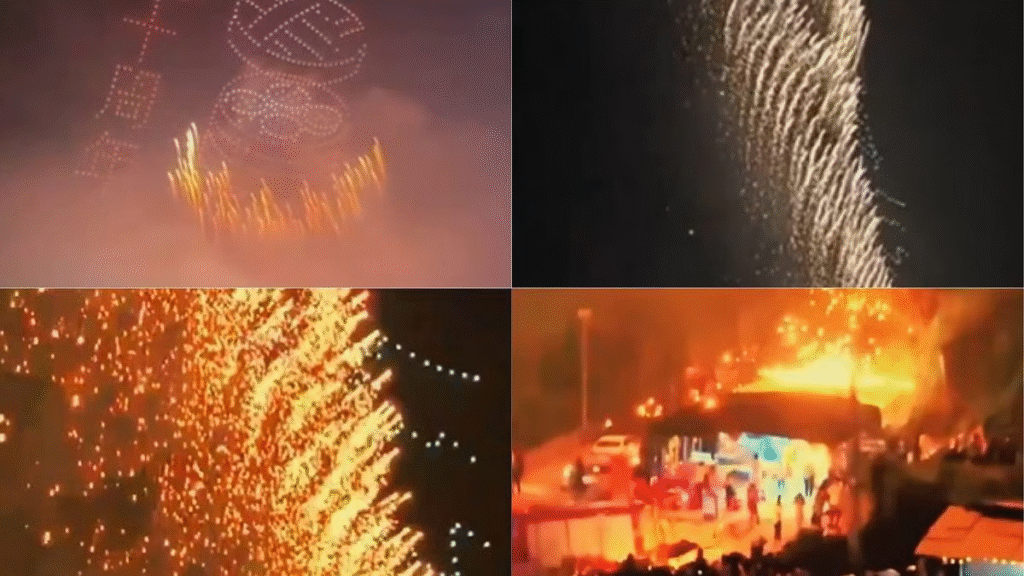
In a shocking turn of events that transformed a much-anticipated National Day spectacle into a scene of panic, hundreds of drones malfunctioned mid-air during a fireworks display in Liuyang City, Hunan Province, China. The incident occurred on October 2, 2025, at the Sky Theatre along the Liuyang River, during the event titled “October: The Sound of Blooming Flowers.” What began as a coordinated 3D light and sound show integrating traditional fireworks with advanced drone technology quickly escalated into chaos as burning debris rained down on spectators and ignited small fires in nearby vegetation.
Authorities have confirmed no injuries among the thousands in attendance, but the mishap has raised serious questions about safety protocols in large-scale pyrotechnic events. Liuyang, renowned as China’s fireworks capital, draws massive crowds annually for such displays, making this failure a stark reminder of the risks involved in blending fire and flight. The malfunction, which involved drones catching fire and plummeting from the sky, prompted an immediate evacuation and swift response from emergency services. Videos captured by attendees show crowds scattering as sparks and embers fell like fiery hail, with some fragments landing perilously close to the audience.
Officials from the Liuyang Bureau of Culture and Tourism attributed the incident to unusually dry weather conditions exacerbating technical glitches, though a full investigation is underway. This event, part of China’s week-long National Day celebrations marking the founding of the People’s Republic in 1949, was intended to showcase innovative entertainment but instead highlighted vulnerabilities in drone operations over populated areas. As details emerge, the focus shifts to accountability, regulatory oversight, and the future of hybrid fireworks-drone shows in one of the world’s most fireworks-dependent regions.
The Spectacle That Turned to Terror
The “October: The Sound of Blooming Flowers” show was billed as a pinnacle of modern pyrotechnics, designed to illuminate the night sky with synchronized fireworks bursts and drone formations creating intricate 3D patterns over both land and the adjacent Liuyang River. Scheduled for October 2 as a highlight of National Day festivities, the event attracted tens of thousands of visitors to the Sky Theatre, a venue purpose-built for large-scale displays in Liuyang’s riverfront district.
Organizers had promoted it as a fusion of tradition and technology: classic Chinese firecrackers exploding in rhythmic sequences, complemented by over 500 drones equipped with LED lights and pyrotechnic attachments to form blooming floral shapes, national symbols, and dynamic animations. Eyewitness accounts describe the initial phases as mesmerizing. Drones lifted off in precise formations, their lights tracing elegant arcs against the dark sky, while ground-based fireworks provided a thunderous soundtrack of pops and booms.
The show’s theme evoked autumnal renewal, with visuals simulating flowers unfurling under October’s harvest moon. However, approximately 15 minutes into the 30-minute performance, the synchronization faltered. Reports indicate that a cascade failure in the drone control system caused several units to veer off course, triggering their onboard fireworks prematurely. This led to a chain reaction: ignited drones spiraled downward, shedding flaming components that scattered across the viewing area.
Read : Russian Drone Strike Kills 13,000 Pigs on Kharkiv Farm, Sparking Massive Fire in Ukraine
The scale was staggering—hundreds of drones affected, according to preliminary estimates from event coordinators. Debris, including hot metal shards and unexploded charges, pelted the crowd, forcing families with children and elderly attendees to dive for cover behind barriers or flee toward exit points.
Hujan api terjadi di China. Insiden itu terjadi pada Kamis (2/10) di Liuyang, Provinsi Hunan, Tiongkok, saat pertunjukan drone bertajuk “October: The Sound of Blooming Flowers” berubah kacau akibat malfungsi yang memicu percikan api dan kepanikan penonton.#detikcom pic.twitter.com/tcXymqIyIn
— detikcom (@detikcom) October 6, 2025
One spectator, speaking anonymously to local media, recounted the abrupt shift: “One moment, we were oohing and aahing at the lights; the next, it was like the sky was attacking us. People were screaming, pushing to get away from the falling fire.” The malfunction not only disrupted the aerial display but also interfered with ground fireworks, causing erratic launches that amplified the hazard. Emergency sirens blared within seconds, signaling the end of what was meant to be a triumphant evening.
Emergency Response and Immediate Aftermath
Response teams acted with remarkable speed, averting what could have been a far graver catastrophe. As drones began to fail around the 10-minute mark, the show’s automated safety protocols activated, grounding remaining units and halting fireworks launches. Simultaneously, on-site security directed the crowd—estimated at over 20,000—toward designated evacuation routes, establishing a one-mile perimeter around the impact zone. Firefighters from the Liuyang Fire Department, prepositioned for the event, deployed within two minutes, using hoses and foam extinguishers to douse embers on the ground and suppress spot fires in dry grass along the riverbank.
The most pressing threat extended beyond the immediate crowd: falling debris sparked multiple small blazes in nearby forested hillsides, where parched conditions from a prolonged dry spell had left vegetation highly flammable. Crews contained these fires within 30 minutes, preventing spread to urban areas. A total of 15 fire units responded, including aerial support for monitoring hotspots. Medical teams triaged attendees at on-site stations, treating minor issues like smoke inhalation and superficial burns from stray sparks, but no hospitalizations were required.
The Liuyang Bureau of Culture and Tourism issued an initial statement praising the “coordinated heroism” of responders, noting that the absence of casualties stemmed from robust pre-event planning, including weather monitoring and redundant fail-safes. In the hours following, the venue was secured for forensic analysis. Drone wreckage—twisted frames and charred electronics—was collected for examination by technical experts from the provincial safety commission.
Authorities cordoned off the Sky Theatre, canceling subsequent National Day events in the area to allow for a thorough cleanup. Traffic disruptions rippled through Liuyang as roads to the riverfront were closed until dawn on October 3. Social media footage of the chaos spread rapidly, amassing millions of views and prompting temporary closures of similar venues nationwide for safety audits. Organizers refunded tickets and offered complimentary access to future shows, though public trust may take longer to rebuild.
Official Explanations and Safety Concerns Raised
Preliminary investigations point to a confluence of factors behind the malfunction, with dry weather emerging as a primary culprit. Representatives from the Liuyang Bureau of Culture and Tourism explained that low humidity levels—hovering around 20% that evening—likely compromised drone stability and accelerated fire spread from pyrotechnic mishaps. Wind gusts up to 15 km/h may have further disrupted GPS signals, causing the fleet to lose formation.
Technical reviews suggest a software glitch in the central control system initiated the cascade, where one drone’s erroneous command propagated to others via the mesh network. Experts note that while drones are programmed with anti-collision algorithms, the integration of live fireworks added an unpredictable variable, especially in arid conditions that heightened ignition risks. This incident underscores broader safety gaps in China’s booming drone entertainment sector. Liuyang, producing over 70% of the nation’s fireworks, has long championed hybrid shows as economic drivers, generating billions in tourism revenue annually.
Yet, critics argue that regulations lag behind innovation. Current guidelines mandate drone flights below 120 meters and pyrotechnic approvals from local fire authorities, but they lack specifics for combined operations over crowds. Following the event, the Hunan Provincial Emergency Management Department announced a review of all 2025 displays, potentially imposing stricter weather thresholds and requiring independent audits for drone fleets exceeding 100 units. Public reaction has been a mix of outrage and calls for reform.
Social media users decried the “man-made disaster,” with hashtags like #LiuyangDroneFail trending regionally. Families voiced relief at the lack of injuries but demanded compensation for trauma and lost property, such as scorched clothing. Industry insiders predict tighter insurance requirements and a shift toward water-based venues to mitigate fire risks. As China gears up for its 2026 National Day, this mishap serves as a cautionary tale: while technology promises spectacle, neglecting environmental and technical safeguards can turn celebration into calamity. Officials vow a transparent probe, with findings expected by mid-November, to ensure such chaos does not bloom again.