

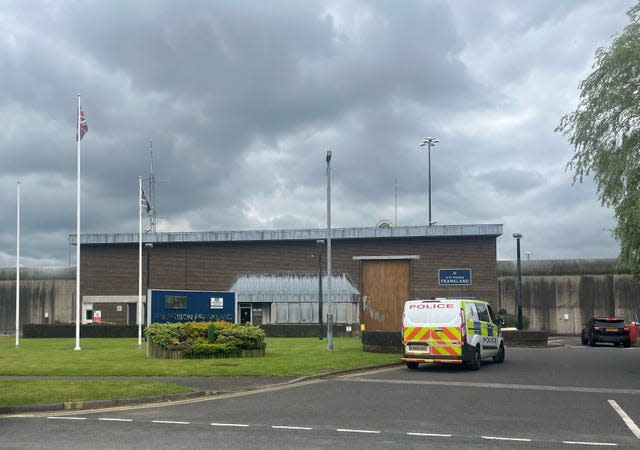
The recent violent assault on prison staff by convicted terrorist Hashem Abedi has sparked a renewed outcry among the UK’s prison officers for better protective measures. The attack, which occurred at HMP Frankland, one of the country’s highest security prisons, has brought to light the increasing danger faced by staff who manage Britain’s most dangerous inmates.
The Prison Officers’ Association (POA) has taken the lead in demanding urgent action, calling for electric stun guns (tasers) to be issued to specially trained officers to ensure they can respond effectively to life-threatening situations.
Hashem Abedi, who played a central role in the 2017 Manchester Arena bombing that killed 22 people, attacked prison staff with hot oil and makeshift weapons. This brutal act has reignited debate over the tools and strategies used to safeguard those working in the prison system.
Prison officers, currently equipped only with batons and Pava spray, say their current arsenal is woefully inadequate when dealing with violent extremists and dangerous offenders.
Rising Threats Inside High-Security Prisons
Incidents of extreme violence within the UK prison system have been rising, particularly in high-security facilities housing the most dangerous inmates. Hashem Abedi’s recent attack is not his first.
He had previously assaulted officers at Belmarsh prison in 2020, an act for which additional years were added to his sentence. Despite his known record of violence, Hashem Abedi was granted access to a kitchen area within HMP Frankland’s separation unit—a decision that would ultimately end in bloodshed and trauma for prison staff.
The separation units are meant to manage prisoners deemed too dangerous to mix with the general population. Yet, even within these restricted areas, staff are at serious risk.
Hashem Abedi’s attack using hot oil and improvised weapons underscores the lethal creativity of determined inmates and the critical importance of ensuring officers have the tools to defend themselves effectively.
Read : Hashem Abedi Throws Hot Cooking Oil on Prison Officers at HMP Frankland
The POA is now intensifying its push for electric stun guns. These devices would provide a tactical, non-lethal means to subdue violent prisoners before a situation escalates into a potentially deadly confrontation.
Read : Jailed Critic of President Putin Shifted to Prison Hospital
According to Mark Fairhurst, national chair of the POA, prison officers face serious threats without having any realistic means to counter them when traditional tools fail. He emphasized the lack of options currently available to officers when faced with life-threatening violence.
Calls for Tactical Taser Deployment and Supermax-Style Security
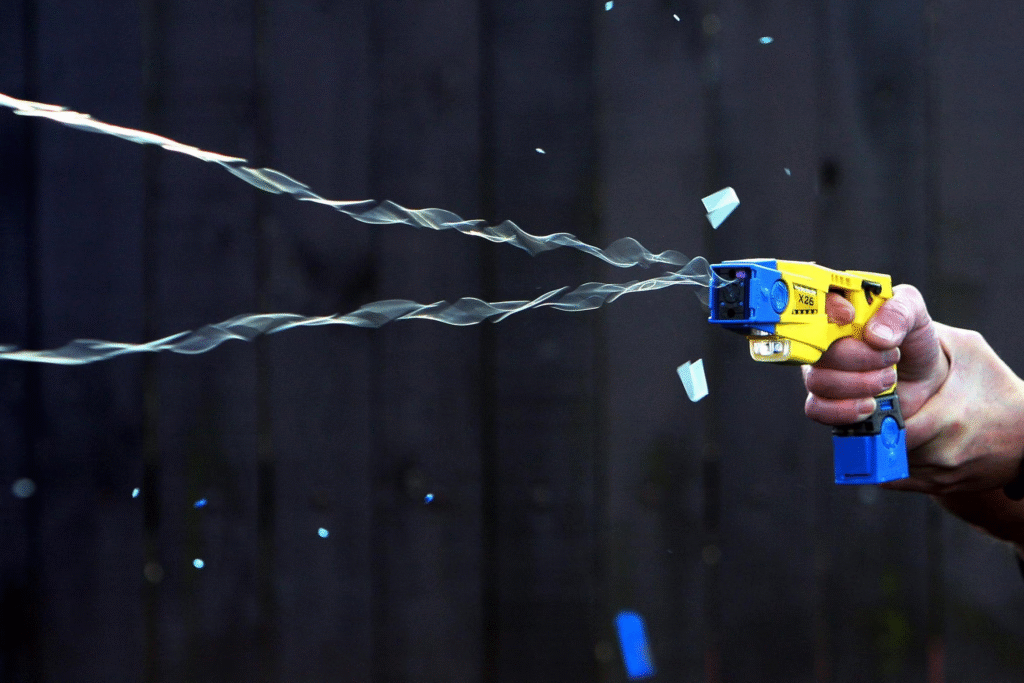
The POA’s primary demand is the tactical use of tasers. The proposal suggests that specially trained personnel be stationed in prisons, ready to respond rapidly and decisively during violent incidents.
These officers would not patrol with tasers regularly but would be on standby to act when other defensive tools prove ineffective. This approach, the POA argues, would not only protect staff but also help control and de-escalate volatile situations before they spiral out of control.
The demand for tasers is not an isolated call. The POA is also advocating for the implementation of American “Supermax”-style incarceration policies for Britain’s most dangerous prisoners. These include:
- Prisoners only being allowed to leave their cells while handcuffed and escorted by three officers.
- A complete ban on interaction with other inmates.
- Restriction to basic legal rights and essential needs, without additional privileges.
Fairhurst argues that these measures are not about cruelty but about control. When dealing with ideologically driven, violent offenders such as Hashem Abedi, traditional prison systems fall short. The goal is to eliminate opportunities for inmates to plan or execute attacks, thereby keeping prison officers and other inmates safe.
This approach, however, is controversial. Critics argue that overuse of such restrictive measures can lead to psychological harm and might violate human rights. But for many frontline officers, the priority is clear—safety must come first.
Government and Ministry of Justice Under Pressure
The response from the Ministry of Justice (MoJ) has so far fallen short of addressing the specific demands for stun guns. Justice Secretary Shabana Mahmood acknowledged the seriousness of the recent attack and stated that the system must “do better to protect our prison officers in the future.”
However, her statement did not mention tasers specifically. Instead, Mahmood has promised a full independent review of the incident and an internal assessment of protective body armor currently used by prison staff.
Critics argue this is not enough. Former prison governor Ian Acheson voiced his concern on BBC Radio 4’s Today programme, stating that the current level of protection for officers does not match the scale of the threats they face. Acheson warned that unless decisive action is taken, the country could be facing the first murder of a prison officer on duty in modern times.
This warning resonates with many in the prison service, who feel neglected by policymakers and exposed to growing risks. Despite the reassurances of a review, frontline staff are demanding immediate, tangible changes. The memory of the Manchester Arena bombing and the horror Abedi has continued to inflict from behind bars only adds urgency to their calls.
The government has suspended kitchen access for separation unit inmates following the attack. While this is seen as a short-term fix, it is not a substitute for broader security reform. The issue at hand is systemic and demands long-term, structural changes to prison safety protocols.
In addition to tasers and stricter confinement rules, the POA is calling for mandatory stab vests for all prison staff. Officers regularly encounter makeshift weapons crafted from mundane items—sharp plastic cutlery, pieces of metal, boiling liquid—and protective clothing could prevent serious injury or death.
The union’s position is clear: if prison staff are expected to control society’s most dangerous individuals, they must be provided with the means to protect themselves. Half measures, reviews, and delayed reforms are no longer sufficient.
A Turning Point for Prison Security?
Hashem Abedi’s attack at HMP Frankland may mark a turning point in the ongoing debate over prison security in the UK. His act of violence inside a high-security facility has reignited demands for meaningful reform—not only in how inmates are managed but in the tools and training given to those who guard them.
The call for electric stun guns is more than a plea for new equipment; it is a demand for recognition of the escalating dangers prison officers face daily.
It is also a reflection of growing frustration within the ranks of those charged with maintaining order behind prison walls. The POA’s push for tactical taser deployment, more restrictive inmate protocols, and improved protective gear is about regaining control in environments that have become dangerously unpredictable.
As the MoJ prepares to conduct its independent review, all eyes will be on whether it results in actionable policy changes or simply another round of bureaucratic deliberation. In the meantime, the officers at the front line continue to report for duty, facing increasing threats with tools that many argue belong to another era.
The UK must now decide: will it stand with its prison officers, acknowledging their need for protection, or will it wait for a tragedy to force its hand?