
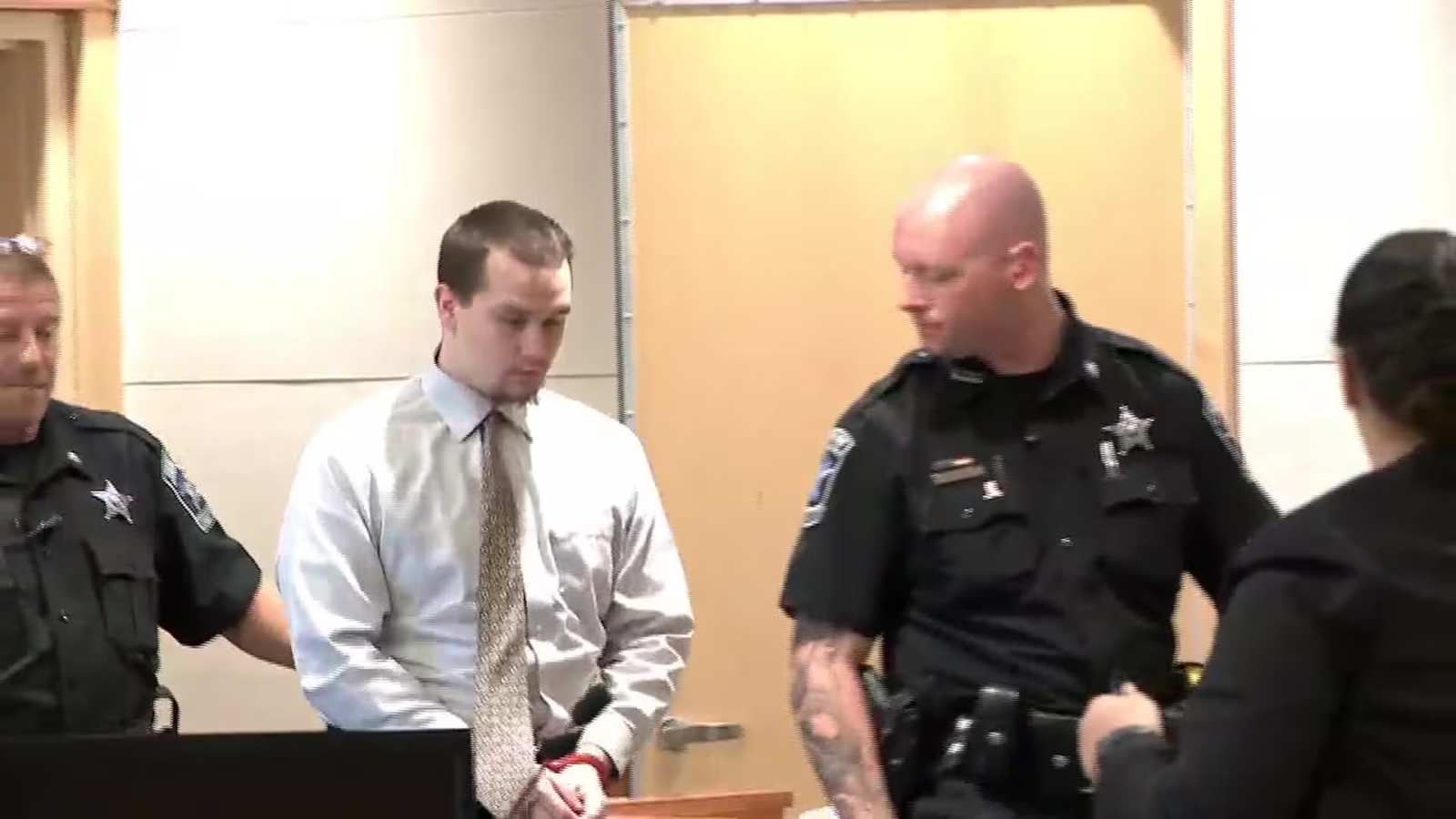
In a packed Merrimack County Superior Court in Concord, New Hampshire, on October 3, 2025, 19-year-old Eric Sweeney was sentenced to 60 years to life in prison for the 2022 murders of his sister-in-law and two young nephews. While the judge imposed a term that offers a slim chance of parole after five decades, prosecutors had sought a minimum of 97 years behind bars, emphasizing the premeditated brutality of the killings. The case, which shocked the quiet town of Northfield, underscores the devastating impact of unchecked family tensions and unresolved trauma.
Eric Sweeney, who was 16 at the time of the shootings, pleaded guilty in August to three counts of second-degree murder and one count of falsifying physical evidence, sparing the family a full trial but leaving them to confront the irreplaceable loss in a public hearing filled with raw emotion.
The sentencing capped a three-year legal saga marked by a web of abuse allegations, mental health struggles, and a fabricated cover story that unraveled under forensic scrutiny. As family members delivered heart-wrenching impact statements, the courtroom echoed with accusations of betrayal and pleas for accountability. Judge John Kissinger described the crimes as “savagely” executed, noting Sweeney’s lack of provocation or remorse in gunning down his victims in their own home.
The Horrific Crime in Northfield
On the morning of August 3, 2022, in a modest ranch-style home on Wethersfield Drive in Northfield, a routine family day turned into unimaginable horror. Kassandra Sweeney, a 25-year-old stay-at-home mother known for her warmth and devotion to her family, spent her final moments capturing joyful videos of her sons on her smartphone. The clips, later recovered by investigators, showed 4-year-old Benjamin in a dinosaur costume hood, giggling with his 23-month-old brother Mason as they watched a groundhog outside and waved to their absent father. “I hope these make you laugh,” Kassandra texted her husband, Sean Sweeney, just minutes before the unthinkable occurred.
Eric Sweeney, Sean’s younger brother and a resident in the home since age 13, emerged from the basement armed with a Taurus .40-caliber pistol he had retrieved from a locked safe in the master bedroom. Without warning or apparent motive, he fired six shots, striking each victim once in the head. Benjamin’s dinosaur hood bore the fatal entry wound, a chilling detail that prosecutors later highlighted as evidence of the close-range execution. The family dogs, Moose and Daisy, remained silent throughout, contradicting any notion of an intruder. Eric Sweeney then fled the scene in the family’s Ford F-150 truck, discarding the weapon in the median of Interstate 93 southbound, three exits from the home.
What followed was a calculated deception. Using Kassandra’s phone, Eric Sweeney texted “Help” to Sean, who was at work, and then called him, claiming he had heard a “loud deep male voice” and “pops” from the basement. He described discovering the bodies after a supposed break-in, prompting Sean to dial 911 in panic: “My brother just called me from my wife’s phone and said someone had broken in and killed them all.” The brothers met near the home; Sean rushed inside to find his family lifeless on the floor, while Eric lingered by the truck at the driveway’s end. First responders arrived to a scene devoid of forced entry—no shattered windows, no disturbed locks, no unfamiliar footprints.
Investigators quickly pierced the facade. Surveillance footage from a neighbor’s camera captured no suspicious vehicles on the dead-end street that morning. Gunshot residue on the truck’s steering wheel implicated Eric Sweeney, as Sean confirmed he hadn’t fired his firearms in years. Cellphone data traced Kassandra’s device to the pistol’s discard site. The safe’s keys—one in the bedroom, one in the truck—further tied him to the weapon. Autopsies confirmed the victims died from single gunshot wounds to the head, with no defensive injuries, underscoring the suddenness of the attack. Northfield Police Chief William Johnson called it “a profound tragedy within a family,” as the community reeled from the loss of a vibrant young mother and her innocent boys.
Read : Yemen’s Houthis Fire Palestine named Ballistic Missile Towards Israel’s Eilat
The absence of a clear motive fueled speculation, but court documents revealed simmering household tensions. In the months prior, police had responded twice to the home: once when Eric left without permission, and again over concerning statements he made. Sean and Kassandra, both in their early 20s with full-time jobs and no childcare, had petitioned to end their guardianship of Eric in March 2022, citing escalating conflicts. The court denied the request, leaving the family to navigate the strain amid Eric’s behavioral issues, including binge eating, tool destruction, and running away. Just weeks before the murders, Eric had been discharged from Hampstead Hospital after a mental health crisis.
From Arrest to Guilty Plea
Eric Sweeney’s early life was a stark contrast to the stability he briefly found with Sean and Kassandra. Born to Heidi Sweeney, an addicted mother prone to incarceration, Eric endured years of neglect and abuse in unstable Florida apartments. Defense filings detailed a childhood of sleeping on urine-soaked floors beside his mother’s abusive boyfriends, begging strangers for food at age 6, and fearing that holiday gifts would be pawned for drugs. Physical beatings, sexual assault at age 4, and chronic malnutrition scarred his development, as outlined in a psychologist’s report: “Persistent neglect changes how a child’s brain develops.”
At 13, after multiple failed interventions, Sean and Kassandra successfully petitioned for guardianship in 2019, relocating Eric to Northfield. The transition, while offering structure, disrupted his therapy and schooling, exacerbating defiance. Despite five weekly appointments from three agencies—Waypoint, Genesis, and another—Eric’s aggression persisted. Homemade weapons, like wood scraps with nails, appeared around the house, and Kassandra noted his deepening depression in late July 2022. Yet, days before the killings, he told a counselor he felt grateful for the family’s support, enjoying time with his nephews.
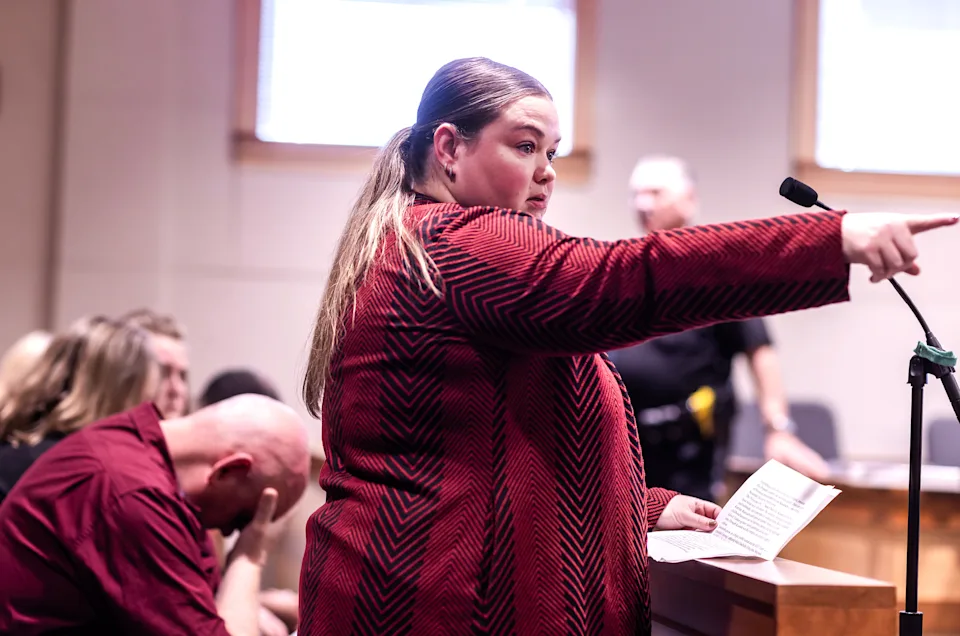
Arrested hours after the murders, Eric Sweeney stuck to his intruder story for three years, even as evidence mounted. Indicted in 2023 on three first-degree murder charges, he faced life without parole if convicted. But on August 15, 2025, in a stark courtroom moment, the shackled teen entered a “naked” guilty plea—no deal attached—to three counts of reckless second-degree murder and falsifying evidence. Assistant Attorney General Bethany Durand recited the facts impassively: the shots, the lies, the residue. Sweeney, dressed in a tie and slacks, affirmed his guilt in a steady voice, eyes fixed ahead as relatives wept.
The plea avoided a jury trial but preserved maximum penalties: life per count. Defense attorney Laura Prusiner argued the reduced charges reflected Eric’s impulsivity, not premeditation, rooted in trauma. Prosecutors, however, saw calculation in the cover-up. Sentencing was set for October 3 before Judge Kissinger, giving both sides time to submit memos. The defense’s 20-page filing painted Eric as a survivor turned perpetrator, while the state demanded consecutive terms totaling 115 years, far exceeding the 97-year minimum some reports cited as their floor. This phase exposed the family’s fractured bonds: Sean’s guardianship had been an act of mercy, yet it ended in bloodshed.
Sentencing Hearing: Grief, Arguments, and Justice Served
The October 3 hearing unfolded over three hours in a courtroom swollen with over 50 attendees, many wearing buttons bearing the victims’ photos. Eleven speakers delivered impact statements, their voices trembling with a mix of sorrow and fury. Kerri Carr, Kassandra’s close friend, stared at Eric Sweeney and branded him “psychopath, murderer, liar, worthless.” “No amount of prison time can rehabilitate these acts,” she said. “Nothing can undo it. Age doesn’t matter. A murderer is a murderer.”
Peg Sweeney, great-grandmother to the boys and Eric’s former “Gram,” recounted teaching him to fish at age 5, embracing him fully despite his half-brother status. Her tone turned icy: “You murdered my genealogy, the future generations of my family. You no longer deserve to carry this Sweeney name.” She vowed never to visit or write, leaving him isolated. Jeff Sweeney, a great-uncle, echoed: “You may have once shared our last name, but you are not a Sweeney.” Kristen Southwick, Kassandra’s mother, described an “unbearable void” of lost texts and hugs: “Eric, you are a coward who stood behind a gun after everything we did for you. This is how you repay us?” Sean, absent, had “nothing to say,” per prosecutors. The room filled with tales of Kassandra’s kindness and the boys’ laughter, now silenced forever.
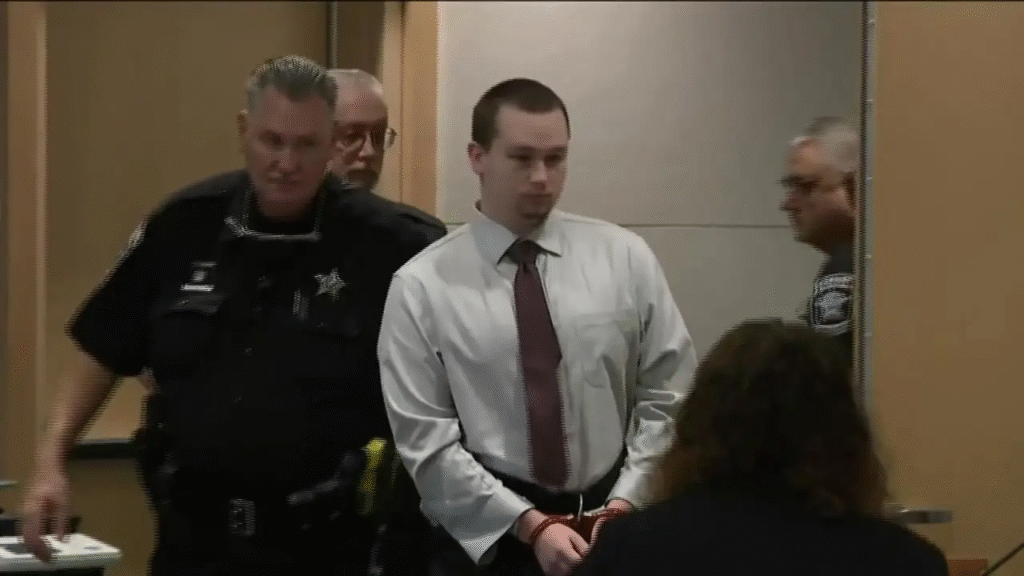
Prosecutor Durand urged 115 years: 35-to-life for Kassandra, 40-to-life each for the boys. “He shot her in the face after she watched her babies die,” she said. “He demonstrated hatred. His killings were unprovoked and senseless.” She requested no profiteering from the case—books, films barred—and no contact with Sean’s family, though Eric’s mother could continue sporadic visits.
Defense counsel Prusiner countered with trauma’s toll: spoiled meals, abuse, a brain rewired by neglect. “Eric Sweeney is not a monster. He committed a monstrous crime. He is still a human being.” Psychologist Laurie Guidry linked his behaviors to survival instincts clashing with normalcy. Tutor Paul Golassa noted his prison politeness: “He wants to be a model prisoner.” Co-counsel Morgan Taggart-Hampton sought 40-to-life, arguing harsher terms crush rehabilitation hopes.
Judge Kissinger, balancing youth against savagery, imposed 60 years to life. “The defendant… savagely slaughtered each of them,” he intoned, “leaving their bodies on the floor of the home they welcomed him into.” The sentence suspends six years for milestones—GED, vocational training, good conduct—yielding parole eligibility at 70, a “very tight but narrow path” to redemption. Eric Sweeney, motionless in chains, showed no reaction as the gavel fell. The ruling, while short of prosecutors’ 97-year demand, ensures decades of reckoning, as New Hampshire grapples with juvenile justice in the face of irreparable family devastation.