
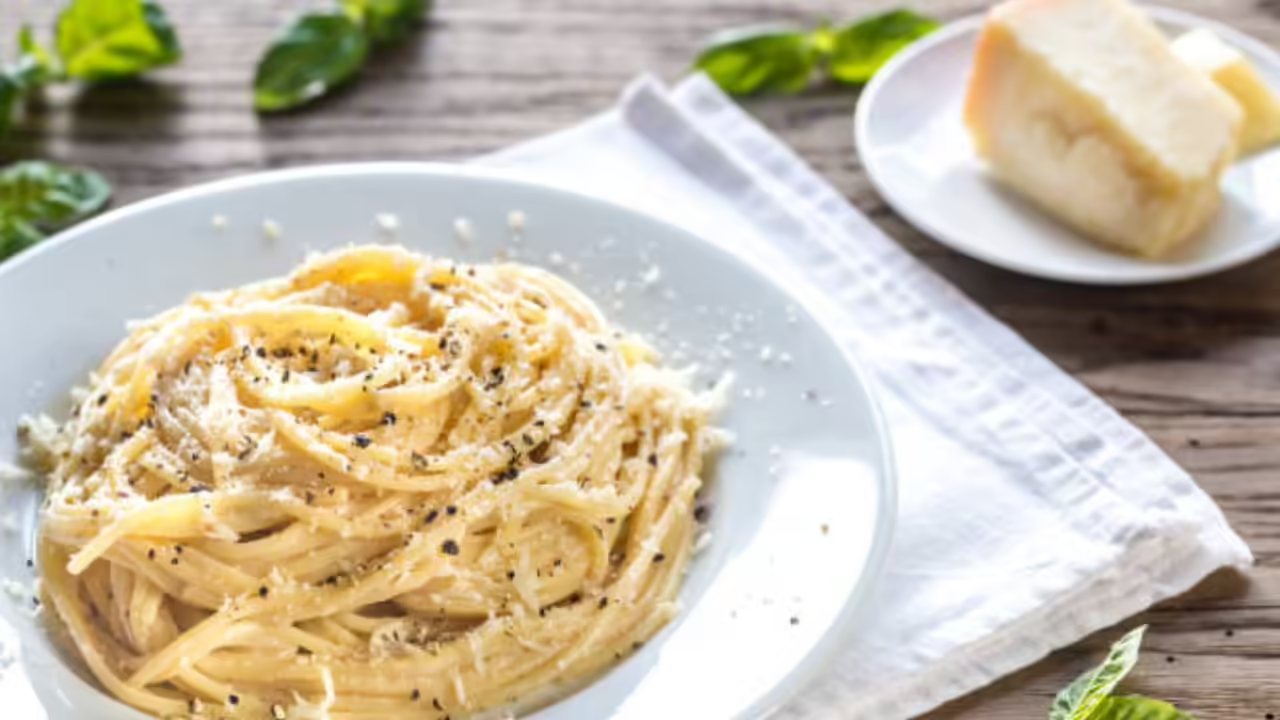
In a delightful blend of culinary tradition and cutting-edge physics, an international team of researchers, spearheaded by Italian physicist Fabrizio Olmeda, has been awarded the 2025 Ig Nobel Prize in Physics. The prestigious yet whimsical honor, presented on September 18 at Harvard University’s Sanders Theatre in Boston, recognizes their groundbreaking study on the “Phase Behavior of Cacio e Pepe Sauce,” published earlier this year in Physics of Fluids.
What began as a personal kitchen frustration for Olmeda has blossomed into a scientific revelation that explains why this iconic Italian pasta dish—simple in ingredients yet notoriously finicky—often ends up as a clumpy disaster rather than a creamy masterpiece. The Ig Nobel Prizes, which celebrate achievements that “first make people laugh, and then make them think,” couldn’t have found a more fitting recipient this year. As the world grapples with everything from quantum computing to climate models, it’s refreshing to see scientists turn their gaze to something as universally relatable as pasta sauce.
The team’s work demystifies the delicate balance required to emulsify Pecorino Romano cheese with starchy pasta water and a generous grind of black pepper, transforming what could be a gritty mess into a velvety coating that clings perfectly to al dente spaghetti. Fabrizio Olmeda, a postdoctoral researcher at the Institute of Science and Technology Austria (ISTA) in Klosterneuburg, led the charge after repeated failures in his own attempts to replicate the dish’s legendary silkiness.
“Cacio e pepe is one of Italy’s most beloved pasta dishes,” Olmeda explained in a statement following the ceremony, “but even seasoned Italian cooks—and scientists—struggle with it. I decided to stop guessing and start calculating.” This approach not only yielded a foolproof recipe but also uncovered universal principles of phase transitions in complex fluids, with potential applications far beyond the dinner table. As news of the win spreads, it’s sparking conversations about how everyday curiosities can fuel serious innovation, reminding us that science thrives on passion, not just protocols.
From Kitchen Fiasco to Scientific Breakthrough
The story behind this Ig Nobel triumph is as charming as the sauce itself. Cacio e pepe, whose name literally translates to “cheese and pepper,” traces its roots to ancient Roman shepherds who sustained themselves with easily transportable staples: hard Pecorino cheese, black peppercorns, and dried pasta. Over centuries, it evolved into a Roman staple, celebrated for its minimalist elegance—just three ingredients that demand masterful technique to avoid separation or clumping.
Yet, for all its fame in trattorias from Trastevere to Testaccio, home cooks worldwide, including Fabrizio Olmeda, have faced the same heartbreak: a sauce that starts promisingly but curdles into an unappetizing grainy sludge under the heat. Frustrated by trial-and-error sessions that wasted too many evenings, Olmeda channeled his expertise in statistical physics and complex systems. Working at ISTA, where he typically explores topics like single-cell genomics and protein aggregation, he saw parallels between biological phase behaviors and the culinary conundrum.
“Why does the cheese bind smoothly one night but seize up the next?” he pondered. Rallying a dream team of collaborators, Olmeda assembled a multinational squad that included fellow Italians Giacomo Bartolucci, Matteo Ciarchi, Alberto Corticelli, and Ivan Di Terlizzi, alongside Daniel Maria Busiello and Davide Revignas from the University of Padova and Max Planck Institute for the Physics of Complex Systems in Dresden, Germany; Vincenzo Maria Schimmenti from the Max Planck Institute; and Giacomo Bartolucci from the University of Barcelona in Spain. This diverse group, bound by shared Italian heritage and a love for pasta, turned their lab into a makeshift cucina.
Read : 45-Year-Old Robert Cherone Crushed to Death by Robotic Machine at Palermo’s Pizza
Their research kicked off in late 2024, blending experimental cooking with rigorous modeling. They boiled tonnarelli or spaghetti in salted water, reserving the cloudy starch-laden liquid that serves as the sauce’s backbone. Grated Pecorino—a sharp, sheep’s-milk cheese—was slowly incorporated off the heat, with pepper added for its subtle thickening power. But the magic, they discovered, lay in the interplay of temperature, starch concentration, and agitation. Using high-speed imaging and rheological analysis—tools more common in studying lava flows than linguine—the team quantified how starch molecules from the pasta act as stabilizers, preventing the cheese proteins from coagulating prematurely. “It’s a classic emulsion problem,” Olmeda noted.
Read : Top Ten Most Consumed Seafood Around the World
“The starch creates a network that traps fat globules from the cheese, mimicking how colloids behave in industrial processes.” What emerged wasn’t just a better recipe but a peer-reviewed paper that mapped the sauce’s “phase diagram,” delineating safe zones for creaminess versus catastrophe. This breakthrough, born from personal pique, exemplifies how serendipity in science often simmers slowly before it boils over into brilliance.
Unraveling the Physics: Starch, Cheese, and the Art of Emulsion
At its core, the team’s Ig Nobel-winning discovery hinges on the physics of non-equilibrium phase transitions—a fancy way of saying how ingredients shift states under stress, like heat and stirring. Pecorino Romano, with its high protein and fat content, is prone to “breaking” when exposed to hot water, forming clumps as caseins denature and aggregate. This is the dreaded “seizure” that ruins countless cacio e pepe attempts. Enter pasta water: laden with amylose and amylopectin starches released during boiling, it forms a viscous gel that coats the cheese particles, delaying aggregation and promoting a homogeneous emulsion.
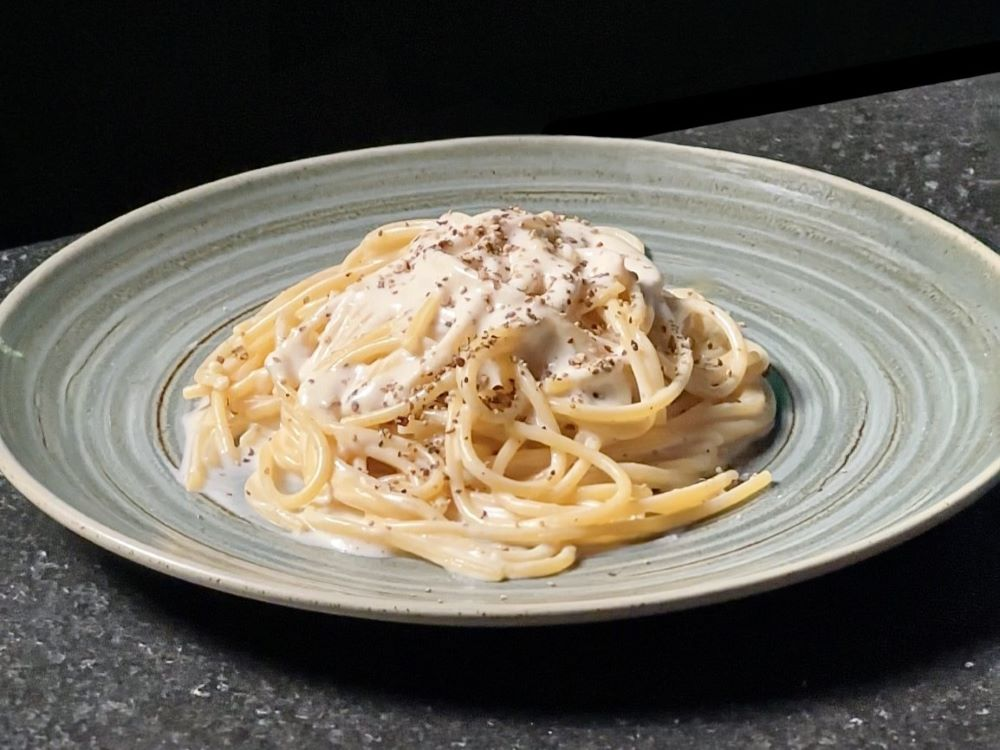
The researchers modeled this using equations from soft matter physics, treating the sauce as a complex fluid akin to paint or blood. They identified critical parameters: an optimal starch concentration of about 0.5-1% by weight, a temperature window of 70-80°C (just off the boil to avoid scorching), and gentle mixing to shear the mixture without over-agitating. “Pepper isn’t just flavor,” Ciarchi elaborated in interviews. “Its coarse grains provide nucleation sites for starch crystallization, enhancing stability.”
Through simulations and bench tests—complete with pH measurements and viscosity curves—they plotted a phase diagram showing how exceeding 85°C triggers irreversible clumping, while insufficient starch leads to a watery separation. This isn’t mere food hackery; it’s foundational science with broader ripples. The principles mirror protein folding in cells, where misaggregation causes diseases like Alzheimer’s, or emulsion stability in pharmaceuticals and cosmetics.
Busiello, a statistical physicist on the team, highlighted the interdisciplinary appeal: “Our work bridges kitchen chemistry and theoretical modeling, showing how everyday phenomena obey the same laws as exotic matter.” For aspiring chefs, the takeaways are practical: cook pasta to near-al dente in minimal water to maximize starch release, grate cheese finely for even dispersion, and temper it gradually with reserved liquid. The result? A sauce that clings like silk, pepper’s bite cutting through the richness without overpowering. As Olmeda quipped post-ceremony, “We’ve turned a Roman riddle into a reproducible reality—physics, one forkful at a time.”
A Saucy Celebration: Implications and the Joy of Quirky Science
The 2025 Ig Nobel ceremony, emceed by Nobel laureates and attended by hundreds, buzzed with laughter as the pasta team accepted their prize—a novelty trophy and, rumor has it, a lifetime supply of Pecorino. ISTA President Martin Hetzer beamed with pride, declaring, “A mentor once told me: As long as you’re having fun, you’re doing it right. This award honors that spirit.” Indeed, in an era of grant-chasing drudgery, Olmeda’s project stands as a beacon for curiosity-driven inquiry. It underscores how playfulness can yield profound insights, much like the Ig Nobels’ ethos of humor preceding wisdom.
For Italian cuisine, the win elevates cacio e pepe from folk recipe to scientific icon, potentially inspiring similar probes into other temperamental dishes like carbonara or risotto. Globally, it democratizes science, inviting home cooks to experiment with variables—perhaps tweaking for vegan alternatives using nutritional yeast and cornstarch analogs. The paper’s open-access publication ensures its legacy, already downloaded thousands of times by foodies and physicists alike.
As the team reflects, Olmeda emphasizes the human element: “Science shouldn’t be confined to labs; it should explain the world we taste and touch.” In a year marked by heavy headlines, this saucy saga offers levity and learning—a reminder that even the simplest pleasures hide elegant equations. Whether you’re a Roman traditionalist or a curious experimenter, the perfect cacio e pepe now feels within reach, thanks to a team that proved pasta can be as intellectually satisfying as it is indulgent. Buon appetito—and bravo to the physicists who made it so.