
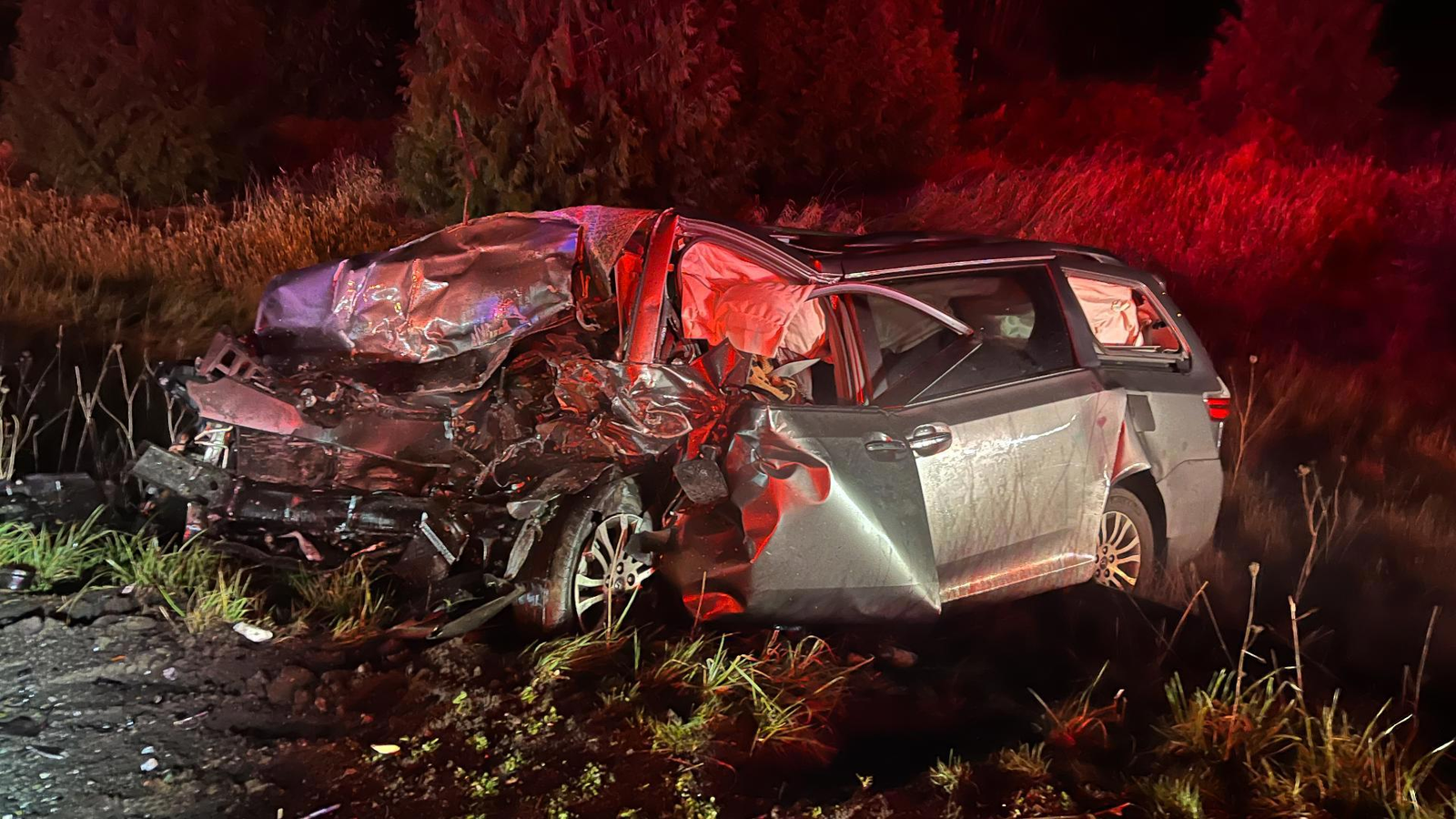
The family of Tu Lam, a 55-year-old Monroe woman who tragically lost her life in a head-on collision on U.S. 2 in 2024, has filed a $50 million wrongful death lawsuit against the Washington State Department of Transportation (WSDOT). The complaint, filed on November 24 in Snohomish County Superior Court, alleges that WSDOT failed to address known hazards along a stretch of the highway, contributing directly to Lam’s death.
According to the lawsuit, the department was aware of a history of serious collisions on U.S. 2 yet did not take sufficient measures to protect drivers from recurring dangers. The lawsuit has drawn attention to ongoing safety concerns along the high-speed, undivided highway and raises questions about infrastructure planning, risk assessment, and the effectiveness of existing road safety measures.
Details of the Collision and the Incident on U.S. 2
On the evening of February 21, 2024, around 6:30 p.m., a fatal crash occurred on U.S. 2 near Three Lakes Road. According to the Washington State Patrol, a Snohomish man driving a Toyota Highlander westbound crossed the center line and collided head-on with a Toyota Sienna traveling eastbound. The driver of the Sienna, Tu Lam, was pronounced dead at the scene by first responders. Investigators were examining the westbound driver on suspicion of driving under the influence. The crash forced a five-hour closure of U.S. 2, disrupting traffic and drawing attention to the dangers of the highway.
The lawsuit highlights that Lam’s death did not occur in isolation but was part of a pattern of deadly collisions on this stretch of U.S. 2. Data cited in the complaint from 2011 to 2015 show 11 fatal or serious cross-center line crashes between mileposts 3.8 and 12.85. Lam’s fatal crash occurred near milepost 6.7, a section that the complaint alleges was known to be particularly dangerous.
Read : Israelis Sue UN Agency for $1 Billion Over Aiding, Abetting October 7 Hamas Attack
WSDOT was reportedly aware of three prior fatalities within a one-mile segment between mileposts 6 and 7—one in 2015 and two in 2018—before Lam’s collision, emphasizing the recurring nature of deadly accidents along this corridor. The complaint asserts that despite recognition of these risks, the department’s safety measures were inadequate. The family argues that this lack of sufficient action directly contributed to Lam’s death and that WSDOT neglected its responsibility to provide a safe roadway for drivers.
Allegations of Negligence and Roadway Safety Failures
Central to the lawsuit is the claim that WSDOT acted negligently by failing to implement effective safety measures despite acknowledging the dangers along U.S. 2. Legislative earmarks were established to fund safety improvements, and in 2017, the department prepared a report highlighting the frequency and severity of cross-center line crashes on the highway. The report stated that “additional cross-centerline crashes that did not result in fatality or serious injury provide evidence that this manner of collision occurs frequently on this high-speed undivided facility.”
The report recommended improvements to mitigate risks, particularly the installation of a concrete median barrier to prevent head-on collisions. However, the lawsuit alleges that WSDOT only installed a concrete barrier between mileposts 3.8 and 5.85 and opted for a six-foot median buffer between mileposts 5.85 and 12.85.

This decision left the one-mile segment where Lam’s crash occurred without the more robust protection of a concrete barrier. Court documents suggest that the choice of a median buffer instead of a concrete barrier was made arbitrarily, without adequately weighing the risks and benefits. The 2017 crash analysis report itself acknowledged that the median buffer would not be as effective in preventing cross-center line collisions as a concrete barrier but suggested that the low-cost measure would provide insights into its impact on safety.
The lawsuit further alleges that WSDOT failed to maintain adequate signage and lighting along this stretch of U.S. 2. Plaintiffs argue that reducing the planned median width from six feet to four feet, combined with insufficient lighting and warning signs, contributed to the hazardous conditions that ultimately led to Lam’s death. The complaint contends that these lapses constitute a clear breach of the department’s duty to protect drivers, amounting to negligence in roadway design and management.
The family’s legal action emphasizes that these were not unforeseen circumstances but known risks that WSDOT had the resources and authority to address. By neglecting to implement the most effective safety solutions, the department allegedly allowed dangerous conditions to persist, creating a preventable threat to drivers like Lam. The lawsuit requests judgment against WSDOT, seeking special and general damages, legal costs, attorney’s fees, prejudgment interest, and any additional relief deemed appropriate by the court.
Response from WSDOT and Broader Safety Implications
Barbara LaBoe, a spokesperson for WSDOT, acknowledged the lawsuit in a statement to The Daily Herald, noting that the agency could not comment further due to pending litigation. She emphasized the department’s ongoing commitment to improving roadway safety, stating that “WSDOT continues to work with communities and partners toward our state’s Target Zero goals. Any death on a roadway is one too many.”
The Target Zero initiative is Washington State’s comprehensive strategy to reduce traffic fatalities and serious injuries on roadways. Despite this commitment, the Lam family’s lawsuit raises questions about the effectiveness of safety planning and the prioritization of resources on high-risk corridors. The legal action highlights the tension between budget-conscious measures, such as median buffers, and the need for proven safety interventions, such as concrete barriers, which can prevent catastrophic collisions.

The case also sheds light on a broader issue: the responsibility of state agencies to act proactively in response to recurring hazards. According to the complaint, WSDOT had documented multiple fatalities along the same segment of U.S. 2 prior to Lam’s death and had the authority and funding to make significant safety improvements. Yet the department’s decisions, the lawsuit alleges, left drivers exposed to preventable dangers. The outcome of this legal action could have far-reaching implications, potentially influencing how state agencies approach roadway safety, hazard mitigation, and accountability in future incidents.
The lawsuit underscores the human toll of roadway design decisions. Each cross-center line collision cited in court documents represents not only a statistical fatality but a family affected by loss, communities disrupted, and questions about preventable harm. Lam’s family is seeking accountability, emphasizing that her death might have been avoided if the recommended safety measures had been fully implemented.
As the case proceeds in Snohomish County Superior Court, attention will focus on whether WSDOT’s decisions regarding median barriers, roadway buffers, and safety signage were reasonable given the documented risks. The litigation may also prompt a renewed examination of U.S. 2 and other high-risk roadways across the state, potentially leading to more stringent safety standards and interventions aimed at preventing future tragedies.
The lawsuit also raises public awareness of how infrastructure and policy decisions can directly impact driver safety. While traffic accidents can be influenced by individual driver behavior, including potential DUI involvement as in this case, the lawsuit highlights that systemic factors—roadway design, signage, lighting, and barriers—play a critical role in preventing fatalities. Lam’s death serves as a tragic reminder that investment in road safety measures can save lives and reduce the occurrence of catastrophic accidents on high-speed roads.
In conclusion, the $50 million wrongful death lawsuit filed by Tu Lam’s family seeks to hold WSDOT accountable for alleged negligence in addressing known dangers along U.S. 2. The case centers on the department’s decision-making regarding median barriers, roadway buffers, signage, and lighting, emphasizing the preventable nature of Lam’s death.
Beyond the personal loss, the lawsuit highlights broader concerns about road safety, infrastructure planning, and the responsibilities of state agencies to protect the public. As the legal proceedings unfold, the case may influence not only the outcome for Lam’s family but also future policies aimed at reducing fatalities and serious injuries on Washington State roadways.