
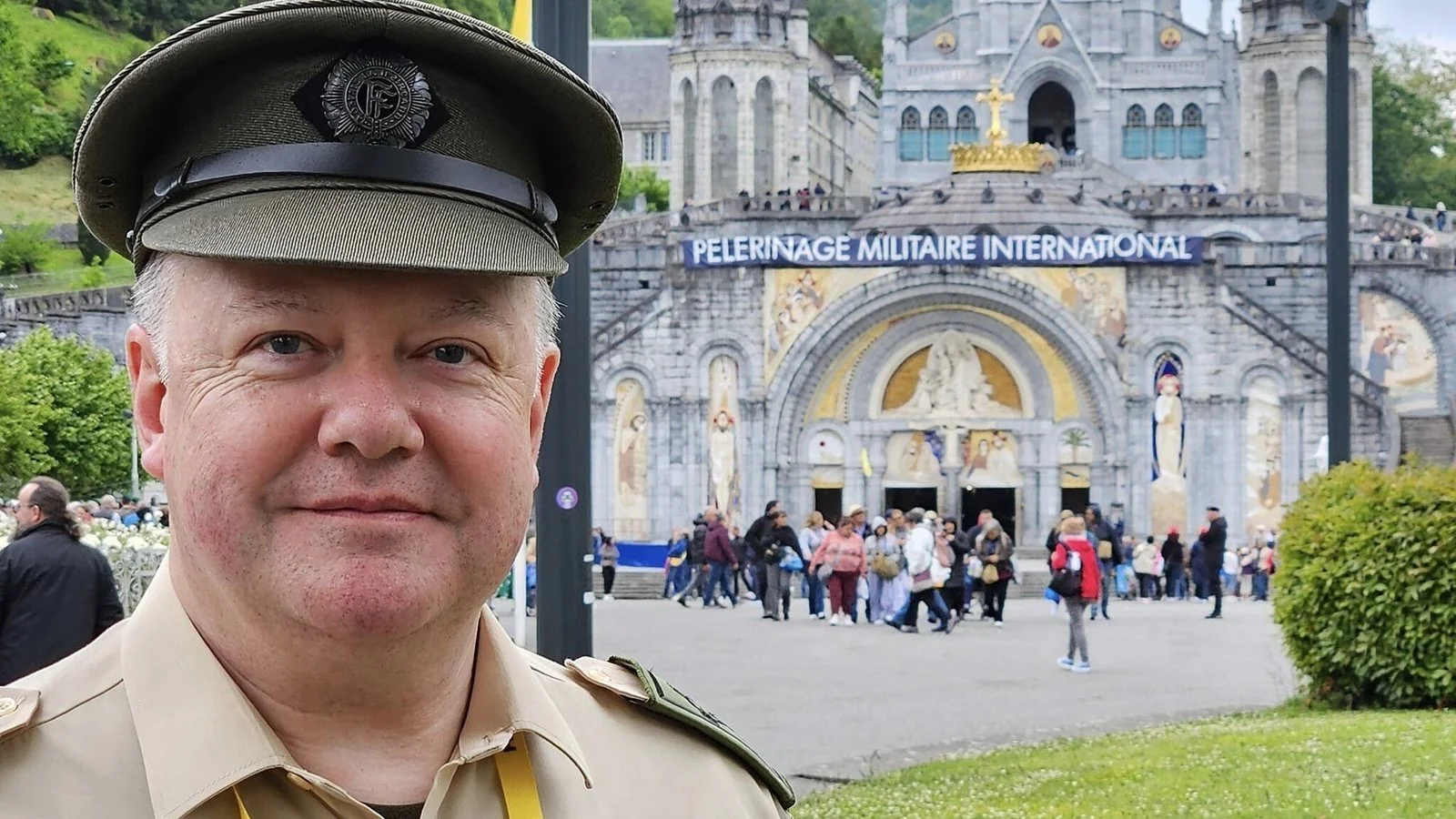
The violent stabbing of Father Paul Murphy at Renmore Barracks in Galway in August 2023 shocked the nation. A dedicated army chaplain and long-serving member of the Irish Defence Forces, Fr Murphy was ambushed by a 16-year-old boy wielding a hunting knife, in an attack later deemed to be motivated by radical ideology.
Despite enduring seven stab wounds, and being left with lasting physical and emotional scars, Fr Murphy extended a gesture of extraordinary grace and humanity — hugging the teenage boy who tried to kill him during a dramatic courtroom appearance nearly a year later.
This act of forgiveness, powerful and deeply spiritual, left a profound mark on all who witnessed it and redefined the concept of compassion in the face of violence.
A Night of Terror at Renmore Barracks
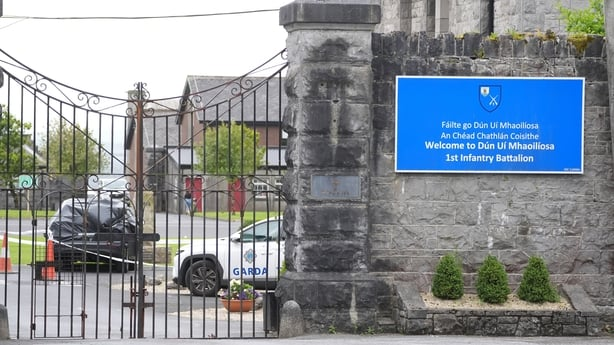
It was around 10:35 p.m. on August 15, 2023, when Father Paul Murphy, returning to Renmore Barracks in Galway, encountered the unexpected horror that would nearly claim his life. As he arrived at the gate in his car, a young teenager approached him, asking, “Excuse me sir, do you have a minute to talk to me?” Moments later, without any warning, the boy lunged at him with a serrated eight-inch hunting knife — an online purchase made months prior.
Fr Paul Murphy’s car was the first vehicle to arrive at the barracks gate that night, making him the first available target. The teenager, unknown to the priest, had apparently adopted a radicalised Islamist mindset and told police officers following the attack that his motivation was “in protest of the Irish Defence Forces and their work in Mali and all the stuff for Islam.”
The act, it would later be confirmed, was not targeted at Fr Paul Murphy personally but was intended as a broader statement of aggression against the military.
The priest desperately tried to escape, driving his vehicle through the barrack gates with the boy still stabbing at him through the window. CCTV footage showed the attacker hanging onto the car, relentlessly stabbing Fr Murphy, who sustained multiple wounds, particularly to his arms.
Read : Indian-Origin Priest of Saints Peter and Paul Catholic Church Shot Dead in Kansas
The Defence Forces quickly responded, firing warning shots and subduing the teenager. Fr Murphy was rushed to medical care, with blood pouring from his injuries and significant damage done to his arms and hands.
Read : Japan’s Top Ten Weird Traditions You Will Be Shocked To Know
During the investigation, authorities discovered disturbing materials at the boy’s home — IS propaganda, an IS flag, Arabic writings, and a notebook filled with violent drawings, including images of beheadings. He had consumed extensive extremist content online, including videos associated with Mohammed Emwazi, better known as “Jihadi John.”
The boy had converted to Islam at the age of 15 and frequently attended Friday prayers. His rapid radicalisation, aided by online networks, was attributed in part to psychological vulnerabilities, including a diagnosis of autism spectrum disorder and the emotional turmoil stemming from his parents’ separation.
Forgiveness in the Face of Violence
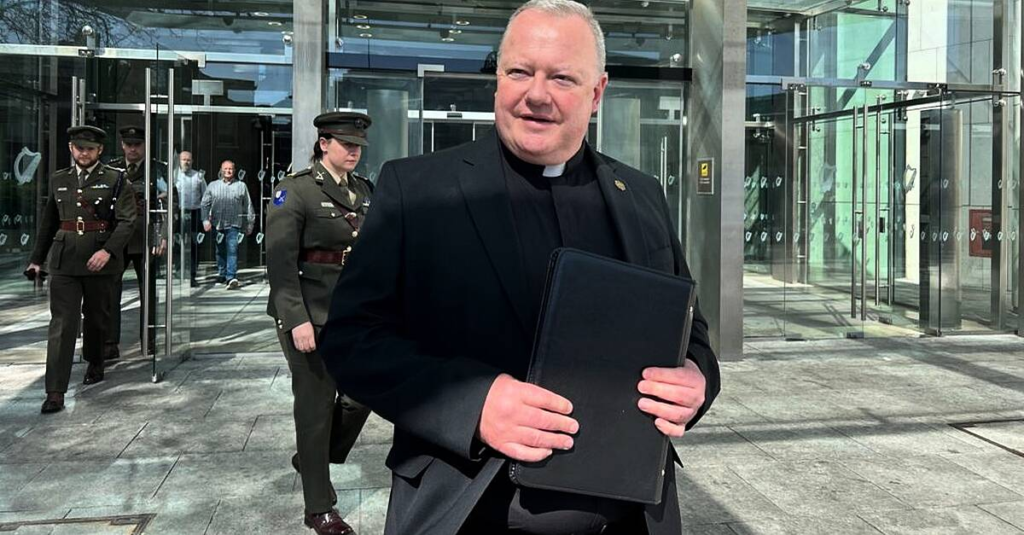
What followed in the courtroom months later was something few expected — a profound act of forgiveness from the victim. During the sentencing hearing at the Central Criminal Court in Dublin, Fr Paul Murphy delivered a moving victim impact statement that left both the audience and legal professionals visibly emotional.
He recounted in vivid detail the attack, referring to every “gory detail” being etched in his memory. Yet, he described the night not with anger or hatred, but with a sense of purpose and grace.
“If it wasn’t me it would have been someone else,” he said, adding that he believed he was “the right person, in the right place, at the right time.” He even went so far as to call the night “filled with blessings.”
Fr Paul Murphy expressed profound gratitude that it was he who suffered the assault and not one of his Defence Forces comrades. “I thank God every single day that the knife tore through my skin, and not through the body of one of my comrades,” he said. “I consider it an honour and a privilege to carry those scars until my dying day.”
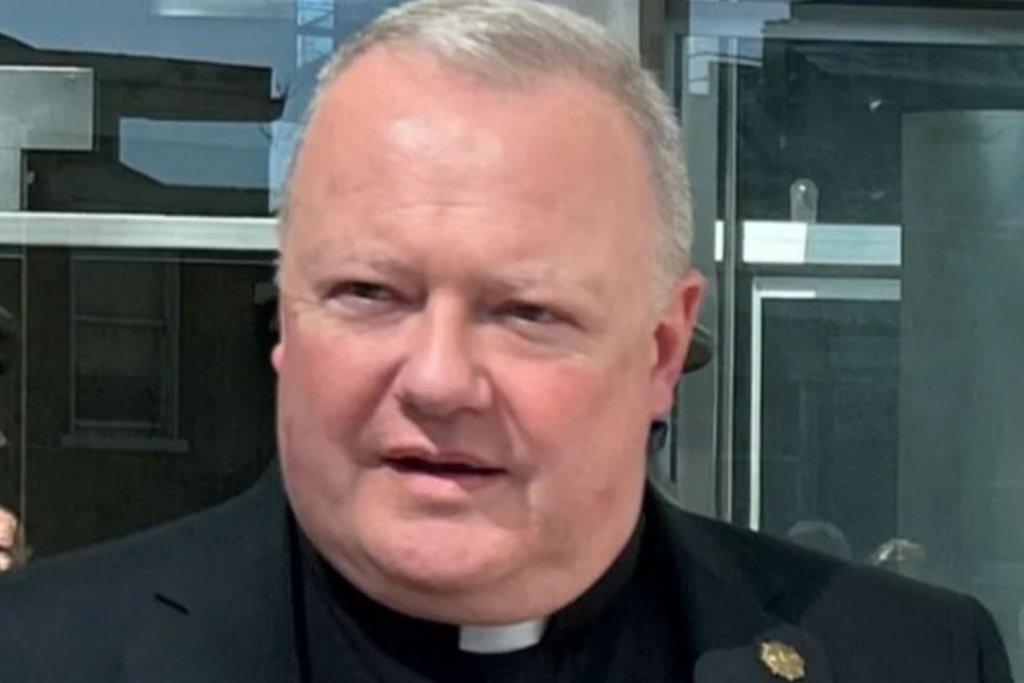
Turning directly to the teenage attacker, Fr Murphy addressed him not as a villain but as a human being capable of redemption. “As a man of faith, I am in the business of forgiveness,” he said. “I offer to you, the young man standing accused before me, the forgiveness that will hopefully help you to become a better person.”
He encouraged the boy to use the resources at his disposal, in prison or later in life, to find a path of goodness. “Life is for living and for loving,” Fr Murphy said. “Your life will find its ultimate joy when you live honourably and love generously.”
In a dramatic and heartfelt gesture, Fr Murphy then approached the young man, shook his hand, and embraced him — an act that symbolised hope, grace, and the possibility of transformation, even in the darkest of situations. The boy, clearly affected, responded with a simple yet powerful apology: “I’m sorry.”
The Long Road to Healing and Redemption
While Fr Paul Murphy has publicly extended forgiveness, the consequences of the attack remain a daily reality for him. He now lives with permanent scarring and reduced mobility in one hand, impairing his ability to carry out certain physical tasks. He also suffers from a psychological toll, including heightened vigilance and a lingering fear of future attacks.
Though he does not feel personally vulnerable due to the non-targeted nature of the assault, he has acknowledged the painful truth: “Sometimes, when one man fails in a mission, another takes up the mantle.” As such, a sense of caution shadows his recovery.
Fr Paul Murphy continues to receive counselling and spiritual support from a fellow priest who is also a psychotherapist. Despite his challenges, he has not retreated from his commitment to the Defence Forces. In fact, he is scheduled to begin his sixth overseas deployment soon, building upon his years of service in conflict zones like Syria and Lebanon.
As for the boy, he has been held at the Oberstown child detention centre and is scheduled to be sentenced on April 29. His defence team presented a complex picture of a teenager struggling with multiple stressors — family breakdown, social isolation, a diagnosis on the autism spectrum, and exposure to extremist ideologies online.
While these do not excuse his actions, his lawyers argued that they should be weighed when considering an appropriate sentence. They pointed to his remorse, his cooperation with authorities, and the fact that he was previously unknown to police. The defence urged the court to consider his youth and capacity for rehabilitation.
Throughout the proceedings, the teenager’s parents have stood by him, attending court and providing emotional support. His mother was seen comforting him during Fr Murphy’s address, reinforcing the fact that the boy is not beyond redemption but rather at a crossroads in his life.
Judge Paul McDermott has postponed sentencing until the end of April, taking time to consider psychological assessments, probation reports, and submissions from both the prosecution and defence. The final decision will weigh not only the severity of the crime but also the hope for rehabilitation — a hope eloquently embodied by Fr Murphy himself.
Fr Paul Murphy’s response to a near-fatal attack — his gratitude, his perspective, and his forgiveness — has transformed a tragic event into a lesson in compassion. His actions challenge society to consider the power of mercy, even in the face of violence, and the importance of seeing humanity in those who stray from the path. This extraordinary case has left an indelible mark, not just on those involved, but on the conscience of a nation.