

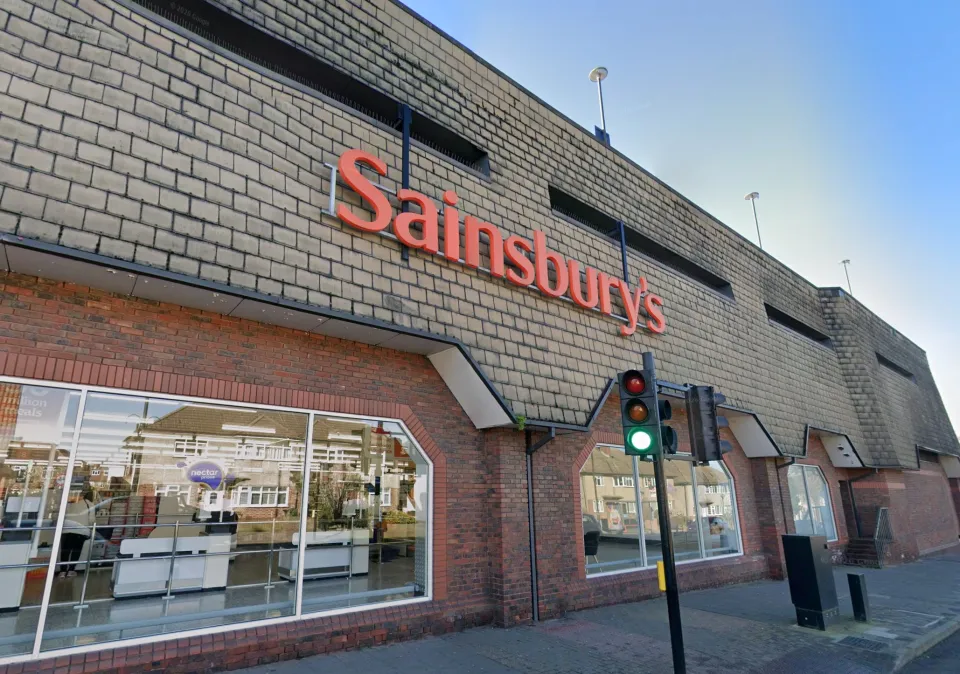
Gary MacArthur, a longtime supermarket employee from southeast London, has become the center of a heated debate in the United Kingdom over retail crime, worker safety, and how far employees should go when confronting suspected thieves. The 34-year-old former Sainsbury’s worker was dismissed after physically restraining a repeat shoplifter accused of stealing expensive Champagne and threatening staff inside a store in West Wickham. What made the incident even more controversial was the fact that MacArthur had reportedly spent part of the same day helping save the life of a security guard who suffered a stroke while on duty.
The case quickly attracted widespread attention after details emerged about MacArthur’s 15 years of service at Sainsbury’s and his repeated experiences dealing with aggressive theft incidents inside the supermarket. Many members of the public viewed him as a worker attempting to protect colleagues and customers in a dangerous situation, while others pointed out that major supermarket chains have strict rules designed to prevent staff from risking injury by physically confronting offenders.
The story has also highlighted the growing crisis facing retailers across Britain, where incidents of shoplifting and violence against workers have sharply increased in recent years. Employees in supermarkets, convenience stores, and retail chains are increasingly finding themselves caught between company safety policies and the realities of dealing with aggressive offenders on shop floors.
Gary MacArthur’s Long Career at Sainsbury’s
Before becoming the subject of national headlines, Gary MacArthur had spent more than a decade working for Sainsbury’s at its West Wickham branch in southeast London. According to reports, he had built a reputation as a dependable employee who regularly stepped in during difficult situations involving theft and disorder inside the store. On the day of the incident in December 2025, MacArthur was reportedly not even scheduled to remain at work beyond his shift. However, he chose to stay longer after the store’s security guard suddenly became seriously ill.
MacArthur later explained that the guard appeared unwell earlier in the afternoon and eventually collapsed on the shop floor after suffering a stroke. MacArthur and another colleague were reportedly among the first people to respond to the medical emergency. They performed CPR and contacted emergency services before the guard was transported to a hospital. The event created a stressful atmosphere inside the store, with staff already shaken by the medical crisis.
Hours later, as MacArthur prepared to leave work around 9 p.m., another emergency unfolded. Staff members reportedly began shouting for help over store communication equipment after a known shoplifter entered the premises. According to MacArthur, the suspect had a reputation for repeatedly targeting expensive alcohol, including bottles of Moët and Bollinger Champagne.
The situation escalated rapidly. MacArthur said he initially escorted the suspect outside the store and discovered a hidden bag containing stolen items in nearby bushes. However, the alleged thief soon returned and allegedly began throwing bottles at staff members, including the store manager. At that point, another customer reportedly intervened to stop the suspect from escaping, while MacArthur restrained him until police officers arrived.
Read : Who is Q’orianka Kilcher, Indigenous Actress Suing James Cameron Over Avatar’s Neytiri Likeness?
The dramatic sequence of events became central to the controversy that followed. Supporters argued that MacArthur acted to protect employees and shoppers from a violent individual, while company officials later concluded that his actions violated workplace policies. The incident was not the first time MacArthur had encountered violence while working in retail. He revealed that he had previously lost teeth after being assaulted by another suspected shoplifter during an earlier confrontation. Despite those experiences, he admitted that he found it difficult to ignore theft and disorder happening directly in front of him.
Read : Ukrainians Treated Better Than Other Refugees: Council of Europe
MacArthur described modern retail crime as more aggressive and organized than ordinary shoplifting. In his view, some offenders no longer act discreetly but instead openly intimidate workers while stealing large quantities of goods. His comments reflected frustrations increasingly shared by retail employees across Britain, many of whom say they feel abandoned while facing rising levels of abuse and violence at work.
Why Sainsbury’s Fired Him After the Incident
Despite the circumstances surrounding the confrontation, Sainsbury’s dismissed MacArthur in March 2026 for gross misconduct. The company later rejected his appeal, maintaining that employees are not expected to physically engage with offenders. According to reports, Sainsbury’s management concluded that MacArthur should have acted only as a “visual deterrent” rather than physically restraining the suspect. The supermarket chain emphasized that employee safety policies exist to reduce the risk of injury to staff, customers, and even suspects during volatile situations.
Large retailers in the United Kingdom have increasingly adopted strict non-confrontation approaches in response to rising incidents of workplace violence. Under many company policies, employees are instructed to observe suspicious behavior, report incidents, and allow trained security personnel or police officers to handle physical interventions. From a corporate perspective, these policies are designed to prevent situations from escalating into serious injuries or legal disputes.
Supermarkets face significant liability risks if staff members or customers are harmed during confrontations. Companies also worry that physical altercations could expose workers to retaliation, lawsuits, or lasting trauma. MacArthur’s dismissal letter reportedly referenced an earlier warning he had received after another incident involving attempted theft in August 2025. That earlier warning may have influenced management’s decision to terminate his employment after the Champagne thief confrontation.
Still, the decision triggered widespread public debate. Many people questioned whether company rules should override what they viewed as an instinctive attempt to protect fellow workers from violence. Others argued that firing an employee after he helped save a colleague’s life and restrained an allegedly dangerous suspect sent the wrong message to frontline workers. The controversy reflects a broader conflict within modern retail environments. Employees are often expected to maintain order and ensure customer safety, yet they are simultaneously instructed not to place themselves in harm’s way.
When chaotic situations erupt inside stores, workers can find themselves making split-second decisions without clear practical alternatives. Retail unions and worker advocacy groups have long warned that retail staff are facing increasing abuse from aggressive shoplifters and disorderly customers. Verbal threats, physical assaults, and intimidation incidents have become more common, especially as organized retail theft operations target supermarkets and large chain stores.
Some critics of current policies argue that workers who intervene in emergencies are later punished for acting decisively under pressure. Others insist that allowing employees to physically confront suspects could lead to even more dangerous situations and increase the likelihood of serious injury or death. In MacArthur’s case, public sympathy appeared to grow because of the sequence of events on the day itself. Many observers viewed him not as an aggressor, but as an employee responding to multiple emergencies in a store environment already under severe stress.
The Growing Problem of Retail Crime in Britain
The firing of Gary MacArthur has become part of a larger national conversation about the surge in retail crime across the United Kingdom. Supermarkets and retail chains have repeatedly warned that theft and violence inside stores are increasing at alarming rates, placing workers under enormous pressure. Retail employees now frequently report facing threats, physical attacks, racial abuse, and intimidation while carrying out routine duties. In some cases, organized groups enter stores and steal large amounts of merchandise while openly confronting staff members who attempt to intervene.
Read : Who is Braden Eric Peters, Influencer Charged in Alligator Shooting Case?
High-value goods such as alcohol, cosmetics, meat products, and household essentials are often targeted because they can easily be resold. Expensive Champagne brands like Moët and Bollinger have become common theft targets due to their high retail value and strong resale demand. Supermarket chains have responded by investing heavily in additional security measures. Many stores have increased the number of surveillance cameras, installed anti-theft barriers, locked up expensive products, and hired more security personnel.

Some retailers have also introduced body cameras for staff members working in high-risk environments. Despite these efforts, frontline workers continue to report feeling vulnerable. Employees often describe frustration over repeatedly seeing the same offenders return to stores without immediate consequences. In some areas, police forces facing limited resources have been criticized for inconsistent responses to lower-level retail crime. Sainsbury’s, like many major retailers, defended its policies following MacArthur’s dismissal by emphasizing that employees should not risk their personal safety during theft incidents.
Company representatives noted that violence, aggression, and theft occur daily in stores across the country, making it essential for workers to avoid physical confrontations. The debate intensified further because MacArthur was not the only retail worker recently dismissed after tackling a shoplifter. Another British supermarket employee, Walker Smith, reportedly lost his job at Waitrose after physically confronting a suspect accused of stealing Easter candy. Cases like these have fueled discussions about whether current policies unfairly penalize workers trying to respond to dangerous situations.
Public opinion remains deeply divided. Some people believe retail employees should never be expected to act like law enforcement officers and should prioritize their own safety above merchandise protection. Others argue that completely passive approaches encourage repeat offenders and contribute to a growing atmosphere of lawlessness inside stores. For Gary MacArthur, the controversy has transformed him from an ordinary supermarket worker into a symbol of the difficult realities facing retail staff across Britain.
His story illustrates the emotional and physical strain experienced by workers who regularly encounter aggression while earning modest wages in customer-facing jobs. Whether viewed as a rule-breaker or a worker trying to defend his colleagues, MacArthur’s case has exposed the tensions between corporate safety policies and the unpredictable realities of modern retail crime. It has also reignited broader questions about how businesses, police forces, and governments should respond to increasing violence and theft in stores across the United Kingdom.
I have not checked in here for some time since I thought it was getting boring, but the last several posts are great quality so I guess I’ll add you back to my daily bloglist. You deserve it my friend 🙂
Would you be inquisitive about exchanging hyperlinks?