
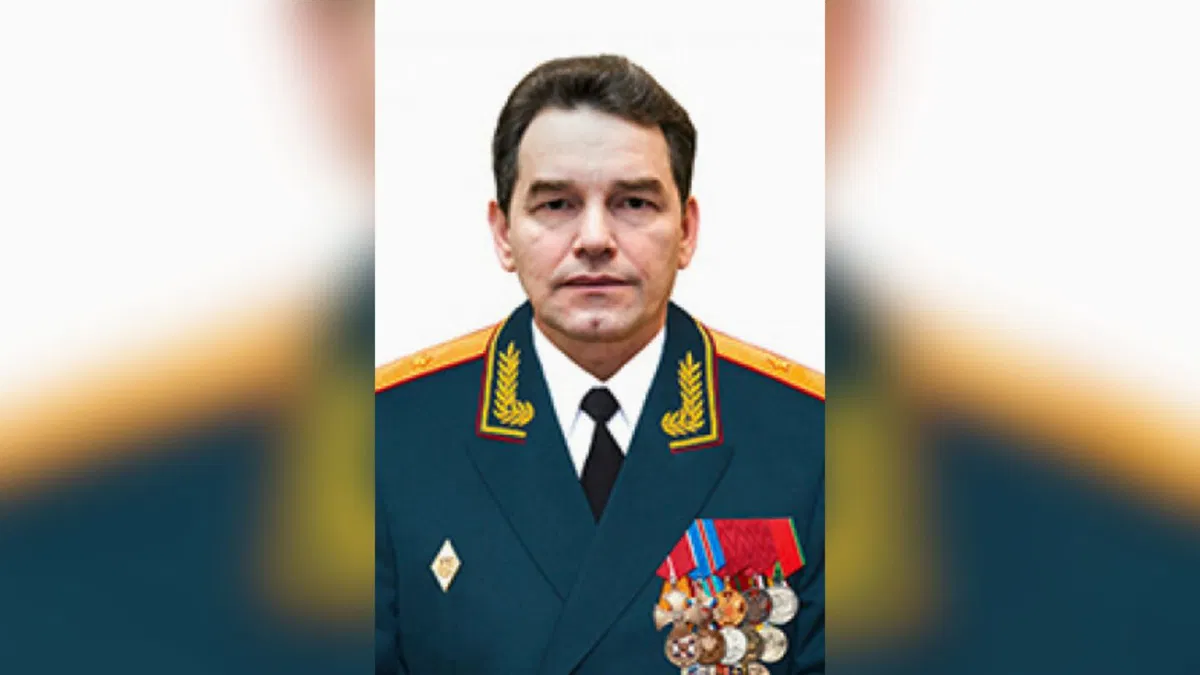
The killing of Russian Lieutenant General Fanil Sarvarov in a car bombing in Moscow marks another significant escalation in a series of targeted attacks that have struck the Russian capital since the start of the war in Ukraine. According to Russia’s Investigative Committee, the 56-year-old senior officer died after an explosive device planted beneath his vehicle detonated in the early hours of Monday morning.
Fanil Sarvarov later succumbed to his injuries in hospital, prompting an immediate criminal investigation into murder and the illegal trafficking of explosives. The incident has heightened security concerns in Moscow and added to an atmosphere of growing vulnerability among Russia’s military and political elite. Sarvarov was serving as the head of the armed forces’ operational training department, a role placing him at the heart of Russia’s military preparedness and doctrine.
His death is the third killing of a military official in the capital linked to bomb attacks within the past year, underscoring a troubling pattern that Russian authorities have struggled to contain. While investigators have stated that one of the theories under consideration involves the possible involvement of Ukrainian intelligence services, no official confirmation has been made, and Ukraine has declined to comment on the incident. The attack has therefore not only eliminated a high-ranking military figure but has also reignited debate about the reach and effectiveness of covert operations amid the ongoing conflict.
Circumstances of the Attack and Official Response
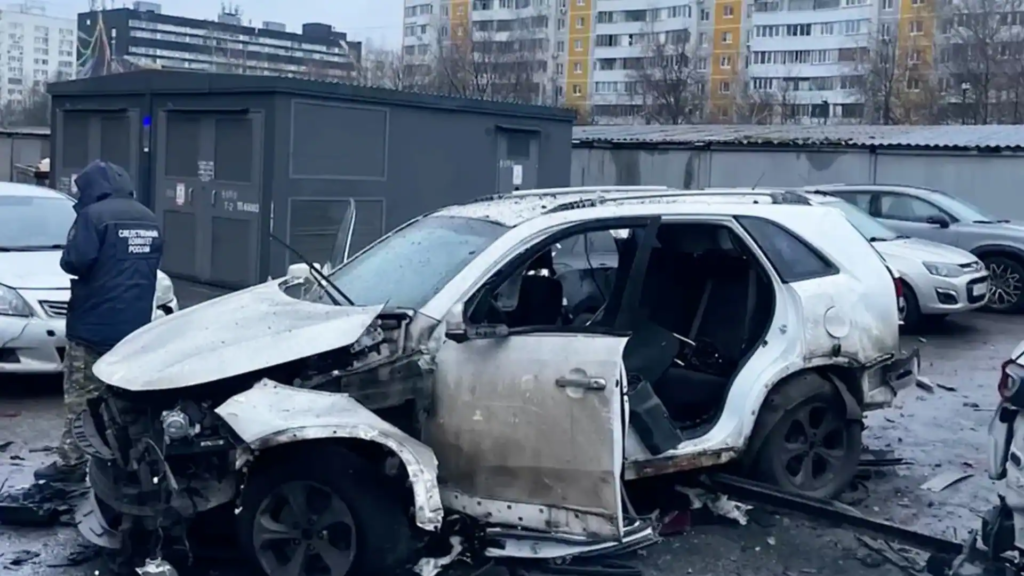
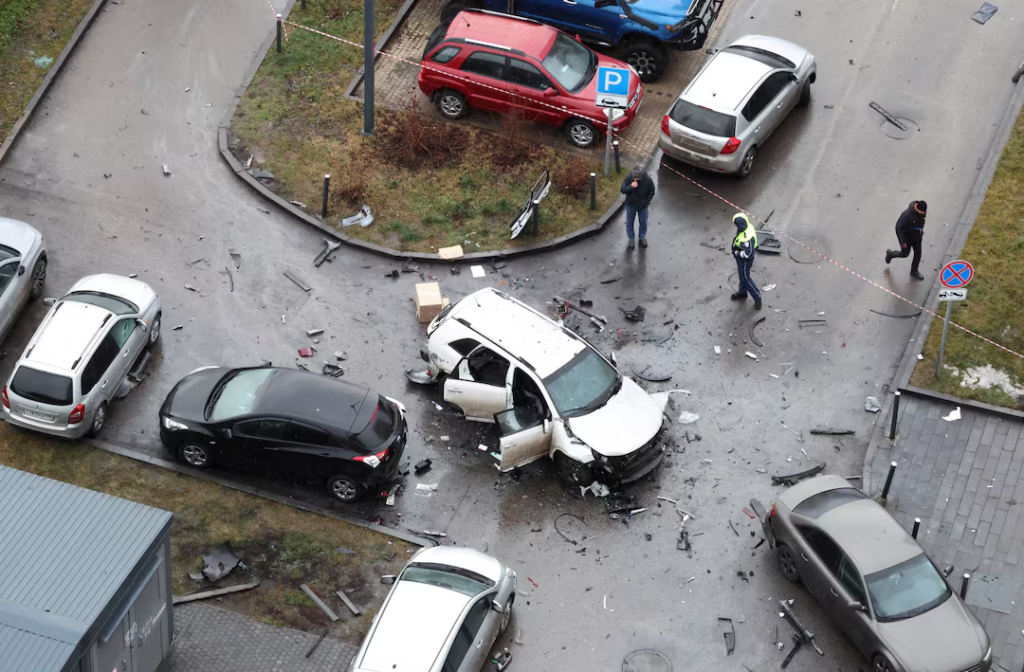
The explosion occurred in a car park near an apartment complex in the south of Moscow, an area not typically associated with high-security military facilities. Investigators arriving at the scene were met with the wreckage of a white Kia Sorento, its doors blown outward by the force of the blast and debris scattered among nearby parked vehicles. Images circulating in Russian media showed forensic teams working through the remains of the vehicle as residents looked on, a stark reminder that violence connected to the war has increasingly spilled into civilian spaces within Russia’s largest city.
The Investigative Committee confirmed that the explosive device had been planted under the vehicle, indicating a deliberate and targeted assassination rather than an accidental detonation. Criminal proceedings were immediately opened under statutes related to murder and illegal explosives trafficking, reflecting the seriousness with which the authorities are treating the incident. Senior investigators were dispatched to the site, and additional resources were reportedly allocated to determine how the device was placed without detection in a residential area.
Kremlin spokesman Dmitry Peskov stated that President Vladimir Putin was informed of Sarvarov’s death without delay, a detail that signals the political sensitivity of the killing. The rapid notification suggests concern at the highest levels of government about both the symbolism and the practical implications of losing a senior officer to an attack in the capital. While no public statement from Putin himself was released, the acknowledgment underscores how such incidents resonate far beyond their immediate circumstances.
Fanil Sarvarov, Head of the Operational Training Department of the Russian armed forces, was blown up in a car in Moscow and died.
— Anton Gerashchenko (@Gerashchenko_en) December 22, 2025
Sarvarov took part in Russia's full-scale invasion into Ukraine, took part in wars in Chechnya and Syria. pic.twitter.com/Cp8ORUR5Ki
Russian officials have increasingly framed these attacks as part of a broader campaign aimed at destabilising the country from within. By noting the possibility of Ukrainian intelligence involvement, investigators aligned the incident with previous cases in which Moscow has alleged foreign orchestration. At the same time, the absence of publicly presented evidence and Ukraine’s longstanding policy of neither confirming nor denying responsibility for targeted killings have left the matter unresolved. This ambiguity has become a defining feature of such incidents, complicating both public understanding and diplomatic responses.
Sarvarov’s Military Career and Strategic Role
Lieutenant General Fanil Sarvarov’s career spanned several decades and multiple conflicts that shaped modern Russian military doctrine. According to Russian media reports, he participated in combat operations during the Ossetian-Ingush conflict and the Chechen wars of the 1990s and early 2000s, campaigns that were formative for many officers who later rose to senior positions. These experiences placed him among a generation of commanders hardened by internal conflicts and counterinsurgency operations during a turbulent period following the collapse of the Soviet Union.
Read : Afghan National Mohammad Dawood Alokozay Arrested for Bomb Threat at Fort Worth Apartment Complex
Fanil Sarvarov also reportedly led Russian military operations in Syria between 2015 and 2016, during Moscow’s intervention in support of President Bashar al-Assad. That deployment was significant not only for its operational challenges but also for its political importance, as Russia sought to reassert itself as a decisive actor in Middle Eastern security affairs. Officers involved in Syria often gained prestige and influence, as the campaign was portrayed domestically as a demonstration of Russia’s revived military capabilities.
At the time of his death, Sarvarov headed the armed forces’ operational training department, a position central to preparing troops, refining tactics, and implementing lessons learned from ongoing and past conflicts. This role would have involved oversight of training standards across branches of the military, making him a key figure in sustaining combat readiness during the prolonged war in Ukraine. While he may not have been a front-line commander, his influence on how forces are prepared and deployed was substantial.
The targeting of an officer in such a position carries symbolic weight. It suggests that those responsible sought not only to eliminate an individual but also to strike at the institutional framework supporting Russia’s military operations. Even if the practical impact on day-to-day training is limited, the psychological effect on other senior officers cannot be discounted. The killing reinforces a sense that no role, however removed from the battlefield, is entirely insulated from the conflict.
A Pattern of Targeted Killings in Moscow
Sarvarov’s death fits into a broader pattern of targeted attacks that have occurred in Moscow since Russia launched its full-scale invasion of Ukraine in February 2022. Among the most prominent earlier cases was the killing of Darya Dugina in August 2022. The 29-year-old daughter of a prominent nationalist ideologue and close ally of the Kremlin was killed in a suspected car bombing outside the capital. That attack shocked the Russian public and signalled that individuals associated with the political and ideological justification of the war could also be targeted.
More recently, General Yaroslav Moskalik was killed in a car bomb attack last April, further fuelling concerns about the security of senior military personnel within the capital. In December 2024, General Igor Kirillov died when an explosive device hidden in a scooter was detonated remotely, an incident that demonstrated both ingenuity and determination on the part of those planning such operations. In Kirillov’s case, a Ukrainian source later told the BBC that Ukraine’s security service was responsible, although this claim was never confirmed on the record.
Ukraine’s official stance of not admitting or claiming responsibility for targeted attacks has contributed to an environment of uncertainty. This policy allows Kyiv to avoid formal escalation while still benefiting from the strategic ambiguity such actions create. For Moscow, however, the cumulative effect of these incidents has been to expose vulnerabilities in domestic security and to challenge the narrative that the capital remains insulated from the consequences of the war.
The repeated use of explosive devices, often placed in or near vehicles, points to a consistent modus operandi that investigators have yet to fully disrupt. Each attack prompts renewed scrutiny of security protocols, particularly for senior officials who may not have previously required extensive personal protection. The fact that Sarvarov was killed in a residential car park rather than a secure military facility suggests that routine movements remain a potential weak point.
Beyond immediate security concerns, these attacks have broader implications for Russian society and governance. They blur the line between the front line and the home front, reinforcing the idea that the conflict with Ukraine has far-reaching and unpredictable consequences. For the Russian leadership, maintaining public confidence while confronting such incidents presents an ongoing challenge, especially as the war shows no sign of resolution.
The killing of Lieutenant General Fanil Sarvarov thus represents more than the loss of an experienced officer. It is a reminder of the evolving nature of the conflict, in which covert operations, targeted assassinations, and psychological pressure play an increasingly prominent role alongside conventional military engagements. As investigations continue and speculation about responsibility persists, the incident adds another chapter to a pattern of violence that has reshaped perceptions of security in Moscow and underscored the enduring reach of the war into the heart of Russia.
**mitolyn**
Mitolyn is a carefully developed, plant-based formula created to help support metabolic efficiency and encourage healthy, lasting weight management.