

In a harrowing incident that has stunned residents of Liberty County, Texas, a 39-year-old mother faces allegations of drugging her three young children with NyQuil before attempting to drown them in a pond on the family’s rural property. The early morning drama unfolded on September 29, 2025, prompting a swift emergency response and leaving the community grappling with questions about family dynamics and child safety.
Authorities from the Liberty County Sheriff’s Office, assisted by the Texas Rangers and Baytown Police Department, are conducting a thorough investigation, but no charges have been filed against the mother as of October 2. The father’s subsequent arrest on an unrelated animal cruelty charge has added layers of complexity to the case, highlighting broader concerns about the household environment.
This event, described by investigators as “bizarre and breathtaking,” underscores the fragility of domestic life and the rapid intervention required in potential child endangerment situations. With the children now in protective custody, the focus remains on their recovery and the forensic unraveling of what led to this desperate act.
The Desperate 911 Call and Chaotic Scene
The ordeal began in the predawn hours of September 29, when Domingo Quintana, 61, the father of the three children, dialed 911 around 5:50 a.m. from the family’s home in the 9100 block of FM 1008, a secluded stretch of road flanked by dense East Texas woodlands. According to Quintana’s account to dispatchers, his wife had administered NyQuil to their daughters, aged 15 and 11, and their 6-year-old son, possibly mixed with alcohol, rendering them drowsy and compliant. He alleged she then led the children to a nearby pond on the property with the intent to submerge them, an act he interrupted just in time to summon help.
Deputies arrived at the scene by 6:13 a.m., greeted by a tableau of distress that would haunt even seasoned first responders. The mother was found submerged in the murky pond water, unconscious and not breathing independently, her body limp amid the shallow depths. Beside her, the 11-year-old daughter floated face-down, also unresponsive, her small frame bobbing perilously in the chill morning air. The two other children, the 15-year-old daughter and 6-year-old son, stood nearby on the muddy bank, conscious but disoriented and shivering in their pajamas, their eyes wide with confusion from the sedative’s grip.
Quintana himself was at the water’s edge, assisting as best he could, his voice hoarse from the frantic call. First responders from the Liberty County Sheriff’s Office and local fire departments waded in immediately, pulling the mother and younger daughter from the water with urgent efficiency. CPR was administered on-site to the unconscious pair, restoring pulses but revealing the severity of their exposure and potential overdose. The older children, though alert, exhibited signs of lethargy consistent with the over-the-counter medication’s effects—drowsiness, slowed speech, and unsteady footing—prompting medics to triage them swiftly.
Investigators noted the pond’s proximity to the home, a man-made feature common in rural Texas for irrigation or livestock, now transformed into a site of unimaginable peril. The property, spanning several acres, appeared isolated, with no immediate neighbors to have heard any cries. Preliminary toxicology tests, though not yet public, are central to verifying Quintana’s claims about the NyQuil administration. Authorities have confirmed the presence of the medication in the home, along with empty bottles suggesting recent use, but details on dosage or any alcohol admixture remain under forensic review. This phase of the probe is critical, as it could elevate the allegations from attempted drowning to chemical endangerment, a charge carrying severe penalties under Texas law.
Read : The World’s top 10 Prettiest Ponds
The father’s cooperation was immediate and vocal; he remained at the scene, providing deputies with a timeline that painted a picture of escalating marital strain. While specifics of the couple’s relationship are withheld pending interviews, Quintana’s 911 plea emphasized his fear for the children’s lives, stating he had physically intervened to prevent the submersion from becoming fatal. This account has been corroborated in part by the older daughter’s initial statements at the hospital, where she described feeling “sleepy and scared” before being taken outside.
Hospitalization and the Children’s Fight for Recovery
As ambulances and life-flight helicopters converged on the rural address, the four victims were rushed to Memorial Hermann Hospital in Houston, approximately 50 miles away—a facility renowned for its pediatric trauma expertise. The 11-year-old daughter and her mother, both in critical condition upon arrival, were intubated and placed in the intensive care unit.
Medical teams reported hypothermia from the pond’s cold water, compounded by respiratory distress likely exacerbated by the NyQuil’s antihistamine properties, which suppress breathing in high doses. The younger girl’s small size made her particularly vulnerable; at just 11, even a standard adult dose could prove toxic, and early scans indicated possible aspiration of pond water into her lungs.
In contrast, the 15-year-old daughter and 6-year-old son stabilized more rapidly. Transported by ground ambulance, they arrived conscious and verbal, though the teenager later recounted to child advocates feeling “really tired” and unable to resist her mother’s urgings. Hospital staff administered activated charcoal to mitigate any residual sedative effects and monitored for cardiac irregularities, a known risk with dextromethorphan overdose—the active ingredient in NyQuil. By midday September 29, both were listed as stable, with the boy responding well to fluids and observation, his young resilience shining through the trauma.

The mother’s condition, however, teetered on the edge. Found without a detectable breath on her own, she required advanced life support during transport. At 39, her physiology should have afforded some buffer against the cold and drugs, but underlying factors—possibly exhaustion or prior health issues—complicated her prognosis. As of the latest updates from the sheriff’s office press conference that afternoon, she remained sedated and under guard, her family barred from visitation pending investigation.
Child Protective Services (CPS) was notified within hours, asserting temporary custody over the siblings. Forensic interviews, conducted through the specialized Bridgehaven center for abused children, are underway to capture unfiltered recollections without parental influence. These sessions, designed for trauma-informed questioning, prioritize the kids’ emotional well-being, incorporating play therapy for the youngest. Once medically cleared—projected within days—the children will transition to foster care, a decision underscoring the agency’s mandate to ensure no return to an unstable home.
This intervention prevents further risk, but it severs the immediate family bond, a heartbreaking necessity in cases of suspected filicide attempts. The hospital’s role extended beyond treatment; staff coordinated with law enforcement to secure clothing and personal items from the pondside, preserving evidence like wet pajamas that could yield DNA or fabric traces linking the sequence of events.
Investigation Deepens Amid Father’s Unrelated Arrest
The Liberty County Sheriff’s Office convened a somber press conference on September 29, where Captain David Meyers, head of investigations, labeled the case “one of the most emotionally taxing we’ve encountered.” With the Texas Rangers lending analytical support and Baytown PD assisting on familial background checks, the multi-agency effort aims to dissect motives ranging from postpartum-like depression in a middle-aged parent to unresolved domestic conflicts.
No suicide note or manifesto has surfaced, but digital forensics on the mother’s phone and home computers are probing for cries for help—social media posts, search histories, or therapy inquiries that might illuminate her state of mind. A pivotal twist emerged on September 30, when Quintana was arrested on a misdemeanor charge of cruelty to non-livestock animals. Deputies, scouring the property for clues, discovered several malnourished pets: emaciated cats and dogs roaming freely, chickens in sparse coops, and one severely underweight feline confined in a sweltering, non-climate-controlled shed without food or water.
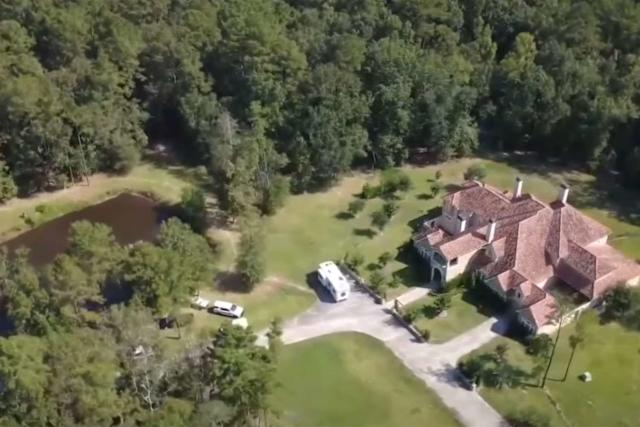
Charging documents detail Quintana’s neglect, painting a portrait of a homestead in disarray—overgrown fields, scattered debris, and animal waste accumulation signaling chronic oversight. Bond was set at $5,000, and he was booked into Liberty County Jail, his release pending payment. Though unrelated to the pond incident, this development has fueled speculation about the overall family welfare, prompting CPS to expand its review of the household.
As of October 2, the near-drowning probe remains active, with detectives canvassing the property through the week. Bloodwork from all parties is pending, expected to confirm NyQuil levels and rule out other substances. The absence of charges against the mother reflects prosecutorial caution; Texas statutes on attempted capital murder of a child demand ironclad evidence of intent, and the ongoing interviews with the children—shielded from media—hold the key. Meyers emphasized community support, urging tips via the sheriff’s hotline, while counseling resources for first responders were quietly mobilized.
This tragedy ripples beyond Liberty County, reigniting debates on rural mental health access and the silent epidemics of parental despair. For the Quintana children, now wards of the state, the path forward involves not just physical healing but rebuilding trust in the adults meant to protect them. As investigators peel back the layers, one stark truth endures: in the quiet hours before dawn, a family’s unraveling can teeter on the edge of irreversible loss, saved only by a father’s call and responders’ resolve.