

In a poignant recognition of heroism amid tragedy, 19-year-old Grace O’Malley-Kumar has been posthumously awarded the George Medal for her extraordinary courage during the Nottingham attacks of June 2023. The announcement, made public on October 6, 2025, highlights Grace’s selfless actions in attempting to shield her friend from a violent assailant, ultimately costing her own life. Established in 1940, the George Medal is Britain’s second-highest civilian gallantry award, bestowed for conspicuous gallantry in the face of extreme danger not involving enemy action.
Grace’s citation emphasizes her “exceptional courage,” serving as a stark reminder of the profound bravery displayed by ordinary individuals in unimaginable circumstances. The award comes two years after the devastating events that claimed three lives in Nottingham, including Grace’s. Prime Minister Sir Keir Starmer commended her sacrifice, stating, “I want to pay tribute to all of the recipients, including Grace O’Malley-Kumar, who made the ultimate sacrifice to protect her friend. Her legacy will live on as a powerful example of heroism.”
This honor, recommended to His Majesty The King, underscores a national acknowledgment of Grace’s valor, while also reigniting discussions on mental health failures and public safety in the wake of the attacks. As one of 20 honorees in the latest Gallantry Awards list, Grace’s story stands out for its raw intensity and the profound loss it represents.
The Nottingham Attacks: A Night of Unfathomable Horror
The Nottingham attacks unfolded in the early hours of June 13, 2023, shattering the sense of security in one of Britain’s vibrant university cities. Grace O’Malley-Kumar and her friend Barnaby Webber, both 19-year-old University of Nottingham students, were walking home to their accommodation after a night out when they were ambushed by Valdo Calocane, a 32-year-old man later diagnosed with paranoid schizophrenia. The assault began without warning around 4 a.m. on Ilkeston Road, where Calocane, armed with a large knife, launched a random and ferocious attack on Barnaby.
Eyewitness accounts and court proceedings later revealed the chilling details: Barnaby was stabbed multiple times in a brutal onslaught that left him critically injured. Grace, a first-year medical student and talented hockey player, witnessed the horror unfold mere feet away. Rather than fleeing, she sprang into action, intervening to defend her friend. Court testimony described how Grace pushed Calocane off Barnaby, screaming, “Don’t do it” and “Why would you do that?” Her desperate struggle lasted approximately 30 seconds as she fought back against the much larger attacker, who then turned his rage on her in an “uncompromisingly brutal” assault.
Grace sustained 23 stab wounds in the process, her body showing the marks of a fierce determination to protect Barnaby. Tragically, both succumbed to their injuries at the scene—Barnaby from 10 stab wounds and Grace from the overwhelming trauma inflicted upon her. The attacks did not end there. Calocane proceeded to a nearby location where he fatally stabbed Ian Coates, a 65-year-old school caretaker who had stopped his van to assist the students. Coates was rammed by Calocane’s vehicle before being knifed to death, bringing the death toll to three.
Two other individuals were seriously injured in related incidents that night, including a man whose van was stolen and a woman attacked on Magdala Road. Emergency services responded swiftly, but the damage was irreparable. The city of Nottingham was left in shock, with vigils and memorials drawing thousands in the days that followed.
Grace O’Malley-Kumar, who was killed in the Nottingham attacks, will be awarded the George Medal for giving her life to try to protect her friend Barnaby Webber in June 2023.
— Good Morning Britain (@GMB) October 6, 2025
The university students were both 19 when they were fatally stabbed.@LizSummers reports. pic.twitter.com/MJbFTmkgKX
The attacks exposed vulnerabilities in mental health care systems, as Calocane had a documented history of paranoia and violence, including prior encounters with police and healthcare providers. Investigations by the Independent Office for Police Conduct and other bodies later scrutinized whether earlier interventions could have prevented the tragedy. For the victims’ families, the events of that night remain a haunting scar, amplified by the randomness of the violence that struck down promising young lives and a dedicated community servant.
Grace’s Act of Bravery: A Hero’s Final Stand
At the heart of this tragedy lies Grace O’Malley-Kumar’s unyielding bravery, an act so compelling it has earned her the rare distinction of the George Medal. As detailed in the official citation, “Grace O’Malley-Kumar was walking home to student accommodation in Nottingham with her friend, Barnaby Webber, when they were approached by a man with a large knife.” What followed was a display of selflessness that defied instinctual fear. Grace’s intervention was not impulsive but a calculated risk to save another, even as she fully grasped the peril.
During Valdo Calocane’s trial at Nottingham Crown Court in late 2023, harrowing details emerged from forensic evidence and witness statements. Grace did not hesitate; she charged at the 6-foot-1 assailant, using her athletic build—honed from years as an England under-18s hockey player—to grapple and resist. Her father, Dr. Sanjoy Kumar, addressed Calocane directly in court: “She heroically and valiantly fought you. Like a hero, she put herself in harm’s way.” This testimony painted a vivid picture of Grace’s final moments: a young woman, full of life and ambition, choosing solidarity over survival.

The George Medal recognizes such “conspicuous gallantry,” and Grace’s case exemplifies it perfectly. Unlike military honors, this award is reserved for civilians facing civilian threats, making her posthumous receipt all the more significant. Established during World War II to honor acts of courage amid the Blitz, the medal has been given to figures like bomb disposal experts and ordinary citizens thwarting crimes. Grace joins this elite cadre, her story resonating as a testament to innate human decency. The medal’s presentation to her family marks a formal closure of sorts, though the emotional weight is immense—her parents, Dr. Sanjoy Kumar and Dr. Sinead O’Malley, have indicated the ceremony’s toll would be too great to attend personally.
This bravery was foreshadowed in Grace’s character. Described by loved ones as compassionate and driven, she embodied the values of her medical studies and sports ethic. Her posthumous degree, conferred alongside Barnaby’s this summer, symbolizes the bright future stolen from her. In awarding the medal, authorities affirm that Grace’s actions transcended survival instinct, embodying a profound moral compass that prioritized her friend’s life above her own.
Legacy and National Recognition: Honoring a Fallen Hero
The posthumous George Medal for Grace O’Malley-Kumar extends far beyond a ceremonial accolade; it cements her as a national symbol of resilience and sacrifice. The recommendation process, initiated confidentially through the Cabinet Office and endorsed by the Prime Minister, reflects broad consensus on her heroism. Predecessor Rishi Sunak had previously advocated for the even rarer George Cross, but the George Medal’s approval underscores the meticulous evaluation of her deeds against the award’s stringent criteria.
For the Kumar family, the honor is bittersweet. In a statement, they expressed profound pride, adopting the motto “Let’s all be more like Grace” for a charity established in her name. This initiative focuses on youth safety, mental health awareness, and community support—areas directly tied to the attacks’ aftermath. Dr. Sinead O’Malley and Dr. Sanjoy Kumar have channeled their grief into advocacy, pushing for systemic reforms in mental health services to prevent similar failures. Calocane’s indefinite hospital order for manslaughter by diminished responsibility, handed down in November 2023, offered scant solace, but Grace’s medal provides a measure of vindication.
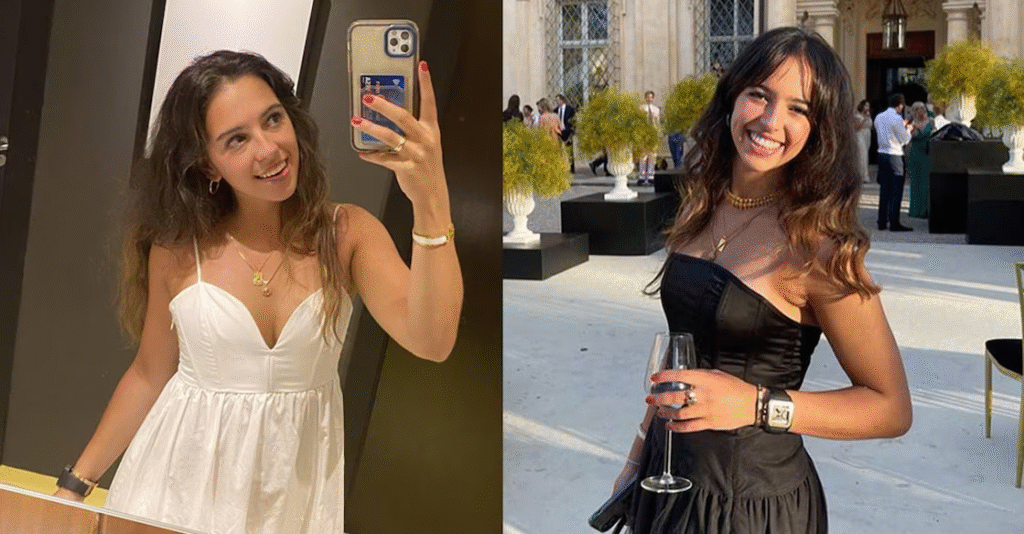
Nationally, the award has sparked renewed dialogue on bravery in modern Britain. Alongside Grace, recipients include Richard O’Brien, honored with the King’s Gallantry Medal for intervening in a 2021 stabbing in Barnet, and Alicia Richards and Molly Bulmer, commended for confronting an armed school intruder in Sheffield last year. These stories collectively highlight everyday heroism, from urban streets to educational settings. Prime Minister Starmer’s tribute in Parliament emphasized Grace’s role as an “outstanding example of personal bravery,” urging society to emulate her courage.
Grace’s legacy also intersects with broader tributes to the Nottingham victims. Memorial funds have raised substantial sums for scholarships and safety programs, while the university’s posthumous degrees ensure Barnaby and Grace’s academic pursuits endure. Public vigils, now amplified by this award, continue to draw crowds, fostering unity in a divided time. As investigations into the attacks evolve— including a reopened probe into police conduct—Grace’s medal serves as a beacon, reminding policymakers of the human cost of oversight.
In total, this recognition immortalizes a 19-year-old whose final act redefined heroism. Grace O’Malley-Kumar did not seek glory; she sought to protect a friend. Through the George Medal, her story inspires a call to action: to build safer communities, support mental health, and celebrate the quiet valor that binds us. As her family poignantly notes, in a world of uncertainties, being “more like Grace” means choosing bravery every day.
References:
Consequences of anabolic steroids
References:
http://47.109.128.105:3001/fae23370478638/9288496/wiki/Dianabol+Review%253A+Our+Expert+Weighs+The+Pros+And+Cons
References:
Best place to order steroids
References:
https://learninghub.fulljam.com/@kimswift558468?page=about