
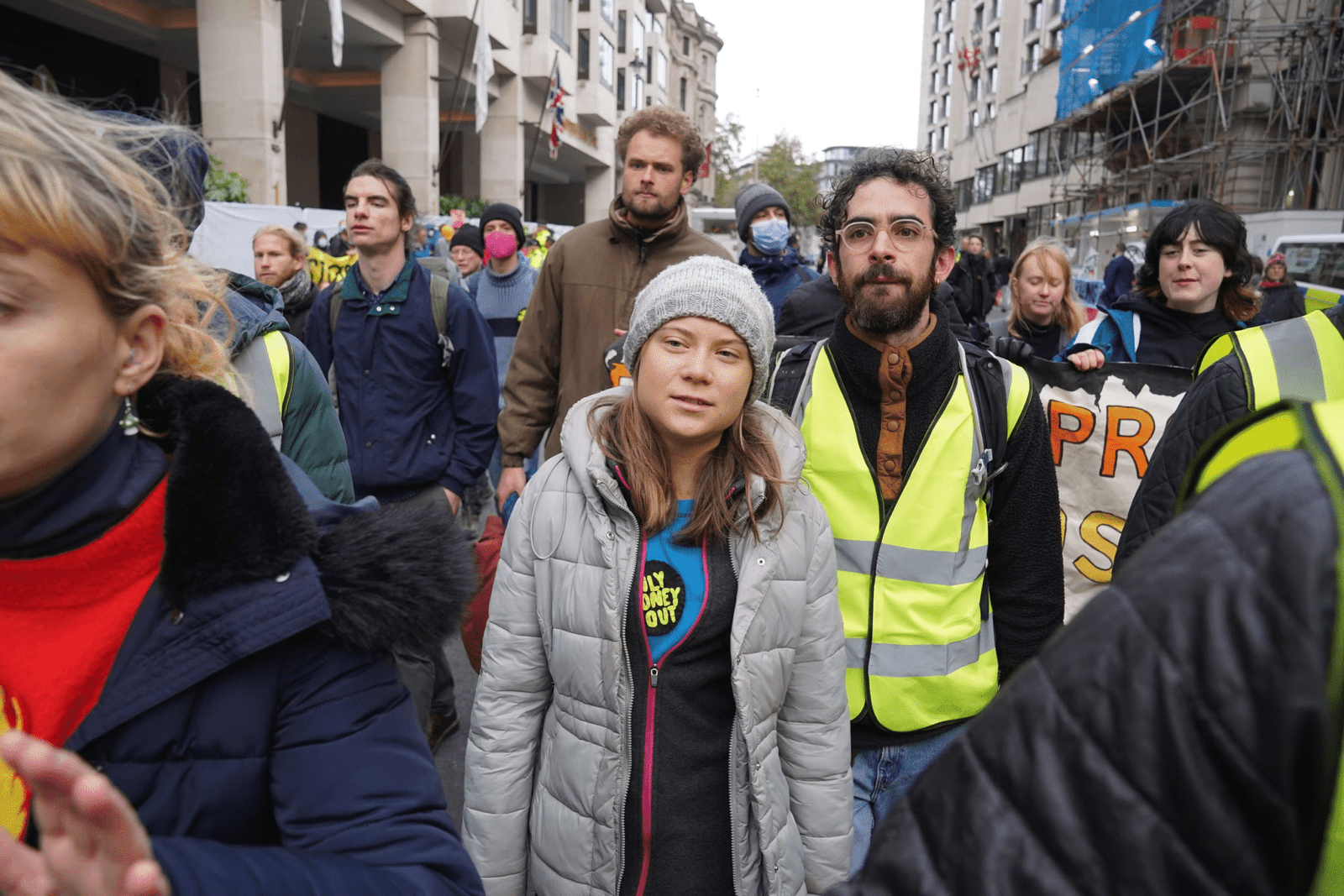
The vivid green hue that spread across the Grand Canal in Venice during a coordinated climate action once again placed global environmental activism at the center of public debate. Greta Thunberg, one of the most prominent figures in the climate movement, was among the dozens of activists fined and temporarily barred from entering Venice after Extinction Rebellion staged synchronized “Stop Ecocide” demonstrations across multiple Italian cities. The incident, timed to coincide with the final days of the COP30 climate summit in Brazil, has prompted strong reactions from Italian authorities while also drawing renewed attention to the strategies activists use to elevate environmental concerns during major international negotiations.
A Coordinated Environmental Protest Across Italy
The Venice action formed part of a broader national mobilization that saw Extinction Rebellion activists release an environmentally safe dye into waterways in Venice, Bologna, Genoa, Milan, Padua, Palermo, Parma, Trieste, Turin and Taranto. Organizers described the coordinated operation as an attempt to visually underscore what they see as the accelerating decline of natural ecosystems due to climate collapse.
The use of the bright green dye, which created a dramatic visual contrast against Italy’s historic urban landscapes, was intended to capture public attention and interrupt what activists regard as political complacency surrounding environmental degradation. Venice, with its lagoon ecosystem and longstanding vulnerability to rising sea levels, has often been chosen as a backdrop for climate demonstrations.
The city’s symbolic significance has grown alongside global discussions about the future of coastal communities in a rapidly warming world. Activists argued that the Grand Canal intervention was a way to emphasize the fragility of the city’s environment, stressing that the dye used was non-toxic and designed to dissipate naturally without harming marine life or the lagoon’s chemical balance.
However, the dramatic aesthetic of the protest quickly drew scrutiny. Local police responded by identifying and fining 37 individuals, including Thunberg, who had traveled to Italy to participate in the action. According to local reports, 34 of those fined were Italian nationals, while three were foreign nationals: Thunberg of Sweden, an activist from Colombia and one from Ethiopia. Police also issued orders preventing the activists from entering Venice for 48 hours, a temporary ban aimed at curbing further disruption.
It's not St Patrick's Day yet!
— RT (@RT_com) November 22, 2025
'Extinction Rebellion' activists pour dye into Venice’s Grand Canal, turning the water bright GREEN
Greta Thunberg reportedly involved
Similar actions hit other Italian cities — eight activists were detained, according to local media pic.twitter.com/Bt4yshyHMZ
Authorities in Rome simultaneously prevented a similar attempt to dye the waters of the lake in the EUR district, demonstrating that law enforcement had anticipated possible multi-city actions and deployed preventative measures. As the movement has grown increasingly organized, Italian authorities have intensified their monitoring of high-impact demonstrations, particularly those that involve public spaces deemed culturally or environmentally significant.
Political and Public Reactions to the Venice Demonstration
The demonstration provoked swift criticism from regional officials, including Luca Zaia, the outgoing governor of the Veneto region. Zaia described the stunt as “pointless” and suggested that the involvement of a high-profile activist such as Greta Thunberg was intended more to create visibility for the group than to raise substantive environmental awareness. His remarks reflected a broader frustration among some political leaders who argue that highly visual protests can place additional strain on municipal resources and contribute to public fatigue rather than constructive dialogue.
Read : Who Is Greta Thunberg Who Dares to Deliver Gaza Aid and Gets Seized in Israel?
Supporters of the protest, however, contended that nonviolent direct action has long been a critical tool for elevating environmental issues to the global stage. They emphasized that traditional channels for influencing climate policy have often been slow, particularly when efforts depend on national governments negotiating complex agreements at international summits such as COP30. For these activists, the Venice action represented not only a symbolic intervention but also a strategic effort to generate public pressure during a pivotal moment in climate negotiations.
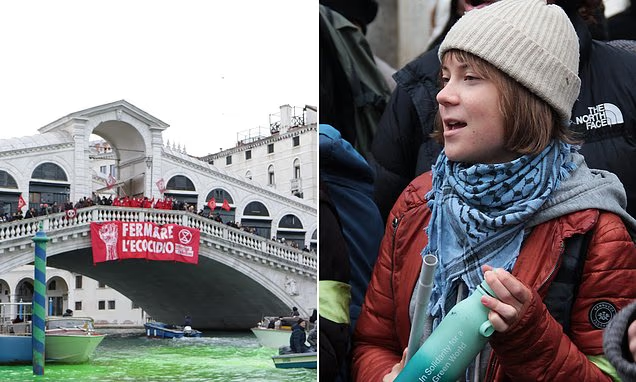
The timing of the protest was deliberate. COP30, held in Brazil, was entering its final days as delegates from nearly 200 countries attempted to reach consensus on commitments to phase out fossil fuels. Reports from the conference indicated that negotiators were grappling with disagreements over language related to fossil fuel reductions, prompting activists to intensify calls for decisive action. Extinction Rebellion framed their Italian demonstrations as a response to what they viewed as insufficient progress at the summit, arguing that the pace of negotiations did not match the urgency of the climate crisis.
Public reaction within Italy was mixed. Some residents and commentators criticized what they viewed as disruptive and attention-seeking behavior, while others expressed support for the activists’ intentions, noting that the dye was harmless and quickly dissipated. Venice has long been at the center of environmental debates due to rising waters, tourism pressures and infrastructure concerns. As a result, protest actions in the city tend to evoke strong emotional responses from those who see the city as both a cultural treasure and a symbol of climate vulnerability.
Implications for Climate Activism and International Negotiations
The incident once again raised questions about the future of climate activism in Europe and internationally. Greta Thunberg’s involvement ensured that the event received widespread global coverage, a reality that continues to spark discussion about the role of high-profile figures in shaping environmental discourse. While critics argue that her presence can overshadow local voices or contribute to polarization, supporters maintain that her visibility draws essential attention to systemic issues that might otherwise receive insufficient scrutiny.
The fines issued—€150 per activist—were relatively modest, but the temporary ban from Venice served as a reminder of the legal risks associated with direct-action climate protests. Such measures have become increasingly common across European cities, where environmental groups like Extinction Rebellion, Last Generation and others have staged high-visibility demonstrations involving roads, artworks, public monuments and waterways. Authorities have sought to balance the right to protest with concerns over public safety, cultural preservation and economic disruption.
From the perspective of environmental organizations, the Venice action demonstrated the continued importance of transnational cooperation in climate activism. The presence of participants from multiple countries underscored the movement’s international character and highlighted concerns that climate impacts transcend borders. As activists pointed out, climate collapse threatens ecosystems worldwide, from Arctic regions facing melting ice to equatorial landscapes experiencing rising temperatures and deforestation.
Read : Gaza Journalist Mohammed Abu Aoun Puts Camera and Shield on Sale to Buy Food for Starving Family
The protests also occurred against a backdrop of intense negotiations at COP30. Delegates in Brazil were attempting to finalize commitments that could influence global emissions trajectories for decades to come. Reports suggested that discussions over a global fossil fuel phase-out were proving contentious, with disagreements centered on timelines, financial support for developing nations and the responsibilities of major emitters. For activists, the slow pace of diplomatic compromise highlighted the challenges of relying solely on international negotiations to drive change.
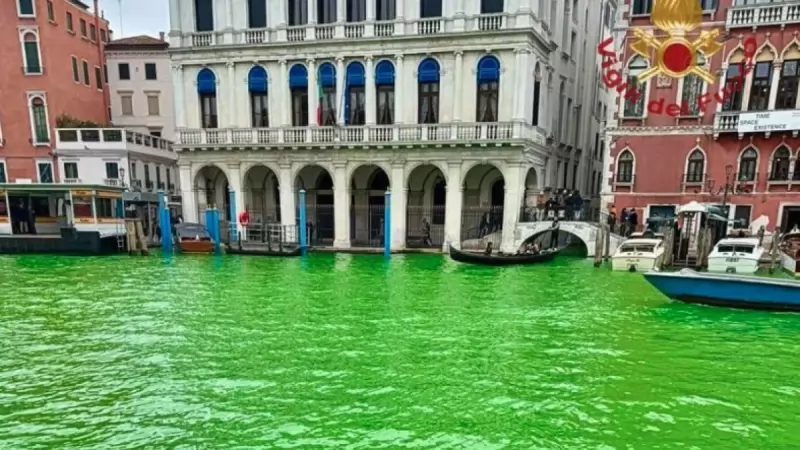
The Venice demonstration was part of a broader trend in which activists seek to create moments that are visually striking and difficult to ignore. By turning the Grand Canal a vivid green, Extinction Rebellion aimed to generate images that would circulate across media platforms worldwide, leveraging the symbolic impact of Italy’s most recognizable waterway. Such tactics reflect a strategic understanding of how modern media ecosystems function, particularly at moments when global attention is focused on major events like COP30.
The incident also contributed to ongoing conversations about the boundaries of acceptable protest. While the dye used was non-toxic, some local officials expressed concern about the precedent set by altering the appearance of protected waterways. Others argued that civil disobedience has long played a significant role in advancing social and environmental causes, and that protests intentionally designed to avoid permanent harm should be understood as part of a broader democratic tradition. These debates are likely to continue as climate activism evolves in response to escalating environmental challenges.
In the broader context of Italian politics, the protest added to ongoing tensions between environmental groups and regional authorities who are navigating complex demands related to heritage preservation, tourism management and climate adaptation. Venice, a UNESCO World Heritage site, faces chronic flooding and long-term structural vulnerabilities that have placed it at the forefront of climate risk assessments. As a result, symbolic actions in the city tend to attract extensive political scrutiny, especially when they intersect with sensitive cultural spaces.
The participation of Greta Thunberg, a figure who has become emblematic of youth-led climate activism, also carries specific implications for the global movement. Her presence often brings international media attention that can amplify local protests but can also intensify political pushback. In this case, her involvement drew comments from regional leaders who suggested that the action was aimed more at visibility than substantive dialogue. Such critiques reflect broader debates about whether the climate movement’s tactics should prioritize disruption, persuasion or institutional engagement.
As cities around the world confront the accelerating effects of climate change, episodes like the Venice demonstration highlight the friction between activism and governance during periods of heightened environmental urgency. With countries negotiating the direction of global climate policy at COP30, activists viewed Italy’s waterways as a stage for raising alarms at a critical moment. Authorities, meanwhile, emphasized the need to maintain public order and protect cultural assets.
These competing priorities reflect a broader global pattern in which the immediacy of climate concerns intersects with longstanding political, legal and cultural frameworks. In the coming months, the outcomes of COP30 and the ongoing dialogues around the role of nonviolent protest are likely to shape the trajectory of climate activism across Europe. The Venice incident underscores the continued willingness of groups like Extinction Rebellion to adopt visually dramatic tactics, as well as the determination of authorities to regulate public demonstrations in historically sensitive locations.
As environmental challenges deepen, these debates will remain central to discussions about how societies balance the right to protest with the need to safeguard public spaces. The green waters of the Grand Canal have now returned to their normal appearance, but the questions raised by the protest—about climate action, civil disobedience and the effectiveness of international negotiations—continue to resonate across Italy and beyond.