
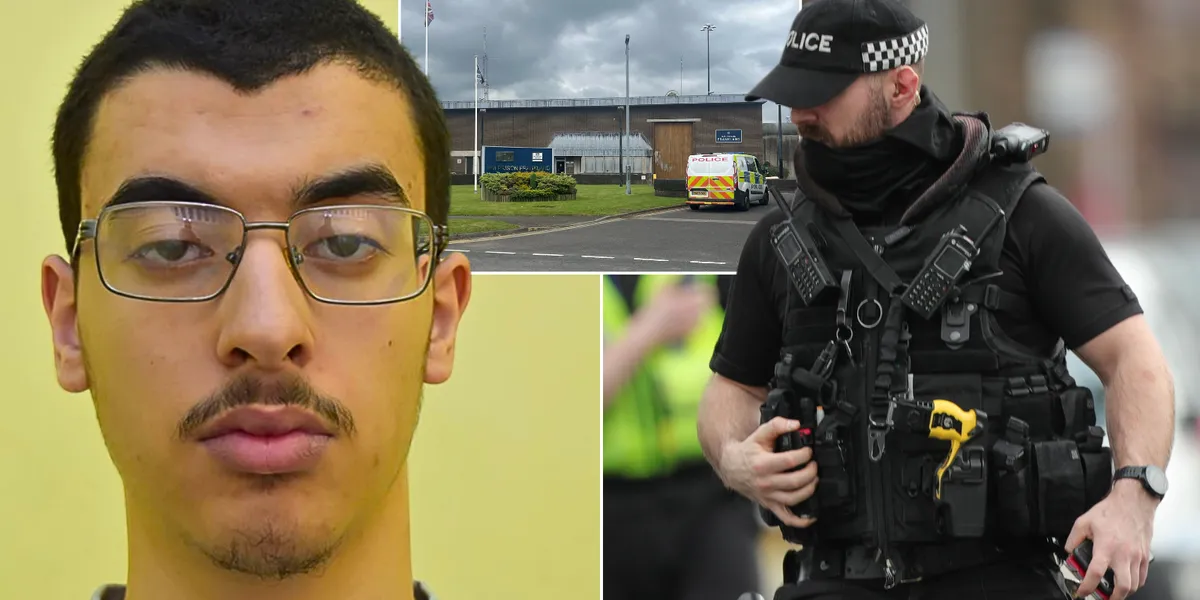
A shocking act of violence has once again brought the nameHashem Abedi to national attention, this time for a vicious attack inside the walls of HMP Frankland. Already serving one of the longest determinate sentences in British legal history, Abedi – the brother of the Manchester Arena suicide bomber Salman Abedi – now stands accused of carrying out a horrific assault on three prison officers.
The incident has sparked outrage and concern across the country, raising critical questions about the handling of high-risk inmates, the effectiveness of prison security, and the broader threat posed by extremist ideology even behind bars.
The Attack at HMP Frankland: A Calculated Act of Violence
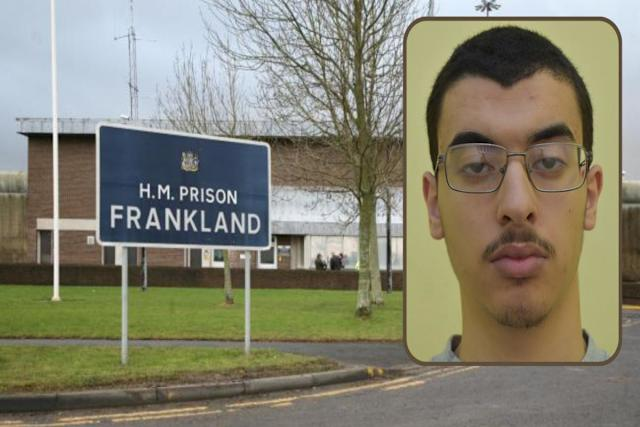
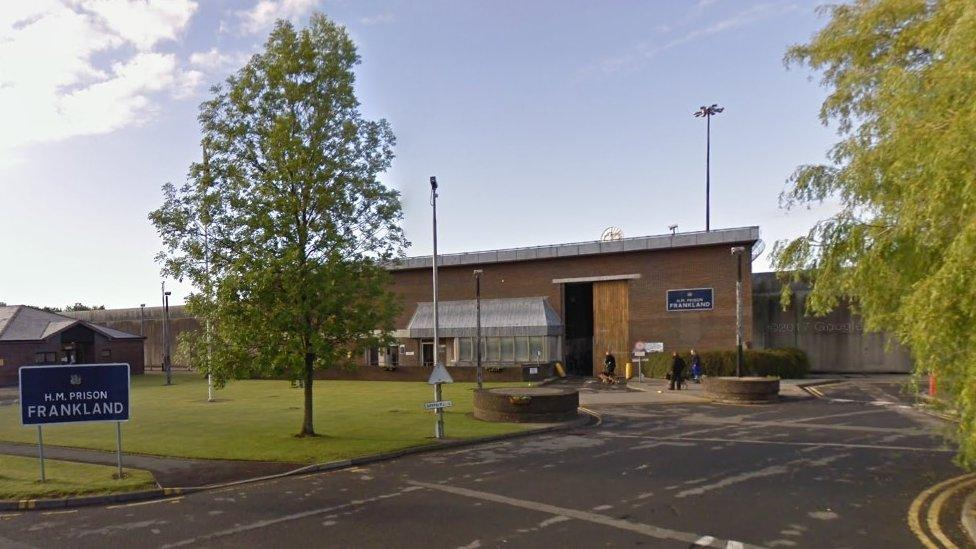
On Saturday, in what authorities have called a “catastrophic security failure”, Hashem Abedi launched a brutal attack on three prison officers at the high-security HMP Frankland in County Durham.
The incident occurred within the prison’s separation centre – a specialized unit created to house and isolate some of the most dangerous and extremist prisoners in the system. Despite the high-security nature of this facility, Hashem Abedi managed to throw scalding hot cooking oil over the officers and stab them with what officials described as “homemade weapons.”
The Prison Officers’ Association confirmed that the three officers sustained life-threatening injuries, including burns, scalds, and severe stab wounds. One of the victims, a female officer, was discharged later that day after receiving treatment.
Read : 17-Year-Old Walid Ahmad Died Due to Starvation in Megiddo Prison of Israel
However, the two male officers required intensive hospital care due to the severity of their wounds. Their conditions were later reported as having stabilized, but the emotional and psychological trauma will likely linger far longer.
This was not a spontaneous outburst, but a premeditated and calculated act of violence carried out with intent to maim or kill. Mark Fairhurst, national chairman of the Prison Officers’ Association, expressed his outrage, emphasizing that even within separation centres, certain privileges – like access to cooking equipment – must be reconsidered when dealing with such dangerous inmates. Fairhurst warned of the potential for copycat attacks, calling for immediate reform in how these prisoners are managed.
Security Failures and Systemic Oversights
The fact that Abedi was able to carry out this attack within a separation unit designed specifically for high-risk individuals points to deeply troubling failures in prison security protocols.
Separation centres like the one at HMP Frankland were established in 2017 as part of a wider strategy to prevent radicalization in prisons and to safely contain inmates who pose a risk to others. These units are intentionally small and heavily resourced, housing fewer than ten inmates at a time under close supervision.
However, this incident has exposed significant gaps in the implementation of those safeguards. The decision to allow Abedi access to a kitchen where he could obtain hot oil and utensils—despite his history of violence and extremism—has been widely condemned.
Fairhurst questioned why someone known for previous attacks on prison staff would be permitted such access, stating unequivocally that “separation centres should be for control and containment” rather than rehabilitation or normalization.
This is not the first time Abedi has assaulted prison staff. In 2022, he was found guilty, along with two other inmates, of a violent attack on two officers at Belmarsh Prison in south-east London. That incident resulted in an additional sentence of three years and ten months, yet it appears that those responsible for managing him have not learned the necessary lessons.
Former prison governor John Podmore called the attack at Frankland a “catastrophic security failure,” reiterating the point that this unit houses some of the country’s most violent and ideologically-driven inmates. Podmore emphasized the need for a re-evaluation of how separation units function and whether they are truly fit for purpose in the face of evolving threats from radicalized prisoners.
Ideology Behind Bars and the Broader Threat
Perhaps the most chilling aspect of this attack is what it says about the enduring nature of extremist ideology, even within the confines of high-security prisons. Hashem Abedi was sentenced in 2020 to life imprisonment with a minimum term of 55 years after being found guilty of 22 counts of murder, attempted murder, and conspiracy to cause an explosion.
His brother, Salman Abedi, carried out the Manchester Arena bombing in 2017 that claimed 22 innocent lives. Hashem’s role in that tragedy was central – he assisted in planning and preparing the explosives, fully aware of the devastating consequences.
Given the gravity of his crimes and his unrepentant attitude, it should have been obvious that Abedi posed an ongoing threat to those around him. What this latest attack demonstrates is that the ideology that motivated the Manchester Arena bombing has not been extinguished by incarceration. If anything, it has been incubated and allowed to fester behind bars.
This is a grave concern for the prison system and for the public. Counter-terrorism officials, including CTP North East and Durham Constabulary, are now leading the investigation into Saturday’s events.
Cdr Dom Murphy of CTP stated that the investigation is in its early stages and emphasized the importance of uncovering all facts before drawing conclusions. Nonetheless, there is already a growing consensus that this must be a turning point in how extremist prisoners are managed.
Justice Secretary Shabana Mahmood and Shadow Justice Secretary Robert Jenrick both issued strong statements condemning the attack. Mahmood pledged that the “strongest possible punishment” would be sought and reaffirmed that “violence against our staff will never be tolerated.” Jenrick went further, calling it a “deeply serious security failure” and warning of the growing influence of Islamist gangs within Britain’s prisons.
These concerns are not new. Reports and whistleblower accounts have long warned that prisons are becoming fertile ground for radicalization, where hardened ideologues like Hashem Abedi can exert influence over more vulnerable inmates.
Despite measures taken since 2017 to create separation units and crack down on extremist preaching, Saturday’s attack reveals that these efforts are far from sufficient.
A System Under Strain and the Need for Urgent Reform
The brutal attack at HMP Frankland has once again highlighted the dangerous reality faced by prison officers who work with the most high-risk offenders in the country.
The physical injuries sustained by the three officers are severe enough, but the psychological impact on staff and their families is incalculable. One officer told BBC News that staff are “shaken” and questioned their continued commitment to a job that puts them at such peril.
Prison officers across the UK have rallied in support of their injured colleagues, and union leaders are demanding not just justice but immediate structural changes. Key among their demands is the removal of privileges such as cooking rights for inmates held in separation centres. There are also calls for greater transparency, accountability, and oversight of how these units operate.

The Prison Service has pledged to support a full investigation and has reiterated its stance that violence against staff will not be tolerated. However, words alone will not suffice. The attack by Hashem Abedi is a wake-up call – not just about the individual danger he poses, but about the broader systemic vulnerabilities that allowed this to happen.
From policy reforms to security upgrades, and from staff training to ideological containment, there is much work to be done. Prisons are supposed to be places of punishment, rehabilitation, and safety. When inmates are able to attack staff with homemade weapons and boiling oil, something has gone fundamentally wrong.
The British public, still reeling from the memory of the Manchester Arena bombing, now faces a new reminder of the enduring threat posed by Hashem Abedi and those like him.
It is a stark lesson in the importance of vigilance, of reform, and of ensuring that those entrusted with protecting society from its most dangerous members are themselves protected and empowered to do their jobs safely.
The road ahead will be challenging, but one thing is clear: the events at HMP Frankland must not be ignored or swept under the rug. They demand a full reckoning with how extremism is managed within the prison system—and a renewed commitment to protecting the brave men and women who serve on its front lines.