

The reported killing of Haytham Ali Tabatabai in an Israeli airstrike on Beirut’s Haret Hreik district has intensified regional tensions and raised critical questions about the future of the ongoing shadow conflict between Israel and Hezbollah. The strike, which hit the upper floors of a residential building in the densely populated southern suburbs, resulted in five deaths and twenty-eight injuries, according to Lebanon’s health ministry.
While Lebanon has not confirmed the identities of the dead, Israel insists that the operation successfully eliminated one of Hezbollah’s most influential military commanders.
The incident marks one of the most consequential escalations in recent months, coming at a time when diplomatic sensitivities in Lebanon are already heightened ahead of Pope Leo XIV’s impending visit. Understanding Tabatabai’s role within Hezbollah, Israel’s rationale for the strike, and the broader implications of this attack provides context for a moment that could shape the trajectory of the region’s fragile security balance.
Hezbollah’s Military Architect and His Rise Through the Ranks
Haytham Ali Tabatabai, often identified as one of Hezbollah’s most seasoned commanders, was considered central to the organisation’s strategic and operational evolution over the past several decades. Israel described him as Hezbollah’s Chief of General Staff, a position that placed him at the heart of the group’s military planning and execution. His involvement with Hezbollah dates back to the 1980s, a period when the organisation was solidifying its structure, ideology, and military capabilities with direct support from Iran’s Islamic Revolutionary Guard Corps.
Tabatabai was widely believed to have played a leading role in shaping the Radwan Force, Hezbollah’s elite offensive unit tasked with cross-border operations and high-risk missions. The Radwan Force has been closely monitored by multiple governments over the years due to its training, tactical sophistication, and strategic placement along Lebanon’s southern border. Under his stewardship, the unit expanded its capabilities, adopting more advanced weaponry, improving coordination with Iranian advisers, and participating in operations beyond Lebanon’s borders.
His influence extended deeply into Hezbollah’s involvement in Syria. As the Syrian conflict intensified, Tabatabai oversaw units that supported the Assad government in battles across Homs, Aleppo, and the Qalamoun region. These operations not only strengthened the Assad regime but also enhanced Hezbollah’s combat experience, further integrating the group into Iran’s regional strategic network.
This period is believed to have shaped Tabatabai’s reputation as a field-tested commander with a keen understanding of both guerrilla warfare and large-scale military coordination. The United States designated Tabatabai as a terrorist in 2016, noting his role in supporting Hezbollah’s expansion and operational planning.
🔴⚠️BEIRUT BOMBED BY ISRAEL⚠️
— Brunella C. (@BrunellaCapitan) November 23, 2025
In a blatant violation of the ceasefire, Israel bombed the #Beirut suburb of Dahiyeh !! The target was Hezbollah's chief of staff, Haytham Ali Tabatabai.
This is just the latest VIOLATION of the ceasefire signed by the occupation with Hezbollah a… pic.twitter.com/y4r4uHb1Hy
Washington also issued a reward of up to five million dollars for information leading to his location. His designation placed him among the highest-ranking Hezbollah figures targeted by international intelligence agencies, underscoring the strategic threat attributed to him by Western and Israeli authorities. Despite these pressures, he remained largely outside public view, contributing to a perception of him as a shadowy but influential figure within Hezbollah’s senior leadership.
The Beirut Strike and Conflicting Claims Surrounding His Death
The Israeli strike that reportedly killed Tabatabai occurred on Sunday in Beirut’s Haret Hreik area, a neighbourhood known for hosting Hezbollah offices, media headquarters, and residential buildings linked to the group’s leadership. An AFP reporter documented that the strike hit the third and fourth floors of a nine-storey residential building, while Lebanon’s National News Agency reported that the structure was struck by three missiles. The civilian casualties emphasised the risks inherent in targeting operations conducted in densely populated urban areas.
Israel claimed responsibility for the strike, asserting that its forces carried out a precise operation aimed at eliminating Tabatabai. In a statement published on X, the Israel Defense Forces said that the attack “eliminated” him and highlighted his long-standing role in orchestrating Hezbollah’s operations in Lebanon and Syria. Israeli officials argued that his removal would significantly weaken Hezbollah’s ability to coordinate large-scale attacks and manage its cross-border infrastructure.
Lebanon, however, has not officially confirmed the identities of the individuals killed in the attack. The health ministry’s statement noted five deaths and twenty-eight injuries but withheld further details pending identification procedures. The absence of confirmation left room for uncertainty, though Hezbollah’s initial responses implied that a senior figure had indeed been targeted.
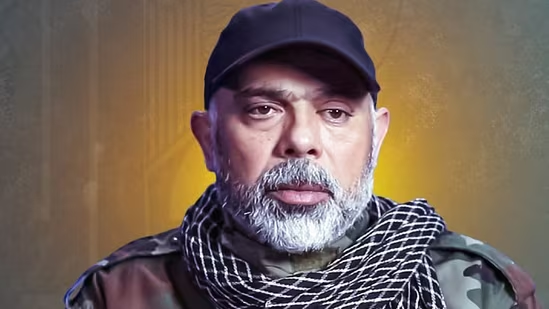
Mahmud Qomati, a senior Hezbollah official, stated that the strike represented “a new red line,” suggesting that Israel had deliberately escalated its targeting efforts by striking inside Beirut’s densely populated southern suburbs. He acknowledged that the attack was directed at a high-level commander but said that the group was still evaluating the full consequences. While Hezbollah has yet to officially announce Tabatabai’s death, Qomati’s remarks indicate that the group views the incident as a significant breach requiring a measured response.
The strike also occurred only days before Pope Leo XIV’s scheduled visit to Lebanon, his first foreign trip since assuming office. The timing raised concerns among Lebanese officials and international observers who feared that renewed tensions could undermine security arrangements for the visit. The Vatican has not issued any immediate statements concerning the strike, but the incident adds complexity to an already fragile security environment.
Regional Impact and Hezbollah’s Calculus Moving Forward
The reported killing of Haytham Ali Tabatabai carries consequences that extend beyond the immediate aftermath of Sunday’s strike. For Israel, targeting high-ranking Hezbollah commanders is part of a broader strategy designed to constrain the group’s military expansion and disrupt its operational hierarchy. Such actions often aim to produce long-term organisational disruption by removing leaders with decades of experience and deep institutional knowledge.
From Israel’s perspective, eliminating figures like Tabatabai weakens Hezbollah’s ability to manage cross-border units, deploy advanced weaponry, and coordinate with regional partners. For Hezbollah, the potential loss of Tabatabai would represent a significant operational challenge. Commanders who have risen through the organisation over several decades possess a combination of battlefield experience, loyalty networks, and deep familiarity with Iran-Hezbollah coordination channels.
Read : Brown University Professor Rasha Alawieh Deported to Lebanon Despite US Judge’s Order
Replacing such individuals is not simply a matter of appointing a successor; it requires re-establishing trust, strategic alignment, and operational readiness across multiple fronts. Any disruption at this level could have short-term effects on the group’s ability to manage escalations, respond to Israeli operations, or maintain its presence in Syria. The attack also fits within a pattern of Israeli strikes conducted across Lebanon since the November 2024 ceasefire.
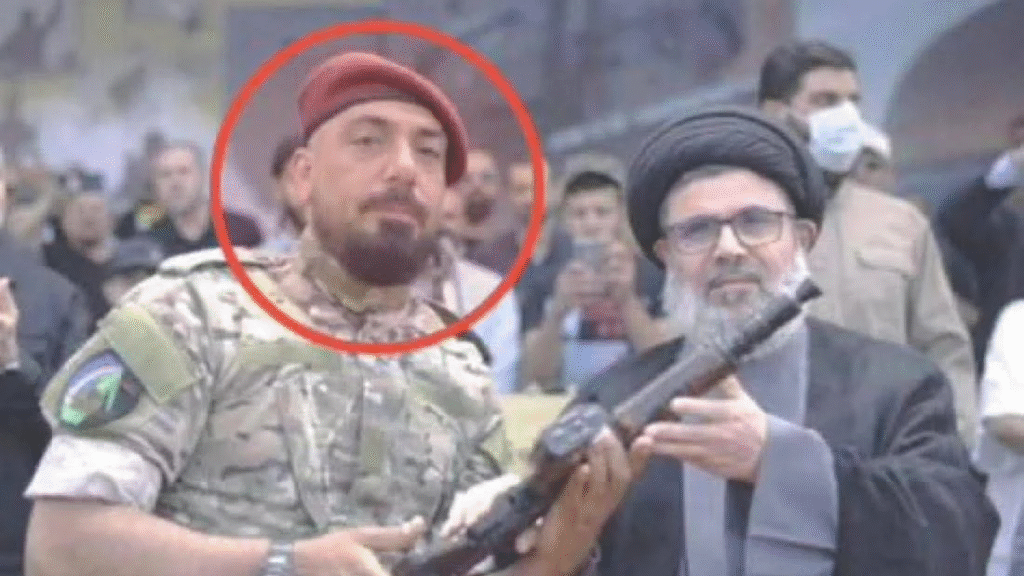
Despite formal commitments to reduce hostilities, Israel has repeatedly targeted individuals and infrastructure associated with Hezbollah, particularly in the south and east of the country. These continued operations reflect Israel’s broader concerns about Hezbollah’s growing capabilities, including precision-guided missiles, cross-border tunnels, and expanded military infrastructure. By carrying out these strikes, Israel aims to prevent what it views as an evolving threat while signalling to Hezbollah that strategic or tactical advancements will not go unchallenged.
From Lebanon’s perspective, the strike fuels concerns about civilian casualties and the broader social and political consequences of conflict spilling into residential areas. As Beirut and southern Lebanon continue to grapple with the economic and infrastructural challenges of recent years, renewed military escalation poses risks to both stability and public confidence. The presence of foreign dignitaries, such as the Pope, adds further urgency to maintaining calm, though incidents like the Haret Hreik strike complicate these efforts.
Hezbollah’s response, therefore, must balance internal pressures, strategic calculations, and regional dynamics. Retaliation risks triggering a broader conflict, particularly at a time when Lebanon is attempting to stabilise its domestic environment and manage diplomatic engagements. At the same time, failing to respond could be perceived as a sign of weakness, especially if the group confirms the death of a commander of Tabatabai’s stature. The organisation’s past behaviour suggests that it may adopt a phased approach, combining immediate symbolic gestures with more calibrated actions designed to restore deterrence without igniting full-scale war.
In the broader regional context, the incident underscores the volatility of the Israel-Hezbollah relationship. Both actors remain entrenched in long-standing patterns of confrontation shaped by political, ideological, and territorial disputes. The reported elimination of a senior commander adds a new layer to this dynamic, increasing the likelihood of further exchanges while reinforcing the fragility of existing ceasefire arrangements. As international observers monitor developments, the coming days will be crucial in assessing whether the situation stabilises or transitions into a more confrontational phase.
The reported targeting of Haytham Ali Tabatabai reflects more than the loss of a high-level figure; it highlights the shifting calculations on all sides of a complex and deeply entrenched conflict. As the region absorbs the implications of Sunday’s strike, the long-term effects will depend on the decisions taken by Israel, Hezbollah, and the broader international community in the tense days ahead.