
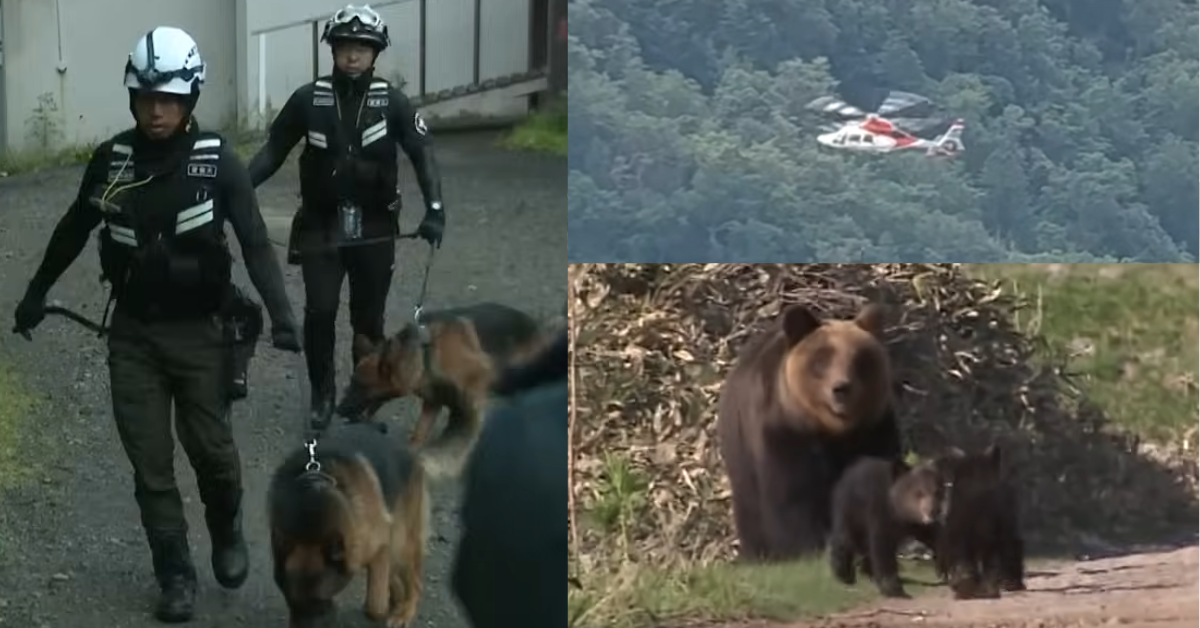
The death of 26-year-old hiker Sota Keisuke on Mount Rausu in Japan’s northern prefecture of Hokkaido has drawn national attention, not only because of the rarity and brutality of the incident, but also because of the detailed reconstruction of events made possible by modern wearable technology. Keisuke was attacked by a brown bear while hiking on August 14, an encounter that ended fatally after he was dragged off the marked trail and into dense forest.
What sets this case apart is the role played by his GPS-enabled smartwatch, which provided investigators with a minute-by-minute record of his movements and physiological condition during his final moments. These digital traces have offered authorities an unusually precise understanding of how the attack unfolded, while also raising broader questions about wildlife risks, human activity in bear habitats, and the evolving role of technology in post-incident investigations.
The Hike and the Sudden Attack on Mount Rausu
Mount Rausu is part of the Shiretoko Mountain Range, a remote and ecologically rich region of Hokkaido known for its rugged terrain, dense forests, and population of Ussuri brown bears. The area is also designated as part of a UNESCO World Heritage site, reflecting its environmental significance and biodiversity. While bear sightings are not uncommon in Hokkaido, fatal attacks in the Shiretoko range have historically been rare, with authorities noting that the August 14 incident was the first recorded deadly bear attack in the area in 63 years.
Sota Keisuke was hiking with a friend on Mount Rausu when the encounter occurred. According to accounts later provided to police, the attack happened suddenly, leaving little time for escape. Keisuke was reportedly seized by the bear and dragged off the hiking trail into the forested slope below. His companion, unable to intervene safely, escaped and later reported the incident to authorities. This report prompted the launch of a search operation the following day, involving police and rescue teams familiar with the challenging terrain.
Read : Top Ten Places That God Has Created for Introverts
During the search, investigators recovered personal items believed to belong to Keisuke, including a piece of clothing and his wallet, scattered along the forest floor. These findings suggested that he had been forcibly moved from the trail, consistent with his friend’s account. Eventually, later that afternoon, searchers located Keisuke and transported him to a hospital, where he was pronounced dead. The extent of his injuries was severe enough that police later advised his parents to view only his face during identification, underscoring the violence of the encounter.
Smartwatch Data and the Reconstruction of Final Moments
The recovery of Keisuke’s GPS smartwatch became central to understanding what happened after he was dragged into the forest. Authorities were able to extract location, movement, and heart rate data from the device, offering a rare digital record of a fatal wildlife attack. According to reports by Japanese media outlets, including Asahi Shimbun, the smartwatch data showed that at approximately 11 a.m. on August 14, the device deviated sharply from the established Mount Rausu hiking trail. This deviation led down a steep, forested slope, aligning with the presumed point at which the bear attack occurred.
Read : Christian Aldridge Reveals Grief After Death of Fellow British Hiker Victoria Bond in Chile Blizzard
Following this sudden change in direction, the watch recorded erratic movements and trembling, interpreted by investigators as evidence of a violent struggle. The GPS track then showed repeated circling within a confined area of thick brush, suggesting that Keisuke was being restrained or attacked in one location rather than moving freely. Crucially, the smartwatch’s heart rate monitor indicated that his heart stopped beating when he was approximately 109 to 142 yards away from the main trail. This data allowed authorities to estimate both the location and approximate time of death with remarkable accuracy.

The smartwatch data did not end there. After remaining stationary throughout the night, the device began moving again around 9 a.m. the following morning. This movement covered several hundred yards through dense undergrowth, a pattern investigators believe indicates that the bear returned to the body and dragged it further into the forest. This interpretation was later reinforced when search teams encountered a mother bear accompanied by two cubs, actively dragging Keisuke’s remains. All three bears were killed at the scene by authorities due to the immediate danger they posed.
Additional remains were discovered buried in an earthen mound roughly 109 yards away from where the bears were killed, consistent with known bear behavior related to food caching. The smartwatch data provided not only a timeline but also behavioral insights, illustrating how the attack progressed and how the animal interacted with the victim after death. Such detailed reconstruction is rare in wildlife incidents and has been cited by investigators as invaluable in understanding the sequence of events.
Broader Implications for Bear Safety, Technology, and Policy
The death of Sota Keisuke has had ramifications beyond the immediate tragedy, prompting renewed scrutiny of human-bear interactions in Japan and the adequacy of existing safety measures. Following the incident, authorities closed the Mount Rausu trail, citing concerns over bear activity and public safety. This decision reflects a broader trend in Hokkaido, where bear encounters have increased in recent years, driven in part by environmental changes, food scarcity, and expanding human activity into traditional wildlife habitats.
Read : 31-Year-Old Hiker Hong Falls to Death From China’s Mount Nama After Untying Safety Rope for Selfie
According to government data cited by international media, at least 13 people have been killed and more than 100 injured in bear attacks across Japan since April of the same year. These figures represent a significant rise compared to previous decades and have intensified calls for stronger preventive strategies. Measures under discussion include improved monitoring of bear populations, expanded use of warning systems, stricter trail closures during high-risk periods, and greater public education on how to respond to bear encounters.

At the same time, Keisuke’s case highlights the growing role of personal technology in both safety and forensic analysis. While GPS watches and fitness trackers are primarily designed for health and navigation, their ability to record location, movement, and vital signs can provide critical information in emergencies. In this instance, the smartwatch did not prevent the fatal outcome, but it offered clarity to investigators and family members seeking to understand what happened. This raises questions about how such data might be integrated more proactively into rescue operations, potentially allowing for faster response times in future incidents.
There are also ethical and emotional dimensions to the use of such data. While the information can aid investigations, it also exposes intimate details of a person’s final moments, creating challenges around privacy and consent. In Keisuke’s case, the data was used primarily to reconstruct events and assess risks, but similar technologies may increasingly be involved in post-incident analyses across a range of scenarios, from natural disasters to criminal investigations.
Ultimately, the death of Sota Keisuke serves as a stark reminder of the dangers that can exist even in well-traveled natural areas. It underscores the power of modern technology to illuminate events that would otherwise remain largely unknown, while also highlighting the limits of such tools in the face of unpredictable natural forces. As authorities continue to balance conservation, public access, and safety in regions like Shiretoko, this incident is likely to remain a reference point in discussions about wildlife management, outdoor recreation, and the evolving intersection of nature and technology.
Brabet4br has become one of my favorites quickly! Huge selection of Games with awesome Bonus. Try It, you wont regret. You can find it brabet4br.