

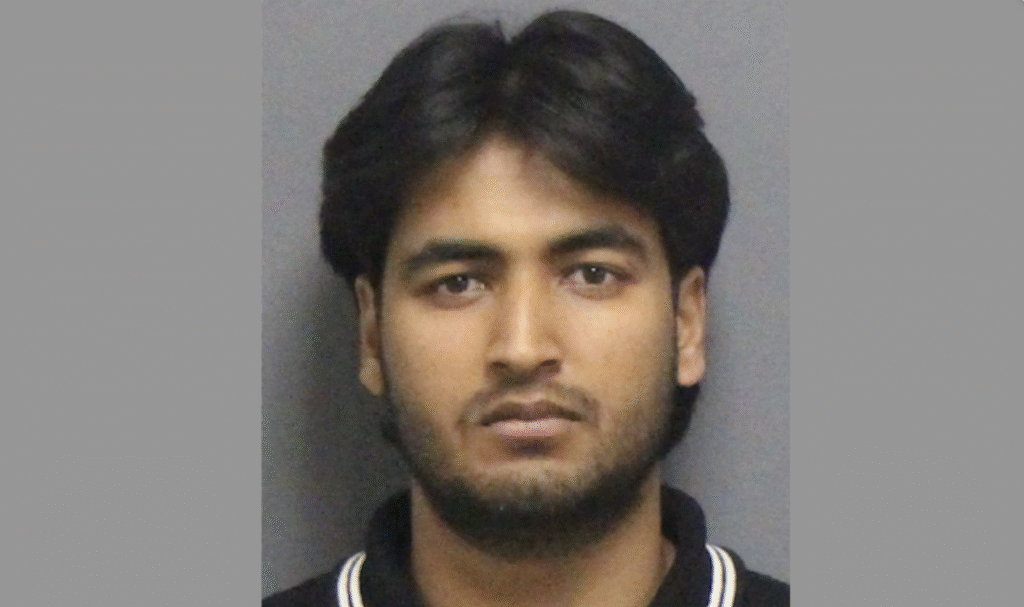
The quiet community of Guilford County, North Carolina, was jolted recently by the arrest of a 21-year-old Indian student, Kishan Kumar Singh, who attempted to scam an elderly woman using a cruel and calculated scheme.
The incident has sparked public outrage and concern over the safety of senior citizens, especially in the context of rising scams targeting vulnerable populations.
Kishan Kumar Singh, who had been residing near Cincinnati, Ohio, on a student visa since 2024, allegedly posed as a federal agent to deceive the 78-year-old victim. His aim was to make off with a large sum of money under the pretext of protecting the victim’s finances.
According to the Guilford County Sheriff’s Office, Singh convinced the woman that her bank accounts had been compromised. Using manipulative tactics, he pressured her into withdrawing a significant amount of money and packaging it for collection.
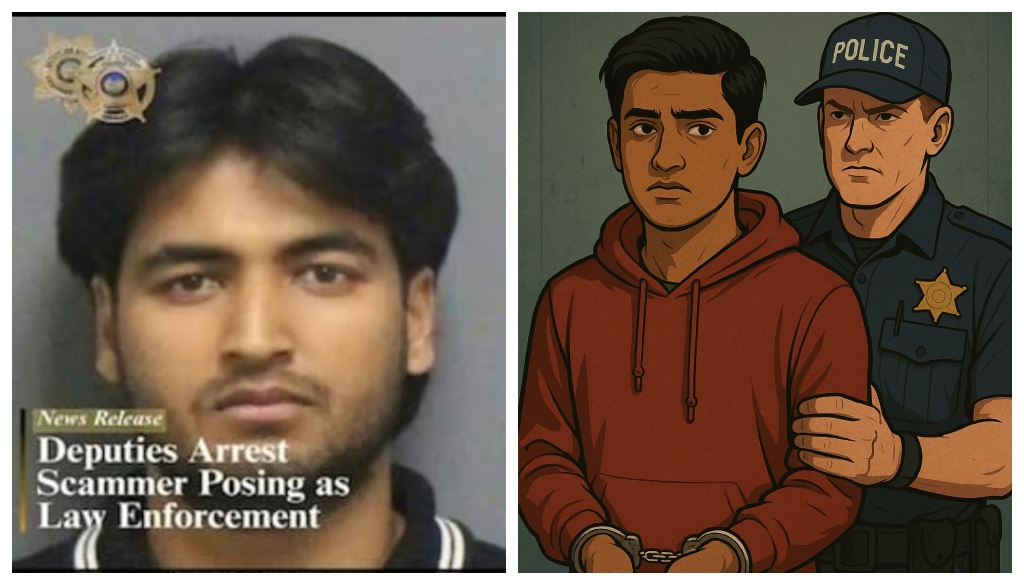
He was ultimately apprehended when he arrived in person to collect the money while dressed and behaving like a law enforcement officer. Singh’s actions are now the subject of intense legal scrutiny, and he is being held on a $1 million bond at the Guilford County Detention Center.
The Modus Operandi and Psychological Tactics
Scammers increasingly target older adults, exploiting their trust and often limited familiarity with digital and legal systems. Kishan Kumar Singh’s case is a textbook example of psychological manipulation.
By posing as a federal agent, he created an atmosphere of urgency and fear, telling the elderly woman that her savings were at risk and only law enforcement could help her. The intention was clear — to override her skepticism and induce panic, forcing her into a hasty and costly decision.
Such schemes are designed to seem official and convincing. Victims are often told not to discuss the matter with anyone, including family members, because the case is supposedly “under investigation.”
Read : North Carolina Man Wears Brown Bear Costume to Scare Off Real Black Bear in His Backyard
These strategies cut off the victim from their support system, making them more vulnerable to coercion. In Singh’s case, the scam escalated when he made arrangements to personally collect the money — a bold move that ultimately led to his arrest.
🚨 SCAMMER ARRESTED 🚨
— Guilford County Sheriff's Office (@gcsoffice) May 2, 2025
Deputies arrested Kishan Kumar Singh, 21, who posed as law enforcement to scam a 78-year-old woman. He’s now in custody under a $1 million bond.
Huge thanks to our Deputies for their quick action and dedication to protecting our community. 💙 pic.twitter.com/sqUY0EW73F
Law enforcement agencies have noted an uptick in scams where perpetrators impersonate officials or government agents. Scammers often spoof caller IDs, use professional language, and even send fake documentation to gain the trust of victims. Kishan Kumar Singh’s use of in-person contact, however, distinguishes this case from many others and added an additional layer of danger for the victim.
A Broader Pattern: Indian Students and Scam Rings
This incident is not isolated. Just weeks earlier, in a separate case in El Paso County, Colorado, two other Indian nationals — Mahammadilham Vahora and Hajiali Vahora, both aged 24 — were arrested on similar charges.
These men, also in the U.S. on student visas, posed as government agents and allegedly threatened an elderly individual into handing over money. Authorities stated that the two are part of an ongoing multi-state investigation involving several victims across the country.
The rise in such cases involving Indian students has alarmed both American law enforcement and Indian diplomatic missions. Many of these students arrive in the U.S. for genuine academic opportunities but are sometimes lured into scam networks through promises of quick money, coercion, or peer pressure.
It’s also possible that some may not fully understand the gravity of the crimes they become involved in, believing they are merely participating in “errands” or “collection jobs” without grasping the larger fraudulent framework.
However, in cases like Kishan Kumar Singh’s, the intentional posing as a federal agent and personal collection of money demonstrates clear premeditation. Such actions are far from accidental or naïve.
They point toward a deeper understanding of the scam process and a willingness to engage in direct criminal behavior. For the U.S. justice system, these individuals are treated no differently than domestic criminals and face severe legal consequences.
Protecting the Elderly: A Call to Vigilance
The Guilford County Sheriff’s Office has used this opportunity to warn the public, especially senior citizens, about the dangers of such scams. In a public statement, they emphasized that law enforcement will never ask for money over the phone or through unverified means. They also highlighted how scammers are increasingly targeting seniors in nursing homes and assisted living facilities, where they are seen as easy targets.
Educating older adults about these dangers is now more important than ever. Family members must maintain open lines of communication and encourage their elderly relatives to verify any suspicious calls or messages. Local police departments often host awareness programs aimed at seniors, teaching them to identify red flags and take precautionary steps.
Moreover, banks and financial institutions can also play a role. By flagging large and unusual transactions by elderly account holders, they can alert family members or law enforcement before it’s too late. A simple conversation at a bank counter could be the difference between a saved retirement fund and financial devastation.
In Kishan Kumar Singh’s case, the situation could have been far worse had he not been arrested during the in-person collection attempt. The fact that he showed up in person indicates a level of boldness — and perhaps desperation — that could have escalated into physical harm. The authorities deserve credit for acting swiftly and preventing potential further crimes.
The Road Ahead: Legal Repercussions and Broader Implications
Kishan Kumar Singh now faces felony charges that could lead to years in prison. Attempted obtaining of property by false pretenses and exploitation of an elder adult are serious offenses in North Carolina.
Given the weight of evidence against him and the deliberate nature of his actions, a harsh sentence is likely if he is convicted. Moreover, his status as a foreign national on a student visa complicates the legal picture, as he may face deportation or a lifetime ban from the U.S.
This case also prompts a closer look at the vetting and monitoring of international students. While the vast majority are law-abiding and contribute positively to American society, a small percentage becoming involved in criminal activities can have a disproportionate impact on public perception.
It’s crucial that universities, immigration services, and local communities work together to ensure that students receive not only academic guidance but also a clear understanding of legal and ethical norms.
Furthermore, diplomatic channels may come under pressure. Indian authorities may have to address concerns raised by U.S. agencies and assure them of cooperation in preventing such crimes in the future. While these cases may represent a tiny fraction of the Indian student population, the potential damage to the country’s reputation is significant.
The arrest of Kishan Kumar Singh in North Carolina serves as a disturbing reminder of the vulnerabilities faced by the elderly and the dangerous lengths to which scammers will go to exploit them.
It also shines a spotlight on a worrying trend involving international students being implicated in complex fraud schemes. With Kishan Kumar Singh now behind bars and other similar cases under investigation, authorities are working diligently to crack down on these networks and protect potential victims.
This case should serve as a call to action — not just for law enforcement, but for families, educational institutions, and communities. Raising awareness, improving preventive education, and ensuring accountability at all levels can go a long way in stopping such crimes before they unfold. For now, Kishan Kumar Singh’s arrest marks a small but significant victory in the broader fight against elder fraud in America.