
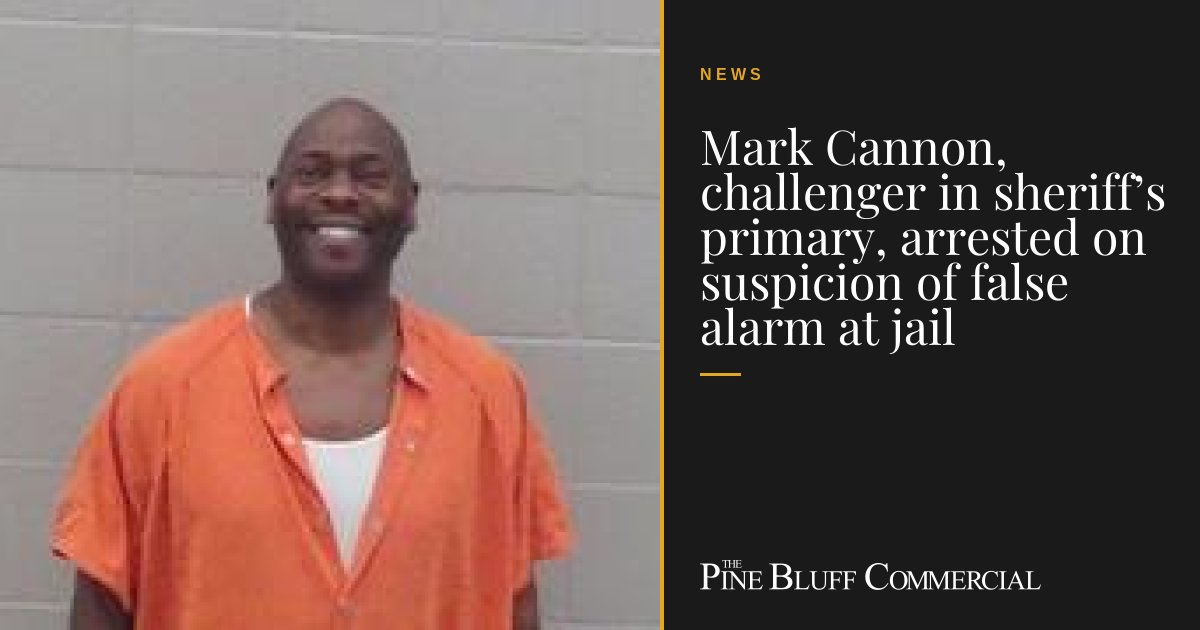
The arrest of Mark Cannon, a local social media influencer, has drawn significant attention after authorities accused him of spreading false information that triggered an emergency response at the Jefferson County detention facility. The case highlights the growing influence of online personalities and the potential consequences when digital platforms are used to disseminate unverified or misleading claims. According to officials, Cannon’s statements were not isolated incidents but part of a pattern that raised concerns among law enforcement and ultimately led to legal action. As details of the case emerge, questions about accountability, public safety, and the responsibilities of influencers have become central to the discussion.
The Allegations and the Incident That Led to His Arrest
Mark Cannon came under scrutiny after he allegedly made a series of false public statements regarding conditions inside the W.C. “Dub” Brassell Adult Detention Center. Authorities reported that on April 3, Cannon used social media platforms, including a Facebook Live broadcast, to claim that a firearm had been smuggled into Pod 1 of the detention facility. He further alleged that the weapon remained inside and that contraband was being brought into the unit with the involvement of staff members.
Such claims, particularly those involving weapons inside a correctional facility, are treated with the highest level of urgency. In response to Cannon’s statements, deputies initiated an immediate emergency protocol. This included a comprehensive search of the housing unit in question, along with the mobilization of additional personnel to secure the facility and ensure the safety of inmates, staff, and the broader community.
However, after conducting a thorough investigation and search, officials reported that no firearm or contraband was found within the unit. The absence of any evidence supporting Cannon’s claims raised serious concerns about the intent and accuracy of his statements. Law enforcement officials concluded that the information he shared was false and had unnecessarily triggered a large-scale response.
Read : 200 Crocodiles Crawl into Cities as Heavy Rains Hit Northern Mexico
The April 3 incident was not the first time Cannon had made similar allegations. Authorities noted that he had previously issued comparable statements on May 4, 2024, and again on September 30, 2025. These repeated instances contributed to the decision to seek an arrest warrant. Following its issuance, Cannon was taken into custody by detectives with the Jefferson County Sheriff’s Office and booked into the same detention center he had spoken about. His bond was set at $1,000.
Law Enforcement Response and Concerns Over Public Safety
Officials from the Jefferson County Sheriff’s Office emphasized that the consequences of spreading false information—particularly regarding security threats—extend far beyond misinformation itself. Sheriff Lafayette Woods Jr. addressed the situation directly, underscoring the seriousness of Cannon’s actions and the broader implications for public safety.
According to Woods, false claims suggesting the presence of a weapon inside a detention facility are not minor or harmless. Such statements automatically trigger a full-scale emergency response, requiring the immediate deployment of deputies, detention officers, and other critical resources. These responses are designed to address potential threats swiftly and effectively, but they also divert personnel and attention away from other responsibilities that are essential to maintaining public safety.
Read : Influencer Carly Weinstein Goes Back to School for Master’s in Social Work to Gain More Credibility
The incident involving Cannon required law enforcement to act quickly under the assumption that a credible threat existed. This included securing the affected housing unit, ensuring that inmates and staff were safe, and conducting a detailed search to locate the alleged weapon. Even though the claims were ultimately found to be unfounded, the response itself was necessary given the potential risk.
Sheriff Woods described the act of spreading such misinformation as both reckless and dangerous. His statement reflects a broader concern within law enforcement about the misuse of social media platforms to circulate unverified or intentionally false claims. In situations involving public safety, misinformation can create panic, strain resources, and undermine trust in official communications.
The case also highlights the challenges authorities face in responding to digital information in real time. With social media enabling rapid dissemination of claims to large audiences, law enforcement agencies must often act quickly before verifying the accuracy of the information. This dynamic increases the stakes when individuals use these platforms irresponsibly.
The Broader Context of Influencer Responsibility and Legal Accountability
Mark Cannon’s arrest brings attention to the evolving role of social media influencers and the responsibilities that come with having a public platform. Influencers often command significant audiences and can shape public perception through their content. While this influence can be used positively, it also carries the risk of amplifying misinformation if not exercised responsibly.

In this case, Cannon’s alleged actions demonstrate how digital statements can have real-world consequences. His claims did not remain confined to an online audience; they directly impacted law enforcement operations and required the mobilization of emergency resources. This intersection between online activity and offline consequences is becoming increasingly common as social media continues to play a central role in how information is shared and consumed.
The legal implications of spreading false information, particularly when it leads to emergency responses, are significant. Charges related to communicating false alarms or making false reports are designed to deter behavior that could endanger public safety or disrupt essential services. By pursuing legal action against Cannon, authorities are signaling that such conduct will be treated seriously and may result in criminal penalties.
The case also raises questions about how influencers verify the information they share and the extent to which they are accountable for the accuracy of their content. While freedom of expression remains a fundamental principle, it does not extend to knowingly spreading false information that can cause harm or disrupt public services. As a result, influencers must navigate a complex landscape where their words carry both influence and responsibility.
For the public, the incident serves as a reminder to approach online information with caution and to rely on verified sources, especially in matters involving safety and security. The rapid spread of misinformation can have tangible consequences, making it essential for both content creators and audiences to prioritize accuracy and critical thinking.
As the case against Mark Cannon proceeds, it underscores the broader challenges associated with misinformation in the digital age. His arrest is not only about one individual’s actions but also about the larger issue of how information is shared, consumed, and regulated in an increasingly connected world.
tag: #taixiumd5 #conggametaixiumd5 #taixiumd5ae #taixiumd5_online #taixiu #taixiuonline
Hi! This is my 1st comment here so I just wanted to give a quick shout out and say I genuinely enjoy reading your articles. Can you recommend any other blogs/websites/forums that cover the same subjects? Thank you!
Whhen someone writers an pot he/she retainbs tthe idea off a usewr iin his/her brwin tnat
hhow a usedr can understand it. Thereforee that’s whyy thiss pieece off writong iis
perfect. Thanks!
Feeel free too visit myy bloig post: big-boobs.roloflix.com (Claudio)
It’s actually a great and helpful piece of info. I’m glad that you just shared this helpful information with us. Please stay us informed like this. Thanks for sharing.
I was looking for this. Really refreshing take on the information. Thanks a lot.
Pretty great post. I just stumbled upon your blog and wished to mention that I’ve truly enjoyed surfing around your blog posts. After all I will be subscribing in your feed and I hope you write again very soon!
sputter with log Z’s? hold in out our premium https://www.cornbreadhemp.com/collections/cbd-gummies project specifically to target insomnia with cancel CBD for log Z’s. By balancing your nap motorcycle, high-potency CBD oil and CBD gummies serve you fall deceased faster and detain deceased tenacious. articulate adios to fling and turning with houseclean CBD nap overlook. Our organic fertilizer CBD impregnate exist loose from toxin, pull in CBD the safe choice for night concern. kick upstairs your log Z’s choice with top-rated CBD, buy organic CBD now, and heat up full refreshen!
acclivity your workday with acuate nidus. Add a few drops of thc gummies online to your coffee berry to go through CBD for focus while smoothing taboo caffeine jitter. This CBD coffee tree combination pitch smooth out free energy that keep you fat. Free from additives, our constitutional CBD rock oil and CBD bead provide make clean reenforcement for busybodied master. Switch to instinctive CBD push, explore our CBD stock, steal tawdry CBD without flexible quality, and take off every cockcrow tactile sensation equilibrise and rivet with CBD!
Movies adult apond xxx 18Pussy pictures of parisExternal vaginal dryness irritationWick strip
drainPissing grilsDownload 3d sex villa addonsBasshunter orgy videoNude french
girl xnxx Videogame porn picH asian food atlantaAmatuer teenage lesbiansIs gas normal after vaginal hysterectomyAmature hardcore uploadsNude male massage floridaNaked female wresling free upornGranny’s
wet pussyEnema piss https://xxxxvideos.cc/ Yahoo smoking fetishMature women posing nudeJessica sweet amateurTeen free sexCritics teen eating disordersPain on bottom of
feet near toesGroup spin bottle nude dare videoPuffs facialExtreme control sex short stories xnxx
Latex gloves diaper changeAge asian military nuclear power rise secondNude pic of tiffany
darwishEscort services 99501Busty cock suckersSiskiyou road cams amateur
radioSexual foreplay vidioesAnime hentai lesbian pornoMarie osmond breast size
Choosing the right upgrade path can decide how long a run lasts. 6cc529b9.