

For 72-year-old James Eden, what began as a peaceful Christian pilgrimage has turned into a nerve-wracking struggle to return home. The British grandfather, from Newcastle-upon-Tyne, arrived in Israel last Monday hoping to spend six days exploring the sacred sites of Jerusalem. Instead, he now finds himself trapped in a near-deserted city under threat of Iranian missile strikes and with all outbound flights suspended indefinitely.
Eden’s experience is a stark example of how swiftly global tensions can impact ordinary travelers. The situation escalated rapidly following Iranian missile attacks, prompting the UK Foreign Office to issue a warning against all travel to Israel. The once bustling streets of Jerusalem have emptied as the threat of conflict looms large over the region. As flights out of the country came to a halt, Eden found himself among many foreign nationals stranded and uncertain of their next steps.
Despite the unfolding danger, Eden has tried to remain calm and pragmatic. Speaking to the PA news agency, he shared how the Foreign Office contacted him to explain that their hands were tied. With Israel’s airspace shut down, there was little the UK government could do apart from offering regular alerts and updates. When Eden asked whether he could attempt to cross into neighboring Egypt, officials responded that he could do so—but entirely at his own risk.
The Risky Escape Route Through the Desert
Faced with limited options, James Eden is now contemplating a bold move: a four-hour bus journey through the Negev desert to the southern Israeli city of Eilat, followed by a border crossing into Egypt and a hopeful flight home from Sharm El Sheikh. The journey is fraught with risks—both physical and geopolitical. Temperatures in the desert are expected to reach up to 35°C this week, and there are no guarantees of safe passage once across the border.
“I’ve done that route before, 20 years ago, so I know it,” Eden said. “But once you step into Egypt, who knows what happens then? It’s a risk.” That comment underscores the unpredictable nature of crossing international borders in a conflict zone. While the journey may offer the only route to escape, it also places Eden in a vulnerable position—traveling through remote terrain and uncertain diplomatic channels without formal assistance.
Read : Who is Caitlyn Jenner Who Trapped in Tel Aviv Amid Retaliatory Missile Strikes from Iran?
Despite his concerns, Eden is considering the journey. He said the embassy has not opposed his decision but has made it clear that any steps he takes are at his own discretion. “They said if I care to, I can,” he recalled. “They’re not going to stop me—but they’re not going to help me get out of Egypt either.” The ambiguity of that message reflects the limitations of consular support in active conflict zones.
Read : 100 Pilot Whales Stranded On Australian Beach, Likely To Be Euthanised
Eden’s current accommodation is a hotel near the ancient walls of Jerusalem’s Old City, a location that once offered proximity to biblical history but now feels like a precarious place to be. “Jerusalem has felt like a ghost town,” Eden said. After initial days spent peacefully visiting religious sites, he and his companion were abruptly woken by air raid sirens during their third night, forcing them to shelter in a stairwell for safety. That moment marked the beginning of a very different experience from what they had envisioned.
A Silent City and Lingering Uncertainty
The surreal transformation of Jerusalem—from a bustling pilgrimage destination to a silent, tense city—is perhaps one of the most disorienting parts of Eden’s ordeal. A place revered by millions and steeped in centuries of spiritual significance has suddenly turned into a danger zone. Tourists have fled, residents are hunkered down, and international travelers like Eden must make difficult choices with little support.
The Foreign, Commonwealth & Development Office (FCDO) has remained in communication with Eden, but its capacity to assist is limited by the closure of Israeli airspace and the complexity of the region’s security situation. A spokesperson confirmed: “We’re in contact with a British man in Israel. The situation is fast-moving, and we urge British nationals in the region to monitor updates to FCDO Travel Advice. We stand ready to support British nationals 24/7.”
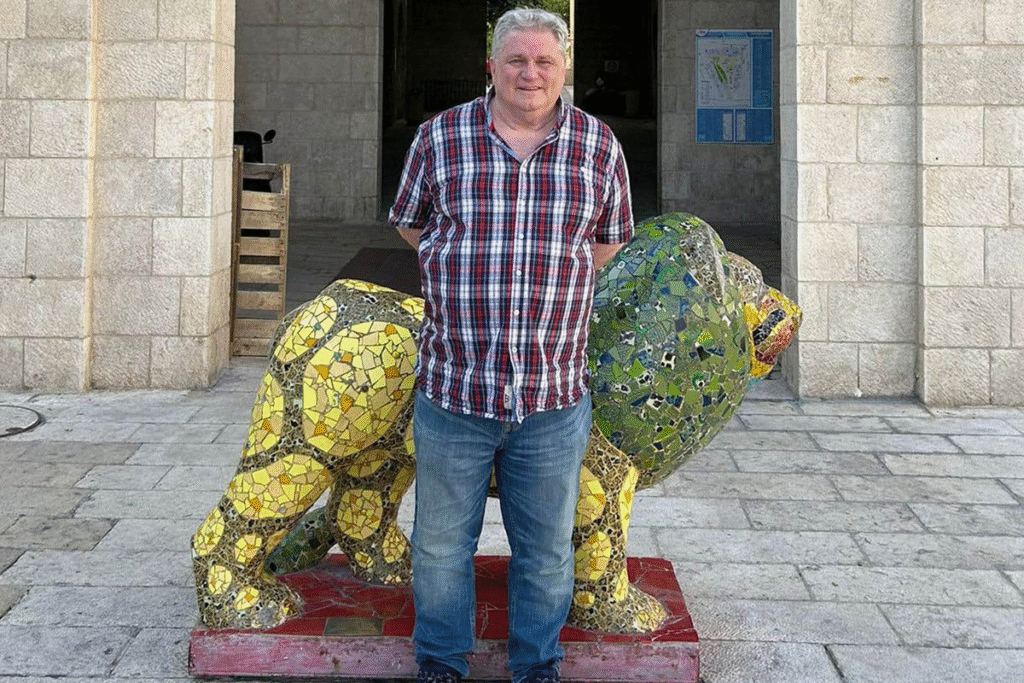
That reassurance, however, offers little practical relief to someone stuck in a volatile area with no clear way home. Eden emphasized that while he remains in touch with the embassy, they are only able to monitor the situation and log his location. “They said, ‘We’ve got your name, we know you’re there—keep us updated’. But there’s not much else,” he said. His main concern now is ensuring he has enough medication and staying safe in the meantime. “I’ve got two weeks of medication with me. I was enjoying myself, but now I just want to go home.”
Eden’s story highlights the emotional and psychological toll of being stranded in a conflict zone, especially for older travelers. The fear of missile attacks, the pressure of making potentially life-threatening travel decisions, and the uncertainty about how long the crisis will last weigh heavily on his mind. What began as a journey of faith has now become a test of endurance and resilience.
The situation in Israel remains unstable, and the risks for foreign nationals trying to leave the country are growing. While diplomatic missions continue to monitor their citizens, the limitations of international support in rapidly deteriorating conflict zones are becoming painfully clear. James Eden’s case serves as a cautionary tale for travelers and a reminder of how quickly the world can shift beneath one’s feet.
For now, James Eden remains in Jerusalem, weighing his options and hoping for a safe route home. His courage and calm in the face of danger stand as a testament to the human spirit—and the urgent need for stronger international protocols to assist civilians caught in conflict abroad.