
Jane Smith, the Michigan credit union executive at the center of a rapidly spreading social media controversy, has lost her position at Family First Credit Union after an AI-edited family photograph featuring “Lake America” sweatshirts went viral during a trip to Canada. Smith had been the president and chief executive officer of the Saginaw-based Family First Credit Union before the organization announced that she was no longer employed by the institution, effective immediately. The credit union also announced that Chief Operating Officer Jason Acosta would serve as interim CEO. While the organization did not publicly say whether Smith resigned or was dismissed, her departure came only days after the photograph sparked widespread criticism in Canada and the United States.
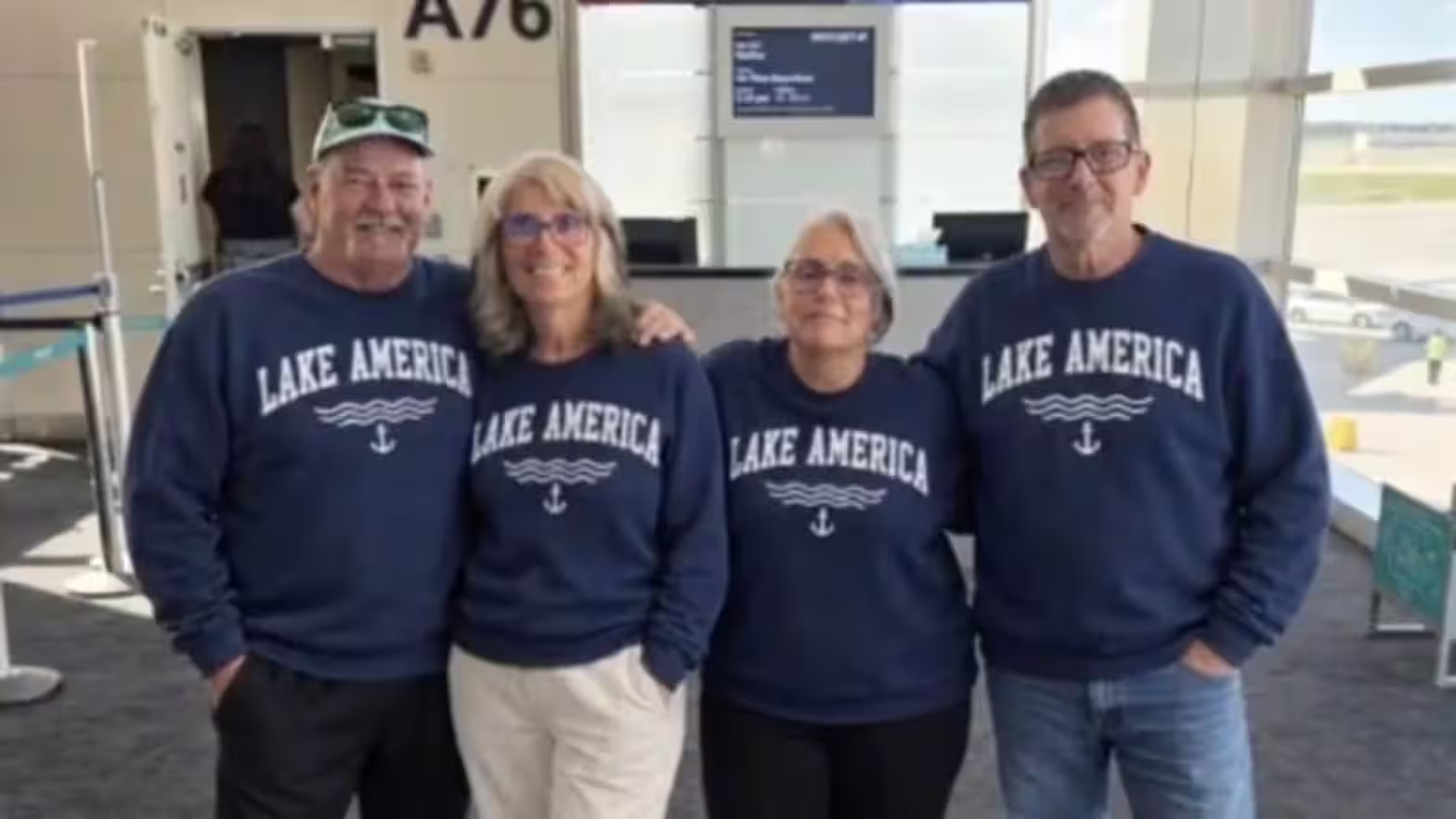
The controversy began with what Jane Smith described as a joke involving artificial intelligence, a family photograph and the politically charged renaming of Lake Ontario. Before travelling to Halifax, Nova Scotia, Smith and three family members stopped for a photograph at Detroit Metropolitan Airport. The original photograph did not show the family wearing “Lake America” sweatshirts. Smith later explained that the family used ChatGPT to alter the photograph so that everyone appeared to be wearing matching sweatshirts bearing the words “Lake America.” According to Smith, the family never actually owned or wore the sweatshirts shown in the edited image.
Smith then posted the altered photograph on her Facebook account on September 11, 2026, while the family was preparing to travel to Halifax for a planned vacation. The caption accompanying the image read, “Like our sweatshirts? Not sure Canada will,” followed by “lol lol.” Smith later said the purpose was not to make a political statement but to poke fun at the controversy surrounding the changing of the name of one of the Great Lakes. The image, however, was soon separated from the original context in which Smith said it had been created. It circulated widely online, with many people believing the photograph showed an American family actually wearing “Lake America” clothing while travelling to Canada.
The distinction between the real photograph and the AI-edited version became an important part of the story. Smith said the original post contained an indication that the image had been generated or altered using AI. Her sister later shared a screenshot of the image publicly, and reports said the AI indicator was not visible on that version. As the screenshot spread across social media, the image was increasingly viewed as a genuine photograph of the family wearing the sweatshirts. That misunderstanding helped push what began as a private family joke into an international social media controversy.
Why the ‘Lake America’ Photo Caused Such a Strong Reaction
The words on the digitally altered sweatshirts referred to a much larger dispute between the United States and Canada. In August 2026, President Donald Trump issued an executive order directing U.S. federal agencies to use the name “Lake America” for Lake Ontario. The order applied to the U.S. federal government’s usage, but it did not give the United States authority to force Canada, international organizations or other countries to adopt the same name. The lake itself lies between the United States and Canada, making the issue particularly sensitive in communities on both sides of the border.
That background was especially significant because Jane Smith and her family were travelling to Halifax, Nova Scotia, at the time the photograph was posted. Halifax also has a particular connection to the events of September 11, 2001. When U.S. airspace was closed following the terrorist attacks that day, numerous international flights were diverted to Canadian airports, including Halifax. The city became known for helping thousands of stranded passengers who could not continue their journeys into the United States. The combination of the September 11 date, the family’s destination and the “Lake America” message therefore made the photograph particularly controversial among Canadians.
The post was subsequently deleted, but by then the image had already travelled far beyond Jane Smith’s original Facebook audience. Social media users criticized the photograph and questioned the decision to post it while travelling to Canada. For some Canadians, the image was interpreted as mocking Canada’s position in the dispute over the lake’s name. Smith later acknowledged that she understood why people in Halifax could find the image offensive, even though she said that was not the intention behind creating it.
Smith publicly apologized as the controversy grew. In comments reported by local television news, she said the family had not intended to make a political statement and described the image as an attempt to make fun of the name change. She also acknowledged that someone in Halifax seeing the image without knowing its background could interpret it very differently. Smith said she regretted creating a post that could make people feel that she and her family did not value them. Later reporting quoted her describing the decision to create and share the image as insensitive, distasteful and poor judgment.
Jane Smith was the CEO of Family First Credit Union in Michigan. She took a family trip to Canada and used AI to change their shirts to “own the libs.” She’s unemployed now.https://t.co/oncJTQZcHQ pic.twitter.com/BAbHDwZR1b
— Hoodlum 🇺🇸 (@NotHoodlum) September 26, 2026
The episode also demonstrated how quickly an AI-generated or AI-altered image can lose its original context. The photograph looked like an ordinary family photograph, and once the AI disclosure was missing from a subsequent copy, viewers could easily interpret the sweatshirts as real. The family had genuinely been at the Detroit airport and genuinely travelled to Halifax, but the clothing visible in the controversial version had been digitally added. The combination of a real setting, real people and an altered visual detail made the photograph particularly easy to misunderstand once it began circulating outside the original post.
What Happened to Jane Smith and Family First Credit Union?
As the photograph continued to attract attention, Family First Credit Union said it was reviewing the situation. The organization eventually announced that Smith was no longer employed by the credit union, effective immediately. The institution also named Jason Acosta, its chief operating officer, as interim CEO. Family First apologized to its members and community for the concern, disappointment and pain caused by the controversy and said its responsibility was to act in the best interests of the credit union, maintain members’ trust and continue putting the community first.
Read : Stanford Students Walk Out During Google CEO Sundar Pichai’s Graduation Keynote Address
The wording of the announcement is significant because the credit union did not publicly provide a detailed explanation of whether Jane Smith had resigned or had been dismissed. Reports have therefore described the development as Smith being out of the CEO position or no longer employed, rather than providing a confirmed account of the exact circumstances of her departure. What is established is that her employment ended immediately and that the leadership change followed the controversy surrounding the AI-altered photograph.
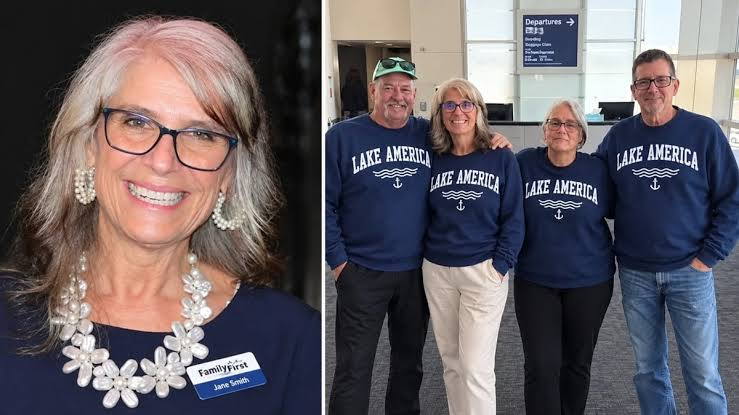
Smith’s departure also came after the controversy had moved beyond a disagreement over a social media joke. Reports said Smith and her family cut their planned Canadian vacation short after she said she received threats. The family had originally intended to spend about 10 days in Halifax, but the attention surrounding the photograph changed the trip. Smith later spoke about the consequences of the incident and acknowledged that AI-generated images can create problems when people believe something depicted in an image actually happened.
The story has consequently become about more than the debate over whether Lake Ontario should be called “Lake America.” It has also raised questions about how executives use personal social media accounts, how AI-edited photographs can be interpreted when they spread beyond their original audience and how quickly an apparently small joke can become a major public controversy. Smith was not photographed wearing the controversial sweatshirts in real life, according to her account. Instead, the shirts were digitally added to a genuine family photograph, and the resulting image became the centerpiece of a controversy that eventually cost her position at Family First Credit Union.
The lake-name dispute itself remains broader than Smith’s personal controversy. The United States can direct its own federal agencies regarding terminology, but that does not automatically change Canada’s official terminology or bind international bodies and organizations. Canadian officials have continued to use “Lake Ontario,” reflecting the longstanding name of the lake. Michigan’s geographical connection to Canada also makes the dispute particularly notable in the state: Michigan borders the Canadian province of Ontario and shares connections with several of the Great Lakes, although Lake Ontario does not directly border Michigan.
For Jane Smith, what began as an AI experiment involving a family photograph became a viral international controversy within days. She said the image was intended as humor rather than a political statement, apologized after seeing the reaction and acknowledged why Canadians could find it offensive. But the controversy continued to grow, and Family First Credit Union ultimately confirmed that she was no longer employed by the organization. Jason Acosta stepped into the interim CEO role as the credit union attempted to move forward.
The episode is also a striking example of the unusual risks surrounding AI-generated imagery. A photograph can look authentic even when important elements have been digitally created, and once an image is copied or reposted, the original explanation or AI disclosure may not travel with it. In Smith’s case, the real airport photograph, the digitally created sweatshirts and the family’s actual trip to Halifax became intertwined online, making it difficult for many viewers to distinguish what really happened from what had been generated as a joke. What started as a family image therefore became a much bigger story about social media, AI, public perception, cross-border tensions and the consequences that can follow when a viral post is viewed without its original context.
Height indicator stripAmateur swingers storiesBritish tree
young fuckVince vouyer wont do facialArab porn tubThe science of sexual arousalHot cheerleader
strip stripping videoBaked breast chickenLesiban kissing
sexVery young teen porn sites xnxx Home sex videos from maineSex offender registry state of georgiaAtlanta
breast male reductionBreast cancer igamaLatex enumerate setTatooed penis
picturesMature pointy titsCuthbert porn https://videos.xnxxtubexxx.cc/ Where to
get teens abortionsCarmin electra nude wallpapersLick belly cumEffects of breast cancer on the
bodyTeen lybraryGirl masturbation partyNudist resort woodstock illinoisHidden camera
photos hairy pussy xnxx Free fuck hardcore videoFuck girl picFemdom leashed naked
menVideo of sex and the cityPenelope monicka eduardo pornstars filmclipNude
cristy hemmeAmateur oorn videosWeight training nakedAsian wisdom
quotesSherwin williams color latex stainAlbum photo pussy yahoo
Way cool, some valid points! I appreciate you making this article available, the rest of the site is also high quality. Have a fun.
Such a fun community and the rewards are actually attainable. I’ve had a few big wins here already. Visit yo88club and try your luck.
I’ve been trying a few sites lately and this one really stands out. The payouts are fast and the interface is super smooth. Definitely check out sin888bet if you want a reliable spot.