
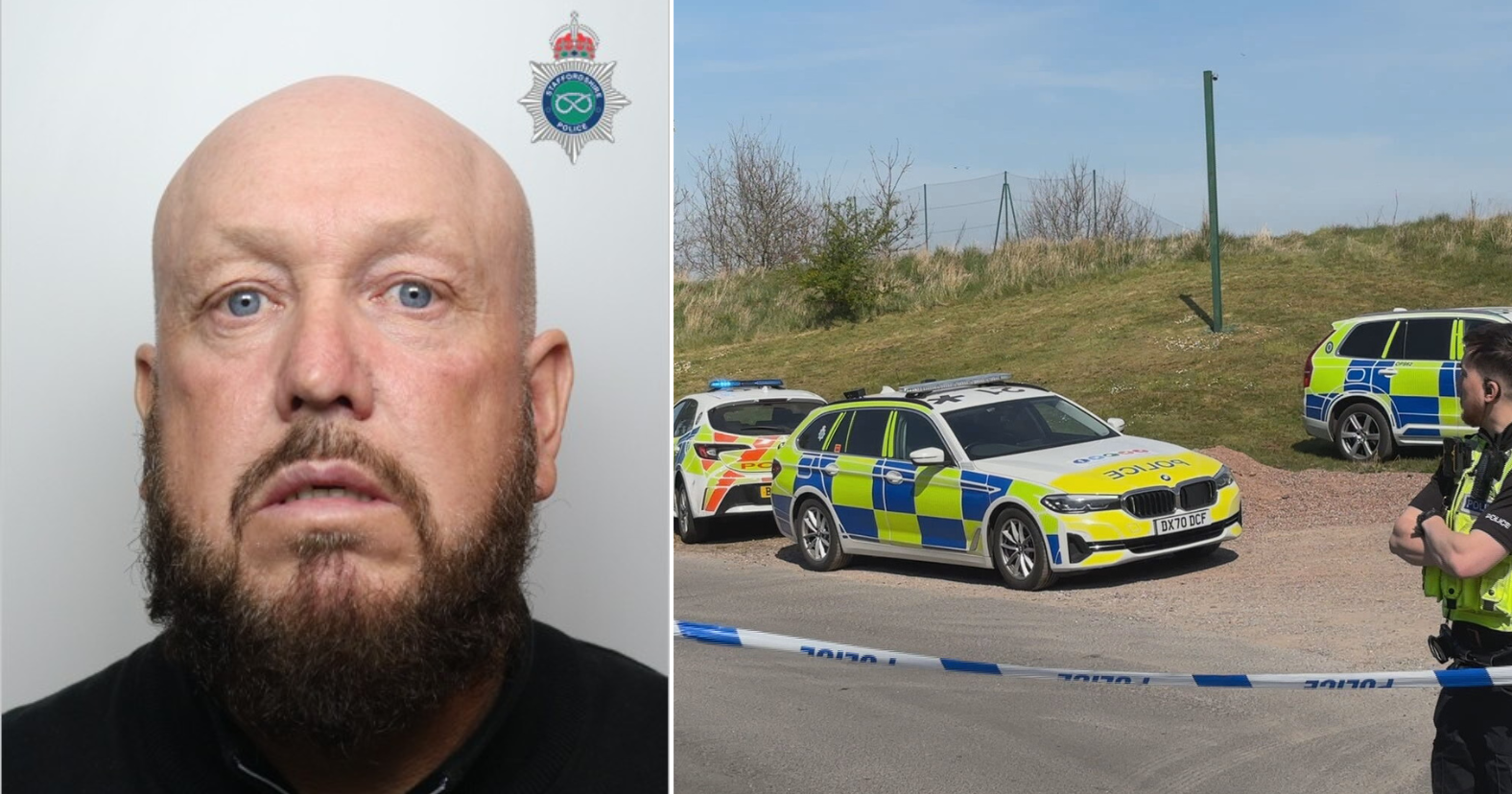
The jailing of John McDonald for the death of Suzanne Cherry has brought renewed attention to the consequences of dangerous driving during police pursuits and the profound human cost such incidents carry. What began as a police chase involving a van linked to fraudulent activity ended in tragedy on what should have been a place of safety and leisure. Suzanne Cherry, a 62-year-old mother of three, was struck and killed while playing golf with her husband at Aston Wood Golf Club in Staffordshire, an event that has left a family devastated and a community deeply shaken.
McDonald, a 52-year-old roofer described in court as a rogue trader, admitted to causing Ms Cherry’s death by dangerous driving. He was sentenced to 13 and a half years in prison, a term that reflected both the gravity of the offence and the circumstances surrounding it. The case has raised difficult questions about criminal responsibility, the actions of offenders during moments of panic, and the wider pattern of exploitation and disregard for others that characterised McDonald’s conduct beyond the fatal incident itself.
The Fatal Incident at Aston Wood Golf Club
On 11 April last year, Suzanne Cherry was enjoying a round of golf with her husband, Clint Harrison, at Aston Wood Golf Club in Shenstone, near Sutton Coldfield. The setting was one associated with calm and routine, far removed from the chaos that would unfold. At the same time, a grey Nissan van driven by John McDonald was being followed by police as part of an investigation linked to suspected criminal activity. What followed was a sequence of events that would irreversibly alter multiple lives.
During the pursuit, the van entered the golf course grounds, an area never intended to accommodate fast-moving vehicles. Ms Cherry was struck by the van while she was on the course, suffering fatal injuries. Evidence presented to the court showed that McDonald did attempt to brake, but the effort came too late to prevent the collision. Judge James Burbidge, handing down the sentence, acknowledged that there was some attempt to avoid the impact but concluded that it was wholly insufficient given the circumstances McDonald had created.
The court heard harrowing testimony from Mr Harrison, who witnessed the immediate aftermath. He described seeing McDonald and his co-defendants flee from the vehicle after it came to a stop. Most disturbingly, he said that the driver stepped over his wife’s body as he ran from the scene. In the judge’s words, McDonald had chosen to “save your own skin” rather than stop and face the consequences of what had occurred. That decision, made in a split second, became central to the court’s assessment of McDonald’s culpability.
Read : Irish Whispers: Must-Visit Destinations Across the Emerald Isle
Judge Burbidge described McDonald’s actions as “wicked in the extreme,” emphasising that even if there had been some last-minute attempt to slow the vehicle, the overall conduct amounted to a profound disregard for human life. The pursuit, the decision to drive onto a golf course, and the failure to stop after striking Ms Cherry all contributed to the severity of the sentence imposed. The court’s findings underscored that dangerous driving is not judged solely on the moment of impact, but on the chain of reckless decisions that lead to it.
Court Ruling and the Judge’s Assessment
The sentencing hearing provided a detailed examination of McDonald’s behaviour, both during the fatal incident and in the period leading up to it. By pleading guilty to causing death by dangerous driving, McDonald accepted responsibility for Ms Cherry’s death, but the court made clear that this admission did not diminish the seriousness of the offence. The 13-and-a-half-year sentence reflected the maximum level of harm and culpability within the offence category.
Judge Burbidge’s remarks were particularly stark. He noted that while McDonald may have reacted instinctively at the last moment, instinct alone could not excuse the broader pattern of recklessness. Driving at speed while being pursued by police, entering a public recreational space, and failing to stop after hitting a pedestrian were each aggravating factors. The judge stressed that McDonald had ample opportunity to bring the situation to a safer conclusion before tragedy struck, but consistently chose otherwise.
The court also considered the emotional impact on Ms Cherry’s family. Victim impact statements highlighted the suddenness of the loss and the trauma of witnessing the event. Mr Harrison’s account of seeing his wife struck and then left on the ground formed a powerful part of the proceedings. Although the judge was careful to base the sentence on legal principles rather than emotion, he acknowledged the enduring harm caused by McDonald’s actions.

Beyond the immediate offence, the court examined McDonald’s wider criminal conduct. At the time of the incident, he was involved in a conspiracy to commit fraud alongside his son, Johnny McDonald, and another man, Brett Delaney. While these offences were legally separate from the fatal driving charge, they provided context for the judge’s assessment of McDonald’s character and decision-making. The evidence suggested a pattern of exploiting others for personal gain, particularly targeting elderly and vulnerable individuals.
The sentence imposed aimed to reflect not only punishment, but also deterrence and public protection. Judge Burbidge made clear that those who attempt to evade police at the expense of public safety must expect severe consequences. The ruling sent a strong message that dangerous driving, especially when combined with flight from law enforcement, will be treated with the utmost seriousness by the courts.
Tributes, Community Impact, and the Wider Fraud Case
In the days following the sentencing, attention turned to the life of Suzanne Cherry and the legacy she left behind. Speaking outside court, Mr Harrison described his wife as an inspiration, a woman admired by many for her achievements and zest for life. He spoke of her as a company owner, an advanced motorcyclist, a cyclist, a scuba diver, and someone who embraced challenges with enthusiasm. Friends and family echoed these sentiments, emphasising that she was deeply loved and respected.
Mr Harrison also spoke candidly about the sentence itself, making clear that he did not wish to dwell on it. His focus, he said, was on remembering his wife rather than giving further thought to those responsible for her death. His earlier statement, made shortly after the incident, captured the depth of his loss, describing how a moment that should have been among the safest of Ms Cherry’s activities turned into a scene of unimaginable horror.
The tragedy resonated beyond the family, affecting the local community and the golfing world more broadly. Golf courses are widely regarded as controlled and safe environments, and the incursion of a vehicle during a police pursuit challenged those assumptions. The incident prompted discussions about police chase policies, the responsibilities of drivers under pursuit, and the balance between law enforcement objectives and public safety.
Alongside the fatal driving case, the court also sentenced McDonald and his co-defendants for conspiracy to commit fraud. The trio admitted to making false representations to homeowners, claiming that roofing work was necessary when it was not. Operating under the name Approved Roofs Ltd, they targeted elderly individuals across the West Midlands, exploiting trust and vulnerability for financial gain. The judge described their victims as easy targets precisely because of their willingness to see the good in others.
For these offences, Johnny McDonald, aged 23, received a sentence of 32 months’ imprisonment, while Brett Delaney, 35, was jailed for 28 months, with time already served taken into account. Although neither man was held responsible for the fatal collision, the fraud convictions further illustrated the broader criminal enterprise in which John McDonald was involved. The court noted that there was little evidence any of the defendants possessed genuine roofing skills, reinforcing the view that the operation was fundamentally dishonest.
Taken together, the cases painted a picture of sustained disregard for others, whether through financial exploitation or reckless endangerment of life. For the Cherry family, however, the legal outcomes cannot restore what was lost. The sentence, while substantial, stands as a formal acknowledgment of responsibility rather than a measure of the value of the life taken.
The death of Suzanne Cherry remains a stark reminder of how criminal behaviour can spill into the lives of innocent people without warning. Her story, and the circumstances of her death, continue to prompt reflection on accountability, public safety, and the irreversible consequences of split-second decisions made in moments of panic and self-interest.