
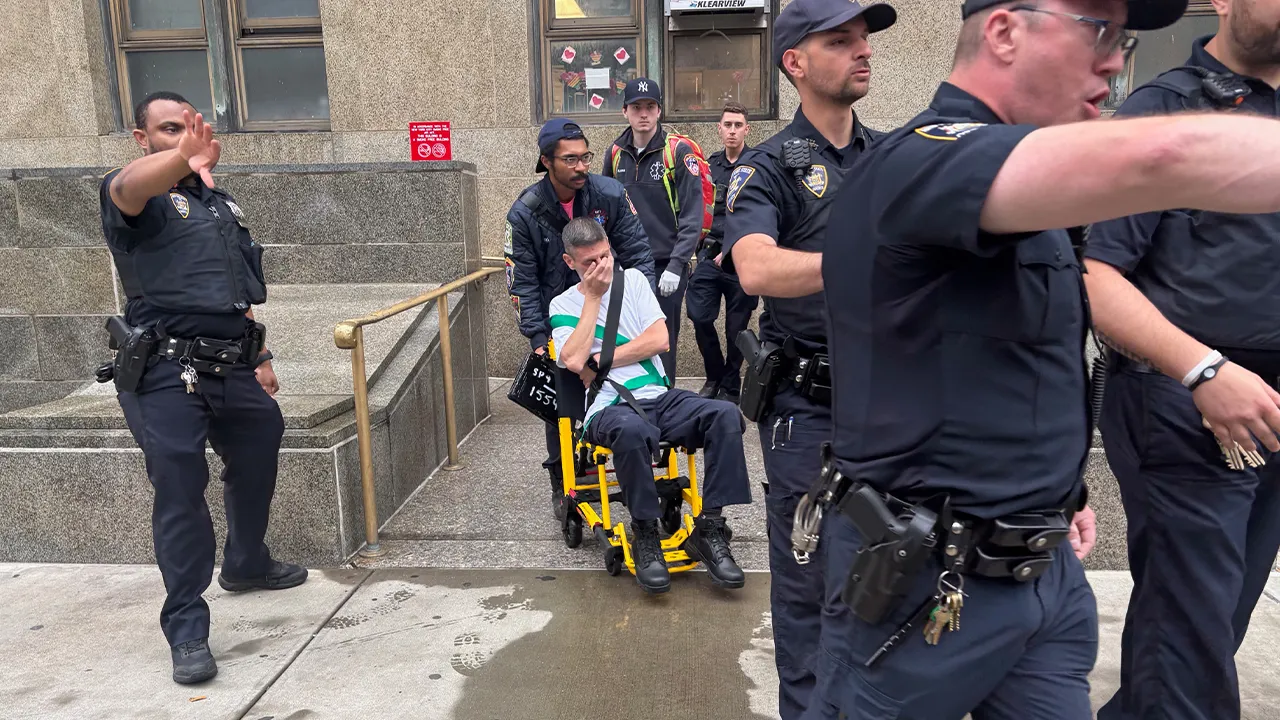
A normal morning at Manhattan Criminal Court quickly turned into a scene of chaos and horror when Jonathan Wohl, a 37-year-old man from Queens, launched a violent and premeditated knife attack on multiple court officers. Armed with a curved blade and driven by a disturbing collection of handwritten notes railing against the justice system, Wohl’s actions shocked a city already grappling with increasing concerns about violence and security in public institutions.
The courtroom attack was not only sudden but caught on camera, capturing the terrifying moments as officers risked their lives to subdue him. The incident occurred at around 9:30 a.m. inside the 100 Centre Street courthouse. As Jonathan Wohl approached the security checkpoint, he appeared calm, hiding the storm that was about to erupt.
Without warning, he bolted and began slashing at officers nearby. The sudden and targeted attack left multiple officers injured, and the scene devolved into chaos before fellow court personnel courageously brought the assailant under control. Prosecutors later revealed that Jonathan Wohl’s pockets were stuffed with a notebook and handwritten pages, displaying a disturbing mindset filled with anti-establishment rhetoric and references to violent ideals.
A Premeditated Attack with Alarming Writings
According to Assistant District Attorney Taylor Holland, Jonathan Wohl’s violent outburst was not a random act but a “premeditated” assault fueled by deeply held grievances. Among the papers recovered from Wohl were multiple pages containing bold, emotional messages — some declaring, “Give me liberty or give me death,” others packed with scathing criticisms of the legal system and law enforcement.
Prosecutors emphasized that Wohl had deliberately chosen his moment and location to make a statement, targeting a symbol of the state’s power in full public view. One particular page also referenced Rodney Hinton, the Ohio man who made headlines recently for running over and killing a retired sheriff’s deputy after his own son had been fatally shot by police.
The inclusion of this name among Wohl’s writings seemed to indicate that he was not only angry with the justice system but possibly inspired by other violent events involving law enforcement. These troubling references painted a picture of a man spiraling into extremism, obsessed with a sense of persecution and determined to act on it in a dramatic and destructive way.
🚨 🇺🇸 Un homme de New York brandissant un couteau taillade deux policiers dans un palais de justice de Manhattan, en touchant l'un au cou et l'autre au visage dans des images obtenues par le New York Post.
— Wolf 🐺 (@PsyGuy007) June 16, 2025
Le suspect a été identifié comme étant Jonathan Wohl, 37 ans.
Sans… pic.twitter.com/Eotc48ppeI
Prosecutors also highlighted Wohl’s criminal history, which includes a felony drug conviction and a charge of resisting arrest from the early 2010s. His history with the court system wasn’t limited to just previous charges — officials revealed that he had been forcibly removed from the same Manhattan courthouse earlier this year after causing a disturbance and shouting inflammatory rhetoric about law enforcement.
There is also a pending case involving him in New Jersey related to another courthouse incident in Paterson. This pattern of behavior suggests that Wohl has long been on a collision course with the justice system, culminating in this violent eruption on Monday morning.
Court Officers’ Heroic Response Prevents Greater Tragedy
The rapid and brave response of the court officers present during the attack was credited with preventing what could have easily become a fatal event. According to Stephen Mikos, president of the state Court Officers Association, more than 50 court officers packed the courtroom during Jonathan Wohl’s arraignment the following day to show solidarity and support for their injured colleagues.
Mikos praised the quick and coordinated reaction of the officers, stating, “As you could see, the response of the officers, how they reacted basically saved lives that day.” Jonathan Wohl wielded a curved knife during the attack, which prosecutors say could have inflicted even more damage had it been a straight-edged blade.
Nonetheless, several officers sustained injuries while trying to neutralize the attacker. Footage from the courthouse’s surveillance cameras captured the terrifying moments when Wohl ran through the security checkpoint and unleashed his fury. The video has since become a stark reminder of the risks that court officers face every day in protecting judges, employees, and the public within these government institutions.
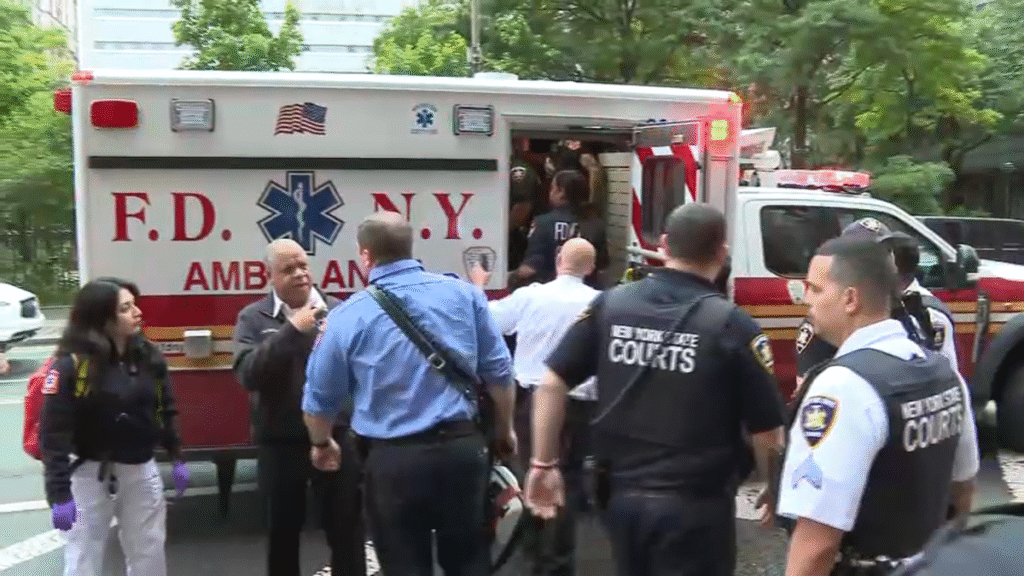
District Attorney Alvin Bragg commended the officers’ courage and reiterated the city’s commitment to ensuring safety within its courthouses. “We will not tolerate that in Manhattan,” Bragg stated during a press briefing following Wohl’s arraignment. “I’m grateful for the work they do each and every day.” Jonathan Wohl was charged with multiple felonies, including attempted murder and assault, and was ordered held without bail at Rikers Island.
A Troubling Pattern of Escalation
While this specific incident is alarming on its own, it appears to be part of a broader pattern of disturbing behavior from Jonathan Wohl. His previous run-ins with the law, combined with the violent rhetoric in his notes, reveal a man consumed by hostility toward law enforcement and the court system. His earlier ejection from the courthouse for aggressive behavior in January should have raised red flags about his potential for violence.
Similarly, the pending case in New Jersey shows that his hostility wasn’t isolated to just one jurisdiction. Wohl’s apparent fixation with perceived injustices and his dramatic act of rebellion may reflect a growing trend among certain individuals who view themselves as warriors against a corrupt system.
The invocation of revolutionary phrases like “Give me liberty or give me death” suggests a dangerous ideology rooted in historical allusion but distorted through personal grievances. What remains unclear is whether Wohl was affiliated with any extremist groups or acting entirely alone in his beliefs and actions.
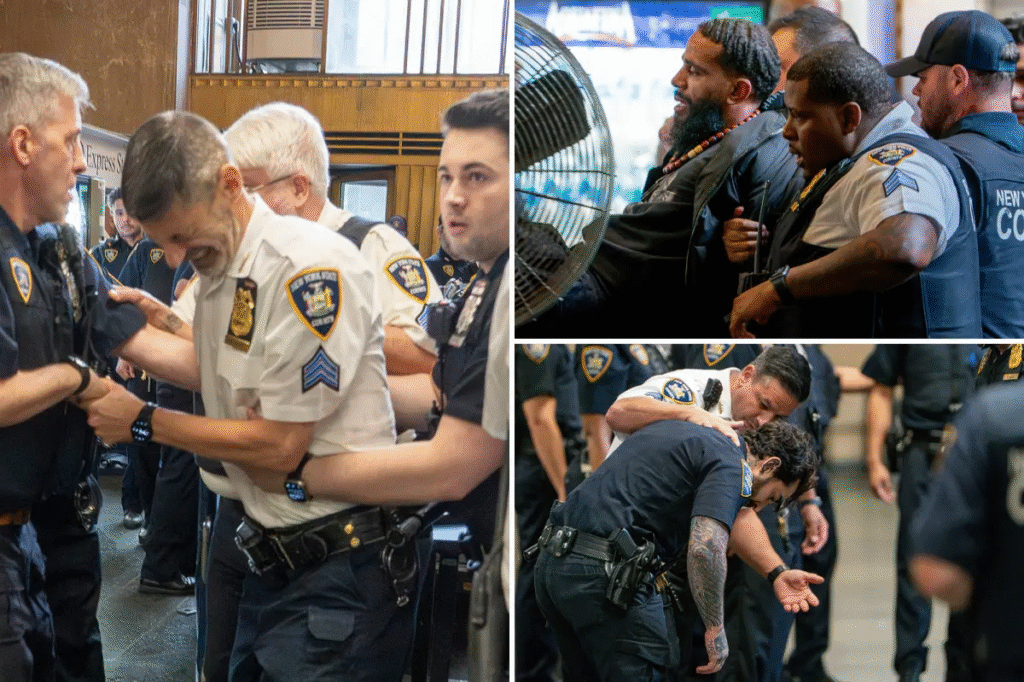
His references to Rodney Hinton, and the tragic events surrounding Hinton’s son’s death, also suggest a broader narrative Jonathan Wohl may have been constructing in his mind — one where he was a martyr or avenger fighting against perceived systemic oppression. These themes, unfortunately, are not new in the landscape of domestic threats and lone-wolf attackers. They serve as a grim reminder that ideology, mental instability, and access to weapons can be a volatile and deadly combination.
Now held at Rikers Island, Jonathan Wohl awaits further legal proceedings. His arraignment was a solemn event, witnessed by dozens of court officers who had either directly experienced or been shaken by the violent episode. It marked the beginning of what will likely be a closely watched case, not only for its shocking nature but for what it might reveal about the vulnerabilities in courthouse security and the early warning signs that may have been missed.
In the wake of this attack, questions are being raised about how someone with Jonathan Wohl’s history and erratic behavior could gain access to a courthouse with a weapon. It underscores the need for continual review and strengthening of security measures in government buildings, especially courthouses that are frequently the targets of emotionally charged confrontations.
As the case moves forward, attention will also turn to Jonathan Wohl’s mental health and whether any previous interventions could have prevented the attack. His ramblings, writings, and escalating encounters with law enforcement paint a deeply troubling portrait of a man who was clearly on the edge. The challenge now lies in addressing how to better identify and manage such threats before they reach a critical and dangerous tipping point.