

The March 2024 killing of 31-year-old Goldsmiths University student Zhe Wang by her classmate and on-and-off partner, 26-year-old American student Joshua Michals, stands as one of the most disturbing relationship-violence cases to emerge from London in recent years. What began as a dispute over sexual health concerns escalated into a fatal confrontation inside Wang’s flat, ending the life of a woman described as gentle, quiet, academically driven, and deeply focused on her future in the arts.
A London jury has now convicted Joshua Michals of murder, rejecting his claims of self-defence and accidental harm. The case raises urgent questions about interpersonal violence, digital evidence, and the dynamics of fear and control that can unfold in private relationships long before tragedy becomes visible to the outside world.
The relationship between Wang and Joshua Michals began in 2023 after the two met on campus at Goldsmiths, University of London, where both were pursuing advanced degrees. Their connection, though initially casual, grew increasingly strained as disagreements accumulated. Central among these tensions was a prolonged dispute about sexually transmitted diseases.
According to police and trial evidence, Wang repeatedly urged Michals to take an STD test after noticing a “red dot” on her skin following sexual contact. Her anxiety was reportedly heightened by her preexisting concern about germs, a factor the defence later attempted to use to justify Michals’ reluctance to engage with her requests. However, the prosecution made clear that Wang’s insistence on testing was not irrational but rather within the normal bounds of communicative expectations in sexual relationships.
Messages later recovered from Michals’ phone revealed that this was far from a single disagreement. Instead, it had escalated into months of disputes, fears, accusations, and emotional friction. The tension reached a breaking point on March 20, 2024, when Joshua Michals visited Wang at her southeast London flat. What happened next would become the centerpiece of courtroom testimony—and ultimately the reason for his conviction.
Relationship Breakdown and Rising Tensions
The months leading up to the killing revealed a deteriorating relationship marked by increasingly heated communication and frequent conflict. Evidence retrieved by investigators established a recurring pattern: Wang expressed concern about her health and pressed Michals to undergo testing, while Joshua Michals responded with avoidance, irritation, and defensiveness. The recovered deleted messages underscored that the dispute was not merely about a medical test but about trust, honesty, and respect. Phone records pulled from cloud backups and device software provided a chronological depiction of arguments that had steadily grown sharper over time.
Friends of Wang described her as soft-spoken and reserved, someone unlikely to provoke conflict without significant cause. For her, the STD testing issue was not merely about personal anxiety but about safety and responsibility in a sexual relationship. According to evidence presented by the prosecution, Wang felt so troubled by Joshua Michals’ reluctance that she warned she would come to campus and “drag” him to a doctor if he continued to avoid her concerns. Her messages, though urgent, remained grounded in a desire for clarity.
Read : 26-Year-Old Goldsmiths Student Joshua Michals Stabbed Fellow Chinese Student to Death
For his part, Joshua Michals reportedly told jurors he believed Wang’s fears stemmed from her germ phobia, which he claimed he had tried to navigate delicately. He presented himself as emotionally overburdened by her requests, portraying the situation as one in which he felt cornered or overwhelmed. Yet the prosecution countered that the accumulation of his deleted messages—along with the sequence of events on the day of the killing—demonstrated intentional concealment and a deliberate attempt to avoid accountability.
By the time March 20 arrived, it was clear that both individuals were approaching the meeting with unresolved tension. Joshua Michals later claimed he arrived with a charcuterie selection as a peace offering, hoping to ease the strain. But the prosecution pointed out that this gesture did not align with the increasingly hostile messages he had sent and deleted. His final message to Wang that evening—simply “here”—was timestamped at 19:17 and showed that he had come to her flat prepared for a significant conversation.
The Fatal Night Inside the Flat
According to Joshua Michals’ testimony, the fatal confrontation began after he emerged from Wang’s bathroom to find her holding a knife. He claimed she lunged at him, forcing him to defend himself. He argued that the fatal injuries—two stab wounds to Wang’s face and strangulation—were the result of a chaotic scuffle in which he only intended to push her away and restrain her, not kill her. “I just wanted to get her away from me,” he told jurors, insisting that the pressure he applied to her neck was meant to subdue, not cause fatal harm.
The prosecution, led by Henrietta Paget KC, rejected this account outright. They argued that the pattern of injuries, the time delay between the attack and his call to police, and the disposal of evidence all indicated a violent and intentional assault rather than an act of panic or self-preservation. Paget described Joshua Michals as having “flown into a rage” during an argument, using his physical advantage to overpower Wang in a brutal manner.
The post-mortem examination results provided stark details: Wang suffered two stab wounds to her face and injuries consistent with sustained manual strangulation. The nature of the wounds contradicted Michals’ version of events, the prosecution argued, because they suggested close-range, directed violence rather than defensive flailing. Furthermore, bloodstained clothing found in Michals’ residence matched Wang’s DNA, reinforcing the conclusion that he had left the flat and made attempts to conceal what had happened.

Perhaps most damning was the discovery of Wang’s phone in a bin outside the property. Investigators found that Joshua Michals had taken steps to remove it from the scene, an action the prosecution interpreted as an effort to hide the digital record of their argument and prevent immediate discovery. Combined with the nearly four-hour delay before he contacted police—during which he phoned his father to seek legal advice—the evidence painted a picture of calculated evasion rather than accidental tragedy.
Detective Inspector Claire Guiver summarised the investigative view starkly: “Joshua Michals carried out a brutal and savage attack on Zhe, who was described by her friends as a quiet and gentle woman enjoying her studies in London. We are pleased the jury has seen through his claims that he killed Zhe by accident when she tried to attack him with a knife. It is clear that Michals is a dangerous, violent individual, and he will now have to live with the consequences of his actions.” Her statement echoed the broader metropolitan police sentiment that this was a case of extreme violence, not misfortune.
Friends and classmates described the crime as deeply shocking, especially given the public image of both students as academically focused and creatively inclined. Wang had been thriving in her studies and pursuing a future in the arts, while Joshua Michals, originally from Chicago, had moved to London to pursue a master’s degree in filmmaking. Nothing in their social personas hinted at the catastrophic end of their relationship. Yet digital records, forensic evidence, and witness testimony ultimately revealed the gulf between outward appearances and the reality behind closed doors.
Digital Evidence, Courtroom Testimony, and the Guilty Verdict
The courtroom proceedings played a crucial role in clarifying the timeline and undermining Michals’ self-defence claims. Prosecutors meticulously reconstructed the chronology of events using metadata from messages, call logs, surveillance footage, forensic reports, and examinations of both victims’ and defendant’s phones. The deleted messages became a central component of the case, illustrating the emotional temperature of the relationship and contradicting Michals’ narrative of calm intentions or innocent motives.
Jurors were asked to consider whether Michals’ behaviour after the killing—including his disposal of Wang’s phone, the hiding of bloodstained clothing, and the multi-hour delay before contacting authorities—aligned with the actions of someone who had acted in genuine self-defence. The prosecution argued that his choices reflected fear of consequences rather than fear for his life. By seeking legal advice before contacting law enforcement, Michals demonstrated awareness of guilt, they contended.
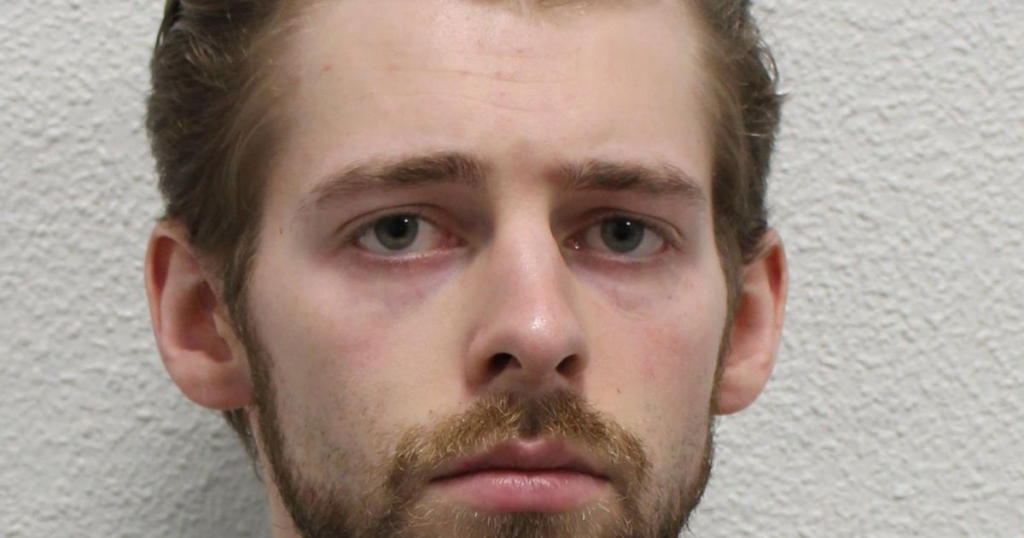
His defence centred on panic, confusion, and a claim that he had been attacked first, with the knife allegedly wielded by Wang. However, the forensic analysis contradicted this allegation. The location and nature of Wang’s wounds, the absence of defensive injuries on Michals, and the physical evidence in the flat all pointed toward him being the aggressor. Ultimately, the jury reached a unanimous guilty verdict.
With the conviction secured, Joshua Michals now awaits sentencing, which will be determined by the court at a later date. Legal observers expect a significant custodial term given the severity of the violence and the court’s determination that the act was intentional.
The case serves as a sobering reminder of how interpersonal conflicts—particularly those involving trust, communication breakdowns, and underlying emotional volatility—can escalate into catastrophic outcomes when paired with anger, fear, or refusal to engage honestly with a partner’s concerns. It also highlights the increasing role of digital forensics in reconstructing relationship dynamics and countering attempts to manipulate or erase evidence.
Zhe Wang’s death has left her family, friends, and academic community grappling with profound loss. For many, the conviction provides some measure of closure, though not relief from the grief of losing a woman described as hardworking, kind, and dedicated to her future. As the court prepares to determine Michals’ sentence, the case stands as a grim testament to the deadly potential of unchecked conflict and the irreversible consequences of a moment of rage.
Heard some buzz about 88gobet8. Thinking of checking it out for some weekend fun. The layout looks promising. Thoughts? Join me 88gobet8, let’s have some fun!