

The Kafue River, one of Zambia’s most vital waterways, has suffered an unprecedented ecological disaster after a massive spill of acidic waste from a Chinese-owned copper mine.
The spill, which released an estimated 50 million litres of toxic material, has devastated aquatic life, contaminated drinking water sources, and raised concerns over the long-term impact on communities and agriculture.
This catastrophic event has drawn significant attention to the environmental risks associated with large-scale mining in Zambia and has reignited debates over foreign-owned mining operations in the country.
The Environmental Catastrophe Unfolds
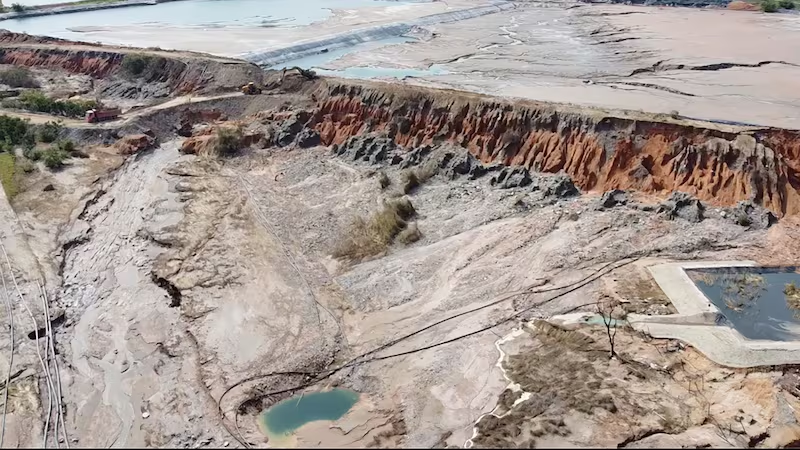
The spill occurred on February 18 when a tailings dam at the Sino-Metals Leach Zambia mine, a subsidiary of the state-run China Nonferrous Metals Industry Group, collapsed.
The dam was designed to contain highly acidic mining waste, but its failure led to a sudden release of a dangerous mixture of concentrated acid, dissolved solids, and heavy metals into a tributary of the Kafue River.
This river, stretching over 1,500 kilometers, is the lifeline of Zambia, providing water for millions of people, supporting agriculture, and sustaining a rich ecosystem.
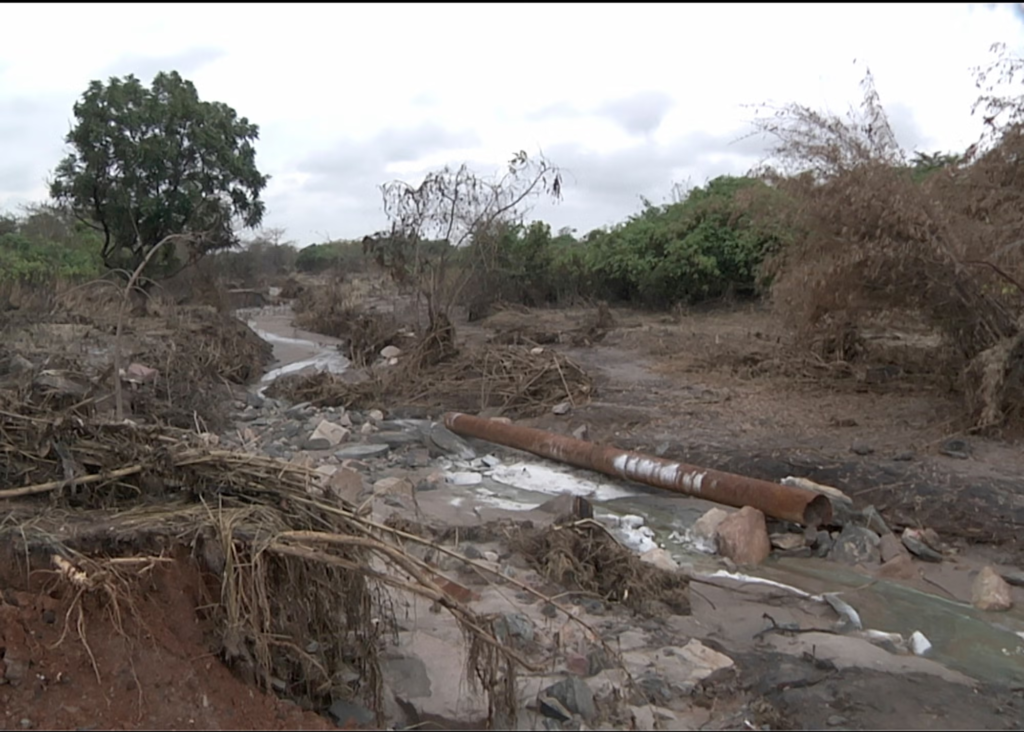
Environmental experts and government officials quickly assessed the damage, with reports confirming that contamination had already reached 60 miles downstream.
Dead fish began appearing on the riverbanks, and residents reported a sudden disappearance of birdlife in affected areas. Local communities, who depend on the river for fishing and irrigation, have been left devastated by the rapid decline in water quality.
Read : Missing 2-Year-Old Dane Paulsen’s Body Found in Siletz River
Sean Cornelius, a resident near the river, described the scene in chilling terms: “Prior to February 18, this was a vibrant and alive river. Now everything is dead, it’s like a totally dead river. Unbelievable. Overnight, this river died.”
This is a tailings dam in #Zambia filled with toxic waste spilling into the Kafue River. The dam is part of a #Chinese owned mine. Chinese owned companies are infamous for #environmental damage in #Africa @UNEP pic.twitter.com/wrCc9gx0yx
— Rob (@shumba60) March 15, 2025
The impact on agriculture has also been severe. Farmers along the riverbanks have reported the destruction of crops due to the toxic spill, raising concerns about food security in the region.
Moreover, scientists and environmentalists warn that the damage may not be limited to surface water, as the contamination could seep into groundwater supplies, further endangering public health.
Government Response and Mitigation Efforts
In response to the crisis, the Zambian government has taken urgent measures to mitigate the damage. Authorities deployed the air force to drop hundreds of tons of lime into the river in an attempt to neutralize the acid and prevent further spread of contamination.
Speedboats were also mobilized to apply lime directly into the affected areas of the river. Despite these efforts, environmental experts warn that reversing the damage will take years, if not decades.
The Ministry of Water Development and Sanitation has classified the consequences as “devastating,” highlighting the urgent need for long-term solutions to prevent future spills. The city of Kitwe, home to around 700,000 people, experienced a complete shutdown of its water supply due to the contamination, further exacerbating the crisis.
Zambian President Hakainde Hichilema has appealed for international assistance, recognizing that the scale of the disaster requires expertise and resources beyond the country’s current capabilities. The government has also vowed to hold Sino-Metals Leach Zambia accountable, insisting that the company bears the full cost of the cleanup operation.
During a meeting with government officials, Zhang Peiwen, chairman of Sino-Metals Leach Zambia, issued a formal apology for the disaster, stating that the company would take full responsibility for restoring the environment.
“This disaster has rung a big alarm for Sino-Metals Leach and the mining industry,” he admitted, promising that his company would work tirelessly to mitigate the damage.
However, public outrage remains high, with many Zambians expressing frustration over the role of Chinese mining companies in the country. Local environmental activists argue that foreign mining corporations prioritize profits over environmental safety, disregarding the devastating consequences their operations have on local communities.
The Broader Issue of Foreign Mining in Zambia
Zambia is one of the world’s top ten copper producers, and the industry plays a crucial role in the nation’s economy. However, the environmental and social costs of mining have long been a point of contention. Chinese companies, in particular, have faced criticism for their business practices, with accusations ranging from labor violations to environmental negligence.
The Kafue River disaster has amplified concerns about Chinese-owned mines operating in Zambia and other African nations. Similar incidents have been reported in neighboring Congo and Zimbabwe, where mining operations have been accused of polluting rivers, displacing communities, and ignoring safety regulations.
Critics argue that Zambia’s dependence on Chinese investment has given foreign companies too much influence over the country’s natural resources, often at the expense of local communities.
Zambia is also burdened with over $4 billion in debt to China, which has complicated its ability to regulate and enforce stringent environmental protections on Chinese-owned companies.
After defaulting on repayments in 2020, Zambia had to restructure some of its loans from China and other lenders, raising concerns about the country’s financial leverage over foreign investors.
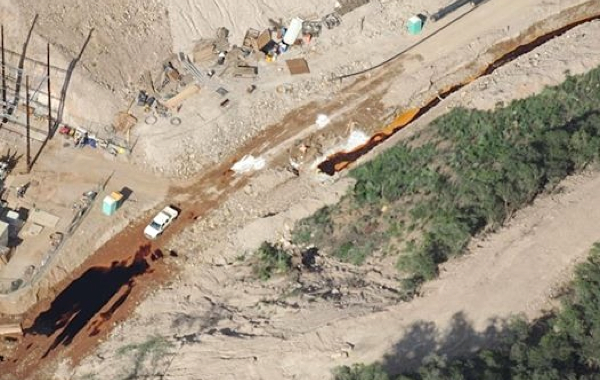
Further adding to public anger, another acid waste leak was discovered at a separate Chinese-owned mine in Zambia’s Copperbelt Province just days after the Sino-Metals spill.
Authorities allege that this mine attempted to cover up the incident, and a local worker tragically died after falling into the acid. Two Chinese managers have been arrested in connection with this second leak, and both mines have been ordered to halt operations.
Mweene Himwinga, an environmental engineer who attended the government meeting on the disaster, expressed frustration over the recurring nature of such incidents: “It really just brings out the negligence that some investors actually have when it comes to environmental protection.
They don’t seem to have any concern at all, any regard at all. And I think it’s really worrying because, at the end of the day, we as Zambian people, (it’s) the only land we have.”
The Road Ahead for Zambia’s Environmental Protection
The Kafue River disaster has highlighted the urgent need for stronger environmental regulations and enforcement mechanisms in Zambia’s mining industry. While mining remains an essential economic driver, the government must balance economic growth with environmental sustainability to prevent future disasters of this scale.
Several steps must be taken to ensure long-term protection of Zambia’s water resources. First, there needs to be stricter monitoring and enforcement of environmental regulations for all mining companies, regardless of their foreign or domestic ownership. Penalties for environmental violations should be severe enough to deter negligence and encourage responsible practices.
Second, there must be an independent environmental oversight body with the authority to conduct regular inspections and audits of mining operations. This body should be transparent and free from political or corporate influence to effectively hold companies accountable.
Third, investment in safer and more sustainable mining technologies is essential. Companies must be required to implement state-of-the-art waste management systems to prevent future tailings dam failures. Additionally, funds should be allocated for research on eco-friendly mining practices that minimize environmental risks.
Lastly, local communities must be empowered to participate in decision-making processes related to mining projects. Affected populations should have a voice in determining how mining activities are conducted and should be provided with compensation and support when environmental disasters occur.
The death of the Kafue River serves as a tragic reminder of the consequences of unchecked industrial activity. While immediate cleanup efforts are underway, the long-term challenge will be ensuring that Zambia’s natural resources are protected for future generations. Without decisive action, the country risks further environmental catastrophes that could permanently damage its ecosystems and threaten the livelihoods of millions.
The Kafue River may never fully recover from this disaster, but it can serve as a turning point for Zambia to demand higher environmental standards and greater accountability from foreign investors operating within its borders.