

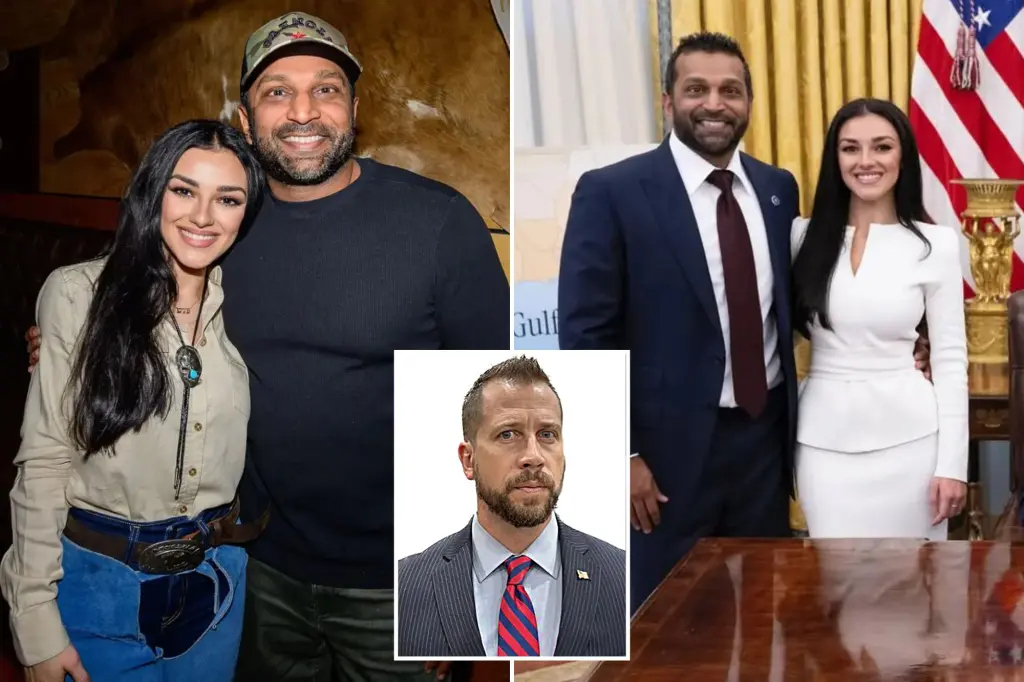
In a high-profile legal battle that has captured significant attention, Alexis Wilkins, the girlfriend of FBI Director Kash Patel, has filed a $5 million defamation lawsuit against former FBI agent turned podcaster Kyle Seraphin.
The lawsuit, filed on August 27, 2025, in the U.S. District Court for the Western District of Texas in Austin, accuses Seraphin of falsely claiming that Wilkins, a 26-year-old American country music singer and political commentator, is a former Israeli Mossad agent involved in a “honeypot” operation to manipulate and compromise Patel.
The allegations, made during an August 22 episode of The Kyle Seraphin Show, have sparked widespread controversy, drawing scrutiny to the intersection of media, politics, and personal reputation.
The Allegations and the Lawsuit
The core of the defamation lawsuit centers on statements made by Kyle Seraphin during the August 22, 2025, episode of his podcast, The Kyle Seraphin Show, which is broadcast to a sizable audience on platforms like X, Rumble, and YouTube. According to the legal complaint filed by Wilkins’ attorney, Jason Greaves, Seraphin claimed that Wilkins, who is significantly younger than Patel, was a “former Mossad agent” working for the Israeli equivalent of the National Security Agency (NSA).
He further suggested that her relationship with Patel, who was sworn in as FBI Director in February 2025, was a calculated “honeypot” scheme designed to manipulate the head of the FBI for foreign interests. The term “honeypot” refers to an intelligence operative who forms a romantic relationship to influence or compromise a target, implying espionage and potential treason.
The lawsuit argues that these claims are “categorically false” and were made with “actual malice,” a legal standard for defamation cases involving public figures, which requires proof that the defendant knowingly spread falsehoods or acted with reckless disregard for the truth. Alexis Wilkins’ legal team emphasizes that she is an American-born citizen, a conservative Christian, and has never visited Israel, let alone worked for any intelligence agency.
Read : Kash Patel’s Bollywood-Style ‘Malhari’ Welcome as FBI Director: Watch
The complaint highlights that Seraphin’s remarks were not only baseless but also damaging to Wilkins’ career as a rising country music artist and political commentator, particularly given her public persona as a patriotic figure in conservative circles. The lawsuit seeks at least $5 million in damages, citing harm to her reputation and professional opportunities.
EXCLUSIVE: FBI Whistleblower Kyle Seraphin Responds To FBI Director Kash Patel's Girlfriend Suing Him For His Coverage Of Allegations That She May Be Connected To Israeli Intelligence pic.twitter.com/CtW3RswrmY
— Alex Jones (@RealAlexJones) August 29, 2025
Seraphin’s comments also included disparaging remarks about Patel’s appearance and their 19-year age gap, mocking Patel as a “cross-eyed, thickish built, super cool bro who’s almost 50 years old who’s Indian in America.” The lawsuit contends that these statements were laced with racial animus and further exacerbated the defamatory impact by questioning the authenticity of Wilkins’ relationship with Patel. According to the complaint, Seraphin’s allegations were designed to generate “self-enriching clickbait,” leveraging his platform as a former FBI counterterrorism agent to lend credibility to the claims while boosting his viewership and revenue.
Background of the Parties Involved
To understand the context of this lawsuit, it’s essential to examine the backgrounds of the individuals involved. Alexis Wilkins, 26, is a Tennessee-based country music singer who has gained recognition in conservative media circles. She has worked as a political commentator for PragerU, a conservative media organization, and serves as the Capitol Hill Press Secretary for Representative Abe Hamadeh.
Alexis Wilkins and Patel, 45, began their relationship in January 2023 after meeting at a Nashville house party, well before Patel’s appointment as FBI Director under President Donald Trump’s administration. Their relationship has been public for nearly two years, with Wilkins sharing photos of the couple on social media, including after Patel’s confirmation as FBI Director in February 2025.
Kash Patel, an Indian-American who grew up in a Hindu household, has had a prominent career in national security and law enforcement. A loyal ally of President Trump, Patel served in various roles during Trump’s first administration, including as a senior advisor to the Department of Defense and the National Security Council. His appointment as FBI Director has been controversial, with critics from both political parties accusing him of politicizing the agency.
Notably, Patel has faced scrutiny for his handling of the Jeffrey Epstein case, with some activists alleging that the FBI, under his leadership, has withheld critical files related to the disgraced financier’s activities. These criticisms have fueled conspiracy theories, some of which have intertwined with the allegations against Wilkins.
Kyle Seraphin, the defendant, is a former FBI special agent who worked in the agency’s Washington field office as a counterterrorism agent. Now a self-described whistleblower, Seraphin is part of a group known as “The Suspendables,” former FBI agents who claim they were unfairly punished for criticizing the agency’s handling of the January 6 Capitol riots and COVID-19 mandates during the Biden administration.
Seraphin has built a significant online following, with over 217,000 followers on X, by positioning himself as a critic of the FBI and a commentator on conservative issues. His podcast, The Kyle Seraphin Show, regularly addresses controversial topics, often targeting current FBI leadership, including Patel.
The lawsuit notes that Seraphin met Wilkins and Patel at a conservative political event approximately two years ago, before Patel’s nomination as FBI Director. This prior acquaintance, the complaint argues, undermines Seraphin’s ability to claim ignorance about Wilkins’ identity or background, further supporting the assertion that his statements were made with malicious intent.
Implications and Broader Context
The defamation lawsuit filed by Alexis Wilkins raises significant questions about the responsibilities of media figures, particularly those with large online platforms, in an era where sensational claims can spread rapidly. Seraphin’s allegations tap into a broader ecosystem of conspiracy theories that have gained traction in certain conservative circles, particularly those linking public figures to foreign influence or espionage.
The lawsuit specifically references the Epstein case, noting that claims about Wilkins intensified after the FBI, under Patel’s leadership, released a memo in July 2025 stating that no client list was found in the Epstein investigation and concluding that Epstein’s death was a suicide. Some online commentators have speculated, without evidence, that Wilkins’ alleged ties to Israel influenced Patel’s decisions regarding the Epstein files.
Wilkins’ legal team argues that Seraphin’s statements were not isolated but part of a pattern of online rhetoric targeting her, exacerbated by her association with PragerU, whose CEO previously worked in Israeli military intelligence. Additionally, social media posts highlighted in the lawsuit have made xenophobic remarks about Wilkins’ Christian faith and Patel’s Indian heritage, as well as her work with Representative Hamadeh, who is of Syrian descent. These posts, some of which Seraphin reposted with the caption “Oh,” have fueled the narrative that Wilkins is a foreign agent, despite her categorical denials.

The case also underscores the growing use of “lawfare” by public figures to combat unfavorable media coverage. Patel himself has a history of filing defamation lawsuits, including against Politico, CNN, the New York Times, and a former FBI official, though some of these cases were withdrawn or dismissed.
Wilkins’ lawsuit appears to follow a similar strategy, aiming to hold Seraphin accountable for what her attorneys describe as “knowingly, intentionally, willfully, wantonly, and maliciously” false statements. The outcome of this case could set a precedent for how defamation claims are handled in the context of online media, where podcasters and commentators often operate with fewer editorial constraints than traditional outlets.
Seraphin, in response to the lawsuit, addressed the allegations on his podcast on August 29, 2025, claiming he did not recall meeting Wilkins and denying that he made the exact statements cited in the complaint. He suggested that the lawsuit was an attempt to distract from criticisms of Patel’s tenure as FBI Director. However, the complaint argues that Seraphin’s background as a former FBI agent gives his claims undue weight, making them particularly damaging to Wilkins’ reputation. The legal battle is poised to be a contentious one, pitting a rising star in conservative media against a self-styled whistleblower with a loyal audience.
In conclusion, the defamation lawsuit filed by Alexis Wilkins against Kyle Seraphin highlights the volatile intersection of politics, media, and personal reputation in the digital age. As the case unfolds, it will likely draw further attention to the challenges of combating misinformation and the legal recourse available to those targeted by baseless claims.
For Alexis Wilkins, the lawsuit is not just about financial damages but about protecting her identity as an American artist and commentator against what she describes as “vile and ridiculous” accusations. The outcome of this high-stakes legal battle will be closely watched, with implications for how public figures navigate the increasingly fraught landscape of online discourse.