
The quiet town of Honea Path, South Carolina, was rocked by a disturbing discovery that unveiled one of the most horrific child neglect and animal abuse cases seen in recent memory. On May 19, authorities intervened after receiving alarming concerns from the Department of Social Services.
The situation they uncovered was so shocking that even seasoned police officers admitted they had never encountered anything so disturbing.
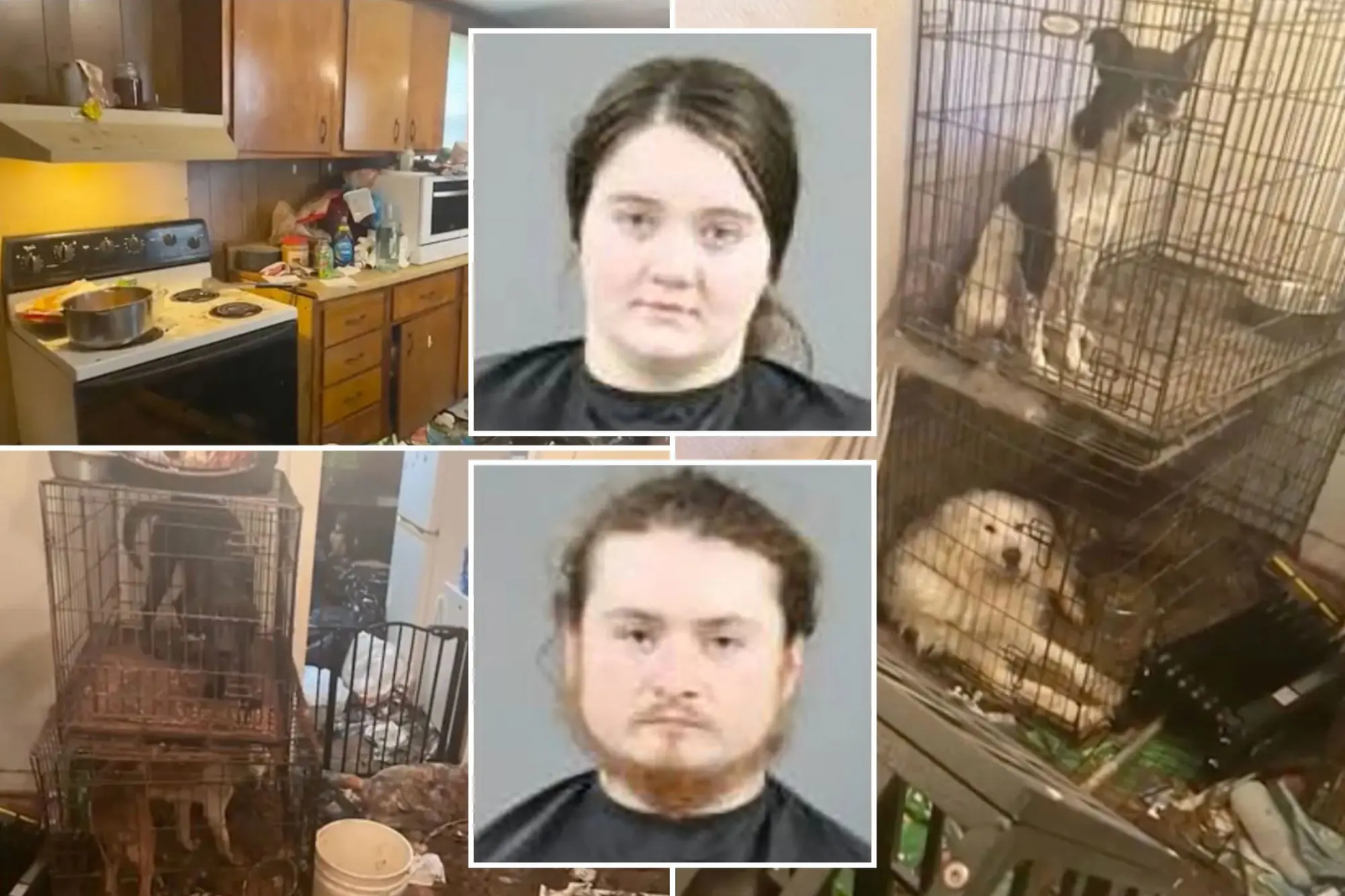
At the center of this case were Kayla Renard and Nicholas Foley, a couple whose 8-month-old baby was found living in filth, surrounded by over 40 unkept animals, waste, and several dead creatures — including a rotting goat in the bathtub and a dead baby goat in a Tupperware bin in the kitchen.
This case has not only left the local community in shock but also highlighted glaring gaps in child welfare oversight and animal protection. The harrowing details revealed by the authorities paint a picture of deep neglect, cruelty, and emotional detachment.
A Horrific Scene Inside the Home
When police officers entered the home at 233 S Shirley Ave in Honea Path, they were met with a scene that can only be described as a nightmare. Officers from the Honea Path Police Department were assisting the Department of Social Services in investigating the welfare of an infant reported to be living in unsafe conditions.
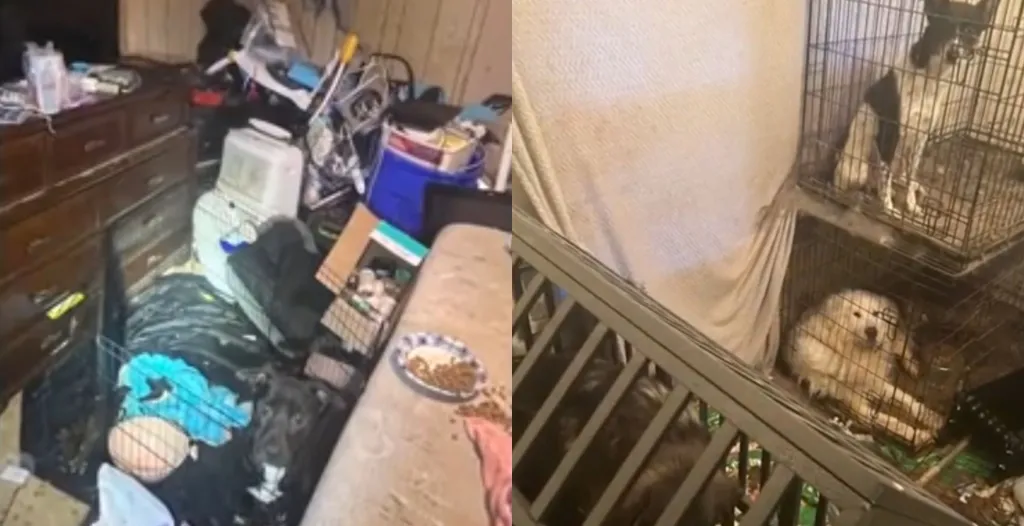
What they discovered surpassed their worst fears. The residence was overrun with animals — raccoons, rabbits, dogs, cats, chickens — and tragically, several deceased creatures. The smell of ammonia and decomposition was overwhelming, so strong that it burned the eyes of those who entered.
A rotting goat carcass was discovered inside the bathtub, and six other dead animals were found on the property. Among them was a baby goat that had been stuffed into a Tupperware container and left in the kitchen. Animal feces and urine coated nearly every inch of the home, mixing with household trash and creating a living environment so toxic that professionals later described it as completely unfit for any living being, let alone a baby.
Read : Ancient Wild Goat Added to Rare Breeds Watchlist as Only 450 Remained
The Director of Anderson County PAWS, Dr. Kim Sanders, was called in to help with the removal and care of the animals. According to her, 41 live animals were found inside the home — including 25 dogs, three cats, five raccoons, six chickens, and two rabbits.
Read : Last Four Goats Living on Brean Down Culled by The National Trust Due to Poor Health
All were severely dehydrated, covered in feces, and emaciated. The house reeked of decay, and the animals were in distress. Yet, miraculously, the 8-month-old baby girl appeared to be in relatively stable condition, despite the environment she was trapped in. She was immediately placed in the care of a relative for her own safety.
Emotional Detachment and Legal Ramifications
One of the most chilling aspects of the case was the demeanor of Kayla Renard and Nicholas Foley during their arrest. According to Honea Path Police Chief Christopher Miller, the couple showed no emotion. “Sitting there calm and really no emotion. No facial expressions,” Miller told Fox Carolina.
“You would think that they’d be a little upset that someone was taking their eight-month-old baby, that the police were there and discovered the horrific conditions of this house. You would think that they would have to know that they were in trouble.”
This total lack of emotional response from the parents has added another layer of concern to the case. It suggests a profound detachment not only from the child’s well-being but from reality itself. Were Renard and Foley simply overwhelmed, or were they living in denial? These are questions that investigators and mental health professionals may attempt to answer as the case moves through the legal system.

The couple was charged with unlawful conduct toward a child and ill-treatment of animals, along with violations of local ordinances. Both were given $10,000 surety bonds. Nicholas Foley has since posted bond, but the legal process is far from over. Given the scale and severity of the neglect, more charges could potentially follow as further investigations unfold.
Additionally, their case may prompt a broader examination of how such extreme conditions went unnoticed for so long. Were there missed warning signs? Could earlier intervention have saved the child and the animals from such prolonged suffering? These questions have left the public demanding answers and accountability.
A Wake-Up Call for Child and Animal Welfare Systems
The horrifying reality uncovered in this case is not just an isolated incident of extreme neglect — it is a wake-up call. When children are raised in environments of neglect, the consequences can be lifelong. From developmental delays to emotional trauma, the child in this case may face challenges far beyond the physical risks she endured. Fortunately, she is now in safe hands and has a chance at a better future, but the road to healing will be long.
Similarly, the animals rescued from the property are undergoing medical treatment. Dr. Sanders shared that all animals are expected to recover physically, though the emotional trauma they sustained will take time to overcome.
The fact that they survived at all is remarkable, considering the conditions in which they were found. They were not only starved and dehydrated but trapped in a toxic environment filled with death and disease.
There is now a renewed call for reforms in how authorities handle reports of child and animal neglect. Many believe that there should be stronger protocols for follow-up visits and cross-agency communication when signs of abuse or neglect are reported.
This case also underscores the importance of mental health support and intervention for parents, especially those dealing with overwhelming circumstances. While the actions of Renard and Foley are inexcusable, it’s also essential to ask how society can prevent such neglect from happening in the first place.
This tragic incident is a sobering reminder that vigilance is essential. Neighbors, relatives, and community members must feel empowered and obligated to speak up when they suspect something is wrong.
Social services and law enforcement must be given the tools and authority to act decisively when a child’s life is at stake. And above all, there must be a cultural shift in how we prioritize the welfare of our most vulnerable — our children and animals — ensuring they are never left to suffer in silence.
The horror found inside the home at 233 S Shirley Ave will not soon be forgotten. It has left a mark on the town of Honea Path and beyond, as the disturbing images and facts of this case circulate in news reports and social media.
But if anything meaningful can come from such suffering, let it be a commitment to reform and to doing better as a society. Because no child — and no animal — should ever have to endure what was uncovered behind that door.