
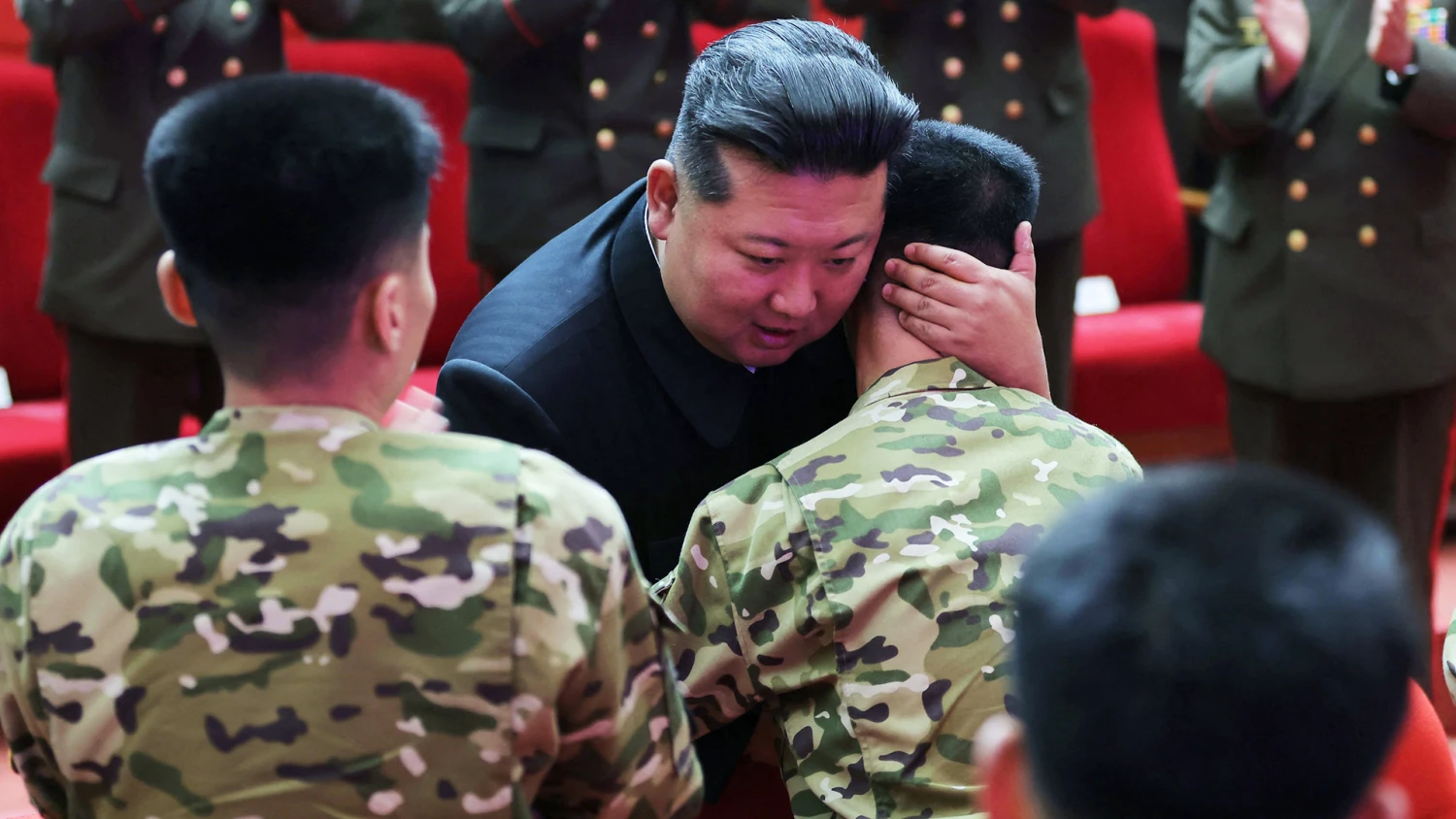
In a rare display of public emotion, North Korean leader Kim Jong Un presided over a solemn ceremony in Pyongyang this week, honoring soldiers from his country who were killed while fighting alongside Russian forces in the ongoing conflict in Ukraine.
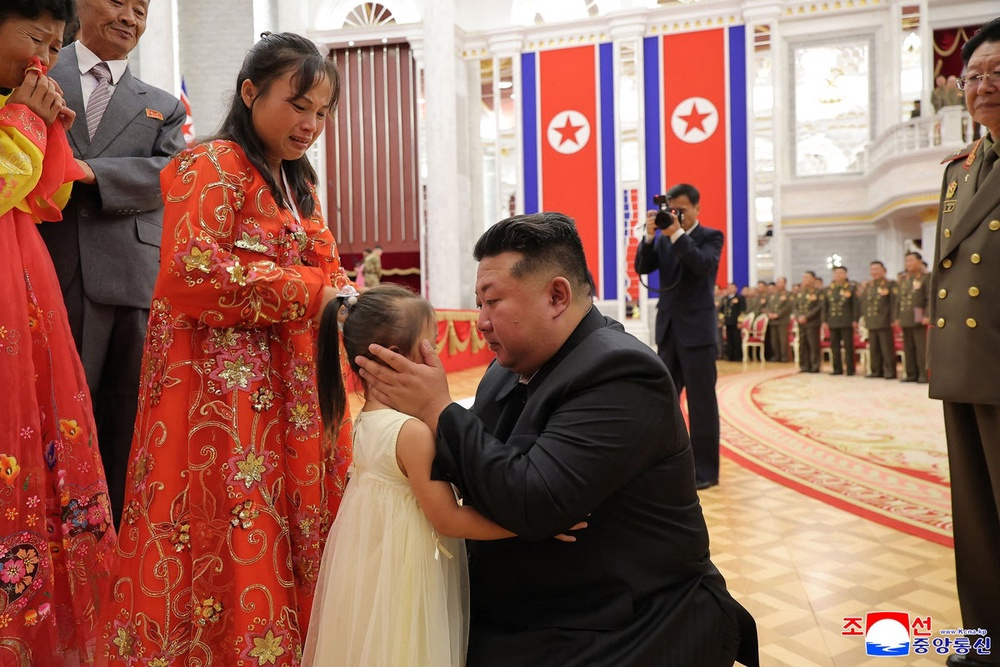
The event, broadcast on state television, marked the first official acknowledgment by North Korea of casualties among its troops deployed overseas in support of Russia’s military campaign. Kim, visibly moved, hugged grieving family members and paid tribute to the fallen as national heroes, underscoring the deepening alliance between Pyongyang and Moscow amid global tensions.
The ceremony comes at a time when reports have circulated about North Korea’s involvement in the Ukraine war, with thousands of its soldiers reportedly sent to bolster Russian positions. This tribute not only highlights the human cost of that involvement but also signals a potential shift in North Korea’s foreign policy, as it openly embraces its role in the conflict.
According to state media, Kim expressed deep sorrow for the losses, emphasizing the soldiers’ bravery in the face of intense combat. The event included the awarding of medals, a memorial service, and interactions that humanized the often stoic leader. This development has drawn international attention, raising questions about the extent of North Korean military aid to Russia and the implications for the broader geopolitical landscape. As the war in Ukraine enters its fourth year, alliances like this one between autocratic regimes are reshaping global security dynamics.
The Ceremony: A Tearful Farewell to Heroes
The tribute ceremony, held in Pyongyang earlier this week, was a poignant affair that showcased a side of Kim Jong Un rarely seen in public. State media footage captured the leader laying a wreath at a memorial wall dedicated to soldiers who had fallen in overseas operations. He knelt before portraits of 101 North Korean troops killed in action, a gesture of profound respect that resonated throughout the hall. Kim’s speech was laden with emotion as he described the soldiers as “heroes who displayed courage and the fighting spirit of the heroes” during their mission.
Photos and videos from the event depicted Kim hugging visibly distraught family members of the deceased. One particularly striking image showed him embracing a soldier who had returned from the front lines, both appearing overcome with emotion amid what was described as a “hail of bullets and bombs” endured in battle. Kim reportedly wept during parts of the proceedings, telling the families that his “heart aches” for their loss. This level of vulnerability from the North Korean leader is unusual, as public displays of grief are typically reserved for state-sanctioned narratives glorifying the regime.
The ceremony included several elements designed to honor the soldiers’ sacrifices. Medals and badges were awarded posthumously to the fallen, with surviving comrades receiving decorations for their service. A concert was organized for the returned soldiers, featuring patriotic songs that celebrated their valor. Following this, a banquet allowed Kim to personally interact with the troops and their families, reinforcing the narrative of national pride and unity. State news agency reports emphasized how these soldiers had “returned home with great honor” after fulfilling their duties in a foreign land.
Read : Bizarre! North Korean Leader Kim Jong Un Bans Hotdogs in Country
This event marks a significant moment in North Korean propaganda, as it openly admits to the deployment and losses of its forces in Ukraine. Previously, while intelligence reports from South Korea and Western nations had estimated thousands of North Korean troops in Russia, Pyongyang had not confirmed casualties.
The acknowledgment of around 100 deaths—specifically in Russia’s Kursk region, where intense fighting has occurred—suggests that the toll may be higher, but the regime is framing it as a heroic endeavor. Analysts note that such ceremonies serve dual purposes: boosting domestic morale by portraying the soldiers as martyrs and signaling loyalty to allies like Russia.
Kim Jong Un fights back TEARS as Russian plane delivers soldiers who fell fighting alongside Russian troops liberating Kursk region
— RT (@RT_com) August 22, 2025
Bodies received with FULL honors
He personally approaches coffins, walking hand in hand with army generals pic.twitter.com/tlrbeFVJGd
The emotional tone of the ceremony also humanizes Kim in the eyes of his people. In a country where the leader is often depicted as infallible, showing tears and hugs could strengthen his image as a compassionate father figure to the nation. However, it also underscores the risks involved in North Korea’s foreign military adventures. Families of the fallen were shown receiving support, including promises of state aid, which may help mitigate any domestic discontent over the losses.
Overall, the ceremony was meticulously staged to blend grief with glory, ensuring that the narrative aligns with the regime’s ideology. It lasted several hours, with participants including high-ranking military officers who had overseen the overseas operations. Kim’s direct involvement, from laying flowers to delivering the keynote address, highlighted his personal investment in the alliance with Russia.
Background on North Korean Involvement in the Ukraine Conflict
North Korea’s participation in the Ukraine war did not emerge in isolation but stems from a longstanding relationship with Russia that has intensified in recent years. Reports of North Korean troops being sent to support Russian forces first surfaced in late 2024, amid Russia’s struggles to maintain manpower in its invasion of Ukraine. Intelligence from South Korea and the United States estimated that up to 12,000 North Korean soldiers had been deployed, primarily to regions like Kursk, where Ukrainian counteroffensives have inflicted heavy casualties.
The alliance between Pyongyang and Moscow was formalized through a mutual defense pact signed during Russian President Vladimir Putin’s visit to North Korea in June 2024. This agreement not only committed both nations to military cooperation but also facilitated the transfer of North Korean artillery shells, missiles, and now personnel to aid Russia’s war effort. In exchange, North Korea has reportedly received advanced technology, including assistance with its nuclear and missile programs, as well as economic aid to alleviate sanctions-imposed hardships.
The soldiers involved are believed to be from elite units, trained for combat and integrated into Russian forces under disguises to avoid direct attribution. However, as casualties mounted, the need for repatriation and recognition became apparent. The recent ceremony confirms that North Korean troops have been actively engaged in frontline fighting, enduring “life-and-death” battles as described by Kim. This involvement has been controversial, with Ukraine and its allies condemning it as a violation of international norms, potentially escalating the conflict.
Historically, North Korea has provided military support to allies during conflicts, such as in the Syrian civil war or African insurgencies, but the scale in Ukraine is unprecedented. The decision to send troops reflects Kim’s strategic calculus: bolstering ties with Russia provides a counterweight to pressure from the United States and South Korea. It also allows North Korean forces to gain real-world combat experience, which could enhance their capabilities back home.
South Korean officials have reported that North Korean soldiers suffered significant losses due to unfamiliar terrain, language barriers, and the intensity of modern warfare. Many were allegedly used as cannon fodder in high-risk assaults, leading to the deaths acknowledged in the ceremony. Despite this, North Korean state media portrays the mission as a success, with surviving soldiers hailed for their resilience.
The broader context includes Russia’s desperation for reinforcements as its own military faces attrition. By outsourcing some fighting to North Korean troops, Moscow can preserve its forces while maintaining offensive momentum. This mercenary-like arrangement has drawn parallels to other proxy involvements in global conflicts, raising ethical questions about the exploitation of soldiers from impoverished nations.
As of now, it’s unclear if North Korea plans to send more troops or if this ceremony signals a winding down of its involvement. Kim’s hints during the event about the end of overseas deployments suggest a possible rotation or pause, but the alliance remains strong.
International Reactions and Implications
The tribute ceremony has elicited varied responses from the international community, highlighting the polarized nature of global politics surrounding the Ukraine war. Western nations, including the United States and members of the European Union, have condemned North Korea’s actions as further evidence of rogue states undermining international security. U.S. officials described the deployment as “desperate measures” by Russia, calling for stricter sanctions on both Pyongyang and Moscow to curb such collaborations.
Ukraine’s government expressed outrage, with President Volodymyr Zelenskyy labeling the North Korean soldiers as “invaders” and urging the world to recognize the expanding axis of aggression. Intelligence sharing among NATO allies has intensified, with reports detailing how North Korean troops were integrated into Russian units, sometimes under false identities. This has prompted discussions about targeting supply lines and imposing secondary sanctions on entities facilitating the transfers.

In contrast, Russia praised the ceremony, with state media echoing Kim’s sentiments and portraying the fallen soldiers as shared heroes in the fight against “Western imperialism.” The event strengthens the narrative of a multipolar world order, where nations like North Korea and Russia challenge U.S. dominance. China, while not directly involved, has remained neutral but watchful, as the alliance could affect its own strategic interests in the region.
South Korea, North Korea’s immediate neighbor, reacted with alarm. Its defense ministry confirmed the repatriation of bodies and warned that continued involvement could lead to heightened tensions on the Korean Peninsula. Joint military exercises with the U.S. have been ramped up in response, signaling readiness for any spillover effects.
The implications of this development are far-reaching. For North Korea, acknowledging casualties publicly could boost recruitment by framing service as honorable, but it also risks internal dissent if losses continue. Economically, the partnership with Russia provides vital resources, including oil and food, helping to sustain the regime amid isolation.
Geopolitically, it complicates efforts to resolve the Ukraine conflict. With external actors like North Korea providing manpower, Russia’s staying power increases, potentially prolonging the war. This could lead to escalated arms races or new alliances, as Indo-Pacific nations monitor the fallout.
Humanitarian concerns are also prominent, with questions about the treatment of North Korean soldiers—many reportedly conscripted and poorly equipped. International organizations have called for investigations into potential war crimes involving foreign fighters. Kim Jong Un’s emotional tribute underscores the human toll of geopolitical maneuvers. As North Korea cements its role in the Ukraine war, the world watches closely, aware that such alliances could redefine future conflicts. This ceremony, while a moment of national mourning, signals broader shifts in global power dynamics that demand vigilant diplomacy.
Сфера недропользования — это совокупность процессов, связанный с освоением природных ресурсов.
Оно включает поиск природных ресурсов и их дальнейшую переработку.
Недропользование регулируется законодательством, направленными на охрану окружающей среды.
Эффективное управление в недропользовании обеспечивает устойчивое развитие.
оэрн
Responsible gaming is an essential part of a healthy entertainment experience.
It enables users to stay in control while enjoying interactive activities.
Defining boundaries helps avoid problems.
Responsible play also encourages better decision-making.
virtual rewards
By tracking personal limits, players can avoid stress.
This approach builds a comfortable long-term experience.
Understanding of personal habits plays a major role.
As a result, responsible gaming ensures a positive atmosphere for everyone.