

In the wake of a massive wildfire that tore through Budj Bim National Park in south-west Victoria, Australia finds itself facing a deeply emotional and ethically charged crisis. The fire, believed to have been triggered by a lightning strike, scorched over 2,000 hectares of rich eucalyptus forests, destroying the delicate ecosystem and pushing hundreds of koalas into a state of severe distress.
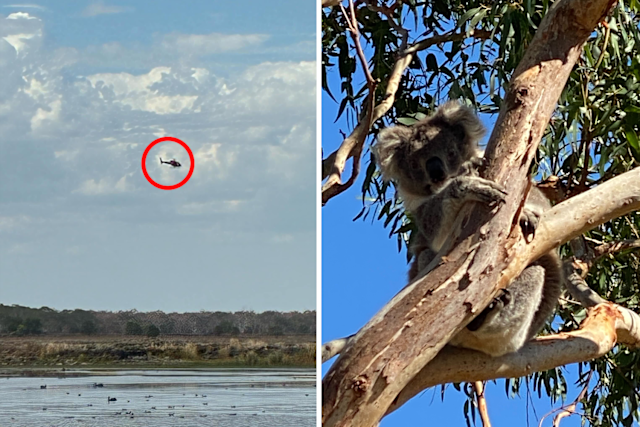
As emergency crews began to assess the environmental toll, aerial teams from the Department of Energy, Environment and Climate Action (DEECA) took to the skies — not to rescue the surviving koalas, but to euthanise them.
Reports estimate that more than 700 Koalas Shot Dead From Helicopters. These operations, justified by government officials as a necessary measure to end the suffering of animals that were badly injured or doomed to starve, have drawn fierce criticism from wildlife advocates, researchers, and local communities alike.
The debate has exploded into a national controversy, raising questions not only about how Australia handles its wildlife emergencies, but also about how it prepares for and mitigates the environmental consequences of climate-induced natural disasters.
The Controversy in the Skies
From the moment helicopters began circling over the blackened canopy of Budj Bim, alarm bells rang among animal rights organizations. The Koala Alliance, a vocal group advocating for the protection of these iconic marsupials, posted images and messages online revealing the presence of sniper teams and alleging indiscriminate killings.
According to their statements, the aerial approach makes it virtually impossible to determine the physical condition of each individual koala. Activists have called into question the ability of snipers to distinguish between severely injured koalas that may need to be put down and those that are frightened but otherwise healthy.
Jess Robertson, president of the Koala Alliance, said, “There is no way they can tell if a koala is in poor condition from a helicopter.” The group’s concern goes deeper than logistics — it’s rooted in a broader mistrust of the methods employed by DEECA and a fear that the department is choosing expedience over compassion.
One post from the Alliance warned that many of the koalas being targeted had recently been displaced from blue gum plantations and relocated to the national park, suggesting that they had already been subjected to multiple disruptions in their habitat.
"- Jacinta Allan has just approved and sanctioned the aerial shooting of koalas in Budj Bim National Park, Victoria.Allowing shooters to kill koalas indiscriminately from helicopters, without proper health assessments" pic.twitter.com/rsZlM0Den2
— MariaLisa (@MariaLisa640569) April 19, 2025
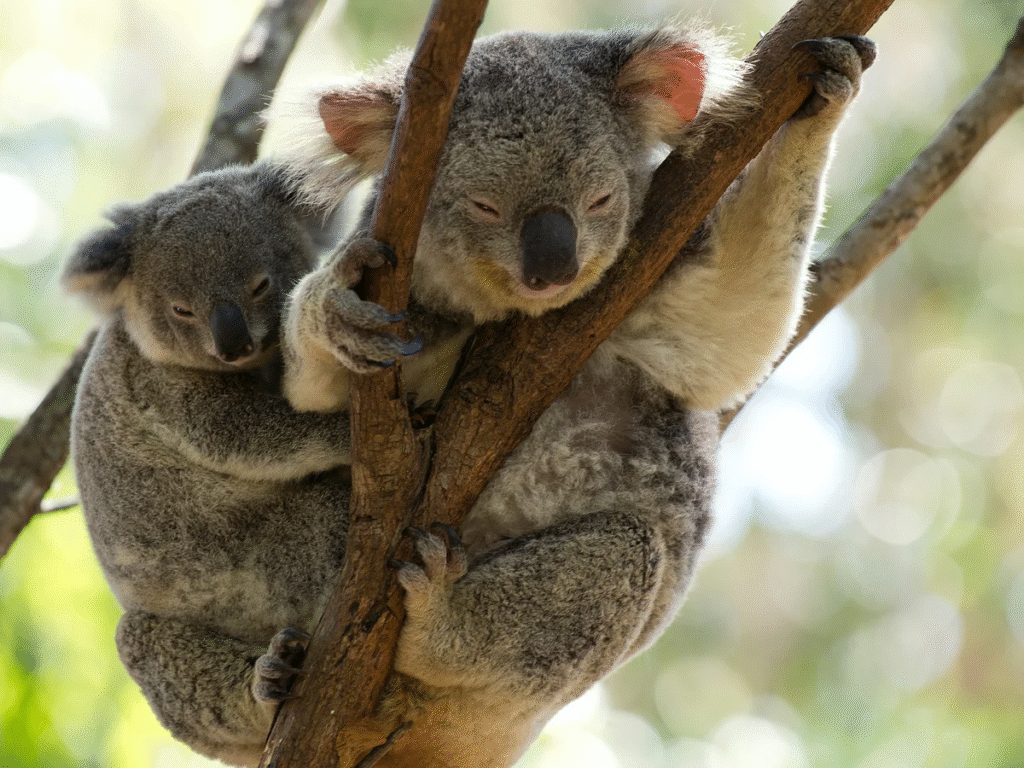
More haunting still is the possibility that not all casualties are immediate. Activists claim that if adult koalas are shot while carrying young in their pouches or clinging to their backs, many joeys may fall and be left behind, slowly dying from injuries or exposure. Such outcomes are not only tragic but serve to deepen the moral questions surrounding the current culling strategy.
Official Justifications and Public Backlash
The Victorian government has come to the defence of its strategy, claiming that the aerial culling is being conducted only after thorough assessments by wildlife experts. Premier Jacinta Allan responded to public outrage by emphasizing that the decision was not taken lightly. She stated, “After an examination of the circumstances, this approach was deemed the way to really recognise the koalas were in a lot of distress.”
She stressed that experts had identified koalas suffering from injuries and dehydration, and that humane euthanasia was the only option left under such dire conditions. However, this response has done little to ease the fury of conservationists who argue that such drastic action could have been avoided altogether with better forest management and more proactive planning.
Wildlife researcher Dr. Rolf Schlagloth of CQUniversity Australia has long criticized how koala habitats are managed across the country. He noted that while bushfires cannot be completely prevented, their scale and destructiveness can be reduced with healthier, more interconnected forest systems. “Koala habitat needs to be extensive and connected,” he said, “and the management of blue gum plantations needs to consider the koala as these trees are very attractive to them.”
Dr. Schlagloth further questioned why euthanasia was treated as a default option instead of a last resort. In his view, a ground-based assessment and rescue operation — though slower and more labor-intensive — would have offered a more compassionate and selective solution. “An aerial cull,” he noted, “appears to be a very indiscriminate method.”
A Pattern of Mismanagement
The tragedy unfolding at Budj Bim is not an isolated incident. It represents, to many experts and activists, a larger pattern of ecological neglect and governmental indifference. Koalas have been under siege for decades due to widespread deforestation, urban expansion, and fragmented habitat corridors.
Although classified as endangered in some regions, koala populations are still being impacted by decisions that prioritize industrial interests or bureaucratic convenience over species preservation. The use of blue gum plantations, for instance, is a double-edged sword.
While the fast-growing trees are economically valuable for timber and paper production, they also attract koalas in large numbers due to their edible leaves. When these plantations are harvested, entire populations of koalas are suddenly displaced, often with little to no warning. Many of the koalas affected by the Budj Bim cull are believed to have migrated from just such plantations before the fire struck.
It raises a crucial question: if wildlife is continually forced to move from one unsuitable or temporary habitat to another, are we merely delaying inevitable disasters like this one? Koalas cannot survive on unstable ground — not physically, and not in terms of conservation policy.
Furthermore, public transparency has been another point of contention. Activists argue that operations like this are often hidden from the public eye, only coming to light through leaked photos, drone footage, or whistleblowers. The idea that helicopters could be silently executing animals in remote forests has shaken public trust in wildlife management protocols.
Hope Beyond Tragedy
Despite the heartbreak and criticism, many conservationists are hoping this tragedy could become a turning point. There is now renewed public interest in reforming how Australia approaches wildfire preparation, animal rescue, and post-disaster response.
This includes calls for better funding of wildlife hospitals, increased ground-based rescue training for emergency responders, and stricter regulations on plantation management to ensure koalas are not pushed into risky zones. Community groups are also stepping up.
In some areas near Budj Bim, locals have begun setting up koala feeding stations and water points to help survivors. Veterinary teams are on standby in neighboring regions, ready to rehabilitate rescued animals. Social media has played a vital role, with thousands of Australians — and international observers — expressing their outrage and offering support to wildlife groups on the frontlines.
The challenge now is to channel that collective anger into lasting change. Koalas are not just cute faces on postcards — they are vital indicators of the health of Australia’s forest ecosystems. If they are suffering, it means the forests are too. And if nothing changes, it’s likely that more culling operations will follow future wildfires, sparking the same grief and outrage again and again.
Budj Bim’s fires may have burned through trees, but they’ve also ignited a debate that refuses to be silenced. A debate about compassion, foresight, and the moral obligation to protect the voiceless. As the helicopters fade into the smoky horizon and the forest begins its slow recovery, the true question remains: can Australia learn to coexist with its wildlife, or will crisis always dictate cruelty?