
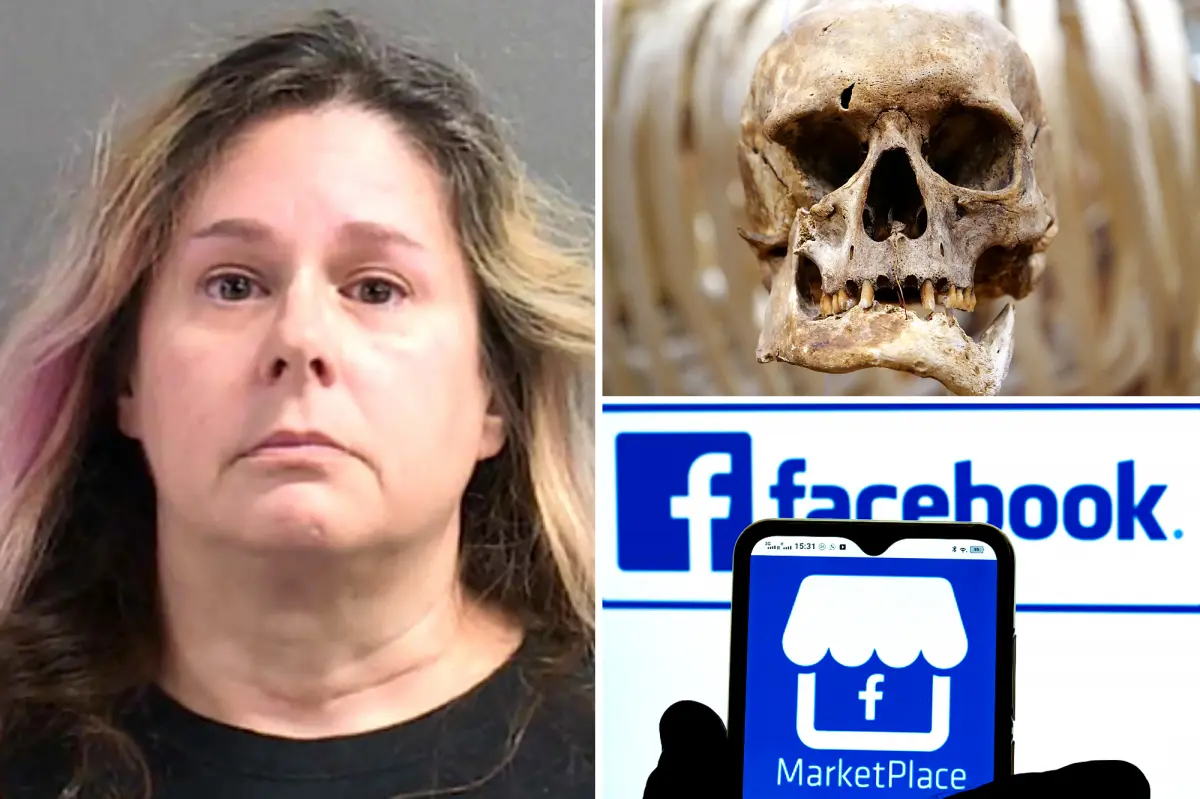
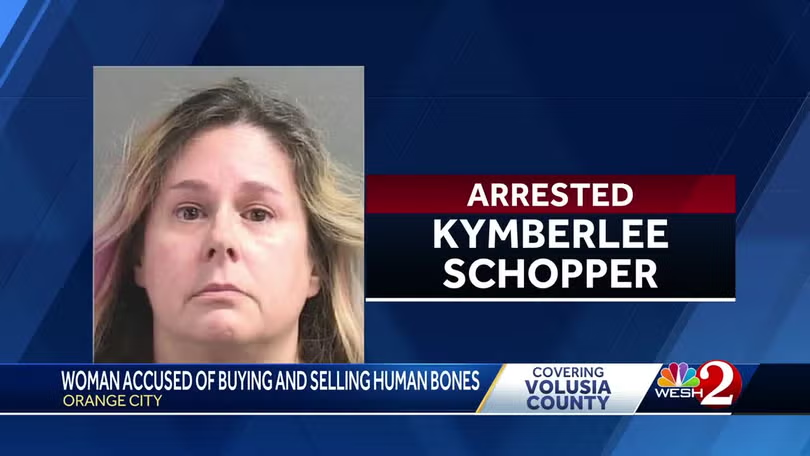
A bizarre and unsettling case from Florida has caught the attention of the public and law enforcement alike. Kymberlee Schopper, a 52-year-old woman from Orange City, has been arrested for allegedly Selling Human Bones on Facebook, including skull fragments, ribs, and other skeletal parts.
The case has sparked legal, ethical, and cultural debates surrounding the sale of human remains, as well as the regulation of online marketplaces.
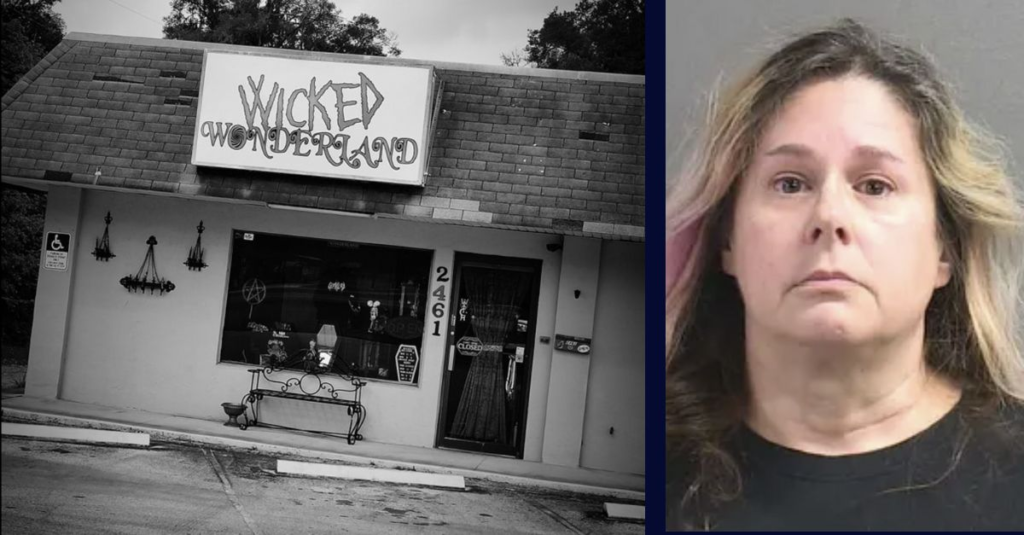
Authorities say Schopper operated under the business name “Wicked Wonderland” and used Facebook Marketplace to sell the bones, believing they were legal for educational purposes. However, the law in Florida tells a different story.
The Start of a Disturbing Investigation
The investigation that led to Kymberlee Schopper’s arrest began on December 21, 2023, when Orange City Police received a tip-off regarding the online sale of human bones.
The tip included images reportedly taken from the Facebook page of a local business operating under the name “Wicked Wonderland,” which listed actual human bones as products for sale. The images showed bones labeled with descriptions and prices, sparking immediate concern among authorities.
The business was located on North Volusia Avenue in Orange City, Florida. Upon further examination, investigators discovered the store’s website also contained listings for multiple human remains. These listings were not vague or disguised but included clearly labeled items such as skull fragments, clavicles, scapulas, ribs, vertebrae, and even a partial human skull.
Read : ‘Cutthroat Cowboys’ Arrested for Riding Horses Through Walmart in Baker
Alarmed by the nature of the products being sold and the possibility of violations of state law, authorities launched a formal investigation. The human remains were seized and sent to the medical examiner’s office for detailed analysis to determine their origin and age.
Read : Connecting the World: Top Ten Countries with the Most Facebook Users
The results added an even more unsettling layer to the story: some of the bones were found to be archaeological in origin, with one fragment believed to be over 100 years old and another more than 500 years old.
Wicked Wonderland and the Defense of Legitimacy
When officers visited Wicked Wonderland to conduct further inquiries, they were met with one of the store’s owners, Kymberlee Schopper. During the conversation, Schopper openly admitted that the store had been dealing in human bones for several years.
She asserted that all bones in the store were genuine human remains and had been obtained legally from private sellers. She even claimed to have documentation for each transaction, although she was unable to present any such paperwork during the police visit.
Kymberlee Schopper explained that the bones were delicate and rare, and insisted they were sold as educational models—items that she believed were legal to buy and sell under Florida law. Her defense hinged on the notion that if the bones were intended for educational purposes, their sale might not fall under prohibitive statutes.
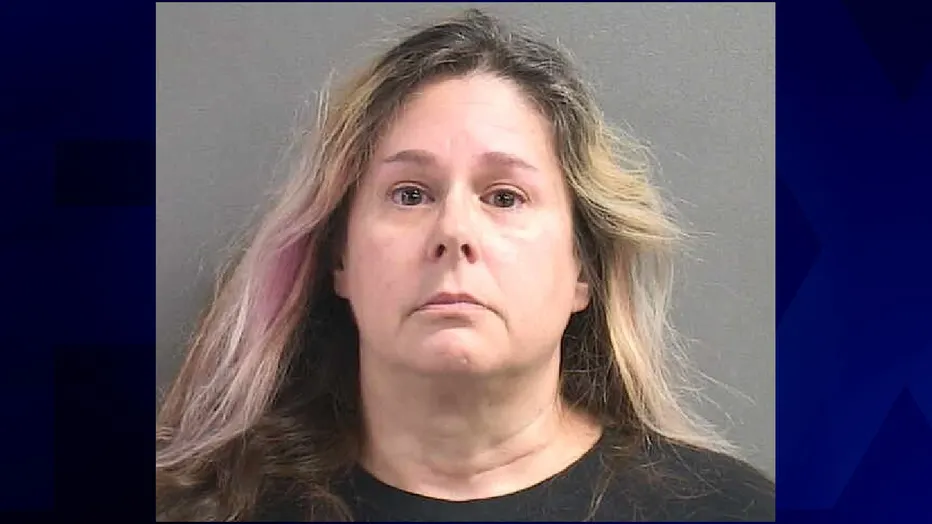
However, Florida state law is strict when it comes to the sale and possession of human remains. While some exceptions exist for scientific or medical institutions, private trade and commercialization of bones—particularly when not properly documented—are generally considered illegal.
The law is designed to protect the dignity of the deceased, prevent grave robbing, and ensure ethical handling of human remains. Schopper’s failure to provide documentation and her use of a public social media platform for sales raised serious legal and moral questions.
Authorities did not take Schopper’s explanations at face value. After reviewing the collected evidence, police placed her under arrest and charged her with the unlawful sale and purchase of human tissue. She was booked into Volusia County Jail on April 11 and released on a $7,500 bond.
Legal and Ethical Questions About Human Remains Trade
The case has reignited an ongoing debate surrounding the trade of human bones and the ethical implications of commodifying human remains. While there is a niche market for human bones—often collected by enthusiasts, artists, or educators—the legality of such trade varies widely across states and countries. In some regions, bones can be purchased through licensed dealers under strict regulations. In others, any sale of human remains is strictly prohibited.
The ethical dilemma centers on respect for the dead and the question of consent. Who gave permission for these remains to be bought or sold? Were they legally obtained from medical institutions or archaeological digs? Or do they originate from unregulated, possibly illegal sources, such as looted graves or undocumented collectors?
Experts also point out that selling historical or archaeological bones, like those found in Kymberlee Schopper’s possession, can contribute to the destruction of cultural heritage. Once removed from their original context, these remains lose their historical and scientific value. Moreover, it becomes difficult to determine their provenance or whether they were acquired through legal means.
Adding to the complexity is the role of online marketplaces like Facebook, which allow users to sell goods through simple listings. Although platforms have policies that prohibit the sale of human remains, enforcement is often weak. Listings can be disguised or go unnoticed, and in many cases, sellers claim educational or artistic purposes to sidestep platform rules and legal scrutiny.
In Schopper’s case, authorities believe she exploited this gray area. By labeling the bones as educational models and operating under a seemingly quirky brand name, Wicked Wonderland, she may have assumed protection from legal consequences. But Florida’s laws, along with the questionable age and origin of the bones, suggest otherwise.
A Growing Market and the Need for Regulation
Despite being a fringe industry, the trade of human remains has grown in recent years, in part due to the ease of connecting buyers and sellers online. Human skulls and other bones have been spotted on platforms like Etsy, Instagram, and Facebook Marketplace, often fetching hundreds or even thousands of dollars.
Some collectors argue that owning human bones helps preserve history, especially when the remains are ethically sourced and properly cared for. Museums and academic institutions also hold collections of human remains for research and educational purposes. However, these institutions operate under strict ethical guidelines and legal frameworks. The same cannot be said for many private sellers.
In Florida and other states, lawmakers have begun reviewing legislation to close loopholes and prevent the exploitation of human remains for profit. Public awareness has also increased, with social media posts and news coverage calling attention to the issue. The goal is to ensure that all human remains—regardless of origin—are treated with dignity and respect.
The Schopper case serves as a cautionary tale about what can happen when these boundaries are crossed. Whether driven by ignorance, profit, or a mix of both, the decision to buy and sell human bones without proper oversight invites both legal repercussions and ethical backlash.
As the investigation continues, authorities may look into the broader network of buyers and sellers connected to Wicked Wonderland. It is possible that other individuals may be implicated, especially if it is found that the bones were obtained through questionable or illegal means. Meanwhile, Kymberlee Schopper awaits further legal proceedings, and her business activities have come to a halt.
While she has maintained her belief in the legality of her actions, the evidence suggests a more complicated reality. The discovery of remains that are centuries old opens up additional questions—could these bones belong to indigenous people or ancient communities? If so, there may be federal protections and cultural restitution issues involved.
The arrest of Kymberlee Schopper for selling human bones on Facebook Marketplace is more than just an unusual news story—it’s a window into a rarely discussed but deeply important issue.
The handling and sale of human remains touch on law, morality, cultural heritage, and respect for the dead. In an age where anything can be bought and sold online, the case underscores the urgent need for clearer laws, better enforcement, and public awareness.
As society navigates the digital age and the ease of online commerce, this case may mark a turning point in how we regulate and understand the trade of human tissue. For now, one thing is clear: human remains are not just curiosities or collectibles—they are the physical legacy of real people who once lived, and they deserve to be treated accordingly.