

On April 11, 2025, a shocking incident unfolded in Panama City, Florida, when 52-year-old Latrance Battle was arrested for allegedly impersonating a U.S. Immigration and Customs Enforcement (ICE) agent in a calculated attempt to kidnap her ex-boyfriend’s wife.
The case, which has garnered significant attention due to its audacity and emotional complexity, highlights the dangers of impersonating law enforcement and the personal motivations that can drive such extreme actions.
Battle’s arrest followed a dramatic sequence of events that culminated in her apprehension as she attempted to flee to Alabama.
The Incident: A Revenge Plot Disguised as Authority
The incident began on April 10, 2025, when Latrance Battle, equipped with a black shirt emblazoned with “ICE,” a sheriff’s office business card, and a handheld radio, entered a hotel where her ex-boyfriend’s wife was employed.
According to an arrest affidavit obtained by the Miami Herald, Battle presented herself as an ICE agent and informed the woman, who was in the process of obtaining U.S. residency, that she was there to detain her. The victim, fearing for her legal status and believing Battle’s ruse, complied and accompanied her to a vehicle.
Battle’s impersonation was meticulously planned. She used props, including a walkie-talkie through which she pretended to communicate with other agents, to bolster her false authority. She told the victim that they were headed to the sheriff’s office, but instead, she drove to the Bridge Plaza Apartments in Panama City Beach.
During the drive, the victim attempted to contact her lawyer and husband, but Battle allegedly snatched her phone, stating she could make “one phone call” later. According to court documents, Battle also told the woman she would “suffer the consequences of her husband’s actions,” revealing a personal vendetta rooted in her past relationship with the victim’s husband.
The victim’s suspicions grew when Battle took her to an apartment complex instead of a law enforcement facility. Seizing an opportunity while Battle was inside the apartment, the woman fled and sought help from a neighbor, who assisted her in contacting authorities.
Deputies from the Bay County Sheriff’s Office responded to the scene, finding the victim visibly shaken and terrified. The victim’s husband, upon learning of the incident, confirmed that the description of the “ICE agent” matched his ex-girlfriend, Latrance Battle, exposing her motive as a revenge plot.
This brazen act of deception not only endangered the victim but also exploited her vulnerabilities as an individual navigating the U.S. immigration process. The incident underscores the psychological toll of such schemes, particularly when they target individuals who may fear repercussions related to their immigration status.
Legal Consequences and Charges
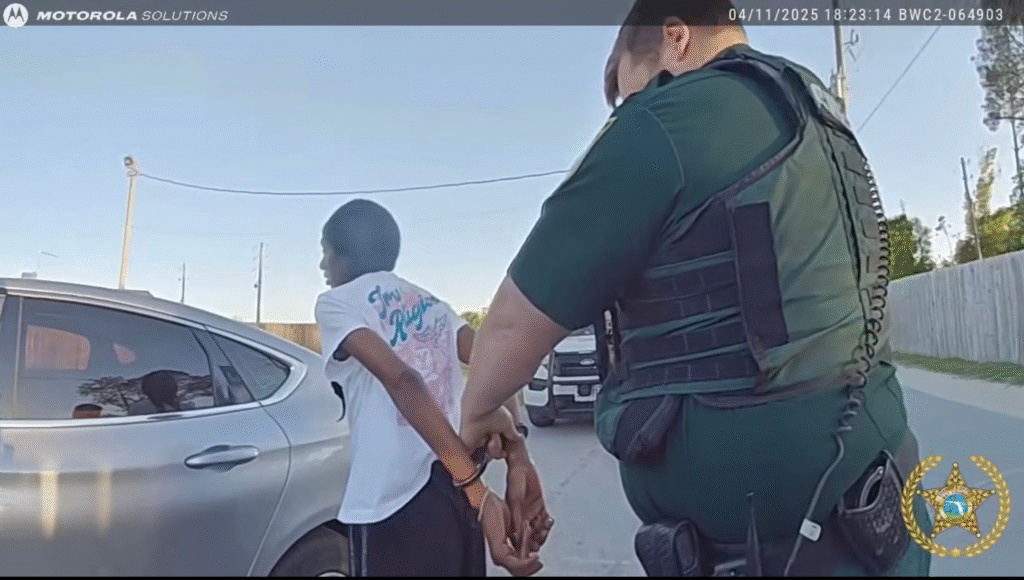
Following the victim’s escape, authorities quickly mobilized to locate Battle, who was reportedly attempting to flee to Alabama. Deputies apprehended her in Fountain, Florida, before she could cross state lines.
Battle was arrested on April 11, 2025, and now faces a slew of serious charges, including kidnapping in the commission of a felony, robbery by sudden snatching, impersonating a law enforcement officer during the commission of a felony, and felony violation of probation.
At the time of the incident, Battle was already on probation for a prior charge of aggravated assault with intent to commit a felony, which compounds the severity of her legal situation. The Bay County Sheriff’s Office emphasized the gravity of impersonating a federal officer, noting that such actions are not only dangerous but also illegal at both state and federal levels.

Under 18 U.S.C. § 912, impersonating a federal officer can result in up to three years in prison and a fine. Combined with the kidnapping and robbery charges, Battle could face significant prison time if convicted. She appeared in court on April 12, 2025, and was ordered to have no contact with the victim. She is currently being held on a $25,000 bond, with her next court appearance scheduled for May 29, 2025.
The legal ramifications extend beyond Battle’s personal consequences. ICE issued a statement condemning the impersonation of its agents, highlighting the risks posed by such actions to public safety and trust in law enforcement.
The agency noted that impersonators can face federal charges, and this case may prompt further scrutiny of how easily individuals can obtain items like ICE-branded clothing, which Battle used to lend credibility to her scheme. Earlier in 2025, a jacket resembling those worn by ICE agents became a bestseller on Amazon, raising concerns about the potential for misuse.
Battle’s case also sheds light on the broader issue of probation violations. Her prior conviction for aggravated assault suggests a pattern of aggressive behavior, and her decision to orchestrate this kidnapping while on probation indicates a disregard for the legal constraints imposed upon her. The court’s response to her actions will likely serve as a precedent for handling similar cases involving repeat offenders.
Broader Implications: Trust, Safety, and Impersonation
The Latrance Battle case raises critical questions about trust in law enforcement, the vulnerabilities of immigrant communities, and the ease with which individuals can impersonate officials. By posing as an ICE agent, Battle exploited the victim’s fear of deportation, a tactic that preys on the anxieties of those navigating the complex U.S. immigration system.
This incident highlights the need for greater education and resources to help immigrants recognize legitimate law enforcement and protect themselves from scams or impersonation schemes. Moreover, the case underscores the dangers of readily available law enforcement paraphernalia. Battle’s use of an “ICE” shirt, a sheriff’s business card, and a walkie-talkie demonstrates how easily accessible items can be weaponized to deceive.

While these props alone do not constitute a crime, their use in criminal activity amplifies the need for regulations or restrictions on the sale of items that mimic official law enforcement gear. The Amazon ICE jacket controversy earlier in 2025 illustrates the potential for such items to be misused, prompting calls for retailers to exercise greater oversight.
Public reaction to the case, as reflected in posts on X, has been a mix of shock, amusement, and outrage. Some users expressed disbelief at the audacity of Battle’s plan, with one noting, “Wife grew suspicious when they drove PAST the jail house 😂 America is NOT a real place!”
Others condemned her actions, emphasizing the fear and trauma inflicted on the victim. The incident has sparked discussions about the lengths to which individuals will go for revenge and the importance of safeguarding vulnerable populations from such schemes.
From a societal perspective, this case serves as a reminder of the importance of maintaining trust in law enforcement. Impersonation undermines public confidence in legitimate authorities and can deter individuals from cooperating with officials out of fear of deception.
Law enforcement agencies, including ICE, must continue to educate the public about how to verify the identity of agents and report suspicious activity. Community outreach programs and multilingual resources could help mitigate the risks faced by immigrant communities, who are often targeted by impersonators.
Finally, the case highlights the personal and emotional dimensions of criminal behavior. Battle’s actions were driven by a desire for revenge against her ex-boyfriend, channeled through an elaborate and dangerous scheme targeting his wife.

This underscores the need for mental health resources and conflict resolution programs to address interpersonal disputes before they escalate into criminal acts. While Battle’s motives do not excuse her actions, they offer insight into the complex motivations behind such crimes.
The arrest of Latrance Battle for impersonating an ICE agent to kidnap her ex-boyfriend’s wife is a stark reminder of the dangers posed by deception and personal vendettas. Her elaborate ruse, which exploited the victim’s immigration status and fear of authority, caused significant distress and endangered public safety.
The legal consequences Battle faces, including felony charges and potential federal prosecution, reflect the seriousness of her actions. Beyond the individual case, this incident raises broader concerns about trust in law enforcement, the vulnerabilities of immigrant communities, and the accessibility of law enforcement paraphernalia.
As the case progresses, it will likely prompt further discussions about how to prevent similar incidents and protect vulnerable populations. For now, Battle’s arrest serves as a cautionary tale about the consequences of taking revenge too far and the importance of upholding the integrity of law enforcement.
The Bay County Sheriff’s Office, ICE, and the courts will play a critical role in ensuring justice is served, while society grapples with the broader implications of this unsettling event.Show in sidebar