

The violent attack on a 26-year-old woman aboard a Chicago Blue Line train has drawn national attention, not only for its brutality but also for the long criminal history of the accused perpetrator, 50-year-old Lawrence Reed. The case has ignited debate among officials, residents, and public figures about systemic failures in the criminal justice process that allowed a man with more than 70 prior arrests to remain free despite a documented record of violent conduct.
As investigators describe the harrowing moments captured on surveillance footage and federal prosecutors detail their terrorism charge against Reed, many are questioning how such an incident could occur in a major public transit system and what it reveals about broader safety and accountability challenges in Chicago and beyond.
Reed’s Extensive Criminal Background and Legal Status at the Time of the Attack
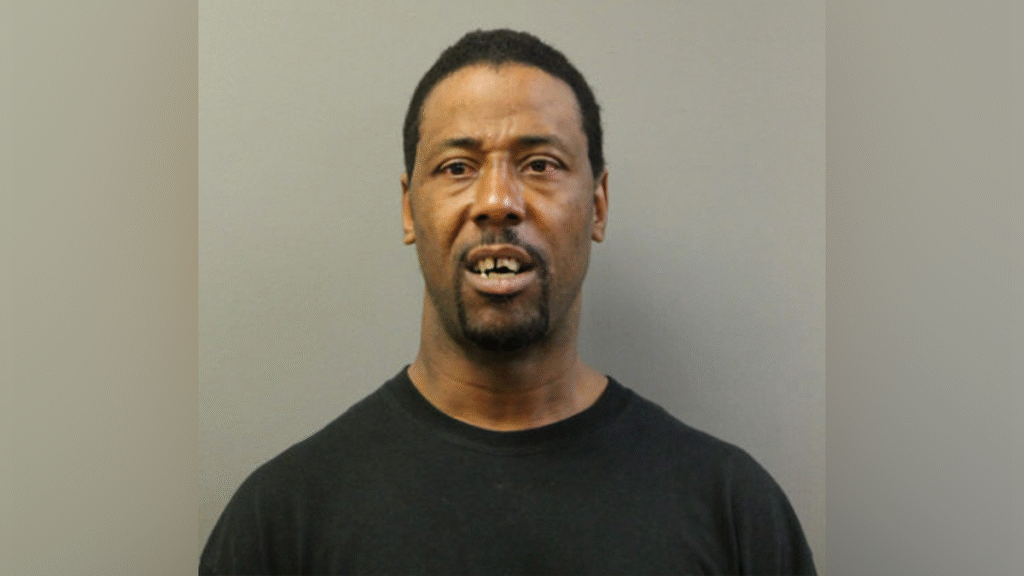
Lawrence Reed’s arrest following the Nov. 24 attack underscored an extensive history of repeated encounters with law enforcement. Public records cited in federal court show that Reed accumulated 72 arrests within Cook County alone, with 15 resulting in convictions. Among the most troubling of these was a 2020 arson conviction, which, according to court documents, resulted only in a probation sentence rather than prison time. At the time of the attack on the Blue Line, Reed was already out on pretrial release for an aggravated battery charge.
Federal authorities expressed significant frustration that Lawrence Reed remained free despite his prior record. ATF Special Agent-in-Charge Christopher Amon stated that Reed “had no business being on the streets,” citing his history of violent offenses and pending criminal cases. These comments highlight mounting tension between federal agencies seeking to manage repeat violent offenders and local court systems criticized for lenient sentencing outcomes.
Prosecutors noted that at no point had Lawrence Reed been formally declared mentally incompetent, despite erratic conduct following his arrest. During his initial federal court appearance, Reed repeatedly shouted over the judge, proclaimed he wished to represent himself, pled guilty multiple times before advisement, and asserted that he was a Chinese citizen.
🚨 JUST IN: The same judge who let free known criminal Lawrence Reed to set a Chicago woman on FIRE is being exposed for supporting DEI and ruling based on SKIN COLOR.
— Eric Daugherty (@EricLDaugh) November 23, 2025
HOLD JUDGE GONZALEZ ACCOUNTABLE!
Enough is enough. At least 72 prior arrests!
pic.twitter.com/lmdjcFkKvD
These moments raised additional questions about Lawrence Reed’s mental stability, but officials emphasized that no legal findings of incompetence had ever been made in his prior cases. This combination of a lengthy arrest history, volatile behavior, and federal belief that the system had allowed an escalating threat to remain at liberty has fueled public debate and administrative concern in the aftermath of the incident.
Details of the Train Attack and Federal Terrorism Charge
According to the federal arrest affidavit filed by the Bureau of Alcohol, Tobacco, Firearms and Explosives, the assault unfolded Monday evening inside a CTA Blue Line train car. Surveillance footage reviewed by investigators shows Lawrence Reed seated at the rear of the car before moving toward the victim, who was seated with her back turned to him. Without warning, he reportedly poured gasoline from a plastic beverage bottle over the woman, initiating a struggle as she attempted to prevent him from igniting the flammable liquid.
Read : Sleeping Woman Set on Fire by Stranger in New York Subway
The affidavit describes the woman running from one end of the train car to the other while Lawrence Reed pursued her. Reed then ignited the gasoline-filled bottle and set the woman on fire as she tried to escape. The attack resulted in severe burns requiring emergency medical treatment, and the victim remains hospitalized in critical condition.
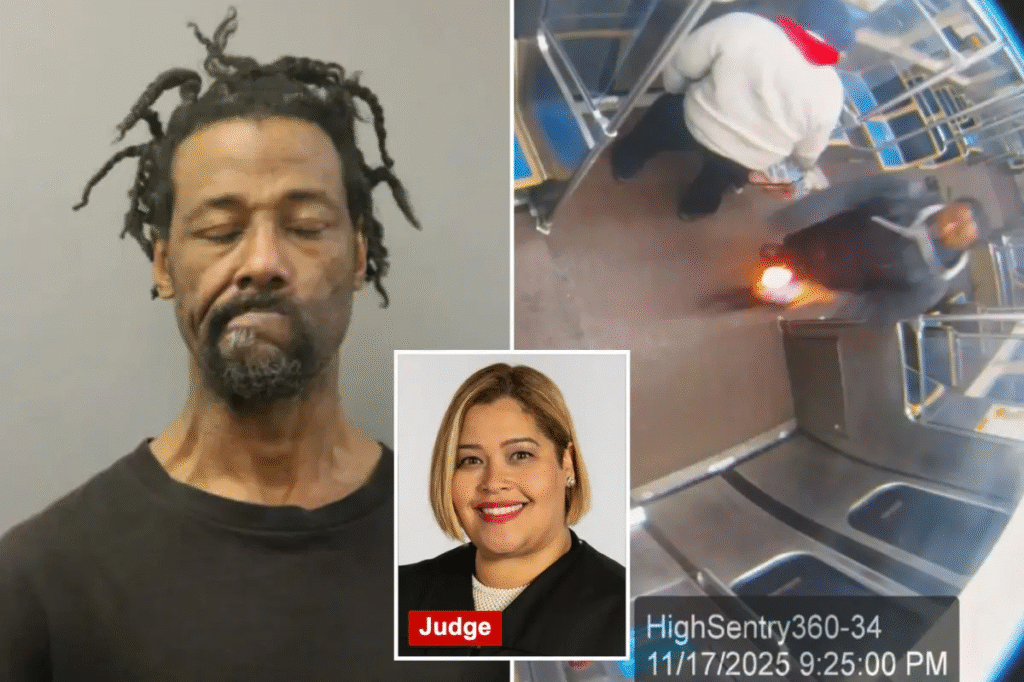
When Lawrence Reed was apprehended the following morning, investigators reported that he was wearing the same clothes captured on surveillance video and that he exhibited burns to his right hand consistent with the ignition event. Officers also documented incriminating statements he allegedly made at the time of arrest, including shouting “burn alive b–h,” a phrase federal prosecutors referenced in their detention filings.
The charge filed against Lawrence Reed —committing a terrorist attack on mass transportation—carries a potential maximum sentence of life imprisonment. Prosecutors argue that the attack meets statutory criteria for terrorism due to Reed’s alleged intent to inflict death or serious bodily harm within a public transportation system.
This classification reflects both the severity of the act and the visible danger posed to other passengers and infrastructure. The unusual deployment of a federal terrorism charge in a case not linked to ideological extremism also underscores the gravity with which federal authorities view the deliberate use of fire as a lethal weapon in an enclosed public environment.
Public and Political Reaction to the Incident and Its Broader Implications
Following the attack and the revelation of Lawrence Reed’s extensive criminal history, the incident has catalyzed renewed conversation about the management of violent offenders in Chicago and the perceived shortcomings of current judicial practices. Public figures and politicians rapidly amplified these concerns, with some referencing the case as emblematic of deeper systemic issues.
Tesla and SpaceX CEO Elon Musk weighed in on the matter on X, arguing that judges who release individuals with extensive violent histories place the public at unacceptable risk. Former Representative Sean Duffy expressed similar criticism, stating that the attack would not have occurred if Lawrence Reed had been incarcerated, and characterizing the incident as a consequence of policies allowing repeat offenders to remain at large. These statements reflect a broader discourse concerning public safety, prosecutorial discretion, bail and pretrial release frameworks, and sentencing practices in urban jurisdictions.
Local Chicago officials, by contrast, offered fewer public details but emphasized the severity of the victim’s injuries and the active investigative processes underway. Federal officials speaking after Reed’s detention hearing reiterated their position that the criminal justice system had afforded Lawrence Reed multiple opportunities that failed to prevent continued violent conduct. This criticism suggests ongoing tension between federal law enforcement perspectives emphasizing public protection and local procedures focused on case-by-case considerations regarding detention, sentencing, and rehabilitation.
The attack has also prompted discussions about transit safety, particularly given the essential role Chicago’s CTA system plays in daily commuting. Public transit authorities have been under pressure to address crime within the system, and this incident represents one of the most severe violent acts reported aboard an L train in recent years. While data on transit-related crime has fluctuated, high-profile attacks often influence public perception more strongly than overall trends, and this event may contribute to renewed calls for enhanced security measures.
In the courtroom, Lawrence Reed’s behavior during his initial appearance was widely reported by local Chicago media. His interruptions, repeated declarations of guilt, and claim of foreign citizenship were noted as unusual but not yet indicative of a legal determination regarding competency. His conduct raised questions about whether future proceedings may require mental health evaluations, but prosecutors noted no prior record suggesting that Reed had been found incompetent or deemed unable to stand trial.
As the legal case proceeds, the woman attacked on the train remains hospitalized with severe burns, and federal prosecutors have signaled an intent to pursue the terrorism charge as filed. Reed has been ordered held without bond as the case moves forward, reflecting the government’s argument that he poses a clear risk to the public.
The attack has become a focal point in national discussions about repeat offenders, judicial decision-making, and urban transit safety, with the severity of the violence underscoring concerns raised by both community members and federal authorities. The case continues to unfold as investigators, prosecutors, and policymakers review the circumstances that led to the attack and consider the broader implications for public safety systems in major American cities.