
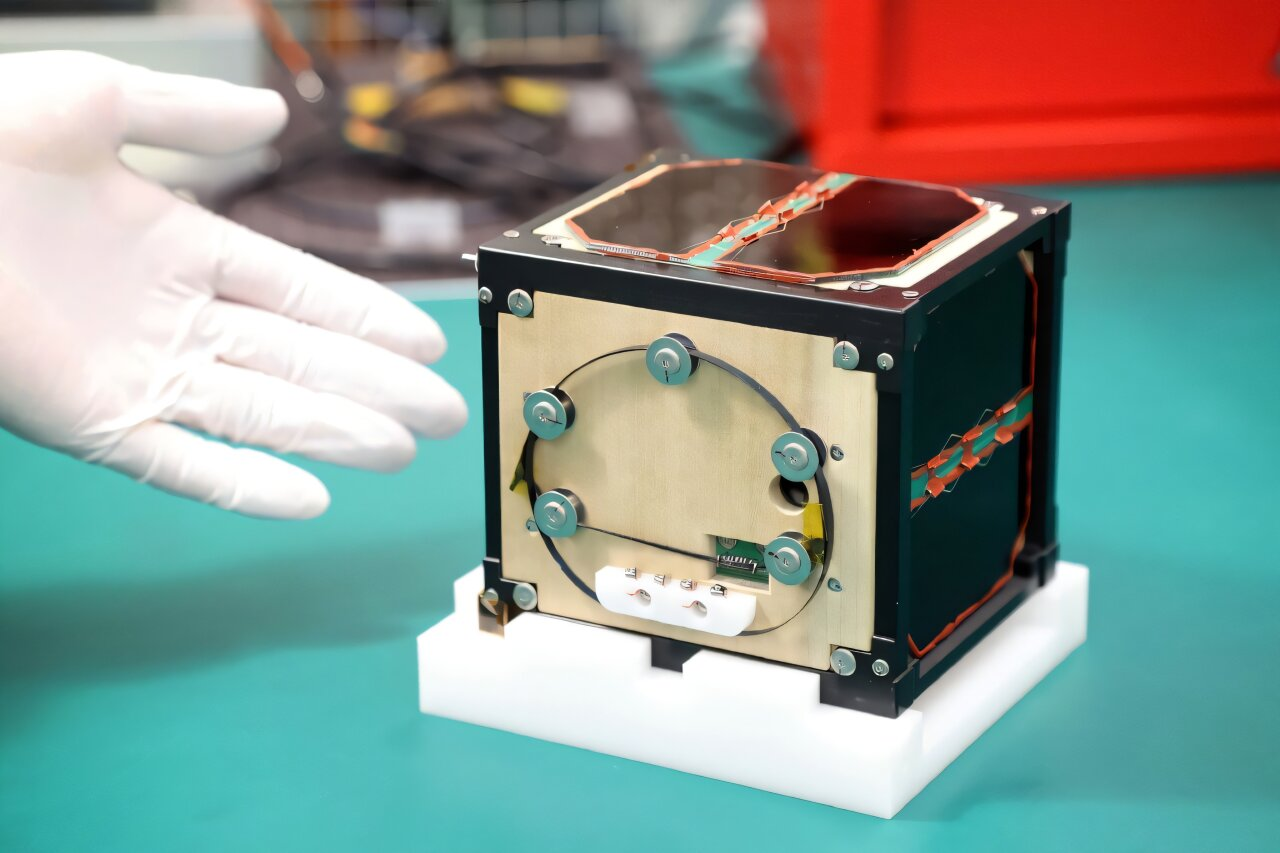
In a groundbreaking development in space technology, LignoSat, the world’s first wooden satellite, was launched into space by Japanese researchers. This unique satellite, a product of collaboration between Kyoto University and Sumitomo Forestry, marks a new chapter in the use of renewable materials in space exploration.
Built from a type of timber called Honoki, traditionally used for making sword sheaths, LignoSat is a compact, innovative solution that challenges traditional satellite designs and offers a more environmentally friendly alternative to conventional materials.
The satellite was launched as part of a SpaceX mission and will be delivered to the International Space Station (ISS) before being deployed into orbit around 400 kilometers above Earth. With its small size and unique construction, LignoSat has generated widespread interest for its potential to revolutionize the way satellites are built and discarded.
As space agencies and private enterprises around the world seek more sustainable solutions for space exploration, the successful deployment of LignoSat could open new possibilities for the use of renewable materials in space technology.
The Science Behind LignoSat: Why Wood in Space?
LignoSat is named after the Latin word lignum, meaning wood, and is designed to showcase the potential of timber in space. At first glance, the idea of using wood in space may seem unconventional, but it actually holds several advantages over traditional satellite materials.
One of the key reasons behind using wood for LignoSat is its durability in the vacuum of space. While wood is susceptible to damage from water, oxygen, and fire on Earth, these elements are absent in space. Without exposure to oxygen or moisture, wood does not rot, burn, or corrode.
The satellite’s wooden exterior was crafted from the Honoki plant, or “Reverse-ovate Magnolia,” a tree species native to Japan known for its lightweight and strong properties.
The durability of this material has been tested extensively to ensure that it can withstand the harsh conditions of space, where temperatures can fluctuate from -100 to 100 degrees Celsius every 45 minutes as the satellite orbits the Earth and transitions from sunlight to darkness.
Read : Japan’s Iconic Mount Fuji Snowless in October for the First Time
Beyond durability, LignoSat also aims to minimize space debris, a growing concern in the modern space era. Typically, satellites are decommissioned by falling into the Earth’s atmosphere, where they burn up. However, the metal and composite materials commonly used in satellites often leave behind remnants, contributing to the problem of space debris.
Wooden satellites, on the other hand, will burn up completely without leaving any harmful traces in the atmosphere. This makes LignoSat an eco-friendly alternative for future satellite missions.
Read : Geisha: Keepers of Tradition and Elegance
Another innovative aspect of LignoSat is its role in shielding electronic components from the effects of cosmic radiation. One of the goals of the satellite is to measure how well wood can reduce the impact of cosmic radiation on sensitive semiconductor components. If successful, this could lead to the use of wood in a wide range of applications, including the construction of data centers and other facilities that require radiation protection.
The simplicity and elegance of wood as a material for satellite construction highlight its cutting-edge potential in the world of space technology. As Kenji Kariya, manager of the Sumitomo Forestry Tsukuba Research Institute, remarked, “It may seem outdated, but wood is actually cutting-edge technology.”
LignoSat’s Mission: Six Months of Space Testing
Once launched from the International Space Station, LignoSat will spend six months in orbit, gathering valuable data on the performance of wood in space. During this time, the satellite’s onboard electronic components will monitor the integrity of the wooden structure and how it withstands extreme temperature changes, cosmic radiation, and the harsh vacuum of space.
As LignoSat moves through orbit, it will experience rapid temperature fluctuations as it transitions from the darkness of space to direct sunlight. Temperatures can drop to -100 degrees Celsius when the satellite is in the shadow of the Earth and rise to 100 degrees Celsius when it is exposed to sunlight.
These extreme conditions provide a challenging environment for any material, but wood’s natural properties make it a surprisingly suitable candidate for withstanding these extremes.

The data collected by LignoSat will be critical in understanding the potential of wood for future space applications. In particular, researchers will be interested in how well the wooden structure maintains its integrity over time and whether it can effectively protect the satellite’s electronic components from radiation.
Cosmic radiation is a significant concern for satellites, as it can degrade semiconductors and other sensitive electronics. If wood proves to be a viable material for shielding against radiation, it could open up new avenues for the use of renewable materials in space technology.
Additionally, the results from LignoSat’s mission could inform the design of future wooden satellites and other space structures. With the growing interest in sustainable space exploration, the use of renewable materials like wood could become a key component of future missions.
As researchers continue to explore the possibilities of timber in space, LignoSat’s mission will provide valuable insights into how this ancient material can be adapted for cutting-edge applications.
The Future of Sustainable Space Technology
The launch of LignoSat represents a significant step forward in the development of sustainable space technology. As the global space industry continues to expand, there is a growing need for more environmentally responsible practices.
The problem of space debris, in particular, has become a pressing issue, with thousands of defunct satellites and pieces of debris orbiting the Earth. These objects pose a risk to active satellites and space missions, and the accumulation of debris in low Earth orbit is a major concern for space agencies around the world.
Wooden satellites like LignoSat offer a potential solution to this problem. By using renewable materials that burn up completely upon re-entry into the Earth’s atmosphere, wooden satellites can help reduce the amount of space debris generated by satellite missions.
This approach aligns with broader efforts to promote sustainability in space exploration, which includes minimizing the environmental impact of satellite launches, reducing waste, and developing more eco-friendly materials.

The success of LignoSat could pave the way for other innovative uses of timber and renewable materials in space technology. For example, wood could be used in the construction of habitats and structures on the Moon or Mars, providing a lightweight, durable, and sustainable option for building in space.
As astronaut Takao Doi from Kyoto University suggested, “With timber, a material we can produce by ourselves, we will be able to build houses, live, and work in space forever.”
The concept of using wood for space habitats may seem futuristic, but it is rooted in practical considerations. Wood is a versatile material that can be grown sustainably on Earth, making it an attractive option for long-term space exploration.
As space agencies and private companies look toward missions to the Moon, Mars, and beyond, the need for sustainable building materials will become increasingly important. The use of timber in space could help meet this demand, offering a renewable resource that can be easily transported and adapted for use in extraterrestrial environments.
Moreover, the development of wooden satellites and structures could have implications beyond space exploration. The lessons learned from LignoSat’s mission could inform the design of more sustainable technologies on Earth, particularly in industries such as construction, electronics, and data centers.
If wood proves to be effective at shielding electronic components from radiation, it could lead to new innovations in radiation protection for critical infrastructure on Earth.
LignoSat as a Pioneer in Sustainable Space Exploration
LignoSat’s launch into space marks a pioneering moment in the history of satellite technology. As the world’s first wooden satellite, it challenges conventional assumptions about materials in space and opens up new possibilities for the use of renewable resources in space exploration.
By demonstrating the durability and potential of wood in the harsh environment of space, LignoSat provides valuable insights into how sustainable materials can be integrated into future space missions.
As the global space industry continues to grow, the need for more sustainable and environmentally friendly practices will become increasingly important. Wooden satellites like LignoSat offer a promising solution to the problem of space debris and represent a step toward a more sustainable future for space exploration.
With its innovative design and mission objectives, LignoSat serves as a reminder that sometimes the most cutting-edge technologies can be found in the most ancient materials.