
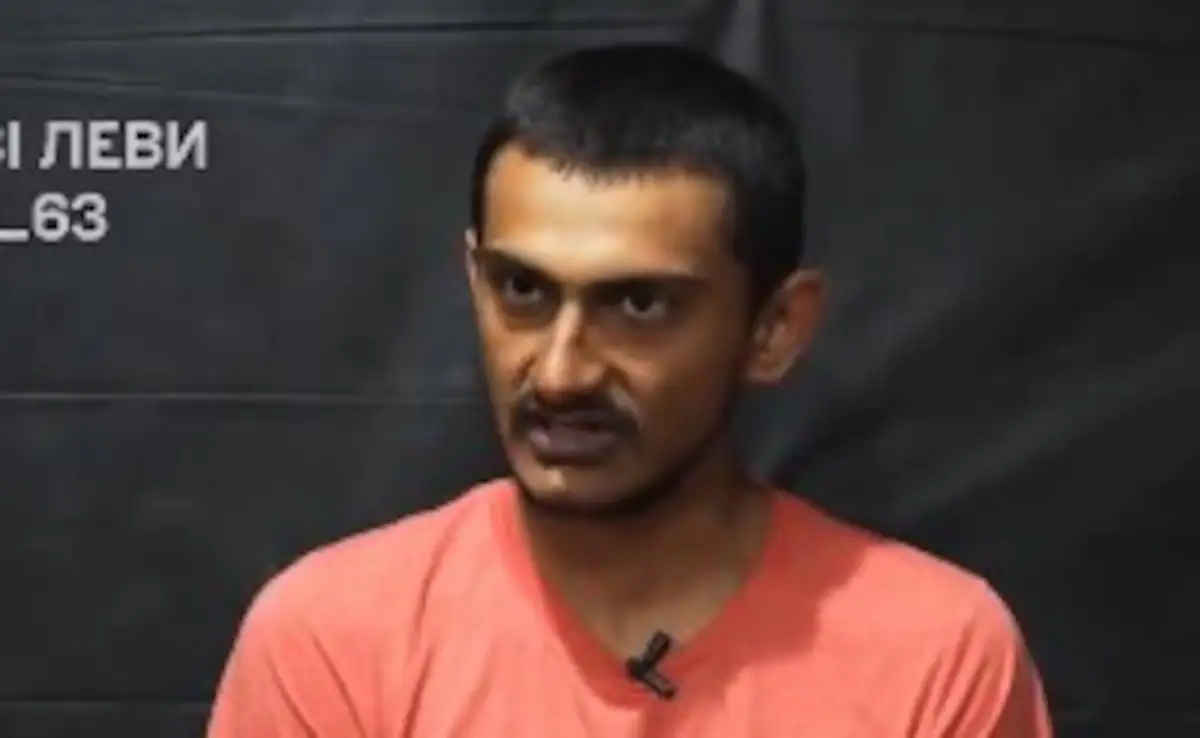
In a startling development amid the ongoing Russia-Ukraine conflict, Ukrainian forces have captured a 22-year-old Indian national, Majoti Sahil Mohamed Hussein, who was allegedly fighting on the side of the Russian military. The incident, reported on October 7, 2025, by Ukraine’s 63rd Mechanised Brigade, highlights the vulnerabilities faced by foreign nationals drawn into the war under duress. Hussein, a student from Morbi district in Gujarat, India, surrendered after just three days on the front lines, marking another case of coerced involvement in the conflict. Indian authorities have launched verification efforts, underscoring the diplomatic sensitivities involved.
The capture has sparked immediate attention in New Delhi, where the Ministry of External Affairs (MEA) is coordinating with the Indian Embassy in Kyiv to confirm the details. This event adds to a growing list of reports about non-Russian citizens being recruited or forced into the Russian armed forces, often through questionable means. Hussein’s case, detailed in a video released by the Ukrainian brigade, provides a firsthand account of the pressures that led him from academic pursuits in Russia to the battlefield. As the news spreads across international media, it raises urgent questions about the recruitment practices of the Russian military and the safety of Indian students abroad.
From Student Visa to Front Lines: Hussein’s Path to Enlistment
Majoti Sahil Mohamed Hussein arrived in Russia on a student visa with aspirations of higher education. Hailing from Morbi, a town in Gujarat known for its ceramic industry and modest communities, the 22-year-old enrolled at a university in Russia to pursue his studies. His journey took a drastic turn when he became entangled in a drug-related legal issue, leading to his arrest and a seven-year prison sentence in a Russian facility.
According to Hussein’s own statements in the video released by the 63rd Mechanised Brigade, the Russian authorities presented him with a stark ultimatum: serve the full term behind bars or sign a contract to join the military for the so-called “special military operation” in Ukraine. Desperate to avoid prolonged incarceration, Hussein opted for enlistment, hoping it would lead to an early release. He later revealed that he never intended to actively participate in combat and planned to desert at the first opportunity once deployed.
This recruitment tactic is not isolated. Reports from Ukrainian and international sources indicate that Russia has increasingly turned to prisons and foreign detainees to bolster its forces since the full-scale invasion began in February 2022. In Hussein’s case, the promise of freedom and financial incentives—though the latter never materialized—proved alluring enough to sign on the dotted line. He emphasized in the video that his decision was born out of necessity rather than ideology, stating, “I didn’t want to stay in prison, so I signed a contract.” This personal testimony sheds light on the exploitative conditions that ensnare individuals like Hussein, transforming students into unwitting combatants.
Ukraine's military says they have captured an Indian national who was fighting alongside Russian forces.
— Sidhant Sibal (@sidhant) October 7, 2025
Majoti Sahil Mohamed Hussein is a 22-year-old student from Morbi, Gujarat, India & came to Russia to study at a university pic.twitter.com/Kzi5F4EDR4
The Indian Embassy in Moscow had previously issued advisories cautioning students against such traps, but Hussein’s predicament illustrates the challenges of enforcement in a foreign legal system. As of October 8, 2025, the MEA has confirmed it is in touch with relevant Russian and Ukrainian counterparts to trace Hussein’s background and ensure his well-being. This incident serves as a cautionary note for the over 20,000 Indian students estimated to be studying in Russia, many of whom arrived post-2022 amid disrupted travel to other destinations due to the war.
Brief Training and Swift Surrender: The Battlefield Ordeal
Hussein’s military involvement was shockingly abbreviated. Following his enlistment, he underwent a mere 16 days of basic training at a Russian facility. The curriculum, as described by Hussein, was rudimentary: instruction on handling an assault rifle, throwing grenades, and basic shooting drills. No advanced tactics, no prolonged simulations—just enough to arm him minimally before thrusting him into active duty.
On October 1, 2025, Hussein was dispatched to his first combat mission near Ukrainian positions. What followed was a harrowing three-day stint on the front lines, during which he witnessed the chaos of artillery fire and close-quarters engagements. A pivotal disagreement with his Russian commander escalated tensions, prompting Hussein to make a bold move. Spotting a Ukrainian trench approximately two to three kilometers away, he deserted his unit and approached the positions of the 63rd Mechanised Brigade under a white flag of surrender.
Read : Russian Drone Strike Kills 13,000 Pigs on Kharkiv Farm, Sparking Massive Fire in Ukraine
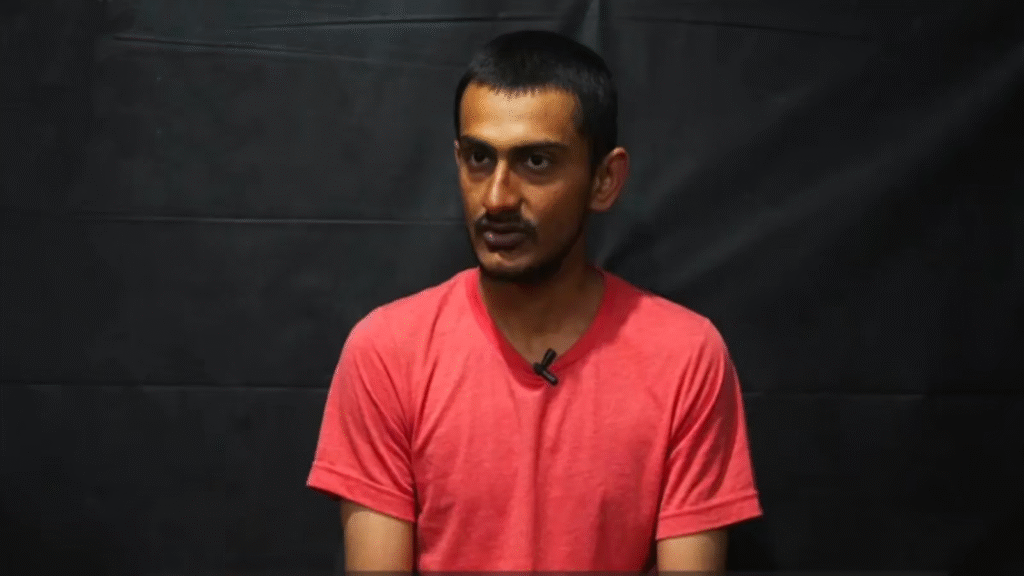
In the brigade’s video, Hussein appears disheveled but coherent, speaking in broken Russian with subtitles provided. He recounts navigating the no-man’s-land under cover of night, driven by fear and disillusionment. “I came across a Ukrainian trench position,” he said, detailing how he signaled his intent to defect rather than fight. Ukrainian troops, trained to handle potential infiltrators, secured him without incident, marking his capture on October 4, 2025.
Notably, Hussein claimed that the promised financial compensation for his service—reportedly a lump sum to offset his prison avoidance—never arrived. This unfulfilled pledge further eroded any lingering loyalty to his Russian handlers. The 63rd Brigade, known for its operations in the Donetsk region, promptly documented his account to highlight Russia’s reliance on coerced foreign fighters. Hussein’s rapid surrender underscores the fragility of such recruits, many of whom lack the motivation or preparation for sustained warfare. Ukrainian military analysts have noted similar defections, with over a dozen non-Russian nationals surrendering in the past month alone, providing intelligence on Russian positions in exchange for leniency.
Diplomatic Response and Broader Implications for India
The Indian government’s reaction has been swift and procedural. The MEA spokesperson, in a briefing on October 7, 2025, stated that New Delhi is “verifying the claims” through diplomatic channels and has urged Ukrainian authorities to treat Hussein humanely under the Geneva Conventions. The Indian Embassy in Kyiv is actively liaising with the Ukrainian Ministry of Defense to facilitate access to the detainee, potentially arranging consular visits. Meanwhile, the embassy in Moscow is probing Hussein’s initial arrest and enlistment to determine if any irregularities violated his rights as a foreign national.
This case amplifies concerns over the recruitment of Indians into foreign militaries. Since 2022, at least five other Indian nationals have been reported killed or captured while fighting for Russia, often under similar coercive circumstances. Advocacy groups in India have called for a travel advisory upgrade for students heading to Russia, emphasizing legal risks and the politicization of visa programs. Prime Minister Narendra Modi’s administration, which has maintained a neutral stance on the Russia-Ukraine war—abstaining from UN votes condemning Moscow—faces domestic pressure to repatriate affected citizens more aggressively.
Hussein’s plea in the video resonates widely: “I don’t want to go back to Russia. There’s no truth there. I’d rather serve time in prison here. And if possible, please send me home to India.” His words capture the human cost of geopolitical entanglements, where personal ambitions collide with international conflicts. Ukrainian officials have indicated that Hussein is being held in a low-security facility, cooperating with interrogators who view him as a low-threat defector. Potential outcomes include prisoner exchanges or, if cleared, facilitated return to India via neutral routes.
On a larger scale, this incident exposes Russia’s manpower shortages, estimated at over 500,000 casualties since the invasion. By tapping into prison populations and foreign detainees, Moscow has filled gaps but at the expense of morale and effectiveness, as evidenced by Hussein’s quick capitulation. For India, it prompts a reevaluation of bilateral ties with Russia, a key defense supplier, without jeopardizing longstanding partnerships. As investigations continue, Hussein’s story remains a stark reminder of how ordinary individuals become pawns in extraordinary wars.