
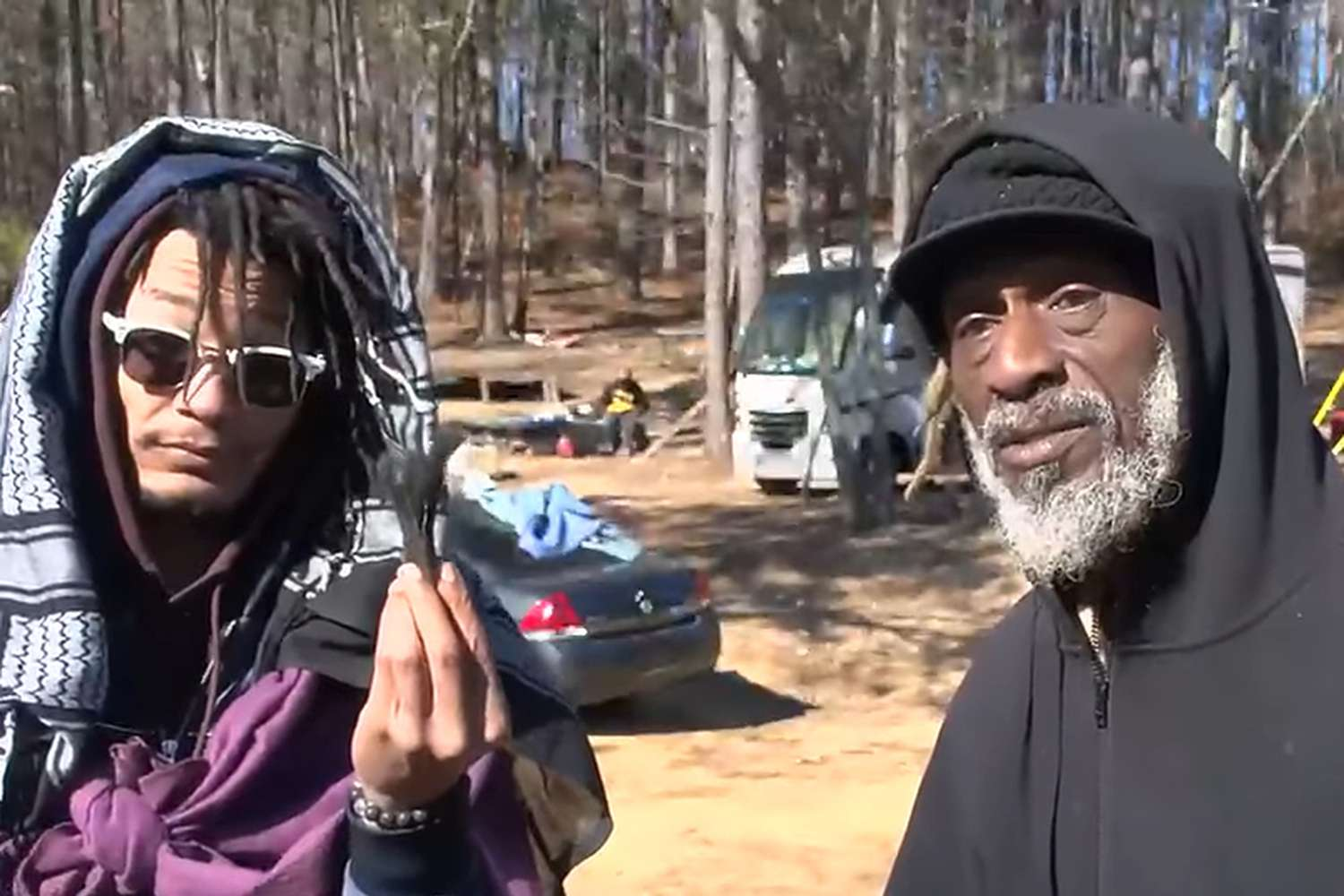
Authorities in rural Alabama have arrested several individuals connected to a small religious group whose leader claims to be the reincarnation of Jesus Christ, following a months-long investigation into their presence at a remote campsite. The arrests occurred near the unincorporated community of Empire in Walker County, where members of the group known as More than the Prophet Ministries had been living for several months.
Law enforcement officials described the operation as the result of ongoing concerns, while members of the group have disputed the manner in which authorities conducted the search and questioned their intentions. The incident has drawn attention both locally and online, raising questions about religious freedom, law enforcement oversight, and the fine line between unconventional belief systems and potential public safety concerns.
Background of the Group and Its Leadership
The group at the center of the arrests identifies itself as More than the Prophet Ministries and is led by a man named Lando, who is referred to by his followers as Reverend Lamp. According to statements made by Lando and information reported by local media, the group’s beliefs center on the idea that he is “the only begotten son of the living God,” a claim that positions him as the reincarnation or embodiment of Jesus Christ.
The ministry appears to operate primarily through social media platforms, where videos and posts describe their teachings as focused on what they call a complete expression of Christ’s life, death, and resurrection. Approximately 15 individuals from various parts of the United States had been living at the campsite for about five months. Lando stated that the group relocated to Alabama from Arkansas and set up their encampment on property owned by a woman to whom he paid monthly rent.
The site consisted of tents and makeshift living arrangements rather than permanent structures, reflecting the group’s transient lifestyle. According to Lando, members chose the location for its seclusion and affordability, and he emphasized that they viewed their time there as temporary. Local officials, however, said the campsite had been under investigation for several months prior to the execution of the search warrant.
Read : Swiss Serenity: Unveiling the Top Destinations in Switzerland
Walker County Sheriff Nick Smith announced that his office, with assistance from the Blount County Sheriff’s Office and the U.S. Department of Homeland Security, carried out the search as part of that investigation. While authorities did not initially provide detailed public explanations for the investigation, Smith stated that some individuals connected to the site were arrested and others were instructed to gather their belongings and leave the property.
The Arrests and Law Enforcement Operation
The search warrant was executed on a Tuesday, catching some members of the group as they were still in the process of preparing to leave the property. According to Sheriff Smith, law enforcement officers detained several individuals during the operation. Lando later told local television station WBRC that three members of the group were arrested for refusing to identify themselves when questioned by authorities. He said those arrests stemmed solely from the individuals’ refusal to provide their names, rather than from any violent or threatening behavior.
Read : Scam! Psychics in China Asking $18 for Five or $420 for Unlimited Questions About Dead Pet
Lando and other group members described the search as aggressive, claiming they were handcuffed and made to lie face down while officers conducted their investigation. He also alleged that agents from the Department of Homeland Security questioned members about their U.S. citizenship, though it remains unclear what specific role DHS played in the operation. Federal authorities had not publicly commented on those claims at the time of reporting, and local officials declined to elaborate on DHS involvement.

During the search, authorities reported finding one firearm and narcotics at the campsite. Sheriff Smith confirmed the discovery, but details about ownership and intent were not immediately released. Lando disputed the implications of those findings, stating that the firearm belonged to an individual who no longer lived at the camp and that the narcotics were marijuana. He emphasized that the group did not engage in violent activity and argued that the items found did not represent an immediate threat to public safety.
In a video posted to social media following the search, Sheriff Smith reiterated that the operation was conducted lawfully and as part of an ongoing investigation. He noted that some individuals were released at the scene and told to leave the property, while others were taken into custody. The identities of those arrested, aside from the general description provided by Lando, were not immediately released by authorities.
Conflicting Accounts and Ongoing Questions
In the days following the arrests, competing narratives emerged from law enforcement and the group itself. Lando maintained that the group had already been instructed to leave the property in November and that several members had complied at that time. According to him, the remaining individuals were in the process of cleaning up the campsite and preparing to depart by the end of December when the search warrant was executed.
He expressed frustration that authorities did not simply notify them to leave immediately, saying the situation could have been resolved without arrests or a large-scale law enforcement presence. “If you would have just woke me up, and said, ‘Hey man, y’all are supposed to be gone,’ ‘Yeah, we’re leaving today,’” Lando told WBRC, suggesting that the confrontation escalated unnecessarily. He also said the group intended to comply with officials’ orders but wished the approach had been less confrontational.
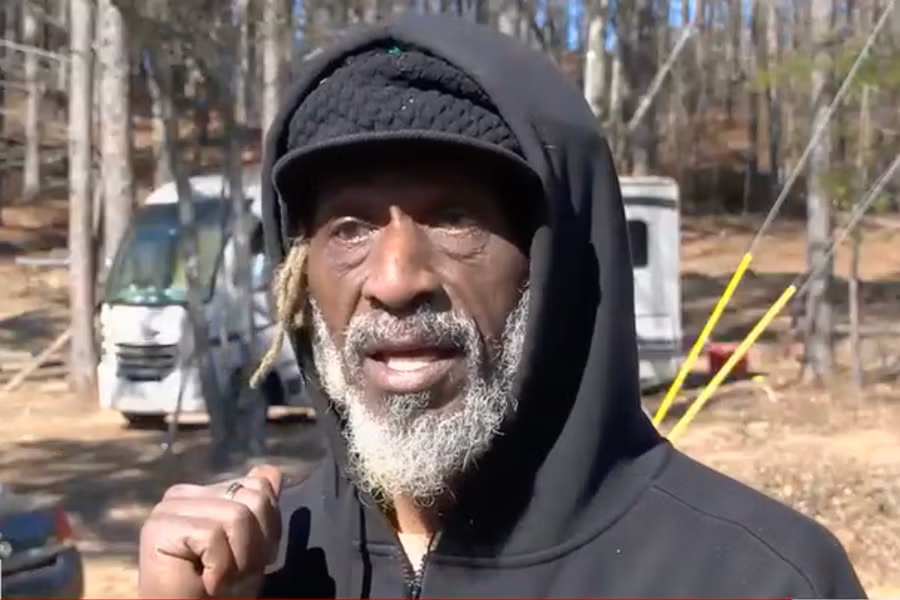
Law enforcement officials, meanwhile, emphasized that the investigation had been ongoing for months and that the execution of the search warrant was based on information gathered during that time. Sheriff Smith did not publicly address the group’s claim that they were already in the process of leaving, nor did he clarify whether the presence of a firearm and drugs factored into the timing of the warrant. The lack of detailed explanations has left room for speculation, particularly among supporters of the group who have rallied online in response to Lando’s social media posts.
On Instagram and Threads, an account appearing to belong to Lando has continued to post videos and messages addressing followers and local residents. In one video recorded after the search, he thanked people in Walker County for showing support, saying he believed the group had been placed there for a reason. He described his followers as “honest, hardworking people” and framed the group’s presence as an example of goodwill rather than a source of concern.
The Independent and other media outlets have sought comment from Sheriff Smith, the Blount County Sheriff’s Office, and the Department of Homeland Security to clarify the circumstances of the investigation and the arrests. As of the latest reports, those requests had not resulted in detailed responses, leaving several questions unresolved. It remains unclear whether additional charges will be filed, what specific concerns prompted DHS involvement, or whether the investigation into the group is considered closed.
The case highlights the challenges authorities face when dealing with unconventional religious groups that operate on the margins of society. While the United States protects freedom of religion, law enforcement agencies are also tasked with ensuring public safety and enforcing local laws related to property use, identification, and criminal activity. In situations like this, tensions can arise between the rights of individuals to practice their beliefs and the authority of the state to investigate potential violations.
As the arrested individuals move through the legal system and the remaining members disperse from the campsite, the incident near Empire, Alabama, is likely to continue drawing attention. Whether it becomes a brief local controversy or part of a broader conversation about religious movements and law enforcement practices may depend on what additional information emerges in the coming weeks.
I was looking for a link to q789gamedownload. I found it on q789gamedownload.com but i don´t know if it´s safe. Thoughts? q789gamedownload
**mitolyn**
Mitolyn is a carefully developed, plant-based formula created to help support metabolic efficiency and encourage healthy, lasting weight management.