

The gruesome murder of Stuart Everett, a former civil servant from Salford, shocked the nation when details emerged of how his housemate, Marcin Majerkiewicz, dismembered his body into 27 pieces.
The crime, which took place in March 2024, was committed in their shared home in Winton, Salford, where Majerkiewicz bludgeoned Everett to death with a hammer before using a hacksaw to dismember his body.
The horrific act was further compounded by Majerkiewicz’s attempt to cover his tracks, deceiving the victim’s family into believing he was still alive by sending texts and a birthday card in his name.
A Grisly Crime with No Clear Motive
Marcin Majerkiewicz, a 42-year-old horror movie enthusiast, had a deep obsession with gore and violent films. His fixation was evident through his internet search history, the gruesome videos he watched, and even his tattoos, one of which depicted Jason, the iconic villain from the slasher film Friday the 13th. Despite this, the true motive behind the brutal killing remains unknown.
On the day of the murder, Majerkiewicz attacked 67-year-old Stuart Everett with a hammer before dismembering his body using a hacksaw.
He went to great lengths to dispose of the remains, placing them in plastic bags and dumping them in various locations around Salford and Manchester, including a nature reserve and a walking trail. Only a third of Everett’s body has been recovered, and authorities continue to investigate the possible whereabouts of the missing remains.
Read : Mystery of Stained-Glass Window Fragments Anonymously Returned to Dunfermline Abbey Solved
Detective Superintendent Lewis Hughes of Greater Manchester Police (GMP) admitted that there was no clear explanation for the heinous act. “We don’t know why he removed the face, if it’s something, [a] sort of weird fantasy or behaviour or it’s just an attempt to mask identification, we don’t know. But we haven’t confirmed any clear motive,” he stated.
Read : Guns with Which Napoleon Planned to Kill Himself Sell for Over $1.83 Million in France
Financial troubles, debt, and potential tensions between the two men have been considered as possible contributing factors. Majerkiewicz was unemployed at the time of the murder and was reportedly struggling with £60,000 in debt.
Covering His Tracks and Attempting to Escape
Following the murder, Majerkiewicz went to extreme lengths to conceal his crime. He assumed control over Everett’s finances and mobile phone, using them to send text messages to the victim’s family in an effort to maintain the illusion that he was still alive. He even sent a birthday card, further deceiving Everett’s loved ones and delaying any suspicion of foul play.
His efforts to evade justice did not stop there. Before his arrest, Majerkiewicz was actively searching for rental properties in Alicante, Spain, suggesting that he may have been planning to flee the country.

However, his plan fell apart when a member of the public discovered Everett’s torso at Kersal Dale Nature Reserve, prompting a police investigation that would ultimately lead to Majerkiewicz’s arrest.
When confronted by authorities, Majerkiewicz initially denied any involvement in the crime, insisting that the police had made a “100 percent mistake.” However, forensic searches of his home revealed significant evidence of blood and an attempted cleanup, further solidifying his guilt.
Trial, Conviction, and the Impact on the Victim’s Family
Majerkiewicz was arrested three weeks after the initial discovery of Everett’s remains. Throughout his trial at Manchester Crown Court, he pleaded not guilty to murder but failed to present any evidence in his defense. The jury, after a three-week trial, took less than two hours to return a guilty verdict.
Mr. Justice Cavanagh informed Majerkiewicz that he would face a mandatory life sentence, with the minimum term before parole to be determined at sentencing on March 28.
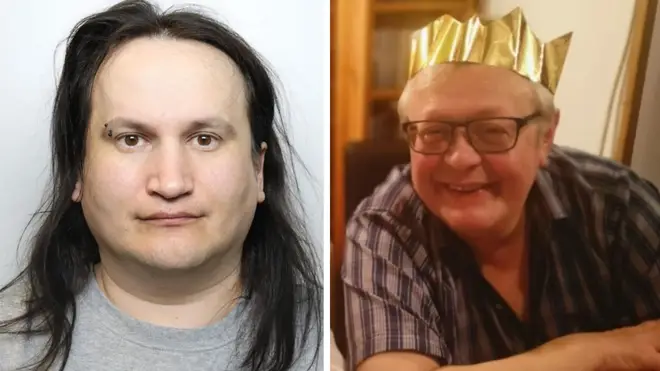
Rebecca Macaulay-Addison, a specialist prosecutor from the Crown Prosecution Service (CPS) North West’s Complex Casework Unit, condemned Majerkiewicz’s actions, calling them “despicable and disturbing.” She further stated, “Majerkiewicz not only stole a loved one from those who cared for Mr. Everett – his subsequent actions are almost certain to have compounded their pain and suffering.”
Everett’s family was left devastated upon learning of his brutal murder. Known as “Benny” to his relatives, he was described as a kind and gentle man who enjoyed gardening, cricket, and listening to Frank Sinatra. His tragic death, combined with the horrific manner in which it occurred, has left an indelible scar on those who knew and loved him.
The case has sparked discussions about the influence of violent media on individuals with disturbing obsessions. While no direct correlation between horror films and violent crimes has been proven, this case has reignited concerns about the potential impact of excessive exposure to graphic content on mentally unstable individuals.
With Majerkiewicz now awaiting sentencing, justice is being served for Stuart Everett and his grieving family. However, the unanswered questions surrounding the motive and the missing body parts continue to add an unsettling layer to an already horrifying crime.