
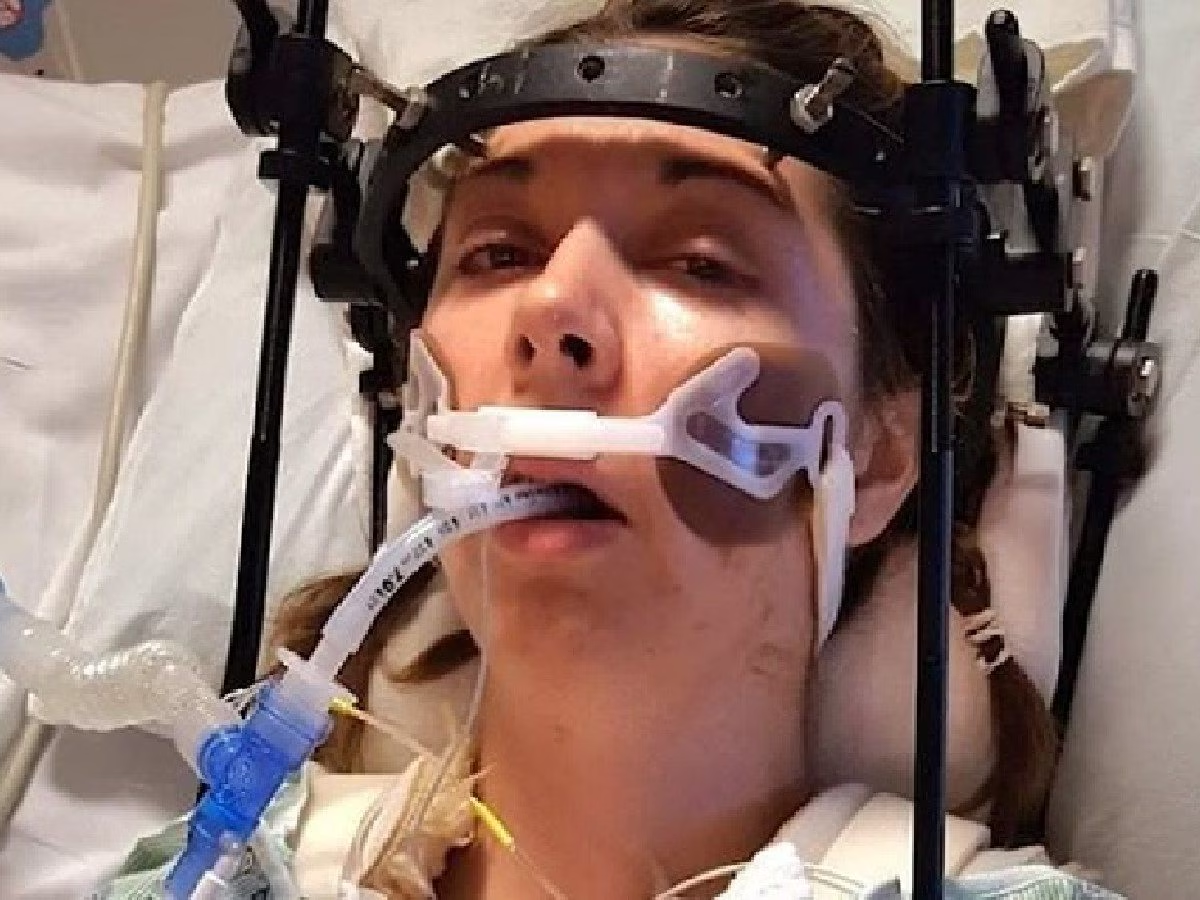
Megan King’s story begins in a gymnasium in Illinois in 2005, where a simple leap for a ball altered the course of her life forever. At the age of sixteen, what should have been a minor fall during a school activity ended up being the first step toward a nightmare no one could have anticipated.
While the immediate injury was a twisted ankle, it soon became apparent that something much deeper had gone wrong. She not only tore muscles from both her shoulder blades but also sustained damage to her spine—an injury that would relentlessly deteriorate over the years.
In the days and months that followed, Megan found her body spiraling into a world of unexplained pain and suffering. Her joints weakened inexplicably, muscles began tearing without provocation, and her recovery never came.
She underwent numerous surgeries, particularly focused on her shoulders and upper back—22 procedures to be exact—without receiving any clear answers about why her condition kept worsening. For a young woman who once led an active life, the transformation into a person constantly in and out of operating rooms was harrowing and bewildering.
It wasn’t until a decade later, in 2015, that doctors finally gave her suffering a name: hypermobile Ehlers-Danlos syndrome (hEDS). This rare genetic disorder affects the body’s connective tissues, causing extreme joint instability, chronic pain, and frequent injuries that heal poorly or not at all. Though the diagnosis brought some clarity, it also painted a daunting picture of what Megan’s life might look like moving forward.
The Ordeal of Internal Decapitation
Just when Megan King thought she had perhaps seen the worst of her condition, an unimaginable incident occurred in 2016 that would nearly cost her life. Due to the instability in her neck caused by hEDS, she had to wear a Halo brace—a rigid metal frame screwed into her skull, designed to immobilize the neck.
But during the process of removing the device, a catastrophic event unfolded. Her skull began detaching from her spine, a medical emergency known as atlanto-occipital dislocation, more commonly referred to as internal decapitation.
Read : Influencer Gessica Kayane Nearly Denied Entry into Brazil After Cosmetic Surgery Changed Her Look
This rare condition is almost always fatal. In fact, it is lethal in over 90% of reported cases. The very structure connecting the head to the spinal column had become unstable, leaving her life hanging by a thread.
Read : Karachi Girl Receives Heart Transplant Surgery in Chennai
“My neurosurgeon had to physically hold my skull in place,” she recalled. The terrifying moment left her unable to stand, her right side shaking violently, and her head tilting back—gravity threatening to do irreversible damage.
She was immediately rushed into emergency surgery. Doctors fused her skull to her spine, stabilizing the critical junction between the head and the body. But the ordeal didn’t end there.
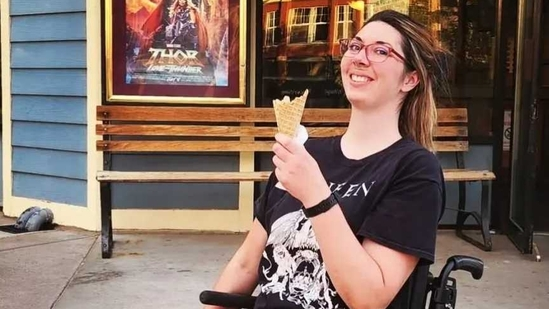
In the months that followed, she would undergo additional procedures that eventually led to the fusion of her entire spine down to her pelvis. Today, Megan cannot bend, twist, or even turn her head. She is physically immobilized from her skull to her tailbone.
She describes herself poignantly: “I’m literally a human statue.” It’s a phrase that speaks volumes—not just about her current physical limitations, but also about her strength and resilience in the face of impossible odds.
Adapting to a New Life and Defying the Odds
Despite being locked in a body that no longer moves the way it once did, Megan King refuses to be defined by her limitations. Now 35 years old and having survived 37 grueling surgeries, she continues to challenge herself, push boundaries, and redefine what’s possible in her world.
A turning point came unexpectedly during a casual evening out with friends. They had gone bowling—a social activity that Megan King initially had no plans to participate in. Given the complete fusion of her spine, it seemed unthinkable that she could swing a ball, let alone aim accurately. But in a moment of spontaneous bravery, she decided to try.
What followed was nothing short of miraculous. Megan King bowled not just one strike, but three. Her friends erupted in cheers—not just because of the pins she knocked down, but because of the symbolic victory the moment represented.
Every strike she bowled was a declaration that her story was far from over. Despite her physical limitations, her spirit was alive, determined, and fiercely adaptive.
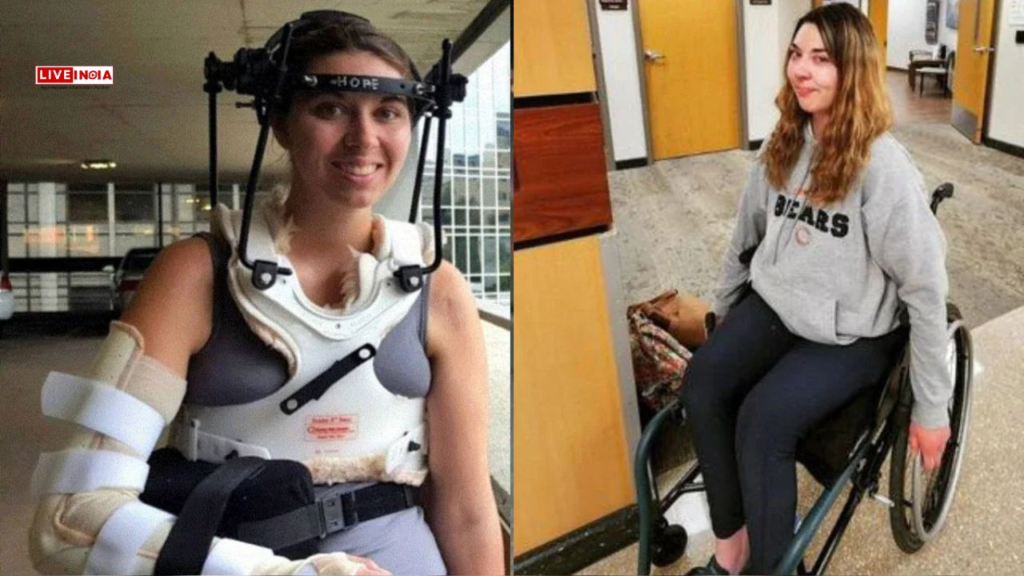
“I’m adapting,” she later said. “And I’m always surprised by what I can still accomplish.” Her words reflect not only an evolving relationship with her body, but also a powerful example of human resilience in the face of overwhelming physical adversity.
Though daily life comes with challenges most people can’t imagine, Megan King has learned to find purpose and even joy in unexpected places. From relearning how to move within her new limits to celebrating small wins like a night out with friends, every moment becomes a testament to her strength.
Her journey also shines a light on the often misunderstood and underdiagnosed world of connective tissue disorders. Ehlers-Danlos syndrome, particularly the hypermobile type, can take years to diagnose and even longer to manage effectively. Megan King’s story is not just one of personal survival, but also one that brings awareness to a condition that desperately needs more research, understanding, and visibility.
Megan King’s tale is not about surrendering to a fate handed down by biology or misfortune. It’s about resilience, adaptation, and the stubborn refusal to be sidelined by circumstance. From the brink of internal decapitation to strikes on a bowling lane, she’s shown that life—though altered—can still be rich, meaningful, and full of surprises.
Her legacy is not defined by the surgeries or the fusions, but by the moments she chose to fight, the strength she showed when all seemed lost, and the quiet yet powerful declaration she makes every day: she is still here, still adapting, and still living.