
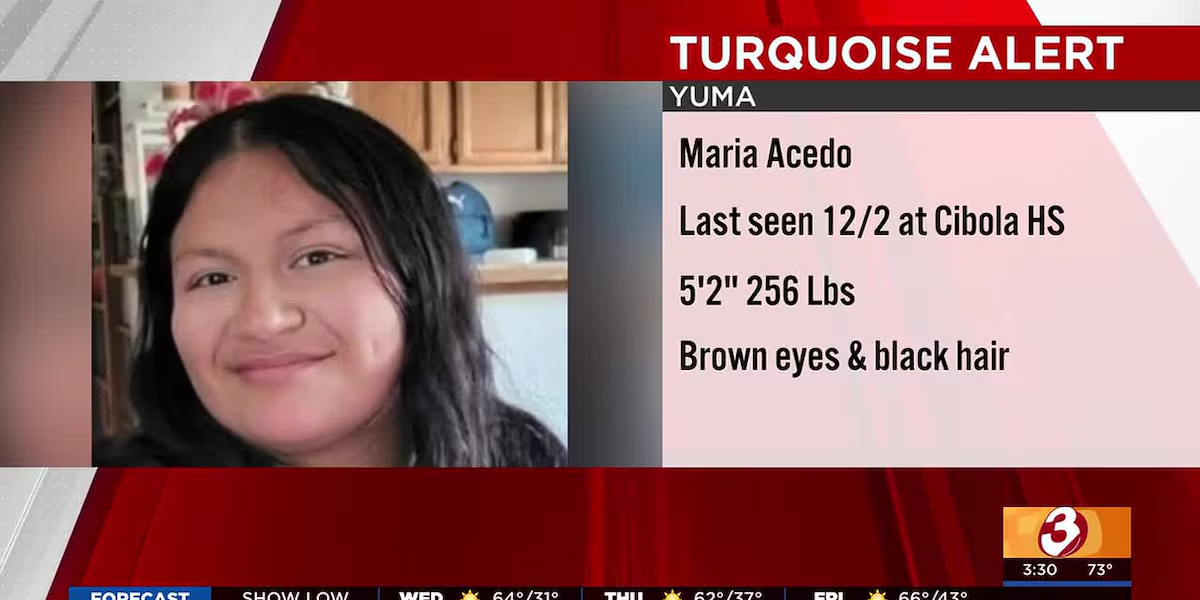
Arizona authorities have launched an urgent statewide and multi-state search for Maria Acedo, a 17-year-old Indigenous teen and member of the Gila River Indian Tribe, after her unexplained disappearance from Cibola High School in Yuma County. The Arizona Department of Public Safety (AZDPS) activated a Turquoise Alert on Wednesday, signaling that investigators believe Acedo may be endangered and that public assistance is critical to locating her safely. The alert follows several days of intensive investigation by local and tribal law enforcement, with no contact from the teen since December 2, raising escalating concern about her wellbeing.
Maria Acedo was last seen after leaving the Cibola High School campus on December 2. According to Yuma Police, she did not return home and has not communicated with family, friends, or authorities since that date. Detectives say the absence of contact, combined with other investigative factors that have not been publicly disclosed, prompted the decision to seek broader public involvement through the Turquoise Alert system. While no confirmed evidence of foul play has been released, officials emphasize that the circumstances of her disappearance are not consistent with a routine runaway case.
At the time she was last seen, Acedo was wearing a black sweater, white pajama pants, and carrying a black backpack. She is described as standing approximately 5 feet 2 inches tall, weighing about 256 pounds, with black hair and brown eyes. Authorities believe these physical characteristics, particularly her distinctive build, could help members of the public identify her if she is spotted. Investigators have also indicated that she may have traveled outside Arizona, with possible connections or sightings leading toward Los Angeles, New York, or Texas, significantly expanding the scope of the search.
Yuma Police Detective Burruel is leading the investigation, working in coordination with the Gila River Tribal Police Department and AZDPS. Law enforcement agencies across state lines have been notified, and a nationwide canvass has begun, including outreach to transportation hubs, shelters, and other locations where a vulnerable youth might seek assistance. Officials stress that time is a critical factor and that even seemingly minor tips from the public could prove decisive.
Turquoise Alert Criteria And Process
The Turquoise Alert is Arizona’s public notification system designed to locate missing endangered persons under the age of 65, with particular emphasis on Indigenous individuals. The program was established to address longstanding gaps in alert coverage that left many at-risk cases without the same level of visibility as Amber Alerts for abducted children or Silver Alerts for seniors with cognitive impairments. Native communities have historically experienced disproportionately high rates of missing persons, and the Turquoise Alert was created to respond more effectively to that reality.
Unlike Amber Alerts, which require confirmation of an abduction and specific suspect or vehicle information, the Turquoise Alert provides greater flexibility. It can be activated when a person is missing under unexplained or suspicious circumstances, appears to be endangered, and does not meet the strict criteria of other alert systems. Importantly, law enforcement must first exhaust initial investigative leads before requesting activation, ensuring the alert is reserved for cases where public awareness is likely to significantly aid recovery.
Once approved, AZDPS coordinates a broad dissemination effort. This includes alerts on electronic highway message boards, notifications to broadcasters, extensive social media outreach, and coordination with law enforcement agencies statewide and beyond. In some cases, wireless emergency alerts may also be used to reach mobile devices, depending on the urgency and available information. The goal is rapid saturation, making it difficult for the missing person to remain unnoticed if they appear in public.
We need more volunteers to join the search for Maria Acedo at https://t.co/ucZ68ptdvc. pic.twitter.com/wJ7vBMv6jU
— Deputy Skaggs (@DeputySkaggs) December 17, 2025
State officials have reported that more than 90 percent of prior Turquoise Alert activations have resulted in safe recoveries. While each case is unique, this success rate underscores the importance of early activation and widespread public engagement. In Maria Acedo’s case, investigators determined that her Indigenous status, age, unexplained departure from school, and prolonged lack of contact met the alert’s thresholds. Yuma Police confirmed that her family and tribal authorities were notified immediately after she was reported missing, and that their input was part of the decision-making process.
The Turquoise Alert also serves a symbolic role, acknowledging the systemic challenges faced by Native families when loved ones go missing. Advocates have long argued that Indigenous cases often receive less media attention and fewer resources. By formalizing a dedicated alert mechanism, Arizona aims to ensure these cases receive timely and equitable responses. Officials involved in Acedo’s case have reiterated that the priority is her safe return, not criminal enforcement, and that anyone with information should come forward without hesitation.
Investigation, Public Role, And Ongoing Search Efforts
As the search for Maria Acedo continues, investigators are pursuing multiple lines of inquiry. The possibility that she traveled to major metropolitan areas such as Los Angeles, New York, or parts of Texas has prompted collaboration with law enforcement agencies in those regions. Authorities are reviewing surveillance footage from transportation centers, retail locations, and public spaces, as well as monitoring tips that may indicate interstate movement. No vehicle information has been released, suggesting investigators do not yet have confirmation that she traveled by car.
Read : 21-Year-Old Joseph Brambila Missing on Mount Whitney After Attempting Risky Descent
Police have urged the public, particularly those in the cities identified as potential destinations, to review any available security camera footage from early December. Even delayed sightings can help reconstruct a timeline and narrow search areas. Officials stress that members of the public should not attempt to approach Acedo if they believe they have seen her, but instead contact law enforcement immediately to allow trained personnel to respond safely.
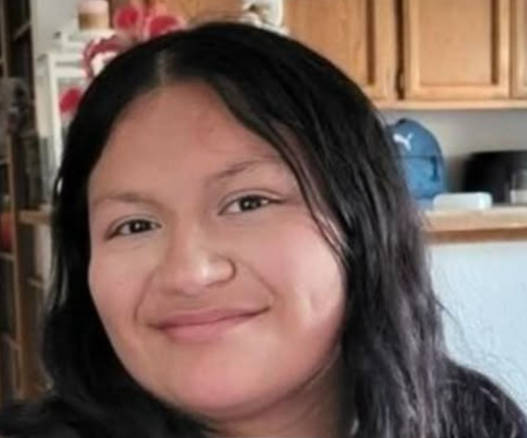
The case highlights the complex vulnerabilities faced by Indigenous youth, especially those navigating multiple systems of care. Acedo is identified as a ward of the Gila River Indian Tribe, adding layers of jurisdictional coordination between tribal, local, and state authorities. Law enforcement agencies involved have emphasized that cooperation has been strong and ongoing, with regular information sharing to avoid delays or duplication of efforts.
Community organizations and advocacy groups have also mobilized, sharing Acedo’s description and alert information across social platforms. While officials caution against spreading unverified rumors, they acknowledge that responsible online sharing can extend the reach of official alerts. The balance between urgency and accuracy remains central to the search strategy.
Authorities continue to underscore that there is no confirmation of foul play at this stage. However, the prolonged absence of contact from a minor, combined with the uncertainty surrounding her movements, has elevated the case to one of significant concern. Investigators have stated that even if Acedo left voluntarily, the priority remains ensuring she is safe and has access to support services.
Anyone with information about Maria Acedo’s whereabouts is urged to contact the Yuma Police Department at 928-783-4421 and ask for Detective Burruel, or call 911 if they believe they have an immediate sighting. Tips can be provided by anyone, anywhere in the country. Law enforcement officials reiterate that no detail is too small and that public vigilance remains essential as the search continues.