
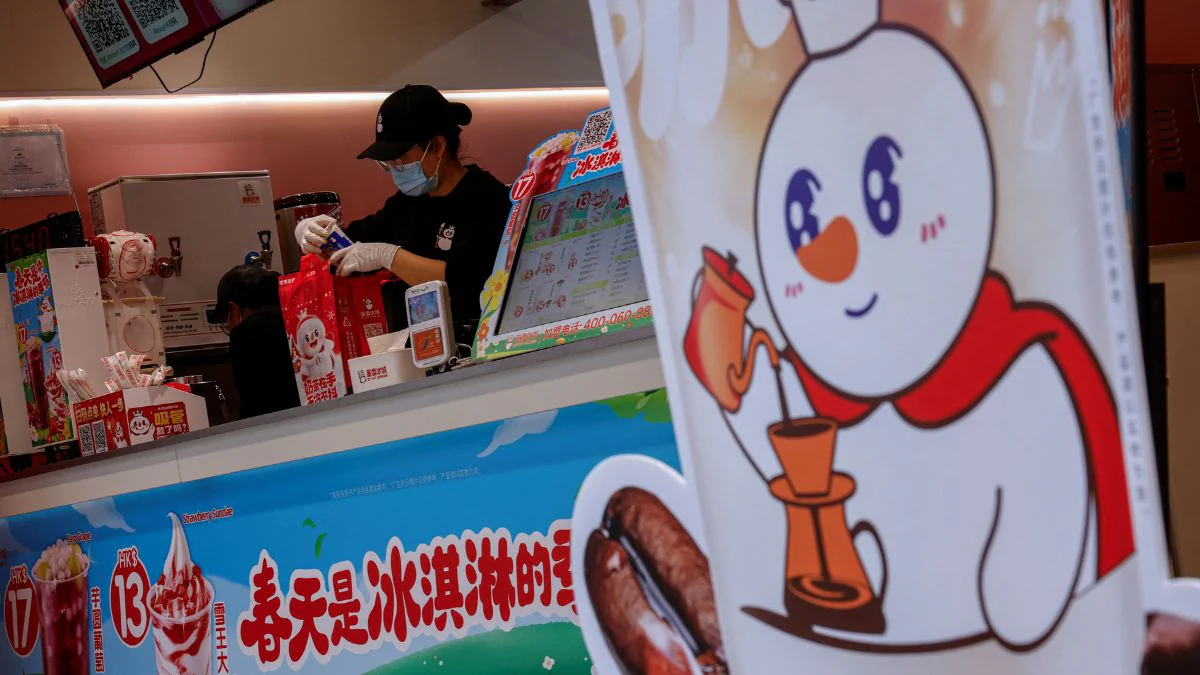
Mixue, pronounced as “ME-schway,” has emerged as the world’s largest food-and-beverage chain in terms of store count, surpassing global giants like McDonald’s and Starbucks. The Chinese brand, founded in 1997 by Zhang Hongchao in Henan province, initially started as a small business selling shaved ice.
Over the decades, it has transformed into a vast franchise network with over 45,300 stores across Asia and Australia. The rapid expansion of Mixue can be attributed to its budget-friendly menu, innovative franchise model, and strategic positioning within China’s economic landscape.
The Rise of Mixue: From Humble Beginnings to a Global Empire
The brand’s success is largely driven by its affordability. It sells ice cream, bubble tea, and coffee for under $1, making it an attractive option for price-conscious consumers.
The company’s low-budget menu resonates particularly well in China, where an economic slowdown has led many customers to seek cost-effective indulgences. By keeping its prices low while maintaining quality, Mixue has secured a loyal customer base that continues to grow.
Another key factor in Mixue’s expansion is its unique franchising approach. Unlike traditional fast-food giants that rely on high franchising fees, Mixue keeps its costs minimal, making it easier for entrepreneurs to open new outlets.
Most of the company’s revenue comes from selling supplies to franchisees rather than charging high upfront fees. This business model has allowed Mixue to scale rapidly, outpacing competitors who rely on more conventional expansion strategies.
Read : Power is Moving Away from Fast Food, Football, and Toward Health, Indian Food: Bryan Johnson
One of the primary reasons Mixue has outgrown McDonald’s and Starbucks in store count is its cost-effective and highly scalable business model. The company focuses on selling inexpensive, high-demand products, which ensures a steady flow of customers.
Read : McDonald’s Worker Seen Drying a Dirty Mop Above the French Fry in Australia
By offering ice cream, bubble tea, and lemonade at extremely affordable prices, Mixue attracts a broad demographic, from students to office workers looking for an affordable treat.
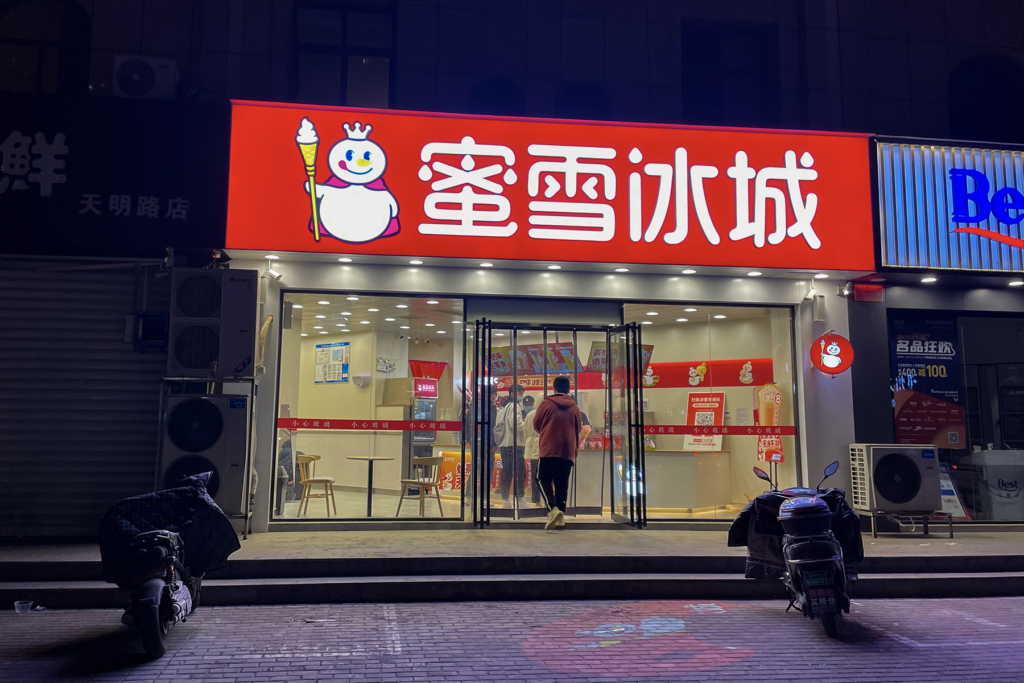
Mixue’s aggressive expansion strategy has also played a crucial role in its growth. Unlike other global brands that focus on flagship stores in high-end locations, Mixue prioritizes small, efficient outlets strategically placed near high-footfall areas such as universities, office buildings, and shopping districts.
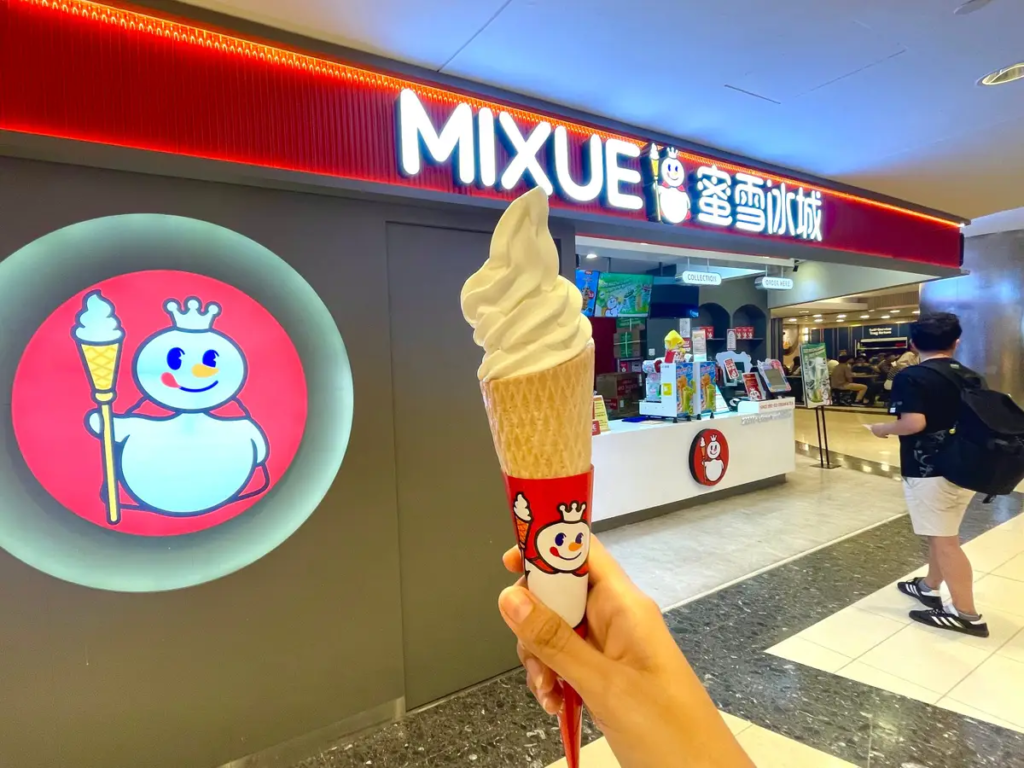
Its stores are often located next to phone repair shops and dumpling stalls, ensuring accessibility to everyday consumers. This placement strategy enhances convenience and maximizes foot traffic, leading to consistent sales volume across its outlets.
Moreover, the company leverages its supply chain dominance to keep operational costs low. Mixue is China’s largest buyer of lemons, a key ingredient in its signature lemonade.
By sourcing ingredients at scale, it manages to maintain competitive pricing while ensuring profitability. This focus on efficient supply chain management has been instrumental in sustaining its low-cost business model without compromising on quality.
Market Expansion and Future Prospects
Mixue’s expansion is not limited to China. The brand has successfully entered markets across Asia and Australia, positioning itself as a global player in the food-and-beverage industry. With over 45,300 outlets, it has surpassed McDonald’s and Starbucks in terms of store count, setting a new benchmark for large-scale food chains.
The company is now preparing for an initial public offering (IPO) in Hong Kong, set to debut on March 3, 2025. The IPO is expected to raise up to $510 million, valuing the company at approximately $10 billion.
This move marks a significant milestone for Mixue, as it looks to strengthen its financial position and fuel further expansion. The IPO will also help the company invest in technological advancements, including data analytics, to enhance customer engagement and operational efficiency.
Mixue’s marketing strategy also sets it apart from traditional competitors. Its roly-poly mascot, Snow King, has become a recognizable symbol, blending elements of Frosty the Snowman and the Michelin Man.
The brand’s jingle, set to the tune of “Oh! Susanna,” has further reinforced its identity, making it a household name in many regions. By leveraging playful and memorable branding, Mixue has cultivated a strong emotional connection with its customers.
Looking ahead, Mixue aims to expand its footprint in new international markets, leveraging its low-cost business model to penetrate regions with high demand for affordable beverages. The company’s ability to adapt to different market conditions will be critical in sustaining its growth trajectory.
As Mixue continues to grow, it faces challenges such as maintaining product quality across its vast network, managing franchise operations efficiently, and navigating regulatory requirements in different countries.
However, its proven track record of rapid expansion and its ability to resonate with budget-conscious consumers make it well-positioned for future success.
In conclusion, Mixue’s rise to the top of the food-and-beverage industry is a testament to the power of affordability, strategic expansion, and an innovative business model.
By prioritizing cost-efficiency and accessibility, the company has managed to surpass industry giants like McDonald’s and Starbucks in store count. With its upcoming IPO and ongoing international expansion, Mixue is poised to solidify its status as a dominant force in the global food-and-beverage market.