
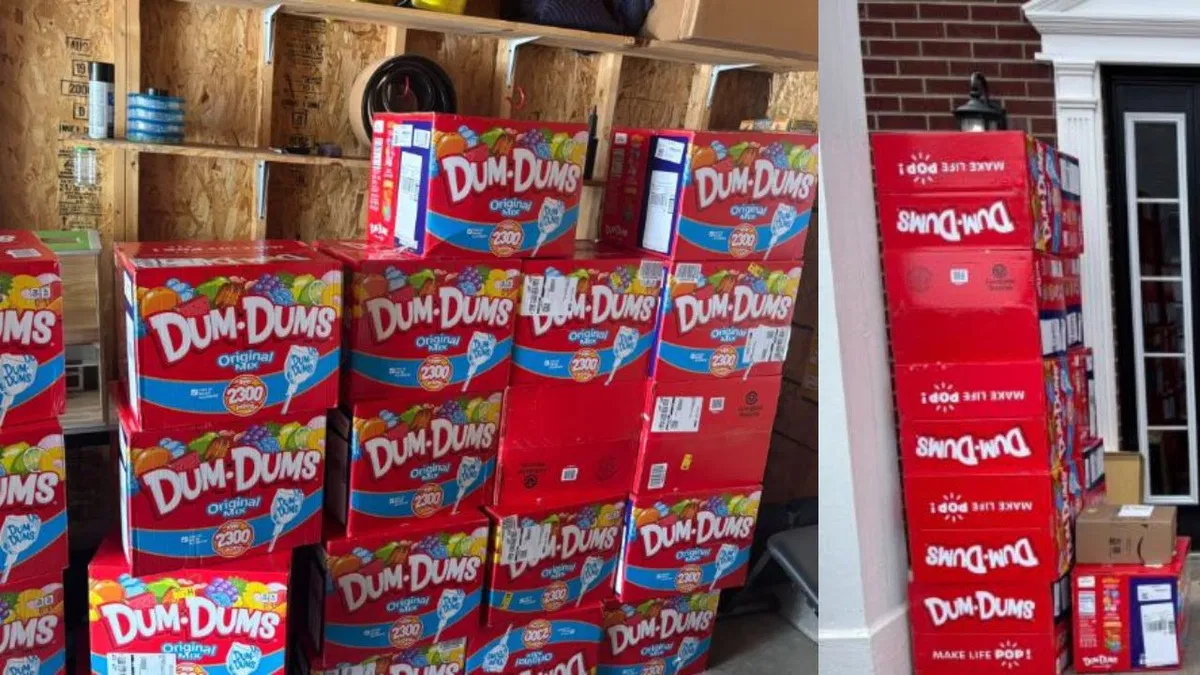
On a seemingly typical Sunday morning in Lexington, Kentucky, Holly LaFavers was getting ready for church when her morning took a wild turn. As she prepared to leave, delivery drivers began arriving one after another, each carrying large boxes. The scene quickly escalated as 22 massive boxes of Dum-Dums lollipops—each weighing 25 pounds—were unloaded in front of her apartment building.
Mother Panics After 8-Year-Old Orders from Amazon, a headline-worthy moment that was both humorous and alarming, especially once she realized the boxes were addressed to her son. The candy mountain had grown into a sugary fortress of over 50,000 lollipops, all thanks to her 8-year-old son, Liam.
Mother Panics After 8-Year-Old Orders from Amazon
Liam had been introduced to online shopping platforms like Amazon during the pandemic, as his mother frequently ordered household essentials. Occasionally, she would allow him to browse items, instructing him to only add them to the cart and not proceed to checkout.
But this time, things took an unexpected twist. Liam, dreaming of throwing a carnival for his friends, apparently tried to “reserve” candy for the event. Instead, he accidentally placed a $4,200 order for 30 cases of Dum-Dums—nearly 70,000 lollipops in total.
When LaFavers checked her bank account after a quick shopping trip that same Sunday, she noticed the charge and was immediately overcome with panic. Her account was in the red, and the realization hit hard: her son had placed an enormous order.
Read : Bizarre! Chinese Woman Eats Firecracker After Mistaking It for Candy
A frantic call to Amazon followed, where she was advised to reject any shipments that hadn’t yet been delivered. She managed to turn away eight boxes—containing 18,400 lollipops—but the remaining 22 boxes had already arrived and were piled at her doorstep.
Read : The Wealthiest Heirs in the World: A Glimpse into Their Fortunes and Origins
To make matters worse, Amazon initially informed her that they could not accept returns on food items, even though the lollipops remained sealed in their original packaging. LaFavers recalled that her Alexa device hadn’t even alerted her to the delivery. Stuck with the candy and a hefty charge, she had to think fast.
A Viral Post, Community Support, and Corporate Compassion
Desperate to get rid of the lollipops and recoup her money, LaFavers turned to Facebook. She posted about the accidental order and offered to sell the unopened boxes at a discounted rate. The post quickly gained attention, not just from her local community but from news outlets and sympathetic parents nationwide.
Many commented with stories of their own accidental purchases: a child who spent $980 on virtual currency in Roblox, a toddler who ordered $300 worth of movies during a flight delay, and others who faced similar situations with online platforms.
While the initial response from Amazon had been a denial, the growing media attention seemed to influence a more customer-friendly outcome. Amazon reversed its decision and issued LaFavers a full refund of $4,200.

In a statement, the company said it “worked directly” with her “to turn a sticky situation into something sweet.” This development brought immense relief, though by then the candy had already become a talking point across the neighborhood.
Rather than continue attempting to sell the remaining lollipops, LaFavers decided to give them away. Neighbors and local businesses stepped up. One neighbor promised to hand some out during Halloween. A chiropractor took two boxes.
A bank in Somerset, Kentucky, claimed five. Local schools, churches, and even charities became recipients of the sugary windfall. What began as a moment of panic was now blossoming into a heartwarming story of community collaboration and goodwill.
Lessons in Digital Parenting and Online Shopping Safeguards
This unexpected turn of events also sparked a broader conversation about children’s access to online shopping and the importance of digital safety. Many parents shared tips on how to prevent such mishaps: removing saved payment methods, activating purchase alerts, and enabling parental controls. Online platforms, from Amazon to Google Play, offer settings to safeguard against unauthorized purchases—but not all parents are aware of them or have them activated.
For example, Apple offers “Ask to Buy” settings, which notify parents before any purchases are made on a child’s device. Google Play requires purchase verification for family accounts, especially for apps rated for children under 12. Game companies like Roblox and Epic Games (creators of Fortnite) have also implemented additional safeguards, such as password-protected purchases and “intent-to-buy” confirmations.
LaFavers’ experience serves as a cautionary tale in an era where children are increasingly exposed to digital marketplaces. Liam’s intentions were innocent—he simply wanted to organize a fun event for his friends. But the lack of an additional security step turned his dream carnival into a $4,200 mistake.

As for Liam, he quickly recognized the trouble he was in. Hoping to help, he offered a heartfelt solution to his mom: “It’s OK, mom, we can sell my Pokémon cards.” While his online browsing privileges have been suspended indefinitely, his willingness to help speaks volumes about his character.
In a sweet twist, Spangler Candy Co., the manufacturer of Dum-Dums since 1924, reached out to the family. The company invited LaFavers and Liam to tour their factory in Ohio. Kirk Vashaw, Spangler’s CEO, expressed admiration for the community’s response and offered words of encouragement. “We also love that so many people jumped in to offer to purchase the extra cases,” he said.
This story, though humorous and heartwarming, raises important questions about how easily children can make significant purchases online and what steps families and tech companies can take to prevent such situations. While technology has made life more convenient in many ways, it has also introduced new challenges, particularly for parents navigating their children’s digital exposure.
In the end, a situation that began with panic turned into an inspiring display of community support and corporate kindness. Holly LaFavers may not have expected to become the center of a viral news story, but through her calm (eventual) response and the help of those around her, she turned a costly error into a feel-good story about empathy, parenting, and the power of neighbors helping one another—one lollipop at a time.