
The arrest and detention of 20-year-old Mubashir Khalif Hussen in Minnesota has become a focal point in a sweeping civil rights lawsuit that accuses federal immigration authorities of operating with unconstitutional and discriminatory tactics. Filed by the American Civil Liberties Union, the class-action lawsuit alleges that agencies including the Department of Homeland Security, Immigration and Customs Enforcement, and the U.S. Border Patrol have engaged in widespread racial profiling as part of a large-scale immigration enforcement operation launched under the Trump administration.
At the center of the case is Hussen, a U.S. citizen of Somali descent, who says federal agents ignored repeated proof of his citizenship, forcibly detained him, and subjected him to treatment more commonly associated with authoritarian policing than routine law enforcement. The lawsuit frames Hussen’s experience as emblematic of a broader pattern, arguing that federal agents in Minnesota have targeted individuals based on race and perceived ethnicity rather than any individualized suspicion of wrongdoing.
According to the complaint, Somali and Latino communities have borne the brunt of these actions, which the ACLU characterizes as a campaign of stops, arrests, and detentions carried out without regard for citizenship status. Hussen’s detention, which occurred in December, is presented as one of several examples in which U.S. citizens were allegedly swept up in enforcement actions meant to target undocumented immigrants, raising fundamental questions about constitutional protections, due process, and the limits of federal immigration authority.
The December Detention and Allegations of Excessive Force
According to the lawsuit, Mubashir Khalif Hussen was out getting lunch on December 10 when his day abruptly turned violent. The complaint alleges that two federal agents approached him in an unmarked vehicle and physically grabbed him, pushing him into a restaurant before dragging him back outside into the snow. Once outside, Hussen was allegedly placed in a headlock and restrained by the agents, who did not initially explain the reason for the stop or identify themselves in a manner consistent with standard policing practices.
Throughout the encounter, Hussen repeatedly told the agents that he was a U.S. citizen, the lawsuit says. He asked to retrieve his coat and phone from inside the restaurant so that he could show them a photograph of his U.S. passport card. The agents allegedly refused to allow him back into the building and denied his requests to access his identification. Instead, he was placed into the back of the unmarked car and driven away from the scene.
The complaint further alleges that Hussen’s supervisor attempted to intervene by showing the agents a copy of Hussen’s passport card, which clearly established his U.S. citizenship. Despite this, the agents reportedly continued to detain him. During the encounter, they allegedly demanded multiple times to scan Hussen’s face, a request that raised additional concerns about biometric data collection and consent.
Mr. Hussen repeatedly informed the officers he was a U.S. citizen & repeatedly asked ICE to let him get his coat with his phone to show them a picture of his passport card. ICE refused & put him in the back of the unmarked car. pic.twitter.com/CYJuPQP14T
— Fly Sistah 🪷 (@Fly_Sistah) January 16, 2026
After being driven to a second location, Hussen was taken to an ICE field office at Fort Snelling. There, he was ultimately released without being charged or placed into any immigration proceedings. The lawsuit claims that agents then told him to walk back to the location where he had been detained, a distance of approximately seven miles, leaving him outside in freezing December conditions. Hussen was later picked up by family members.
The ACLU argues that the detention lacked any lawful basis and that the agents’ refusal to acknowledge clear proof of citizenship amounted to an unlawful arrest. The complaint also highlights the alleged use of force and the psychological impact of the encounter, asserting that Hussen has since lived in fear of being detained again because of his Somali identity.
Claims of Racial Profiling and Broader Enforcement Practices
Hussen’s case is one of several included in the class-action lawsuit, which accuses federal agencies of conducting a racial profiling campaign on a “massive scale” in Minnesota. The suit alleges that agents have stopped and detained individuals based solely on race or perceived ethnicity, rather than on specific, articulable facts suggesting immigration violations or criminal activity. Somali and Latino residents are identified as the primary targets of these actions.
The lawsuit situates these allegations within the context of a broader federal immigration operation that began in December, shortly after President Donald Trump made derogatory remarks about Minnesota’s Somali population. According to the administration, the operation involves more than 2,000 agents and represents the largest immigration enforcement effort in U.S. history. Federal officials have defended the initiative as a targeted crackdown aimed at enforcing immigration law in so-called sanctuary jurisdictions that limit cooperation between local law enforcement and federal immigration authorities.
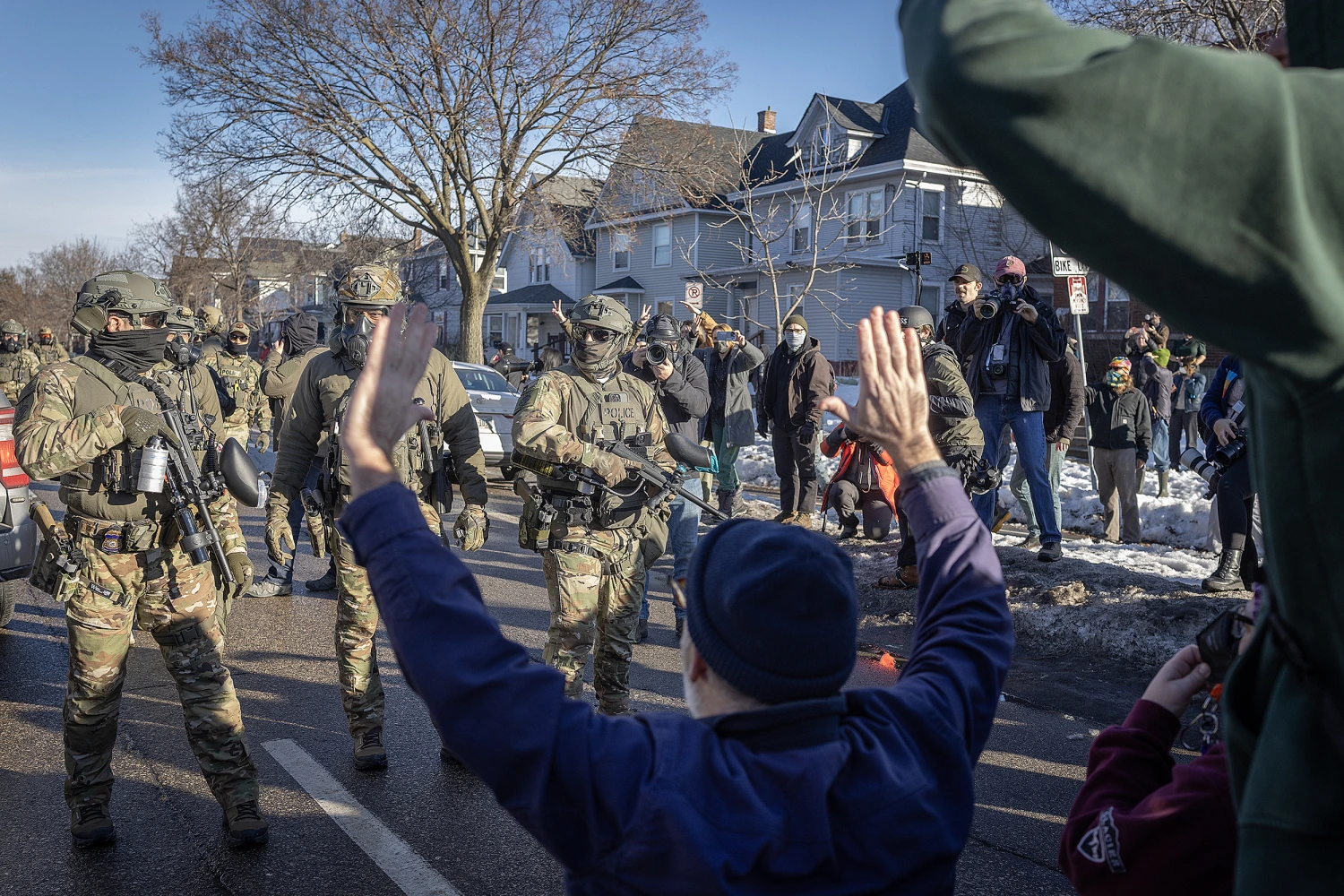
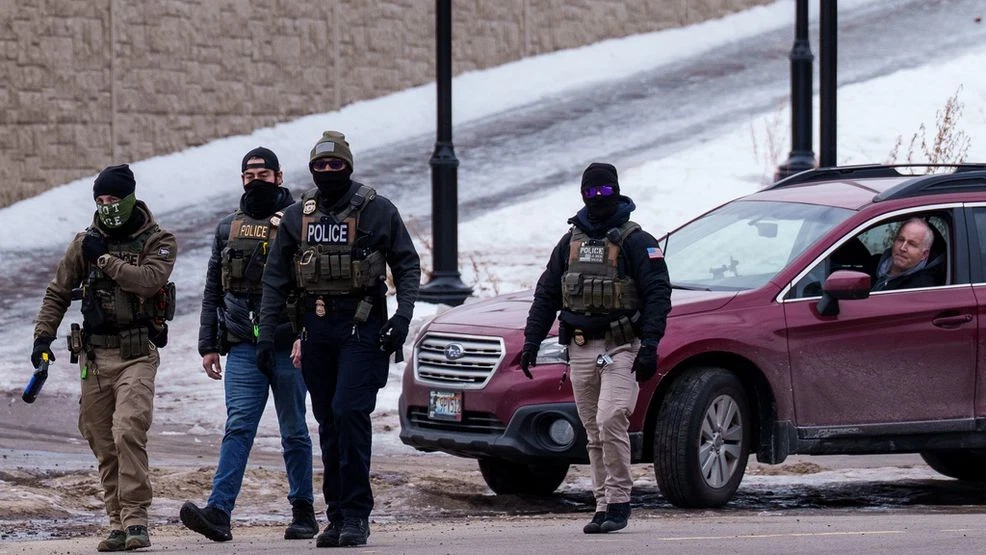
However, the ACLU contends that the reality on the ground has been far different. The complaint alleges that the operation has relied on military-style tactics, including unmarked vehicles, heavily armed agents, and surprise detentions in public spaces. It further claims that many of those arrested have no criminal convictions and that U.S. citizens and lawful residents have been caught up in the sweeps despite having no connection to immigration violations.
In Hussen’s case, the lawsuit argues that his treatment was directly tied to his race and perceived ethnicity. It notes that despite his clear assertions of citizenship and the availability of documentary proof, agents persisted in detaining him. The complaint asserts that such conduct violates the Fourth Amendment’s protection against unreasonable searches and seizures, as well as the Fifth Amendment’s guarantee of due process.
The lawsuit also raises concerns about surveillance and retaliation. In a separate incident described in the complaint, Hussen alleges that he was pepper-sprayed by federal agents after recording officers with his phone from a public sidewalk. The ACLU argues that this incident further demonstrates a pattern of intimidation and suppression of constitutionally protected activity, including the right to observe and record law enforcement in public spaces.
Legal, Political, and Community Fallout in Minnesota
The filing of the lawsuit comes amid heightened tensions in Minnesota, particularly in Minneapolis, where recent enforcement actions have sparked protests and drawn national attention. Earlier this month, an ICE agent fatally shot Renee Good during an encounter, and days later a federal agent shot a Venezuelan immigrant in the leg during a traffic stop. These incidents have intensified scrutiny of federal operations in the state and fueled public demonstrations, most of which have been peaceful, though some have involved isolated acts of violence.
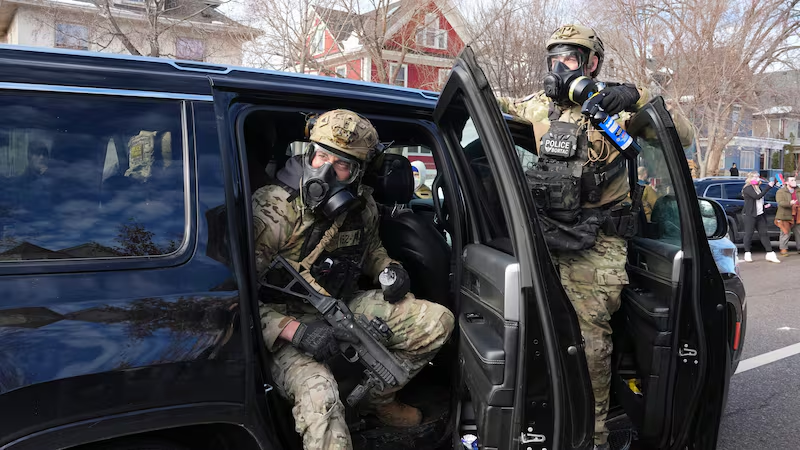
The Trump administration has defended its actions, insisting that the sweeps are targeted and necessary to enforce immigration law. The White House has argued that sanctuary policies undermine public safety by preventing cooperation with federal authorities and has suggested that military-style deployments are justified in jurisdictions that resist immigration enforcement. The president has also threatened to invoke the Insurrection Act, which would allow for the deployment of active-duty military or federalized National Guard troops to respond to unrest.
Civil rights advocates and local officials have pushed back strongly against these claims. They argue that the use of aggressive tactics has eroded trust between communities and law enforcement and that racial profiling undermines both public safety and constitutional governance. Minneapolis Mayor Jacob Frey, whose office released a photograph of Hussen following his detention, has been among those calling for accountability and transparency in federal operations.
Legally, the ACLU lawsuit seeks declaratory and injunctive relief, aiming to halt what it describes as unconstitutional practices and to establish clearer limits on federal agents’ authority. The case could have significant implications not only for Minnesota but for immigration enforcement nationwide, particularly if the court finds that federal agencies engaged in systemic racial profiling.
For Hussen, the lawsuit represents an effort to seek accountability for an encounter that he says has left lasting emotional and psychological effects. The complaint notes that he now fears being stopped or detained again simply because of his appearance and background. While the Department of Homeland Security has not yet publicly responded to the specific allegations, the outcome of the case is likely to shape the ongoing debate over immigration enforcement, civil liberties, and the treatment of minority communities in the United States.
It is in reality a great and useful piece of information. I’m glad that you just shared this useful info with us. Please keep us informed like this. Thanks for sharing.