
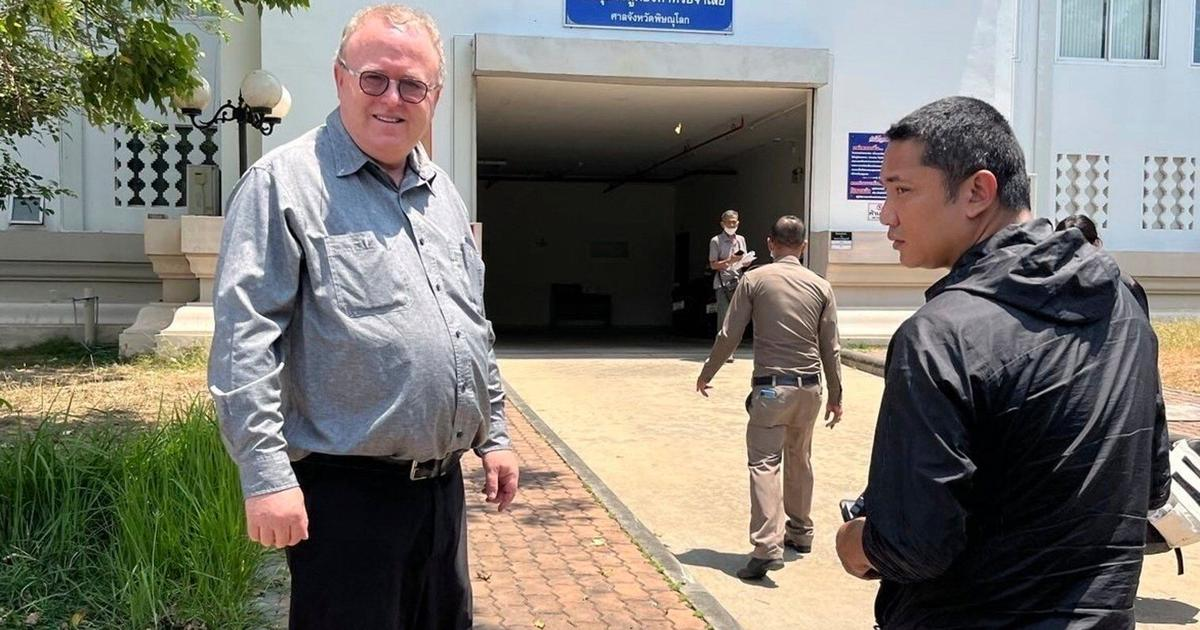
In an unsettling turn of events for academic freedom and international relations, Paul Chambers, a respected American political science lecturer at Naresuan University in Thailand, has been jailed ahead of trial for allegedly insulting the Thai monarchy.
This marks one of the rare instances where Thailand’s harsh lese-majeste laws—used frequently to suppress dissent—have been applied to a foreign academic.
Chambers, 58, was denied bail and now faces the possibility of up to 15 years in prison if convicted under Article 112 and Thailand’s Computer Crime Act. His arrest has sent shockwaves through both academic circles and international observers concerned about freedom of expression and human rights in Southeast Asia.
An Arrest That Raises International Eyebrows
Paul Chambers has lived and worked in Thailand for more than a decade, dedicating his academic career to studying the intersection of politics and the military within the country. His research often delved into Thailand’s turbulent political history, including the military’s recurring role in national governance.
With a doctorate from Northern Illinois University and a long-standing affiliation with Naresuan University in northern Thailand, Chambers has contributed to a deeper understanding of Thai politics through lectures, publications, and international webinars.
His arrest this week in Phitsanulok province came as a surprise, not only to his academic colleagues but also to international rights groups. Thai authorities reportedly denied him bail citing his foreign nationality, the serious nature of the alleged crime, and concerns of flight risk.
The charges stem from remarks made during a 2024 webinar on military restructuring hosted by the ISEAS-Yusof Ishak Institute based in Singapore. Although the exact nature of the comments deemed offensive has not been disclosed publicly, it is believed that the Thai military interpreted his analysis as being insulting to the monarchy.
Read : 66-Year-Old Sally Barton Becomes Oldest International Cricketer
Adding a deeply personal dimension to the story, Paul Chambers’ wife, Napisa Waitoolkiat, who is also the dean of social sciences at Naresuan University, came forward to defend him. She stated that the remarks used to support the charges were not directly from her husband but were instead taken from a third-party description of the event.
Read : Middlesbrough Couple Who Retired to Thailand Facing Prison After Neighbours Attacked Them
“It feels like they wanted to deter Paul from his research, which often covers the Thai military’s economics,” she told the press. Her remarks suggest that the arrest may have more to do with silencing critical research than actual offenses against the royal institution.
Lese-Majeste and the Stifling of Academic Freedom
Thailand’s lese-majeste laws, most notably Article 112 of the Criminal Code, impose severe penalties on anyone who “defames, insults, or threatens the king, queen, heir-apparent, or regent.” While domestic activists and dissidents have frequently been targets of the law, foreign nationals have generally been spared its reach.
That makes Paul Chambers’ case highly significant and precedent-setting in terms of the international academic community’s interaction with Thai political discourse.
Over the past few years, the number of lese-majeste cases has surged, particularly since the wave of pro-democracy protests that began in 2020. Thai Lawyers for Human Rights, a group that monitors legal and human rights abuses in the country, reports that more than 270 individuals—most of them activists—have been charged under Article 112 since 2020.
Critics argue that the law is routinely exploited by those in power to quash opposition, limit freedom of speech, and suppress any discourse that might challenge the status quo. Paul Chambers’ situation brings into sharp focus the fragility of academic freedom in Thailand.

The fact that a foreign academic, whose work is well-regarded and who has contributed meaningfully to the intellectual landscape, can be arrested for scholarly expression poses a dangerous precedent. The arrest suggests a broader trend of shrinking civic space and intolerance for dissenting voices, even within educational institutions which should serve as havens for critical thinking and open debate.
This clampdown on academics is particularly concerning in a globalized world where international collaboration and intellectual exchange are essential for societal progress.
If researchers are at risk of imprisonment for merely discussing political structures and history, it could significantly deter scholars from engaging with politically sensitive topics related to Thailand. It may also have a chilling effect on local academics, who already face pressures and constraints when engaging in critical analysis.
Global Reactions and Implications for US-Thai Relations
The arrest of an American citizen under lese-majeste laws has not gone unnoticed in Washington. The U.S. State Department expressed alarm over the detention, emphasizing its concerns over freedom of expression. In its statement, the department urged Thai authorities to respect international norms and allow space for open dialogue and academic freedom.
The statement also criticized the broader application of Thailand’s lese-majeste laws, which it said could serve to stifle dissent and undermine democratic values. As tensions simmer over the arrest, questions are being raised about the future of U.S.-Thai relations, especially in academic and cultural exchanges.
The United States and Thailand have long-standing diplomatic and educational ties, with many American scholars contributing to Thai institutions and vice versa. Cases like that of Paul Chambers risk undermining these relationships and could deter future cooperation.
Moreover, the academic community around the world has reacted with concern. Scholars at Risk, a U.S.-based organization that advocates for academic freedom, indicated that Paul Chambers’ arrest may be part of a broader campaign to suppress politically sensitive research. They emphasized that such actions not only violate individual rights but also threaten the very foundations of intellectual inquiry.
While his legal team has vowed to appeal the decision to deny bail, the fact that no trial date has been set adds to the uncertainty. Legal experts point out that lese-majeste trials in Thailand can be prolonged, with accused individuals sometimes spending months or even years in pre-trial detention. This raises serious concerns about due process, fair trial rights, and the humanitarian impact on Paul Chambers and his family.
The situation is also likely to draw increased scrutiny from international human rights organizations. Thailand’s human rights record has already been under the spotlight in recent years due to its handling of protests, political opposition, and freedom of speech. The Chambers case could become a rallying point for renewed calls for legal reform, especially the abolition or reform of Article 112.
Ultimately, the arrest of Paul Chambers is more than just a legal case—it’s a litmus test for Thailand’s commitment to human rights, academic freedom, and openness to global academic dialogue.
As the international community watches closely, the Thai government must consider whether the application of such draconian laws serves the country’s long-term interests or merely entrenches an atmosphere of fear and repression.
The implications for Thailand’s global reputation could be profound. If the country continues to clamp down on free speech—especially when it comes from respected voices in academia—it risks isolating itself in an increasingly interconnected world where open exchange of ideas is not just a value but a necessity. Whether Paul Chambers’ case becomes a turning point or yet another chapter in the suppression of dissent in Thailand remains to be seen.