
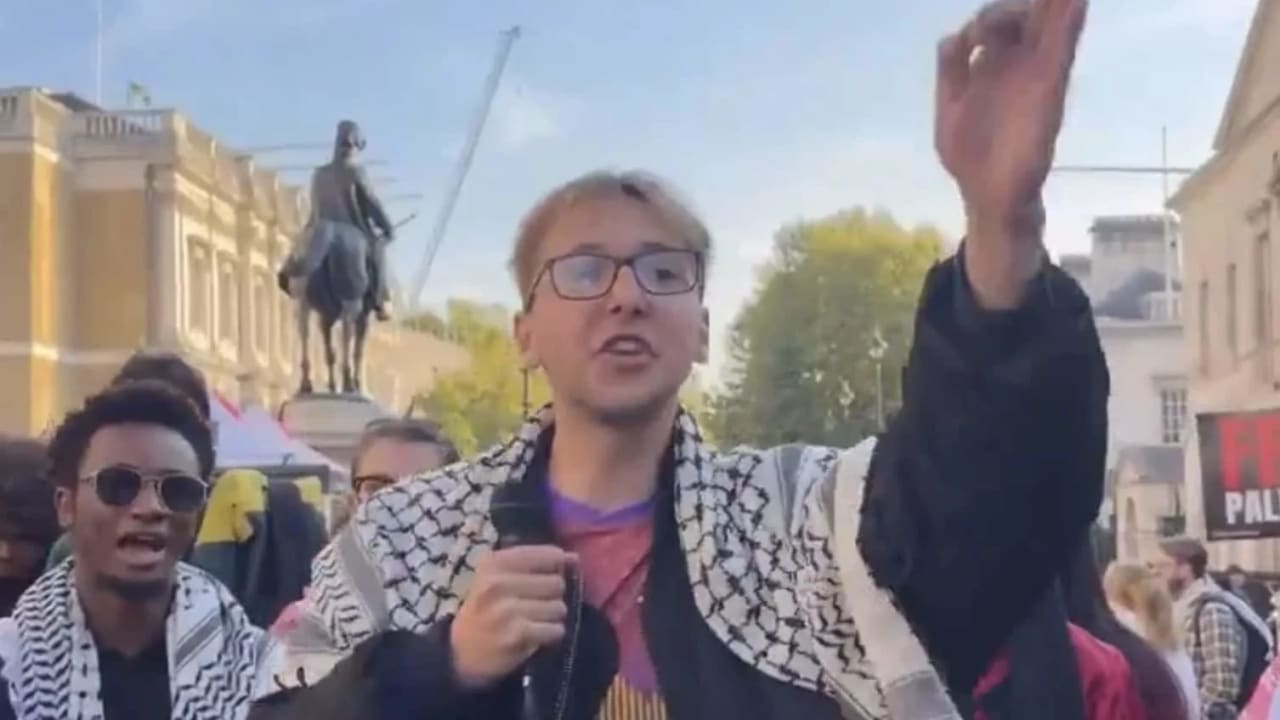
A University of Oxford student has been charged with stirring up racial hatred following an investigation into chants heard at a pro-Palestinian demonstration in central London. The case centres on allegations that a chant referencing violence against “Zios” was shouted during a march organised by the Palestine Coalition on 11 October. The Metropolitan Police confirmed that Samuel Williams, 20, from Oxford, was arrested four days after the event and formally charged on Tuesday. He is due to appear at Westminster Magistrates’ Court on 27 January 2026.
The charge has drawn attention to the boundaries between protest, political expression, and criminal law, particularly in the context of heightened tensions linked to the Israel–Gaza conflict. Video footage of the chant circulated widely online after the demonstration, prompting a police investigation and public debate over whether the language constituted hate speech.
The university has issued a statement reiterating its opposition to antisemitism and discrimination while noting that it cannot comment on individual student cases. At the same time, some pro-Palestinian groups have defended the chant, arguing it reflects opposition to Zionism or military actions rather than hostility toward Jewish people. The case now moves into the judicial process, where the court will assess whether the alleged conduct meets the legal threshold for the offence charged.
The Allegations and the Police Investigation
According to the Metropolitan Police, the investigation began after footage emerged online showing a man chanting in Whitehall during a Palestine Coalition demonstration on 11 October. The chant included the phrase “put the Zios in the ground,” which critics say invokes violence צור against a group identified by a term often associated with Zionists and, by extension, Jews. The video circulated across social media platforms, drawing complaints and calls for police action.
Samuel Williams was arrested four days after the demonstration. Police said he was charged with stirring up racial hatred, an offence under UK law that addresses conduct intended or likely to incite hatred against a group defined by race, nationality, or ethnic origin. The charge does not itself determine guilt, and the court proceedings will assess evidence including the video footage, the context of the chant, and any intent attributed to the accused.
The Metropolitan Police have not released further details about the evidence beyond confirming the charge and the court date. The case will be heard at Westminster Magistrates’ Court, a venue that frequently handles high-profile public order and speech-related cases. Legal experts note that prosecutions for stirring up racial hatred often involve careful scrutiny of language, context, audience reaction, and whether the words used cross the statutory threshold from political expression into criminal incitement.
Read : Oxford Student Samuel Williams Arrested After Chanting ‘Put the Zios in the Ground’
The demonstration itself was part of a series of protests held across the UK in response to developments in Gaza and Israel. These marches have attracted large crowds and, at times, controversy over slogans, placards, and chants. Police forces have stated that they monitor such events closely to balance the right to protest with the need to prevent hate speech or threats of violence. In this instance, the investigation was triggered by the circulation of video evidence rather than by arrests made at the scene on the day of the march.
University of Oxford Response and Institutional Context
The University of Oxford addressed the issue in a statement issued on 16 October, several days after the demonstration. While the university said it could not comment on individual student cases, it emphasised its stance against antisemitism and discrimination. “Oxford University is unequivocal: There is no place for hatred, antisemitism, or discrimination within our community, and we will always act to protect the safety and dignity of our students,” the statement said. The university also indicated that it has disciplinary mechanisms available, including the possibility of suspension, should circumstances warrant such action.
Read : 18-Year-Old Neshaminy High School Senior Ryan Duffy Dies from Bacterial Meningitis
Universities across the UK have faced increased scrutiny over how they respond to student activism related to the Israel–Gaza conflict. Campuses have seen protests, teach-ins, and demonstrations, alongside concerns from Jewish students and staff about antisemitism and from pro-Palestinian students about restrictions on political expression. Institutions have sought to navigate these pressures by reaffirming commitments to free speech within the law while also emphasising codes of conduct and safeguarding obligations.
BREAKING…Samuel Williams has been arrested by the Metropolitan Police on suspicion of inciting racial hatred. He is currently in police custody.
— Never Again (@Never_Again2020) October 15, 2025
pic.twitter.com/vjw3MuNyjm
In this context, Oxford’s response reflects a broader sector-wide approach of separating criminal proceedings from internal disciplinary processes. Universities typically wait for the outcome of court cases before determining whether academic sanctions are appropriate, although interim measures such as suspension can be considered where there are concerns about Samuel Williams’s case.
The case has also prompted discussion within academic circles about the responsibilities of students during public demonstrations and the extent to which off-campus conduct can have consequences within a university setting. While universities do not police protests, they may consider whether a student’s actions conflict with institutional values or policies when those actions attract significant public attention or legal scrutiny.
Debate Over Chants, Hate Speech, and Political Expression
The chant at the centre of the case has been the subject of competing interpretations. Some pro-Palestinian groups, including Direct Confrontation Media and Cardiff Students For Palestine, have publicly endorsed the chant or defended its use. They have argued that certain slogans, such as “Death to the IDF,” have gained global resonance within protest movements and are intended to criticise military institutions rather than civilians. Supporters of this view draw a distinction between opposition to Zionism or Israeli military actions and hostility toward Jewish people as an ethnic or religious group.
Critics, including Jewish organisations and antisemitism watchdogs, contend that the phrase “put the Zios in the ground” constitutes a call for violence and cannot be separated from antisemitic meaning. They argue that the term “Zio,” while sometimes used to denote Zionists, is frequently employed as a slur against Jews and that calls to put any group “in the ground” imply killing or burial. From this perspective, the chant goes beyond political criticism and enters the realm of hate speech.
UK law does not criminalise criticism of states, governments, or political ideologies, but it does prohibit incitement to hatred or violence against protected groups. Courts have previously examined whether language used at protests is metaphorical, rhetorical, or literal, and whether a reasonable person would interpret it as encouraging hatred. The outcome often depends on context, including the surrounding chants, the nature of the crowd, and the broader political climate.
The case against Samuel Williams will therefore test how these legal principles are applied to protest slogans that are contentious and emotionally charged. It also reflects a wider national conversation about how the Israel–Gaza conflict has influenced discourse in the UK, leading to increased reports of antisemitic and Islamophobic incidents alongside intensified activism. Law enforcement agencies have stated that they aim to apply the law consistently, regardless of political viewpoint, while safeguarding the right to peaceful protest.
As the court date approaches, the case is likely to remain a focal point for debates over free expression, protest culture, and the limits imposed by hate speech legislation. The proceedings at Westminster Magistrates’ Court will determine whether the evidence supports the charge of stirring up racial hatred and will set out the legal consequences, if any, for the accused.