
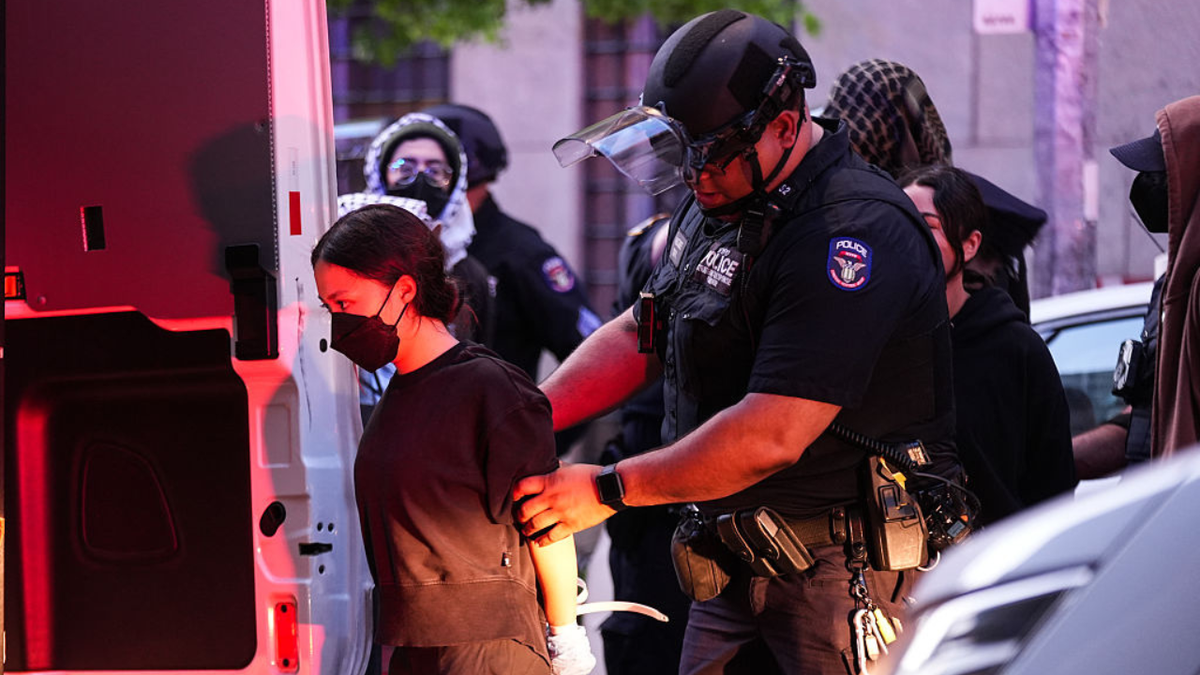
In a dramatic escalation of the ongoing debate over pro-Palestinian activism on U.S. college campuses, over 50 protesters were arrested after they occupied part of the Butler Library at Columbia University. The incident unfolded on Wednesday, with protests spilling over into violent actions that left two university security officers injured.
As tensions rise, both the university administration and city officials have condemned the actions of the protesters. This blog delves into the events surrounding this protest, examining the broader implications for campus activism, the political fallout, and the state of U.S. universities under scrutiny from the Trump administration.
The Incident at Columbia University
On the afternoon of Wednesday, [date], dozens of pro-Palestinian activists descended on Columbia University’s Butler Library, a historic building on the university’s main campus in New York City. The protest was reportedly organized by a group of activists from the “Columbia University Apartheid Divest” movement, which has previously pushed for greater action on Palestine-related issues.
The protesters, many of whom wore keffiyeh headscarves and masks, entered the library, ignoring university regulations that prohibited face coverings during protests, a rule instated after widespread demonstrations in previous years.
A video posted on social media shows protesters chanting and waving signs as they occupy the library. Their demands were centered on amplifying their message of support for Palestinian rights. However, tensions quickly escalated when activists began vandalizing bookshelves and writing slogans such as “Free Palestine” on the library walls.
The protesters’ actions were met with a swift response from university security officers, who tried to prevent the group from further disrupting campus activities. Two security officers sustained injuries when protesters forced their way into the building, an act that was condemned by university officials.
Read : Joseph Czuba Killed 6-Year-Old Palestinian American Boy After Hamas Attacks Israel
University President Claire Shipman quickly issued a statement decrying the protests, labeling the activists’ actions as “outrageous” and damaging to the academic environment. Shipman further clarified that many of the protesters were not Columbia students, highlighting the fact that the protest was organized by external individuals.
NOW: Arguments as students are stuck outside of Columbia University Library while dozens of Pro-Palestine students have OCCUPIED Columbia University Butler Library, stating "THE BASEL AL-ARAJ POPULAR UNIVERSITY has just launched, reclaiming BUTLER LIBRARY FOR THE PEOPLE".
— Oliya Scootercaster 🛴 (@ScooterCasterNY) May 7, 2025
Video… https://t.co/aJAsKhycte pic.twitter.com/FgwdcgxXvx
Columbia University had previously been involved in debates regarding its stance on Middle Eastern politics, especially in relation to the Israel-Palestine conflict. This protest marks the latest in a series of similar actions across U.S. campuses, fueled by a growing global conversation about Palestine.
Political and Legal Ramifications
The protest at Columbia has been met with widespread condemnation from both the university’s leadership and New York City officials. In an unusual move, President Shipman requested assistance from the New York Police Department (NYPD), signaling the seriousness of the situation.
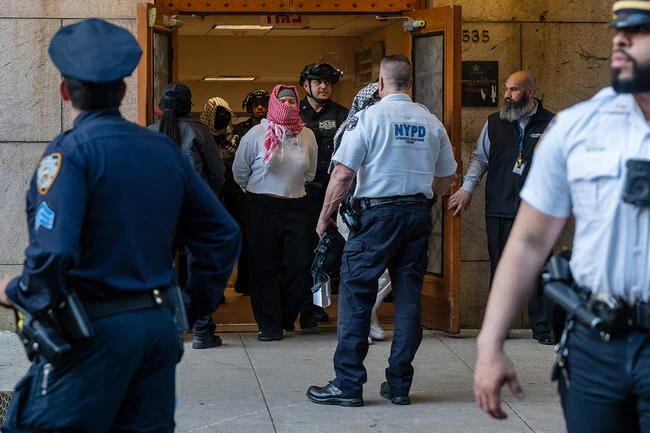
The NYPD responded by arresting over 70 individuals involved in the protest, though no formal charges have been filed as of the latest updates. This is the first time Columbia University has requested police intervention for an on-campus protest since April 2024, when activists occupied Hamilton Hall for nearly 24 hours.
The political ramifications of the protest go beyond the immediate confrontation between protesters and university officials. U.S. Secretary of State Marco Rubio has weighed in on the situation, announcing that the visa statuses of those involved in the protest would be reviewed.
This statement echoes a broader initiative under the Trump administration to scrutinize the activities of pro-Palestinian groups and their supporters on U.S. soil. Rubio, who has been a vocal critic of the rise in campus activism related to the Israel-Palestine conflict, described the protestors as “trespassers and vandals.” His remarks were aimed at undermining what he perceived as a growing alliance between radical campus activists and pro-Hamas factions.
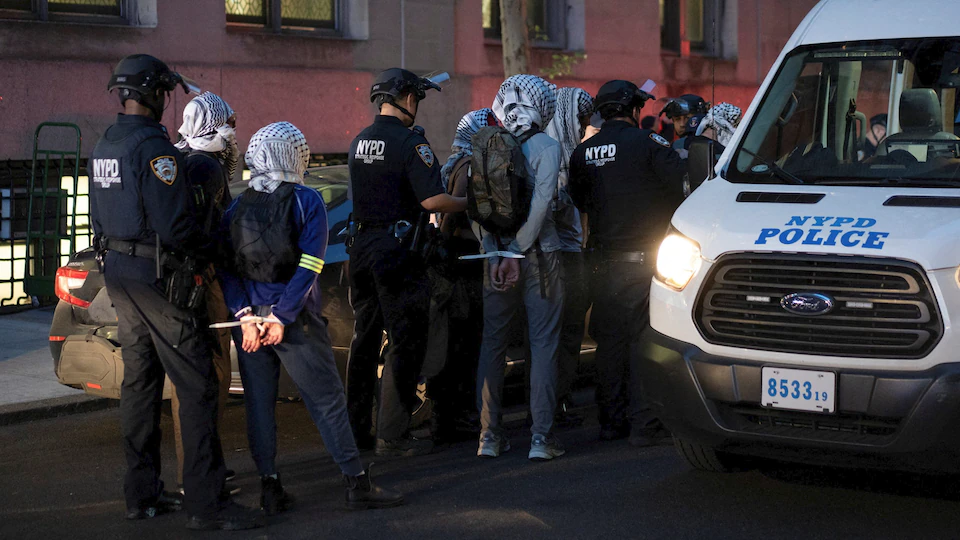
The Trump administration has already used its political power to target several high-profile universities, including Columbia, accusing them of tolerating antisemitism and failing to take stronger stances against violence and hatred on their campuses.
In response to similar protests in 2024, President Trump threatened to withhold federal funding from universities that allowed such protests to persist, as well as revoked the visas of international students involved in anti-Israel activism. With Columbia at the center of the debate, it is likely that the university will face intense scrutiny in the coming weeks.
In addition to the federal pressure, Columbia has already seen pushback from faculty members who have filed lawsuits over the potential loss of federal funding. The legal disputes highlight the tension between universities’ commitment to free speech and the U.S. government’s growing desire to exert control over campus demonstrations.
This tension is not limited to Columbia. Other top-tier U.S. universities, such as Harvard and the University of Washington, have faced similar challenges from the government regarding their handling of pro-Palestinian protests.
The Broader Context of Campus Protests
The protest at Columbia is part of a broader wave of pro-Palestinian activism that has swept U.S. campuses in recent years. Since the outbreak of violence in Gaza in 2024, protests have erupted on campuses across the country, often resulting in clashes between student activists, university security, and law enforcement.
The pro-Palestinian movement has gained significant momentum, fueled by growing dissatisfaction with U.S. foreign policy in the Middle East, particularly the country’s unwavering support for Israel in the Israel-Palestine conflict.
This particular protest at Columbia reflects a larger ideological divide on campuses, with many students and faculty members calling for greater support for Palestinian rights. Protesters argue that U.S. universities, including Columbia, are complicit in perpetuating the occupation of Palestinian territories by Israel.
The growing calls for divestment from companies that support Israel’s military operations have added fuel to the fire, as groups like “Columbia University Apartheid Divest” advocate for a comprehensive divestment policy from companies with ties to the Israeli government.
On the other hand, critics of the movement, including U.S. politicians and pro-Israel groups, argue that the rise of pro-Palestinian activism on campuses has led to an increase in antisemitic sentiments. Proponents of this view contend that while the protests may start as demonstrations for Palestinian rights, they often devolve into open hostility toward Jewish students and institutions.
This concern has prompted U.S. leaders, particularly under the Trump administration, to take a more aggressive stance against such activism, threatening universities with funding cuts and expulsion of international students.
The wave of protests has also brought to light the fine line that universities must walk when it comes to balancing free speech with safety and security on campus. Universities like Columbia are caught in the crossfire of political and ideological battles that are now playing out on their campuses.
While these institutions have traditionally championed the right to free speech and political protest, the question remains: how far should universities go in allowing activism that may disrupt academic activities and create divisions within their student body?
The protest at Columbia University has become a flashpoint in the ongoing battle over campus activism, free speech, and the role of universities in political discourse. With over 70 protesters arrested, the situation raises questions about the balance between political expression and campus order.
The involvement of high-profile political figures like Marco Rubio and the Trump administration’s ongoing campaign to clamp down on pro-Palestinian activism signals that the future of campus protests may be in for a dramatic shift. As this issue continues to evolve, the relationship between universities, their students, and the broader political climate will remain under intense scrutiny.
The protest at Columbia is not an isolated incident but part of a larger pattern of increasing campus activism related to the Israel-Palestine conflict. As the debate continues, both sides are likely to continue pushing their agendas, with the hope that their voices will be heard on campuses across the country.
With tensions running high and political forces aligning on both sides, the outcome of these protests could have long-lasting implications for the future of free speech and political expression in American higher education.