
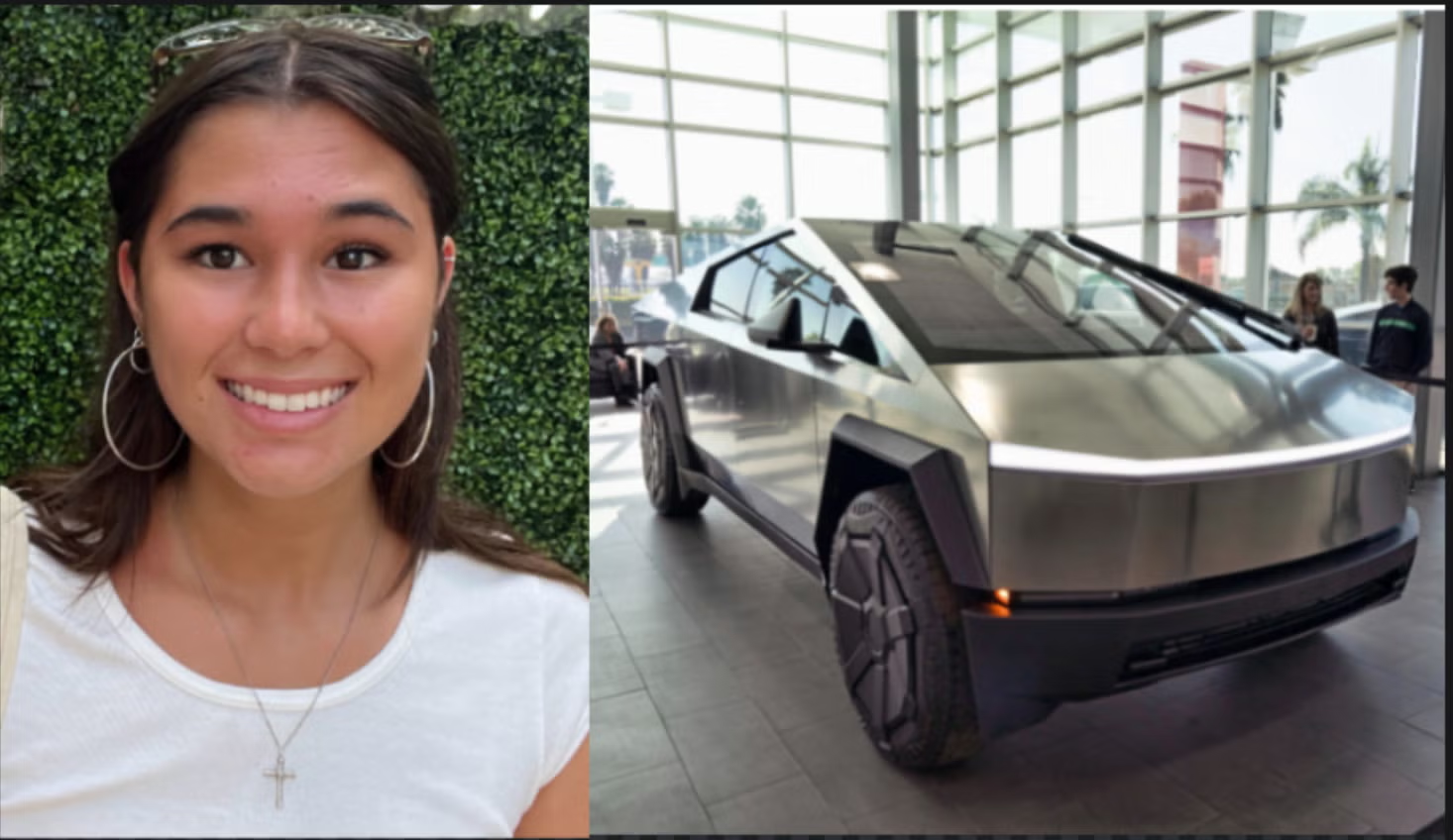
In a heartbreaking development that underscores ongoing safety concerns with electric vehicles, the parents of 19-year-old Krysta Tsukahara have filed a wrongful death lawsuit against Tesla, alleging that a defective door design in the Cybertruck prevented their daughter from escaping a fiery crash that claimed her life. The suit, lodged on October 2, 2025, in Alameda County Superior Court, California, claims the vehicle’s electronic doors locked after the impact, trapping Tsukahara inside as flames engulfed the cabin.
This legal action arrives amid a second similar complaint from another victim’s family in the same incident, highlighting potential systemic flaws in Tesla’s engineering choices. Krysta, a promising student at the Savannah College of Art and Design in Georgia, had returned home to the Bay Area for Thanksgiving break when the tragedy unfolded on November 27, 2024. The crash not only ended her young life but also killed two others, leaving families grappling with profound loss and questions about vehicle safety. As Tesla faces mounting scrutiny over its innovative yet controversial designs, this case could set precedents for how automakers address emergency egress in high-voltage vehicles.
The Fatal Piedmont Crash: A Night of Devastation
The incident occurred in the affluent enclave of Piedmont, California, a quiet residential area east of Oakland, around 10 p.m. on a chilly November evening. Soren Dixon, 19, was behind the wheel of a recently purchased Tesla Cybertruck, ferrying three friends home after a night out. The group—close-knit college students on the cusp of bright futures—included Krysta Tsukahara in the rear passenger seat, fellow back-seat occupant Jack Nelson, 20, a University of Colorado, Boulder student, and an unidentified front-seat passenger who survived.
According to the California Highway Patrol report and coroner’s findings cited in the lawsuits, Dixon lost control at high speed, slamming the angular stainless-steel behemoth into a large tree along Mountain Avenue. The impact was severe enough to rupture the Cybertruck’s high-voltage battery pack, igniting an intense blaze characteristic of electric vehicle fires—rarer than those in gas-powered cars but notoriously difficult to extinguish due to thermal runaway.
Toxicology results later revealed Dixon had alcohol, cocaine, and methamphetamine in his system, contributing to the crash’s cause, though the suits emphasize that the initial collision injuries were survivable for the passengers. Eyewitness accounts and lawsuit details paint a harrowing scene of chaos and heroism. A friend trailing in another vehicle arrived moments after the crash, spotting the inferno and the sole survivor’s desperate attempts to flee. Using a tree branch as an improvised tool, the rescuer shattered a side window, allowing the front passenger to escape with non-life-threatening injuries.
Read : Missing Teen Celeste Rivas Hernandez’s Body Found in Trunk of Tesla Registered to Singer D4vd
But for those in the rear, the doors—flush-mounted and electronically operated—remained sealed shut. Krysta and Jack, both with only minor trauma from the wreck, perished from smoke inhalation and burns as the fire spread rapidly, filling the cabin with toxic fumes and searing heat. Krysta’s father, Carl Tsukahara, recounted the unimaginable horror in interviews following the filing: “She suffered unimaginable pain and emotional distress because she could not escape the fire, which ultimately led to her death.” The families describe the four young people as inseparable companions, each poised for impactful lives—Krysta pursuing graphic design, Jack studying environmental science.
Read : Video Shows Tesla Car Flips 7 Times in Crash: Musk Says Safety is Primary as All Survive
Their deaths have shattered multiple households, with the Tsukaharas and Nelsons expressing no animosity toward Dixon’s family but pursuing claims against his estate as a procedural step to consolidate the case. This wasn’t just a random accident; it exposed vulnerabilities in the Cybertruck’s vaunted armored exoskeleton and automated systems, which Tesla markets as revolutionary safety features. The vehicle’s eight recalls since its late-2023 debut—addressing issues from accelerator pedals to wiper motors—have already dented consumer confidence, with sales lagging far behind projections. Yet, the Piedmont crash stands out for its human toll, transforming a celebratory holiday gathering into a fatal trap.
Design Flaws Under Fire: The Door Latch Controversy
At the heart of the Tsukahara lawsuit—and its companion filed by Jack Nelson’s parents, Todd and Stannye—is a pointed accusation: Tesla’s reliance on electronic door mechanisms, powered by a low-voltage 12-volt battery separate from the main propulsion pack, created an inescapable deathtrap when crash forces severed power. The suits demand unspecified punitive damages, arguing the company prioritized sleek aesthetics over occupant survival, ignoring warnings accumulated over more than a decade.
Tesla’s doors, a hallmark of its futuristic ethos, use flush handles that pop out electronically and latches that disengage via software commands. In a collision, however, the 12-volt system can fail instantly, rendering buttons and touchscreens useless. Rear doors compound the peril with manual overrides described as “obscure, nonintuitive, and highly unlikely to be located or operated in the smoke and chaos of a post-crash fire.” To release them, occupants must lift a rubber mat in the door’s storage pocket, fish out a hidden cable, and yank it forward while shoving the door—all while blinded by acrid smoke and enduring blistering heat.
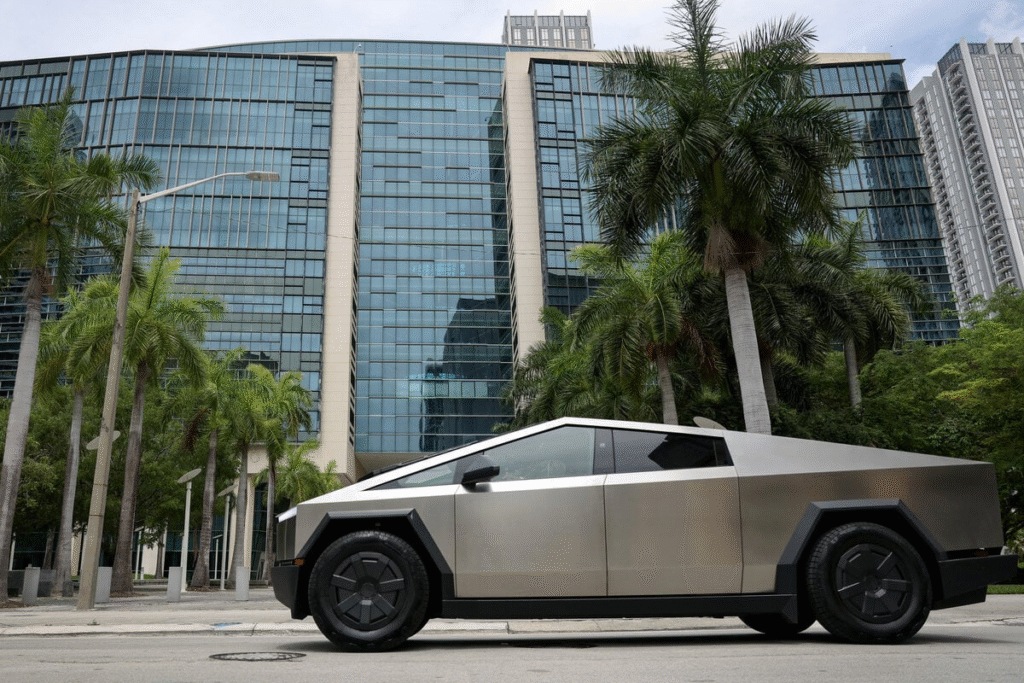
The Tsukaharas’ attorney, Roger Dreyer, called it “a horror story,” asserting Tesla had “repeated and direct notice” of entrapment risks from prior incidents, including a 2016 Model S fire that killed Joshua Brown and a 2024 settlement with the family of Kevin McCarthy, who suffocated in his burning Tesla after futile escape attempts. Despite these red flags, the Cybertruck launched without capacitors to maintain door power briefly post-impact or more prominent mechanical backups, flaws the suits label as “catastrophic design defects.”
Carl Tsukahara’s anguish cuts deep: “If it had not been so difficult to escape the burning Cybertruck, she’d be alive today.” He lambasts Tesla’s trillion-dollar valuation as emblematic of hubris: “How can you release a machine that’s not safe in so many ways?” The Nelson suit echoes this, branding all three deceased as “victims of Tesla’s unsafe design,” irrespective of Dixon’s impairment.
Representing the Nelsons, San Francisco attorney Andrew McDevitt didn’t mince words: “It’s just absolutely unforgivable. You know people have died and you continue to do it.” While competitors like Ford and Toyota have adopted electronic doors with more robust fail-safes, Tesla’s persistence with minimal overrides invites comparison to aviation standards, where redundancy is non-negotiable.
Ripple Effects: Scrutiny, Investigations, and Future Safeguards
The dual filings coincide with heightened regulatory pressure on Tesla’s door tech. In September 2025, the National Highway Traffic Safety Administration (NHTSA) launched a probe into electronic latches across models, spurred by complaints of children trapped in rear seats after parents exited Model Ys—four incidents requiring window breakage. This federal inquiry, which could expand to the Cybertruck, amplifies the lawsuits’ urgency, potentially forcing recalls or redesigns.
Tesla has remained silent on the Piedmont cases, declining comment despite repeated outreach. Internally, however, momentum builds for change. Chief designer Franz von Holzhausen acknowledged on a September Bloomberg podcast that power-loss door access is “something we are working on, and it’s in the car soon.” Legal experts speculate Tesla may counter by attributing entrapment to crash damage or Dixon’s recklessness, but plaintiffs’ counsel dismisses this as deflection from core liability.
Beyond the courtroom, the saga reverberates through the EV industry. Cybertruck’s tepid reception—fewer than 40,000 units sold in its first year—stems partly from safety jitters, now compounded by these deaths. Families like the Tsukaharas seek not just compensation but systemic reform: “Our life is never going to be the same, and there are other families just like us,” Carl noted, alluding to broader Tesla fire litigation.
As discovery unfolds, expect forensic reconstructions of the blaze and expert testimonies on egress engineering. For now, the suits stand as a stark reminder: Innovation must yield to survival. In Piedmont’s shadow, the Cybertruck’s gleam dims, prompting a reckoning for Tesla’s bold vision.