

The discovery of a loaded gun magazine on a Frontier Airlines flight moments after landing in Atlanta triggered an urgent evacuation, intensive security response, and a series of questions over how such a potentially dangerous item was left behind inside a commercial aircraft. The incident, which occurred shortly after the flight arrived from Cincinnati, unfolded with alarming speed and left passengers stunned as authorities swept the cabin for additional threats.
With law enforcement agencies, federal authorities, and airline staff involved in the investigation and response, the episode has renewed scrutiny over aviation security procedures and the protocols required for law enforcement officers who carry firearms on board. The events of that afternoon offered a stark reminder of both the vulnerabilities in airline safety checks and the complexities involved when authorized personnel travel with weapons.
Immediate Discovery and Rapid Evacuation
The situation began when a passenger sitting near row 7 spotted a gun magazine beside seat 7-C just after the aircraft touched down at Hartsfield-Jackson Atlanta International Airport. The magazine contained 10 hollow-point rounds, reportedly marked with the initials “K H,” raising immediate concerns among crew and passengers. Hollow-point ammunition, designed to expand upon impact, is typically carried by law enforcement officers rather than civilian travelers, heightening the urgency of verifying the item’s origin.
Upon being notified, the pilot made the swift decision to order a complete and immediate deplaning. In recorded cabin audio later obtained by local media, the captain stated, “We need to do a security sweep. We’re going to get everyone off the airplane.” His direct and decisive instruction signaled to passengers that the matter was serious, leaving many shaken as they filed off the aircraft and onto the tarmac.
Law enforcement authorities were contacted at 4:32 p.m., and passengers were escorted into the terminal to be re-screened by TSA agents. While Frontier had not initially specified whether the weapon itself had been found, the presence of a loaded magazine alone was enough to prompt intervention from multiple agencies responsible for aviation safety.
K-9 units, Homeland Security officers, FBI agents, and Frontier personnel conducted a rigorous search of the aircraft to determine whether any additional ammunition, weapons, or other contraband were present. The search lasted several hours, and although the discovery caused considerable disruption, no further items of concern were found. Once cleared, the aircraft was later returned to service and eventually departed Atlanta for Cincinnati at 7:56 p.m., allowing the flight schedule to resume after the unexpected delay.
Read : Engineering Marvel: Discovering the Great Wall of China’s Grandeur
Passengers who spoke to local news outlets described the atmosphere as tense but controlled. Many expressed relief that the discovery occurred after landing rather than in mid-flight, while others were frustrated at how the ammunition could have been left behind in the first place. One passenger criticized the responsible individual’s carelessness, noting that leaving such an item unattended demonstrated a significant lapse in responsibility. Another passenger remarked that while immediate danger may not have been apparent, the presence of a loaded magazine could have posed unpredictable risks under different circumstances.
Conflicting Accounts and Ongoing Questions
Following the aircraft sweep and the resumption of regular operations, Frontier Airlines issued a statement indicating that the ammunition belonged to a law enforcement officer who had been on an earlier flight using the same aircraft. According to the airline, the officer had undergone the necessary process to carry a firearm on board, which includes credential verification and a justification for traveling with a loaded weapon.
Frontier stated that the magazine and ammunition were taken into custody by the Atlanta Police Department and that the officer had been referred to the department to reclaim the items. However, despite this statement, Atlanta authorities had not yet confirmed the airline’s version of events. This discrepancy left some lingering uncertainty about the chain of custody and whether the ammunition had indeed been traced back to a verified law enforcement individual.
Read : 21-Year-Old Ishaan Sharma Arrested for Attacking Passenger on Frontier Flight to Miami
While federal air marshals and certain qualified officers are legally permitted to travel with firearms, strict guidelines govern this privilege. Officers must complete specialized training and notify the airline and federal authorities in advance. They are also obligated to maintain control of their weapon and accessories at all times, a responsibility designed to prevent incidents exactly like this one.
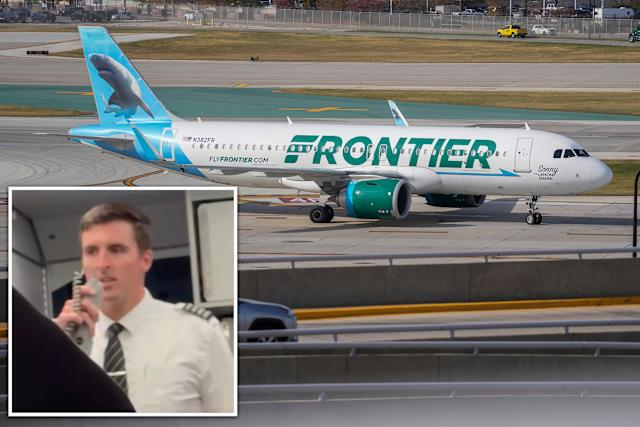
The lack of immediate confirmation from Atlanta authorities raised additional questions. If the ammunition did indeed come from a law enforcement officer, how was it left behind on the aircraft? Was the officer’s weapon properly secured? Were airline staff and federal agents notified as required at the time of boarding? These questions are part of a broader inquiry into how the system designed to handle authorized weapons might have faltered.
Frontier Airlines acknowledged the seriousness of the incident and emphasized its cooperation with federal and local law enforcement agencies throughout the investigation. The airline emphasized that passenger safety remained the highest priority and that the pilot’s decision to deplane the cabin was made out of an abundance of caution. Hartsfield-Jackson Atlanta International Airport, the busiest airport in the world with 108 million passengers annually, has extensive security protocols in place, making the discovery of a loaded gun magazine inside a cabin a particularly concerning breach.
Passengers expressed a mix of concern and frustration at the lack of clarity. Some noted that while law enforcement officers are trained professionals, the failure to secure ammunition on a commercial flight represented an avoidable danger. Others questioned whether the officer had followed proper notification protocols and whether the airline’s verification procedures were sufficiently thorough. Frontier’s prompt explanation did little to ease the apprehension among some travelers, who felt that the uncertainty surrounding the ammunition’s origin highlighted vulnerabilities that should not exist within the current safety framework.
The incident also brought renewed public attention to the broader question of how law enforcement personnel carry and manage firearms while traveling commercially. Although necessary in many circumstances, the system relies heavily on individual officers adhering strictly to protocol. The discovery of a loaded magazine lying openly in a cabin seat undermined confidence in the assumption that officers always exercise proper control of their equipment.
Aviation Security Implications and Passenger Reactions
The event has potential implications for aviation safety protocols, particularly as they relate to law enforcement passengers and the handling of firearms aboard commercial flights. Currently, the Transportation Security Administration’s Law Enforcement Officers Flying Armed (LEOFA) program outlines strict requirements for officers traveling with firearms. These include specialized training, detailed documentation, and compulsory notification to both the airline and TSA upon arrival. Officers must also retain possession of their weapon and accessories at all times, making it difficult to explain how the magazine could have been left behind without a procedural breach.
Read : Namibia: The Awe-Inspiring Frontier of Boundless Sands and Profound Mysteries
The discovery of hollow-point ammunition added to the severity of the situation. Hollow-point rounds are designed for maximum stopping power and are commonly used by police departments across the United States. Their presence in an unsecured location on a commercial aircraft represents a scenario that existing regulations aim explicitly to prevent.
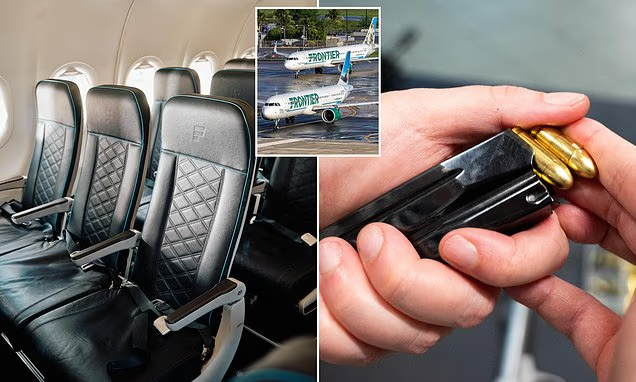
From a security perspective, the rapid response was decisive and aligned with established protocols. The involvement of K-9 units, Homeland Security, FBI personnel, and TSA agents reflected the seriousness with which such discoveries are treated. Aviation authorities cannot assume that a found weapon component is harmless or mislaid; each incident must be treated as a potential threat until proven otherwise.
Passengers re-screened by TSA expressed varying degrees of understanding and concern. Some appreciated the airline’s prompt action and the crew’s professionalism. Others felt rattled by the realization that a potentially dangerous item had been within reach throughout the flight. One passenger commented that although the danger may not have been immediate, the situation underscored the importance of thorough checks and responsible behavior by those allowed to carry weapons.
The incident also highlighted the challenges faced by airlines operating at busy international hubs. With millions of passengers passing through Hartsfield-Jackson each month, even isolated lapses can create significant disruptions. The several-hour delay experienced by the Frontier aircraft, along with the diversion of federal and local resources, demonstrated how one misplaced item can ripple through an entire operational system.
While the aircraft was eventually cleared and returned to service, the questions surrounding accountability remained. If the ammunition did originate from a law enforcement officer, further review may be needed to assess whether existing training and verification processes are sufficient. The circumstances may prompt additional oversight or procedural updates to ensure that officers adhere strictly to regulations designed to prevent unauthorized access to weapons or ammunition during commercial travel.
The loaded magazine incident also serves as a reminder that aviation safety is a collaborative effort requiring vigilance from airlines, security personnel, and authorized firearm carriers. Each component of that system must function without error to maintain the highest standards of passenger safety.
888slot có blog chia sẻ kiến thức chuyên sâu: từ cách đọc bảng thanh toán, phân tích RTP, đến mẹo quản lý vốn hiệu quả – giúp bạn trở thành cược thủ thông minh, không chơi theo cảm tính. TONY01-06S
888SLOT cam kết bảo mật danh tính tuyệt đối cho mọi khách hàng thông qua công nghệ mã hóa dữ liệu đầu cuối hiện đại. TONY03-20