
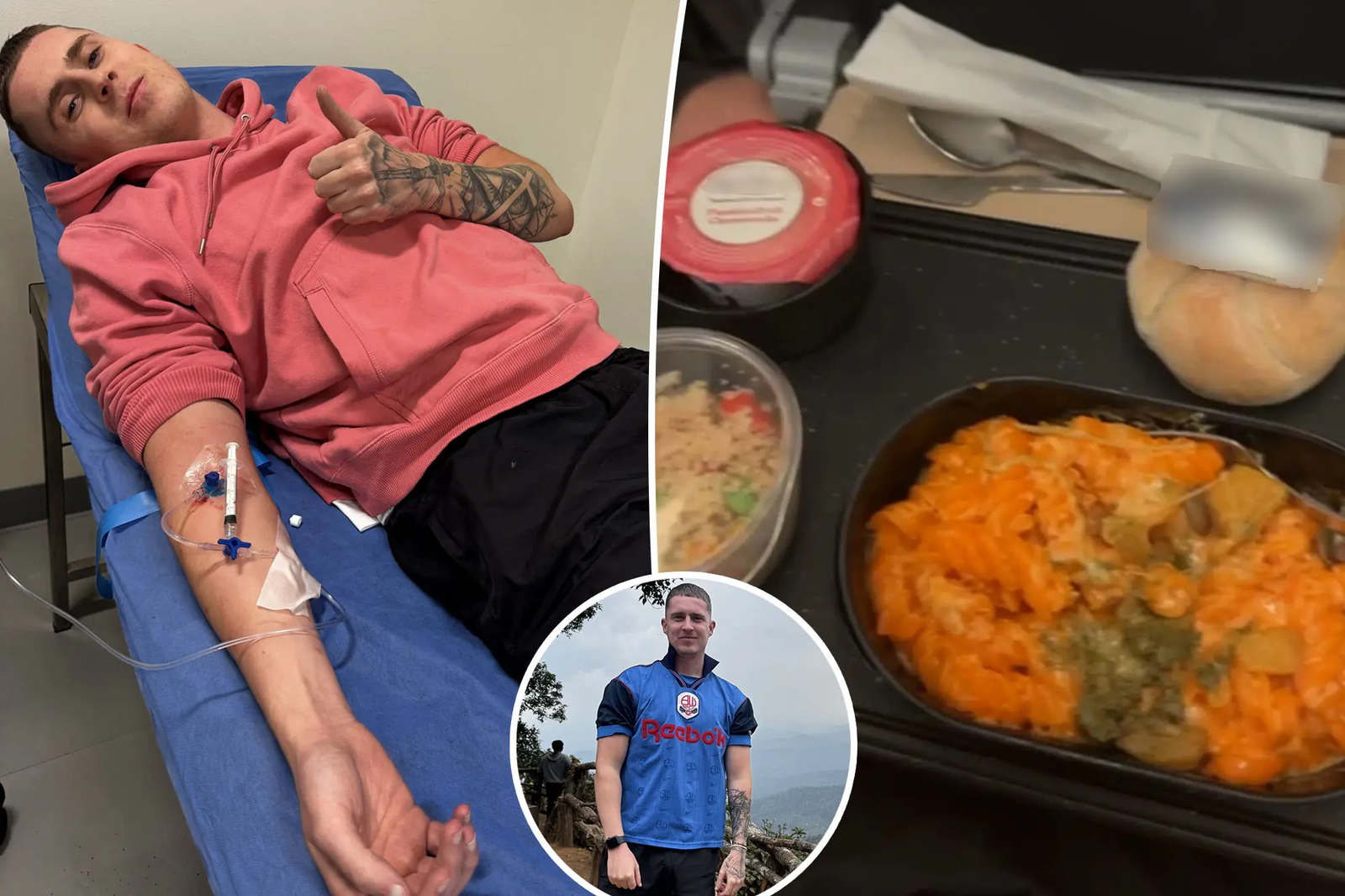
Air travel is meant to be a smooth and comfortable experience, but for one British traveler, it turned into a nightmare. Cameron Callaghan, a 27-year-old Passenger Pukes 30 Times During 6-Hour Flight, experienced what he described as the “flight from hell” after consuming an inflight meal on an Etihad Airways flight from Manchester to Abu Dhabi.
What followed was a harrowing experience of continuous vomiting, extreme weakness, and an unexpected medical emergency upon landing. His ordeal sheds light on the potential risks associated with inflight meals and the importance of proper food storage and safety on long-haul flights.
A Flight to Remember: Callaghan’s Horrific Experience
Cameron Callaghan embarked on his journey from Manchester, UK, to Bangkok, Thailand, with a connecting flight in Abu Dhabi, UAE. However, his troubles began when his flight was delayed for five hours.
As a result, he had very little to eat before boarding the plane, consuming only an egg sandwich at the airport. Feeling hungry after a long wait, he decided to eat the inflight meal that was served to him – a tomato, cheesy, chicken pasta dish.
Despite noticing a strange smell emanating from the dish, Callaghan chose to eat it, rationalizing that airplane food often has an unusual odor. However, within 20 minutes of consuming the meal, he began to feel uneasy.
His stomach started churning, and he soon found himself making repeated trips to the airplane restroom. Initially, he suffered from diarrhea, but his condition rapidly worsened. Soon, he was vomiting uncontrollably, eventually throwing up an astonishing 30 times over the course of the six-hour flight.
Callaghan’s symptoms became so severe that he could no longer remain in his seat. He was forced to take refuge at the back of the plane, where a flight attendant assisted him in keeping the restroom available for other passengers. The relentless vomiting drained him of energy, leaving him unable to stand by the end of the journey.
Read : Max Armstrong from San Diego Burn Thumb While Cooking Pasta Gets Both Legs Amputated
Upon landing in Abu Dhabi, Callaghan was so weak that he required a wheelchair to be transported to the airport’s medical facility. There, he was placed under medical supervision, receiving an IV drip with anti-nausea medication to help stabilize his condition.
Read : Russia to Resume Direct Passenger Trains to North Korea from July
While his symptoms gradually subsided, he remained bed-bound for the first few days of his vacation in Bangkok, struggling to fully recover from the ordeal.
The Possible Cause: Was the Food Stored Properly?
Callaghan strongly believes that the cause of his food poisoning was improper food storage due to the flight delay. He speculates that the pasta dish had been sitting out for an extended period before being served, allowing bacteria to develop.
Given that he had not eaten anything else apart from the egg sandwich prior to the flight and had felt fine until he consumed the pasta, he is convinced that the meal was the culprit.
Food safety regulations for airlines are typically stringent, with meals prepared and stored under temperature-controlled conditions. However, delays and unexpected circumstances can sometimes impact the quality of food served onboard.

Callaghan’s case raises concerns about how airline catering companies handle food safety during prolonged flight delays and whether there is sufficient oversight to ensure that passengers receive fresh and safe meals.
Foodborne illnesses are not uncommon during air travel. In cases where food is not stored at the correct temperature or left out for too long, bacteria such as Salmonella, E. coli, and Listeria can multiply rapidly, leading to severe gastrointestinal distress. Symptoms can range from mild discomfort to severe dehydration and hospitalization in extreme cases.
Despite Callaghan’s experience, Etihad Airways maintained that the food on the flight was prepared and stored under strict temperature-controlled conditions.
The airline also pointed out that no other passengers on the same flight reported similar symptoms, suggesting that the issue may have been an isolated incident. Nevertheless, the incident raises important questions about the risks associated with inflight meals and whether airlines should take additional precautions to prevent such occurrences.
Airline Food Safety: Can More Be Done?
While airlines follow strict protocols for food safety, incidents like Callaghan’s highlight the need for continuous improvements in catering procedures. One potential solution is increased transparency regarding how meals are stored and prepared, particularly in situations where flights are delayed for extended periods.
For travelers, there are also steps they can take to minimize the risk of foodborne illness while flying. Eating a light meal before a flight, avoiding foods that appear undercooked or have an unusual smell, and staying hydrated can help reduce the chances of experiencing severe food poisoning.
Cameron Callaghan’s harrowing experience serves as a stark reminder of the potential risks associated with inflight meals. While Etihad Airways maintains that their food was properly stored and prepared, his severe illness raises concerns about how food safety is managed during flight delays.
With repeated vomiting, extreme weakness, and the need for medical attention upon landing, Callaghan’s ordeal was anything but an ordinary flight experience.
As airlines continue to refine their food safety protocols, passengers should remain vigilant when consuming inflight meals. Proper oversight, improved reporting mechanisms, and increased awareness can go a long way in preventing similar incidents in the future.
For now, travelers may think twice before eating a meal that smells unusual—because sometimes, that odd odor might just be a warning sign of an unpleasant journey ahead.