
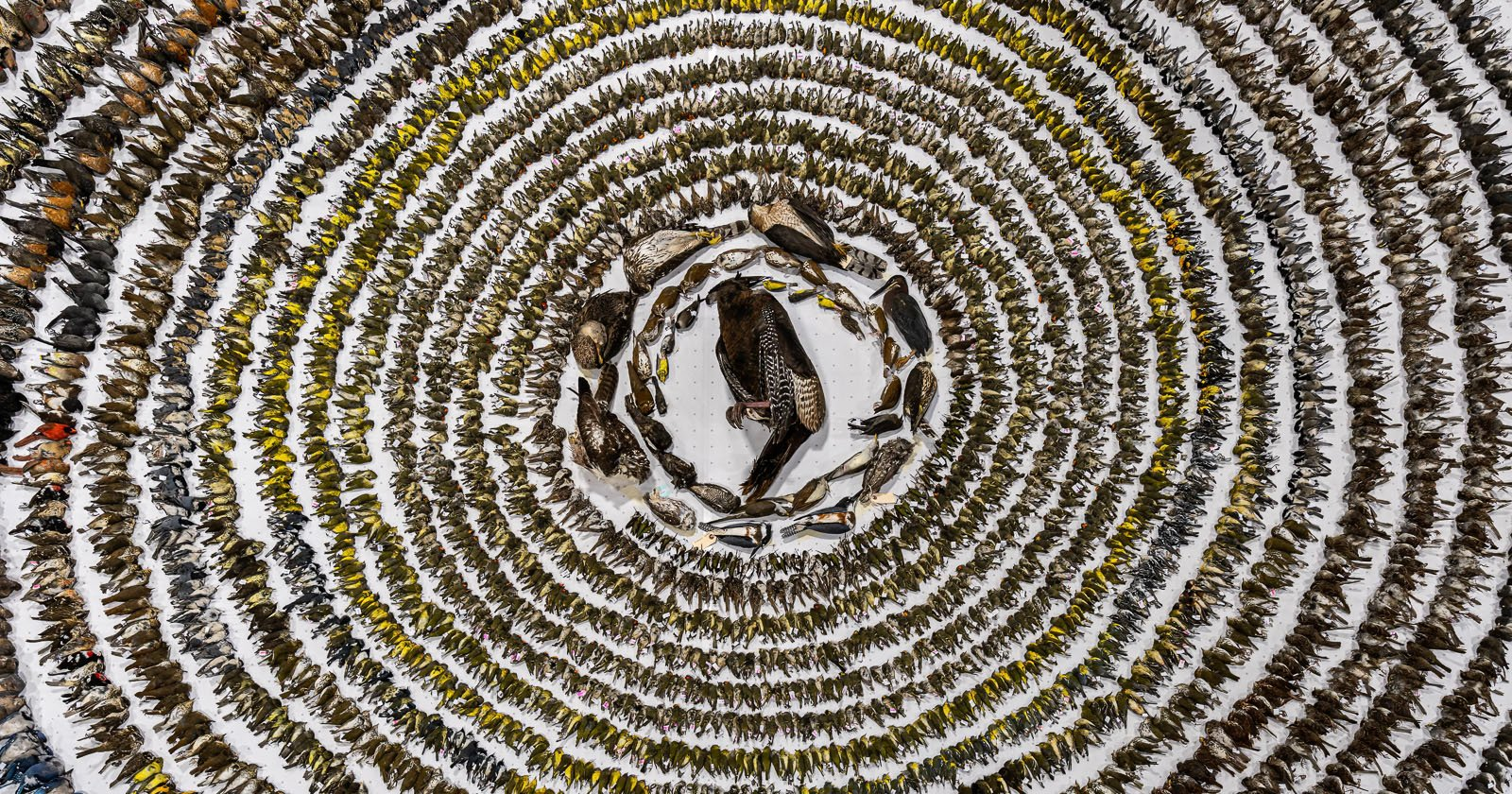
Patricia Homonylo, a conservation photojournalist from Canada, captured a heartbreaking image that has won her the prestigious Bird Photographer of the Year Award 2024. Her photo, which depicts 4,000 birds that tragically died after colliding with reflective surfaces like windows in urban areas, is more than just an impressive shot—it’s a wake-up call for the global community.
The award-winning image powerfully conveys the often-overlooked danger that human-made structures pose to bird populations, and it is already making waves in the world of conservation and photography.
Each year, urban settings become silent killers for millions of birds. Buildings with glass windows or reflective surfaces trick birds into thinking they are flying into open air. Unfortunately, what they perceive as a continuation of their natural habitat is often a hard, deadly barrier. Patricia Homonylo’s haunting image of 4,000 birds lays bare this widespread environmental crisis.
The Message Behind Patricia Homonylo’s Award-Winning Photo
The award-winning photograph by Patricia Homonylo brings attention to a crisis that many city dwellers may not be aware of. Birds are integral to our ecosystems, but urban landscapes are designed with little thought for the natural world.
Homonylo’s work with the Fatal Light Awareness Program (FLAP) in Toronto has highlighted the devastating impact that reflective windows have on bird populations. “Each year more than one billion birds die in North America alone due to collisions with windows,” she states, echoing the urgency of the issue.
Read :Meryl Streep Said a Female Cat Has More Freedom Than a Woman in Afghanistan
The photo itself is an overwhelming sight. Thousands of bird carcasses arranged together create a striking and emotional display. This visual representation of the sheer number of lives lost in urban environments hits harder than statistics alone ever could.
Homonylo’s goal is simple yet profound: to shock people into recognizing the scale of the problem and motivate them to take action. By using bird-safe glass and supporting conservation efforts, people can help minimize this avoidable tragedy.
Conservation and the Role of Photography: Patricia Homonylo’s Perspective
Patricia Homonylo considers herself a conservation photojournalist, and her work is deeply rooted in her passion for preserving wildlife. In her own words, the main purpose of this photograph is to “increase public awareness” and honor the birds that have lost their lives.
By focusing her lens on the unseen or underreported consequences of urbanization, she draws attention to the fatal dangers faced by birds. The deaths of these 4,000 birds represent just a fraction of the billions of birds killed by window collisions every year across North America and beyond.
Read : Bird Watching Helps Students Reduce Stress and Improves Mental Health
Working with FLAP, Homonylo and her team aim to save birds that survive window collisions, though many are too injured to make a full recovery. The organization also works to spread the word about the importance of bird-safe building materials, which could prevent such collisions.
Through her photography and conservation efforts, Patricia Homonylo highlights the need for systemic change—urban landscapes must be redesigned to better coexist with the natural world.
Her photograph serves as a poignant reminder that even the smallest actions can help prevent these unnecessary deaths. For those in the building and construction industries, this means designing structures with birds in mind. For the average person, it could be as simple as installing bird-safe windows at home or office buildings. Every effort counts in reducing the toll that reflective surfaces take on avian life.
The Impact of Patricia Homonylo’s Photography on the Global Stage
The Bird Photographer of the Year competition received more than 23,000 submissions from photographers around the world, but Patricia Homonylo’s striking image stood out for its emotional depth and environmental relevance.
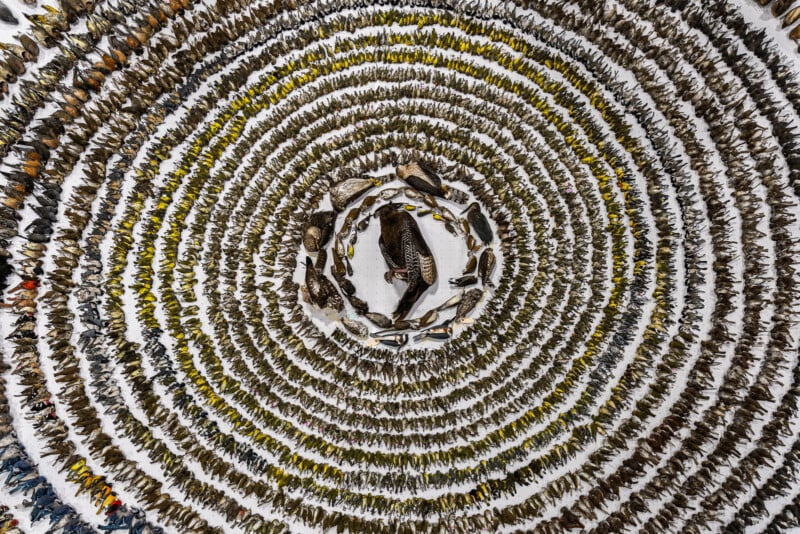
By taking home the grand prize of $4,670 (£3,500), Homonylo’s photograph has garnered international attention and praise, not only for its technical excellence but for the urgent message it conveys.
Bird Photographer of the Year celebrates the beauty and diversity of birds, but this year’s winner is a stark departure from the usual breathtaking images of avian life.
Homonylo’s photograph isn’t just about capturing the beauty of birds in flight—it’s about their death. The image forces viewers to confront the reality that, despite our love for birds, human civilization is responsible for an immense amount of harm to them.
By elevating Patricia Homonylo’s work to this level, the competition also raises the profile of conservation photography as a powerful tool for social change. Through visual storytelling, conservation photojournalists like Homonylo can reach people who may otherwise be unaware of environmental crises. A single image can inspire action, shift public opinion, and even influence policy.
What Can Be Done to Prevent Bird Collisions?
The tragic loss of 4,000 birds in Patricia Homonylo’s photograph is a wake-up call for both city planners and ordinary citizens. There are several ways we can reduce the number of bird deaths caused by collisions with buildings:
- Bird-Safe Glass: One of the most effective solutions is installing bird-safe glass, which reduces the likelihood of collisions by making windows more visible to birds. These windows often have patterns or markings that birds can detect, helping them avoid fatal impacts.
- Retrofit Existing Windows: For buildings that cannot be rebuilt with bird-safe materials, retrofitting is an option. This involves applying window films or decals that create visual markers for birds. There are also external screens and netting that can be added to windows to prevent birds from flying into them.
- Turn Off Lights at Night: Many birds migrate at night and are often drawn to brightly lit buildings. By turning off unnecessary lights during migration seasons, buildings can help prevent birds from becoming disoriented and flying into windows.
- Advocacy and Legislation: Supporting organizations like FLAP and advocating for bird-friendly building codes can make a significant difference. Laws that require bird-safe building designs for new construction can be instrumental in reducing bird deaths.
Patricia Homonylo’s Legacy in Conservation Photography
Patricia Homonylo’s photograph does more than document an environmental crisis—it carries the potential to create real change. As her work reaches wider audiences, she hopes that more people will become aware of the issues facing bird populations in urban areas.
Her involvement with FLAP and her dedication to conservation photography are making her a leading figure in the movement to protect birds from human-made hazards.
The haunting image of 4,000 dead birds is not just a reminder of what we have already lost—it is a call to action. Through changes in architecture, urban planning, and individual behavior, we can reduce the number of bird collisions and ensure that future generations of birds can safely navigate our cities.
Patricia Homonylo’s award-winning photograph serves as a powerful visual reminder of the devastating impact that urban environments can have on wildlife. By focusing her lens on this tragedy, she has brought global attention to an often overlooked issue, sparking conversations about how we can live in harmony with nature.
The tragic scene of 4,000 dead birds might be hard to look at, but it is a necessary confrontation that urges us all to reflect on the consequences of human progress and, more importantly, the steps we can take to prevent further harm.