
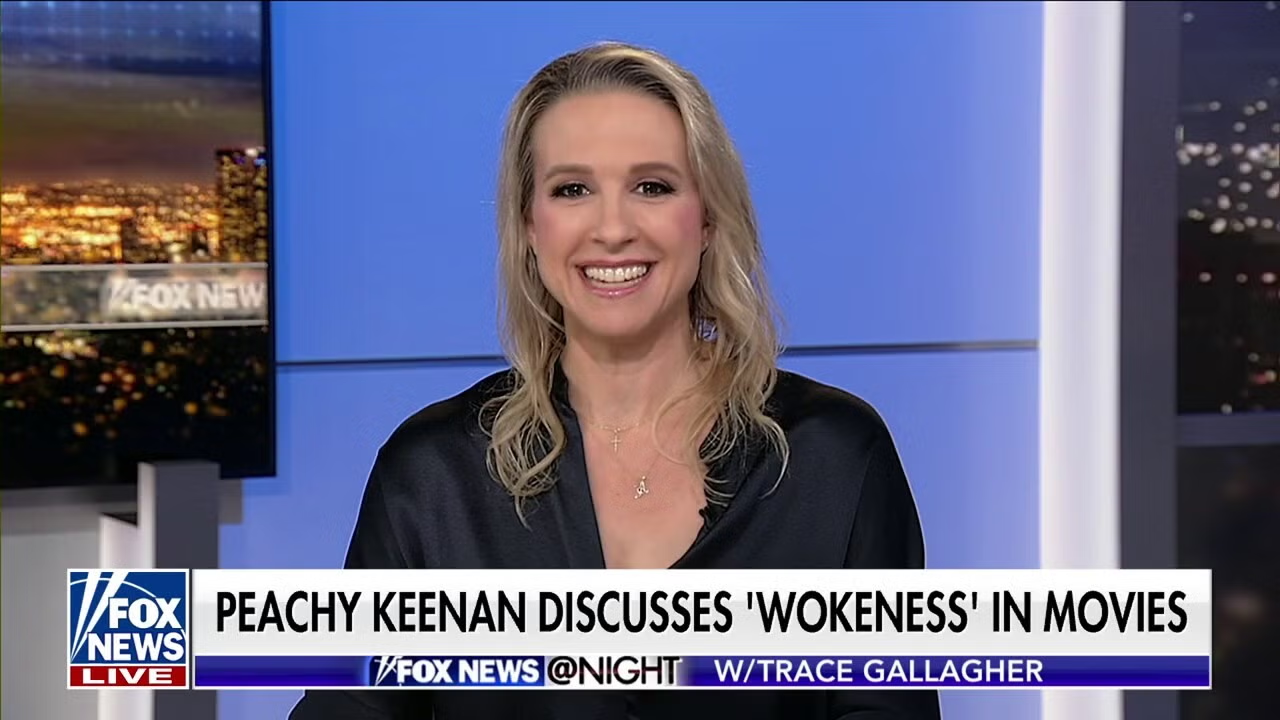
Peachy Keenan is not a household name in mainstream American politics, but within certain conservative and pro-natalist online circles she has cultivated a loud, polarizing presence. Known for deliberately provocative rhetoric and a self-styled identity that blends cultural traditionalism with aggressive political commentary, Keenan became the center of a fierce intra-conservative backlash after asserting that she had “never met” an immigrant who came to the United States in pursuit of freedom or individual liberty.
Her remarks, posted on social media, triggered swift criticism not from liberal commentators but from prominent conservative writers, radio hosts, and policy advocates who argued that her claims contradicted both historical reality and lived experience. The episode highlighted deep divisions within the American right over immigration, national identity, and the meaning of American ideals, as well as the limits of incendiary rhetoric in an increasingly fractured political coalition.
Peachy Keenan’s Public Persona and Ideological Brand
Peachy Keenan is a pseudonymous conservative commentator and author who has built her following primarily through social media, essays, and appearances in right-wing media ecosystems. She has described herself using deliberately confrontational labels such as “wife supremacist,” “husbosexual,” and “MAGA fertility fanatic,” terms designed to provoke outrage while reinforcing her embrace of rigid gender roles, large families, and traditionalist social values.
A mother of five, Keenan frequently frames her personal life as a political statement, presenting pro-natalism as both a cultural duty and a form of resistance to what she portrays as liberal decadence and demographic decline. Her politics align closely with the populist nationalist wing of American conservatism that coalesced around Donald Trump. She has credited Trump with inspiring her views on family size and cultural combat, and her writing often blends humor, insult, and absolutist claims about nationhood.
In her book and online commentary, Keenan positions herself as a defender of what she considers “real” Americans against elites, immigrants, and progressive institutions. This approach has earned her both a dedicated audience and sharp criticism, even among ideological allies. Central to Keenan’s worldview is a blood-and-soil conception of American identity.
I have never met a single immigrant, legal or illegal, who moved to the United States because they longed to experience things like freedom of expression, free speech, individual liberty, or representational democracy.
— Peachy Keenan (@KeenanPeachy) December 29, 2025
They move here for the money, bro. Even the ones on my…
In the controversy that brought her renewed attention, she described America not as an idea or a set of shared principles but as an ancestral homeland belonging to families who “farmed it, built it, fought for it, and died for it” over multiple generations. She argued that to be truly American requires indigenous roots stretching back generations, a claim that places her at odds not only with liberal pluralism but also with long-standing conservative narratives about America as a nation defined by ideals rather than ethnicity.
The Controversial Claim About Immigrants and Freedom
The backlash began when Keenan posted a series of tweets asserting that immigrants do not come to the United States in search of freedom or democratic values. She claimed that she had never met a single immigrant, legal or undocumented, who migrated out of a desire for freedom of speech, individual liberty, or representative democracy. According to her, immigrants come for economic opportunity alone, reducing America to what she described as an “ATM machine” for newcomers.
Although harsh rhetoric about immigration is common in some pro-Trump circles, Keenan’s sweeping generalization struck many conservatives as historically illiterate and personally insulting. Her comments came at a moment when debates over immigration were already inflamed by rhetoric from political leaders and media figures, making her statements a flashpoint for broader tensions within the right. What distinguished this episode was not merely liberal condemnation, but the speed and intensity with which conservative intellectuals and commentators repudiated her claims.

Several prominent voices responded by offering direct counterexamples from their own lives. Writers and podcasters cited friends and family members who had fled religious persecution, authoritarian regimes, or rigid social hierarchies specifically to enjoy freedoms unavailable in their countries of origin. Naturalized citizens within conservative media circles noted their own journeys to the United States as motivated by admiration for American political institutions and civic culture, not simply by economic gain.
The criticism underscored a fundamental disagreement about the moral narrative of immigration. For many traditional conservatives, the idea that people risk their lives to reach the United States because of its freedoms is not a sentimental myth but a core component of American exceptionalism. By denying that narrative, Keenan appeared to reject one of the philosophical foundations that had long united economic conservatives, religious conservatives, and Cold War anti-communists.
Conservative Backlash and What It Reveals About the Right
The reaction to Keenan’s remarks revealed fault lines within the modern conservative movement that extend beyond immigration policy into questions of national identity and historical memory. Writers affiliated with institutions such as National Review, along with conservative radio hosts and advocacy group staffers, framed her claim as not merely wrong but dangerously reductive. They argued that it erased the experiences of refugees from communist, theocratic, and authoritarian regimes whose stories had historically strengthened conservative arguments about the superiority of liberal democracy.
Read : Prison Guard Megann Gibson Faces Jail for Having an Illicit Relationship with an Inmate
Some critics responded with sarcasm, others with personal anecdotes, and a few with outright condemnation. The common thread was a rejection of Keenan’s insistence that America is not an idea. For many on the right, especially those shaped by Cold War conservatism, the belief that the United States represents a set of ideals has been central to arguments for patriotism, assimilation, and civic unity. To deny that belief, they argued, is to undermine the very reason America has been able to integrate immigrants successfully across generations.

Keenan attempted to soften her position after the backlash, clarifying that she did not mean there were no immigrants motivated by freedom, but rather that she had not personally met many, particularly among those under the age of 60. This clarification did little to stem criticism, as detractors pointed out that personal anecdote is a poor substitute for historical evidence. Waves of immigrants fleeing fascism, communism, religious persecution, and caste-based discrimination are well documented, and many conservatives viewed her follow-up as a retreat rather than a meaningful correction.
The episode illustrates a broader struggle within the MAGA-aligned right between ethnic nationalism and ideological nationalism. While both camps often agree on restrictive immigration policies, they diverge sharply on how to explain America’s past and justify its future. For ideological nationalists, America’s appeal lies in its constitutional freedoms and political culture, which immigrants can adopt. For ethnic or ancestral nationalists, belonging is rooted in lineage and inheritance, leaving little room for newcomers regardless of their beliefs.
Peachy Keenan’s controversy demonstrates the risks of absolutist rhetoric in a coalition that remains more diverse than its loudest voices sometimes acknowledge. Her claim, intended to provoke and assert dominance within online culture wars, instead exposed the limits of her argument when confronted by conservatives whose own biographies contradict her assertions. In doing so, it offered a revealing snapshot of a movement still grappling with what it means to be American in the twenty-first century, and whether that identity is defined by blood, belief, or an uneasy combination of both.
**mitolyn official**
Mitolyn is a carefully developed, plant-based formula created to help support metabolic efficiency and encourage healthy, lasting weight management.