

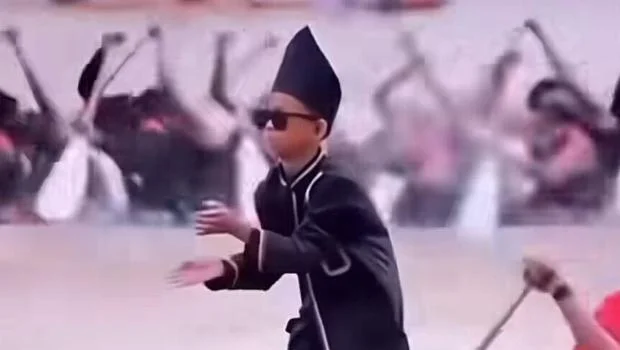
Rayyan Arkan Dikha’s sudden rise from an 11-year-old longboat performer in Riau to a global cultural phenomenon stands as one of the most remarkable viral moments of 2025. His fame began with a short, 42-second video that spread rapidly across social media platforms, showing him performing anime-like energy poses, rhythmic arm waves and confident gestures on the narrow, swaying bow of a traditional Pacu Jalur boat.
Within days, millions around the world were imitating his movements, celebrities joined the trend and commentators attempted to decode his undeniable charisma. What set him apart was not only the theatrical nature of his performance but also the cool, unbothered demeanor he maintained while balancing on a moving boat at high speed. This distinctive style led to him being affectionately called the “aura farming boy,” a phrase borrowed from gaming and anime culture and used online to describe someone radiating effortless swagger.
That online identity helped catapult him beyond viral fame and landed him on The New York Times’s list of the Most Stylish People of 2025, placing him alongside global athletes, artists, actors and fashion icons. His recognition symbolizes more than a meme: it represents the global reach of Indonesian culture and the surprising ways local traditions can find renewed relevance in the digital age.
Cultural Roots Behind a Global Phenomenon
Rayyan Arkan Dikha is from Riau, a province in Sumatra known for its deeply rooted traditions and its centuries-old Pacu Jalur festival. Pacu Jalur is a longboat racing competition that dates back to the 17th century and serves as both a sporting event and a cultural celebration. The lengthy river boats, often stretching more than 40 meters, are powered by dozens of rowers working in unison.
Standing at the bow of each boat is the Togak Luan, a dancer and hype-man whose function is to motivate the rowers, signal rhythm and help maintain communal energy during the race. This role requires balance, precision and a strong sense of showmanship, all of which Rayyan demonstrated with remarkable mastery even at a young age. Unlike the more restrained and traditional movements often associated with the role, Rayyan infused his performance with modern gestures, anime-inspired flair and playful confidence, redefining how many viewers perceived the position.
What captivated the world was how seamlessly he blended cultural heritage with contemporary expression. His poses resembled scenes from shōnen anime, and his arm waves and stylized motions felt reminiscent of popular dance trends circulating online. Yet he remained entirely grounded in the purpose of the Togak Luan: energizing his team and maintaining morale. His sunglasses, calm facial expression and fluid transitions between playful and powerful movements created a persona that viewers immediately connected with.
🌊🇮🇩 Meet Rayyan Arkan Dikha — the 11-year-old Indonesian boy who went viral for “aura farming” during a traditional Pacu Jalur boat race.
— Eyes on the Globe (@eyes_globe) July 15, 2025
Calm, confident & commanding#AuraFarming #ViralVideo #Indonesia #RayyanArkan #r4today pic.twitter.com/PhhBUzlqMm
These stylistic choices were not crafted for an international audience, yet the internet interpreted them as markers of a unique and modern “aura.” That global interpretation brought unprecedented attention to Pacu Jalur. International audiences who had never heard of the festival suddenly became curious about its history, meaning and significance. This surge of interest reinforced the idea that cultural preservation and global appeal are not mutually exclusive but can strengthen one another when young people bring fresh energy to traditional practices.
The Rise of “Aura Farming” and its Digital Resonance
The phrase “aura farming” initially emerged from online gaming communities, where it referred to gathering or generating power, style or confidence points. Over time, social media users adapted the term to describe people who display natural magnetism in their appearance or movements. Rayyan became the embodiment of this trend after his Pacu Jalur performance went viral.
Viewers commented that he appeared to be collecting “aura points” as he danced, his movements evoking an almost supernatural level of confidence. Unlike many internet trends rooted in irony or exaggeration, the concept around Rayyan carried genuine admiration. His charisma appeared authentic, making his performance feel both humorous and sincere at the same time. As the video spread, celebrities and influencers began participating in the trend. Clips emerged of athletes, including NFL star Travis Kelce, imitating Rayyan’s signature poses.
TikTok was soon filled with creators replicating his gestures on boats, skateboards or simply in their rooms. What made the trend enduring rather than fleeting was the sense of joy and creative experimentation it encouraged. For many, Rayyan’s dance became a symbol of youthful self-expression, blending cultural identity with modern aesthetics. His popularity among younger viewers also highlighted how globalized online culture has become: an Indonesian cultural practice, performed by a child on a traditional boat, could inspire a worldwide movement within days.
Furthermore, the “aura farming” trend carried an unexpectedly positive message. While most viral phenomena rely on shock value or controversy, Rayyan’s fame was rooted in admiration, humor and respect for cultural tradition. The internet framed him not only as stylish but also as skilled and courageous, emphasizing the difficulty of maintaining balance on a narrow boat while performing choreographed movements.
His steady composure despite the instability beneath him became a metaphor for confidence under pressure. This symbolism contributed to his universal appeal and helped sustain the trend far beyond typical viral timelines. As more outlets covered his story, audiences across continents discovered Pacu Jalur and the role of the Togak Luan, deepening appreciation for the cultural backdrop that shaped Rayyan’s performance.
From Viral Star to Cultural Ambassador
Rayyan’s newfound fame had profound implications both for him and for Riau Province. Local leaders recognized the significance of the global attention he had brought to the Pacu Jalur festival, which has long been central to regional identity but had rarely received international coverage. His popularity offered a unique opportunity to showcase the richness of Indonesian cultural traditions to a global audience.
As a result, Rayyan was appointed a Tourism Ambassador for Riau, a role in which he now helps promote the festival and other regional heritage sites. His selection reflects a modern approach to cultural diplomacy, acknowledging that viral figures can serve as effective representatives of local culture when their influence is rooted in authenticity. The recognition from The New York Times further elevated his standing. Being named one of the Most Stylish People of 2025 placed him in the company of well-known artists and fashion icons, highlighting the global appeal of his natural confidence and distinctive expression.

The accolade was not merely about clothing or appearance but celebrated his overall presence and ability to express individuality. It also symbolized a shift in how style is defined in the digital era. Instead of limiting style to fashion houses or curated images, the list acknowledged individuals who embodied charisma, cultural resonance and originality. Rayyan exemplified these qualities, demonstrating that someone from a small Indonesian community could influence global aesthetics without altering or commercializing their cultural identity.
His role as an ambassador also allowed him to engage with cultural preservation efforts. By speaking at events, participating in promotional campaigns and interacting with younger audiences, he encouraged interest in traditional activities among his peers. Local communities embraced him not only as a viral figure but as a symbol of pride. His success story underscored the potential for cultural festivals to evolve and attract international attention through creative expression. At the same time, he remained grounded in his origins, continuing to participate in Pacu Jalur and engage with the traditions that shaped him.
Rayyan’s influence extended beyond cultural promotion. His rise also demonstrated the transformative power of digital platforms for minority and regional cultures. In an increasingly interconnected world, moments of authenticity can gain global traction and elevate local voices. Instead of diluting traditions, viral visibility can strengthen their relevance and encourage cultural exchange. Rayyan’s journey illustrated how young people can bridge generational and global divides simply by embodying confidence and creativity within their cultural contexts.
As 2025 draws attention to evolving definitions of style, influence and representation, Rayyan Arkan Dikha stands as a compelling symbol of how cultural heritage and modern expression can coexist harmoniously. His viral dance not only entertained millions but also brought international recognition to the Pacu Jalur festival and highlighted Indonesia’s vibrant diversity. His nomination by The New York Times affirmed that style is as much about presence as it is about fashion, and that charisma can emerge from unexpected places. Through his natural charm, Rayyan transformed a traditional role into a global inspiration, reaffirming the enduring power of cultural traditions in shaping contemporary expression.
Alright, video poker fans! Videopokervn seems like a decent spot. Selection is alright, layouts clean. Just need to get some luck. Try your hand at video poker.