
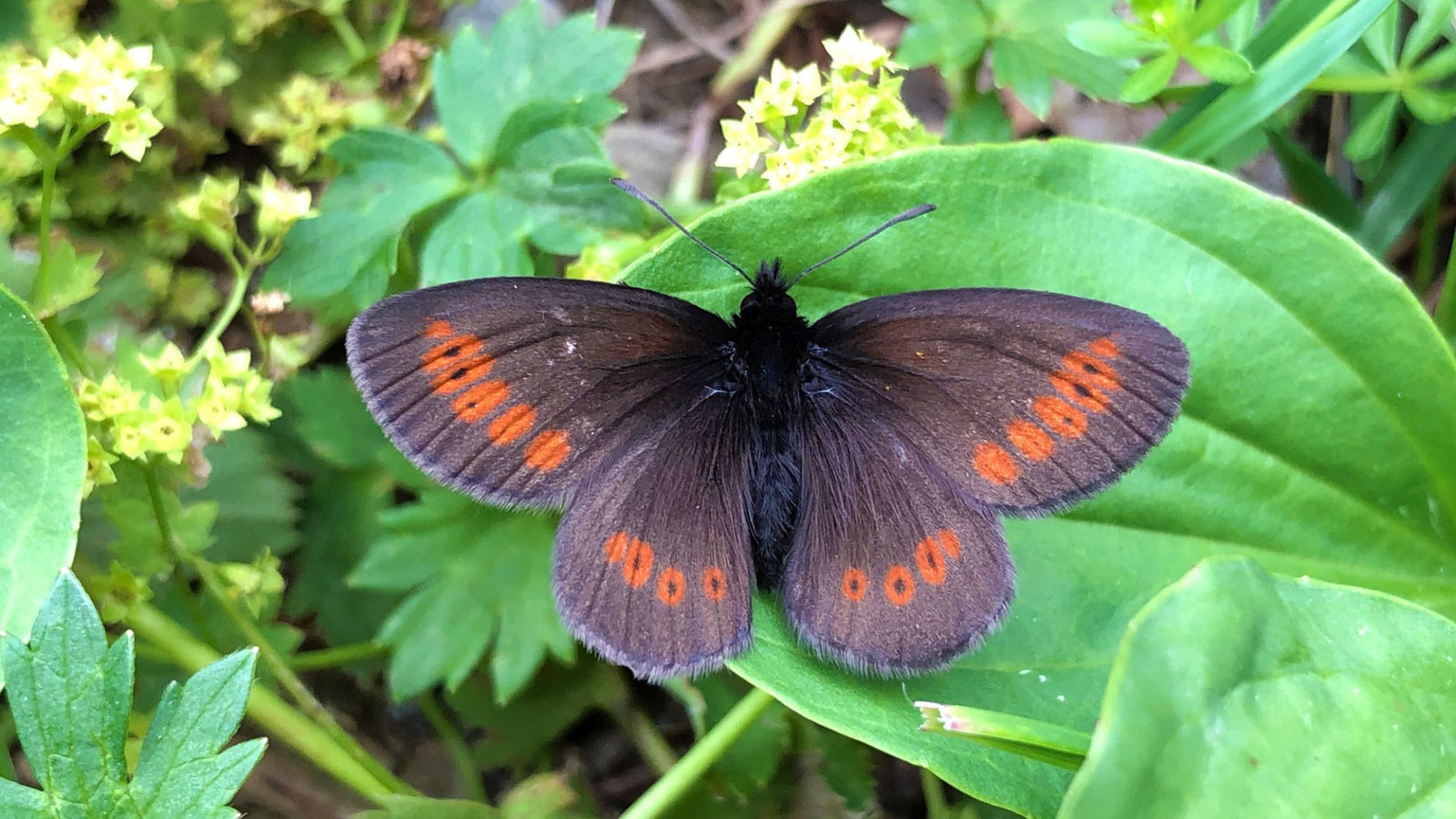
The rugged beauty of the Lake District has long been a haven for hikers, nature lovers, and wildlife enthusiasts. But now, conservationists are urging these visitors to keep an eye out for one of the region’s most elusive and unique inhabitants—the mountain ringlet butterfly.
This small, brown butterfly with delicate orange spots is not only rare but holds the distinction of being England’s only true mountain butterfly. Found at high altitudes, particularly above 450 meters, the mountain ringlet is a remarkable species whose existence may now be under threat from climate change and habitat loss.
Butterfly Conservation, the UK’s leading insect conservation organization, has launched a campaign asking the public to report any sightings of this shy creature while exploring the Lake District. These citizen reports are vital for scientists who are struggling to determine whether the butterfly’s numbers are stable, growing, or dwindling. The lack of long-term data has left researchers with more questions than answers, making public involvement crucial in conserving this alpine gem.
A Butterfly Above the Clouds: The Secretive Life of the Mountain Ringlet
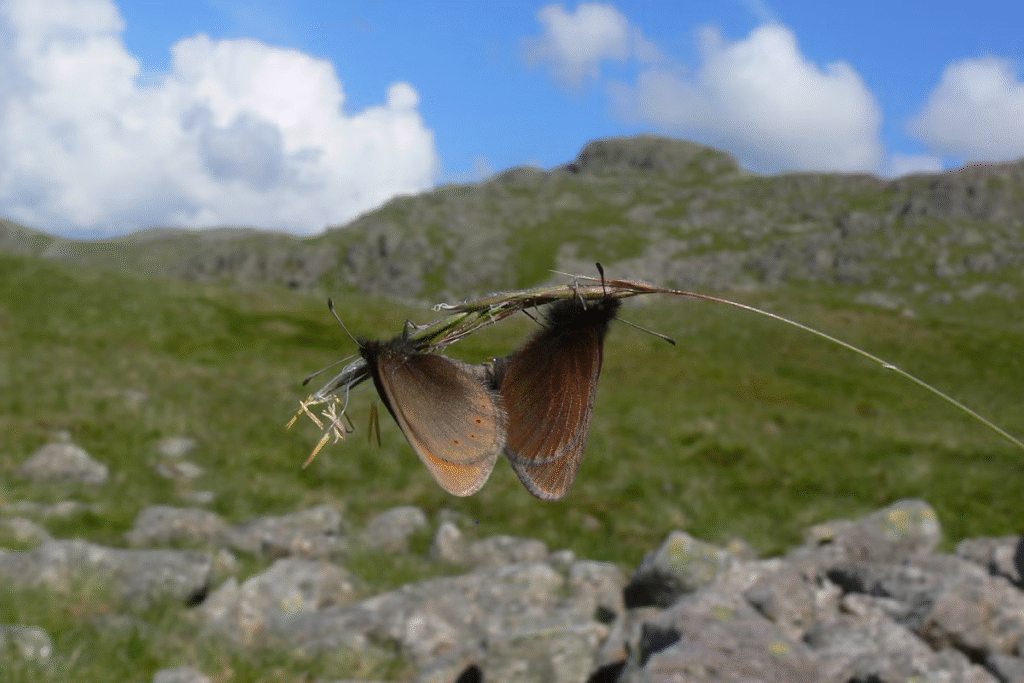
The mountain ringlet (Erebia epiphron) is not your typical butterfly. Unlike its showier cousins that flit through lowland meadows and gardens, the mountain ringlet lives exclusively in mountainous regions, preferring the harsh, windswept summits of the Lake District and the Scottish Highlands.
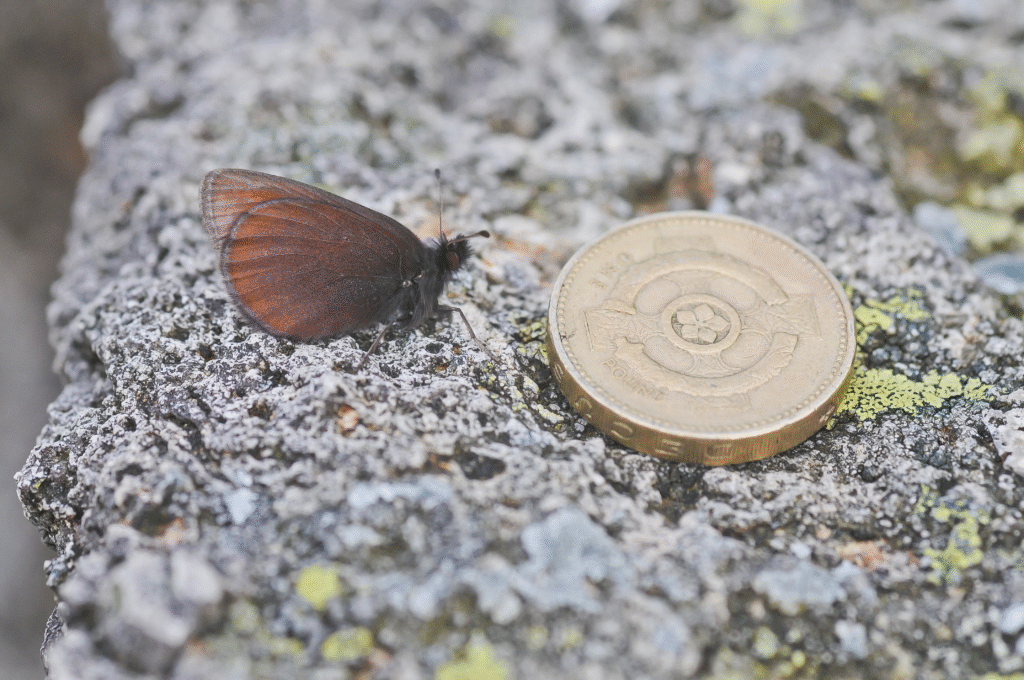
It’s a modest insect, measuring just 35–38mm across, and it spends much of its short adult life close to the ground, flying only in bright sunshine and for short bursts at a time. This secretive nature, coupled with its high-altitude preference, makes it incredibly difficult to study.
The butterfly’s muted brown wings are accented with subtle orange spots, making it well-camouflaged against the rocky terrain and grassy tussocks of the fells. When not in flight, mountain ringlets rest on low-growing flowers such as tormentil and heath bedstraw, from which they feed. These plant species are themselves specialized to the upland environment, meaning that the mountain ringlet’s entire lifecycle is closely tied to the unique ecology of the Lake District’s high peaks.
Its elusive presence is most detectable during a narrow window in summer. Adult butterflies typically emerge in June and fly for up to three weeks, although this can vary depending on weather conditions.
The earliest sightings in Cumbria occur in late May, and the latest by mid-July. Because of this limited flight period, coupled with the difficulty of reaching their preferred habitats, many colonies remain undocumented or poorly understood.
Read : 12 Flowers You Must Plant in Your Garden to Attract Butterflies
What makes this butterfly even more compelling is that it is far more common in the Scottish Highlands than in England. Its scattered populations in Cumbria are believed to be isolated and vulnerable, and this geographical limitation increases the urgency of conservation efforts. Researchers fear that climate change could force these already rare butterflies into even smaller areas of suitable habitat, possibly pushing them toward extinction in England.
How Hikers Can Help: Citizen Science in Action
Recognizing the challenges in tracking such a secretive insect, Butterfly Conservation has turned to an invaluable resource—the public. Scientists and conservationists are calling on hikers, fell walkers, and nature lovers visiting the Lake District to assist in monitoring mountain ringlet populations.
Whether on a long trek or a leisurely afternoon walk, every sighting reported could add to a growing database that helps experts map the butterfly’s current distribution and understand its breeding patterns. Butterfly Conservation has released a detailed map indicating all known sightings of the mountain ringlet, focusing on the Borrowdale volcanic group that stretches from Wasdale in the west to Mardale and Haweswater in the east.
These are the locations where the butterfly has historically been observed, all above 450 meters in elevation. In addition to known sites, the map highlights “pink squares”—areas adjacent to existing sightings where the butterfly could potentially be found but has not yet been recorded.
This initiative, coordinated in part by Lancaster University student Mim Woodward, encourages visitors to explore these pink-square zones. By doing so, nature enthusiasts may be the first to uncover a brand-new colony, contributing valuable information that could directly influence conservation strategies. “If you can explore one of these pink squares, you could be the first to record a mountain ringlet there,” Woodward says, adding that such discoveries could make a real difference to the work of Butterfly Conservation.
The call to action is simple: if you’re in the right area and the weather is bright, keep a watchful eye out for a flutter of brown and orange close to the ground. Bring a camera, record the date and location, and submit your observations to the organization. Every report, no matter how minor it may seem, helps paint a clearer picture of this butterfly’s status in England.
As Martin Wain, Butterfly Conservation’s North of England conservation manager, puts it, “Looking for the mountain ringlet can add extra interest to your hike, whether you slow down and mindfully look for it, watch out for it as you eat your sandwiches, or just keep it in mind as you walk.” It’s a form of wildlife appreciation that goes beyond passive enjoyment—it’s a way to actively contribute to the preservation of a species teetering on the edge.
The Bigger Picture: Climate Change, Grazing, and Long-Term Conservation
While individual sightings are valuable, they are part of a larger effort to secure the future of the mountain ringlet in the face of mounting environmental pressures. Climate change looms as the most significant threat. As temperatures rise, the butterfly’s cold, high-altitude habitats may shrink, forcing it to retreat further uphill.
In mountainous ecosystems, this “escalator to extinction” leaves little room for retreat. If temperatures continue to climb, the mountain ringlet may eventually run out of viable terrain. To address this threat, Butterfly Conservation is planning to work with local farmers and land managers in Cumbria.
The aim is to trial new land management strategies, particularly those involving grazing patterns, to see which techniques create the best habitats for the mountain ringlet. Overgrazing can strip away the low vegetation that the butterflies rely on for shelter and food, while undergrazing can lead to habitat overgrowth that also proves unsuitable. Striking the right balance is key.
Conservationists are exploring a range of practices that could support mountain ringlet populations without disrupting the agricultural use of these uplands. These trials will help determine how best to preserve this butterfly’s fragile ecosystem while also supporting sustainable farming—an important consideration in a region where both agriculture and tourism are economically significant.
Beyond the Lake District, the mountain ringlet serves as a symbol of the delicate balance between species and their environments. It represents a class of alpine and subalpine wildlife that may be at risk as the climate shifts. Protecting this butterfly means protecting the ecosystem it depends on, and the knowledge gained from studying it could inform the conservation of other upland species facing similar threats.
At the heart of this conservation initiative is a community effort. The mountain ringlet may be elusive, but it is not invisible. Through a combination of scientific inquiry and public participation, there is hope that this little-known butterfly will continue to grace the high fells of the Lake District for generations to come. Each reported sighting is not just a data point—it’s a testament to our shared responsibility to preserve the natural world, one butterfly at a time.
I loved as much as you will receive carried out right here.
The sketch is tasteful, your authored subject matter stylish.
nonetheless, you command get bought an shakiness over that you wish be
delivering the following. unwell unquestionably come more
formerly again since exactly the same nearly a lot
often inside case you shield this increase.